In the VFX pipeline, you start by creating concept art that shapes your visual direction and aligns the team. Next, you organize assets systematically to keep everything accessible. Then, you develop previsualizations to test ideas and plan scenes. Afterward, modeling, texturing, and asset integration transform these plans into detailed elements. Finally, compositing, rendering, and finishing combine everything into seamless visuals. Keep exploring to discover how each step guarantees stunning, cohesive effects that bring your stories to life.
Key Takeaways
- Concept art establishes the visual blueprint and creative vision for the VFX project, guiding all subsequent stages.
- Asset management organizes and tracks models, textures, and references to ensure efficiency and version control throughout production.
- The previs stage translates concept art into simple 3D models and animations, helping visualize sequences and plan detailed work.
- Modeling, texturing, and animation refine assets based on previs, integrating them seamlessly into the scene for further development.
- Compositing and rendering combine CGI with live-action footage, applying lighting and effects to produce the final, polished visual output.
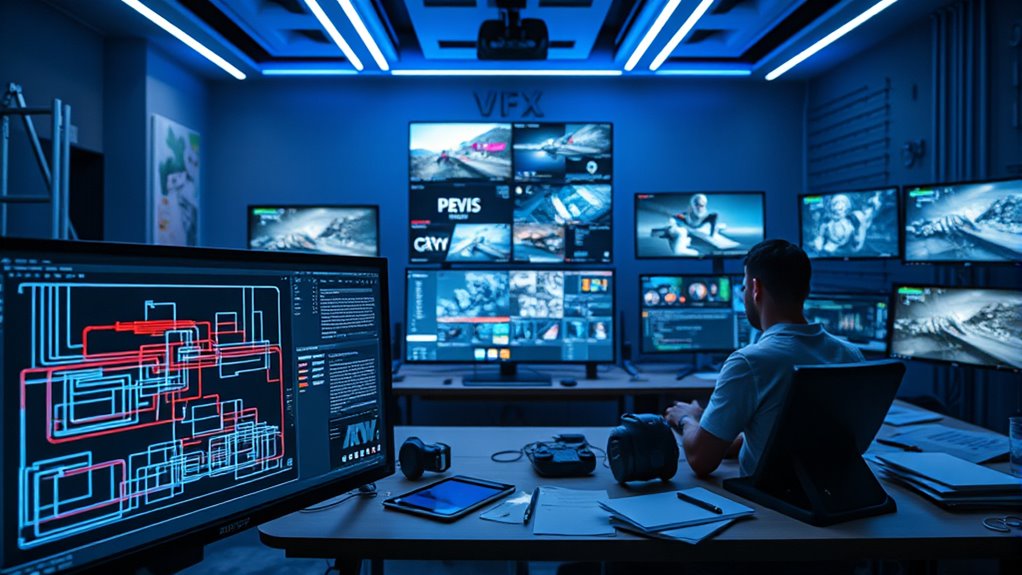
Have you ever wondered how stunning visual effects seamlessly integrate into movies and videos? The journey from initial idea to the polished final shot involves a complex yet meticulously organized process called the VFX pipeline. It all begins with concept art, which serves as the visual blueprint for the entire project. As a VFX artist or supervisor, you’ll start by translating scripts and storyboards into detailed illustrations that capture the look and feel of the effects you want to create. Concept art helps align the entire team—modelers, animators, compositors—by providing a clear vision. Once the concept is solidified, asset management becomes essential. You need a systematic approach to organize, track, and store all digital assets—models, textures, reference images, and animation files. Proper asset management ensures that everyone has access to the latest versions, minimizes errors, and keeps the workflow efficient. Without it, chaos can quickly take over, delaying deadlines and compromising quality.
As you move into the previs (pre-visualization) stage, you start translating the concept art into simple 3D models and rough animations. This step helps you visualize the sequence, camera angles, and timing before investing in detailed work. Previs acts as a bridge between the creative ideas and technical execution, allowing you to make adjustments early on. From there, the production pipeline advances to creating detailed models and textures, which are then animated and integrated into scenes. Throughout this process, asset management continues to play a critical role, ensuring that all elements are properly stored, versioned, and easily retrievable. Additionally, incorporating diverse designs can elevate the visual appeal and uniqueness of the effects, making the final output more engaging.
Once the assets are ready, you’ll move into the compositing and rendering phases. Here, the focus shifts to integrating CGI elements with live-action footage, applying lighting, effects, and color grading to achieve realism. During rendering, your hardware and software work intensively to produce the final images, which are then reviewed and refined. At this stage, quality control is key, and you’ll rely heavily on organized asset management to quickly locate and update elements if needed. The entire pipeline relies on seamless coordination, from initial concept art and asset management to previs, modeling, animation, compositing, and final render. When all parts work harmoniously, the result is the breathtaking visual effects that captivate audiences and bring stories to life.
Frequently Asked Questions
How Long Does Each Stage of the VFX Pipeline Typically Take?
Pipeline timelines vary depending on the project, but stage durations typically range from a few days to several weeks. You might spend a week on previs, a few weeks on modeling, and another week or two on compositing. Complex shots or heavy effects can extend these durations. By understanding stage durations, you can better plan your workflow, ensuring each pipeline stage stays on schedule and meets project deadlines efficiently.
What Are the Common Challenges Faced During VFX Pipeline Integration?
You face challenges like creative blocks and resource allocation issues during VFX pipeline integration. Creative blocks can stall progress, making it hard to maintain momentum. Meanwhile, improper resource allocation leads to bottlenecks, delays, and increased costs. To overcome these, communicate clearly with your team, plan your resources carefully, and encourage collaboration. Staying flexible and adaptable assists you in navigating these common hurdles and ensures smoother pipeline integration.
How Do Teams Ensure Seamless Collaboration Across Departments?
Think of your team as a finely tuned orchestra, where interdepartmental communication is the conductor guiding harmony. You guarantee seamless collaboration by establishing clear channels for asset management, so everyone accesses the latest versions effortlessly. Regular check-ins, shared documentation, and collaborative tools keep everyone in sync, preventing discord. By fostering transparency and accountability, you turn complex VFX tasks into a symphony of coordinated effort, delivering stunning visuals without missing a beat.
What Software Tools Are Most Popular in Each Pipeline Stage?
You’ll find that software like Maya and Houdini dominate modeling and animation stages, while Nuke excels in compositing. For rendering, tools like Arnold or RenderMan are popular. These software options support seamless integration, enhancing artist workflows across pipeline stages. By choosing compatible tools, your team can streamline collaboration, reduce errors, and guarantee smooth progression from previs to final render, making the entire VFX process more efficient and cohesive.
How Is Quality Control Maintained Throughout the VFX Process?
You guarantee top-notch quality assurance by establishing frequent review checkpoints that catch tiny flaws before they snowball. It’s like having eagle eyes watching every frame, every detail, no matter how small. You rigorously evaluate each stage, from initial concepts to final render, making sure standards stay high. This relentless attention to detail guarantees your VFX work remains flawless, consistently meeting client expectations and industry excellence.
Conclusion
Now that you understand the VFX pipeline from previs to final render, you see how vital each step is to creating stunning visuals. Imagine working on a blockbuster scene where seamless collaboration transforms initial concepts into breathtaking reality—just like the VFX team for “The Jungle Book” brought the lush jungle to life. With a clear pipeline, you can confidently turn your ideas into spectacular visuals that captivate audiences worldwide.