
TL;DR

Get the latest gadgets delivered free with Prime
- Fast, free delivery on millions of items
- Prime Video, Amazon Music and more included
- Member-only deals all year
Abyssal Station introduces a pioneering scroll-driven depth engine that simulates a deep-sea descent in a web experience. The technology synchronizes visuals and interactions with simulated water depth, offering an immersive journey. The development showcases advanced use of CSS and JavaScript for seamless, accessible interactivity.
Abyssal Station, a web-based underwater simulation, has introduced a novel scroll-driven depth engine that mimics a descent into the ocean’s depths. This innovative technology aligns visual and interactive elements with a simulated water depth, creating a highly immersive experience. The development is significant for its technical sophistication and potential applications in digital storytelling and education.
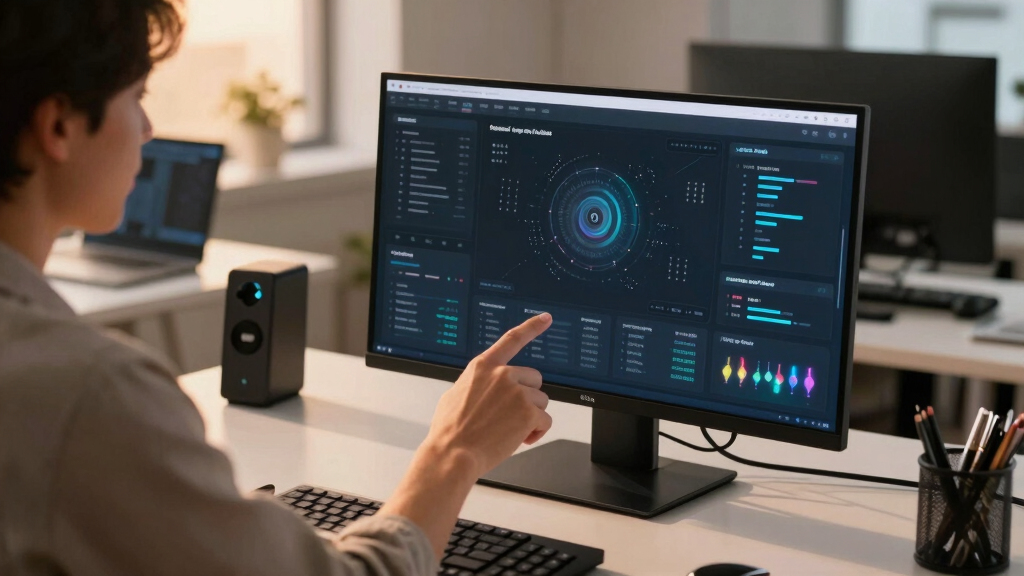
The experience, accessible through a browser, uses a seamless combination of CSS variables and JavaScript to interpolate background colors, lighting, and UI elements based on the user’s scroll position. This creates a convincing illusion of sinking through ocean layers, from surface teal to hadal black. The visual language is inspired by oceanic layers, employing bioluminescent cyan, cold blue glows, and textured SVG elements to evoke underwater textures.
The core technical approach involves a master scroll anchor that measures user input and dynamically adjusts environmental effects, including particle drift, creature animations, and lighting decay. These elements respond to the virtual depth, enhancing the sense of physicality and immersion. Accessibility features such as self-hosted fonts, reduced-motion options, and keyboard navigation are integrated to ensure inclusivity.
The project followed a rigorous three-phase process: initial build translating the concept into code, critique and refinement focusing on fluidity and visual harmony, and final validation by an art director to ensure emotional resonance and technical mastery. The full design process and technical notes are documented in the site’s guide, which is inspired by the original analysis.
Why the Scroll-Driven Depth Engine Matters
This development demonstrates how advanced web technologies can create immersive, interactive experiences that simulate physical environments with high fidelity. It showcases a new approach to storytelling, education, and virtual exploration, leveraging CSS and JavaScript to synchronize visuals with user input in real time. Such techniques could influence future digital interfaces, virtual museums, or educational tools that require realistic environmental simulations.
Moreover, the experience highlights the potential for AI-driven design and development pipelines to produce complex, polished web environments without reliance on external assets or frameworks. This could accelerate innovation in interactive web content and inspire new standards for accessibility and visual storytelling.
As an affiliate, we earn on qualifying purchases.
Technical Foundations and Artistic Vision Behind Abyssal Station
The scroll-driven depth engine builds upon recent advances in CSS and JavaScript interpolation techniques, integrating them into a cohesive system that responds to user scrolls with precise visual adjustments. The project was developed in a three-stage process: initial coding, external critique, and artistic validation. The design draws inspiration from oceanic layers, employing a curated palette and textured SVGs to evoke underwater textures and lighting.
Previous projects in this series have explored different themes and technical approaches, but Abyssal Station stands out for its seamless integration of technical mastery and emotional storytelling. The experience was built without external frameworks, relying solely on HTML, CSS, and JavaScript, emphasizing code-based visual synthesis and accessibility.
“The scroll-driven depth engine in Abyssal Station exemplifies how web technologies can simulate immersive environments with high fidelity, opening new possibilities for digital storytelling.”
— Thorsten Meyer
Unresolved Questions About the Depth Engine’s Capabilities
It is not yet clear how adaptable the scroll-driven depth engine is for other types of environments or whether it can handle more complex interactions beyond visual synchronization. The scalability and performance limits of the system under different browser or device conditions remain untested. Additionally, the long-term accessibility and user experience across diverse audiences are still being evaluated.
Future Applications and Development of the Depth Engine
Further testing will explore how this technology can be adapted for educational tools, virtual tours, or storytelling platforms. Developers are likely to refine the engine’s scalability, responsiveness, and integration with other web technologies. There is also potential for expanding the experience into multi-user or augmented reality contexts, though these are not yet confirmed.
Key Questions
How does the scroll-driven depth engine work?
The engine uses CSS variables and JavaScript interpolation to synchronize visual effects—such as background color, lighting, and creature animations—with the user’s scroll position, creating a sense of sinking into the ocean.
Can this technology be used for other types of virtual environments?
While technically feasible, its adaptability depends on the complexity of the environment and performance constraints. Further development is needed to extend its application beyond oceanic simulations.
Is the experience accessible to all users?
Yes, the experience includes accessibility features like self-hosted fonts, reduced-motion options, and keyboard navigation, but testing across diverse devices and users is ongoing.
Will this technology be available for broader use?
The current implementation is a prototype within a curated exhibition. Future versions may be shared for wider development and integration into other projects.
Source: ThorstenMeyerAI.com
Fall Picks
fall essentials
As an affiliate, we earn on qualifying purchases.