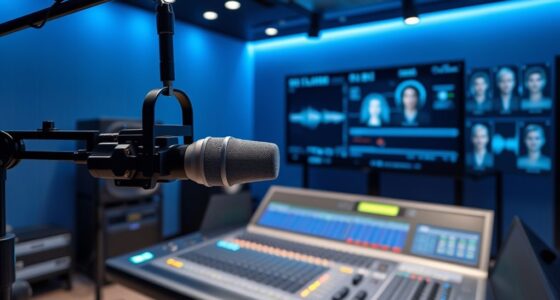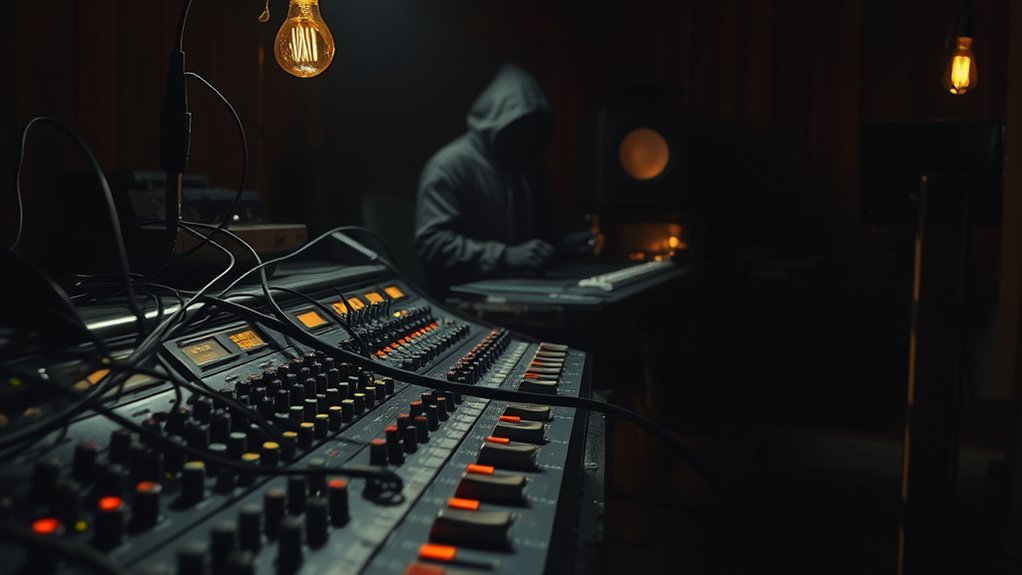

Sound design in horror uses ambient noise and binaural effects to create a tense, immersive environment that triggers your subconscious fears. Subtle sounds like whispers, creaks, and distant footsteps make you feel vulnerable and ahead of danger. Binaural effects craft a realistic sense of space, making threats seem personal and immediate. This clever manipulation heightens your emotional response, often before you even realize it. Exploring more will reveal how sound design expertly taps into your primal fears, intensifying the scare.
Key Takeaways
- Ambient noise creates an unsettling atmosphere by filling silent gaps with subtle, often unnoticed sounds that trigger our subconscious fears.
- Binaural effects enhance spatial realism, making sounds seem to come from specific directions and increasing feelings of immediacy and threat.
- Subtle sounds like whispers or creaks heighten anxiety by priming viewers for danger before visual cues appear.
- Sound design manipulates emotional responses, using sudden or eerie sounds to evoke helplessness and tension.
- Curated audio cues tap into subconscious fears, intensifying visceral emotional reactions and making horror scenes more immersive and frightening.
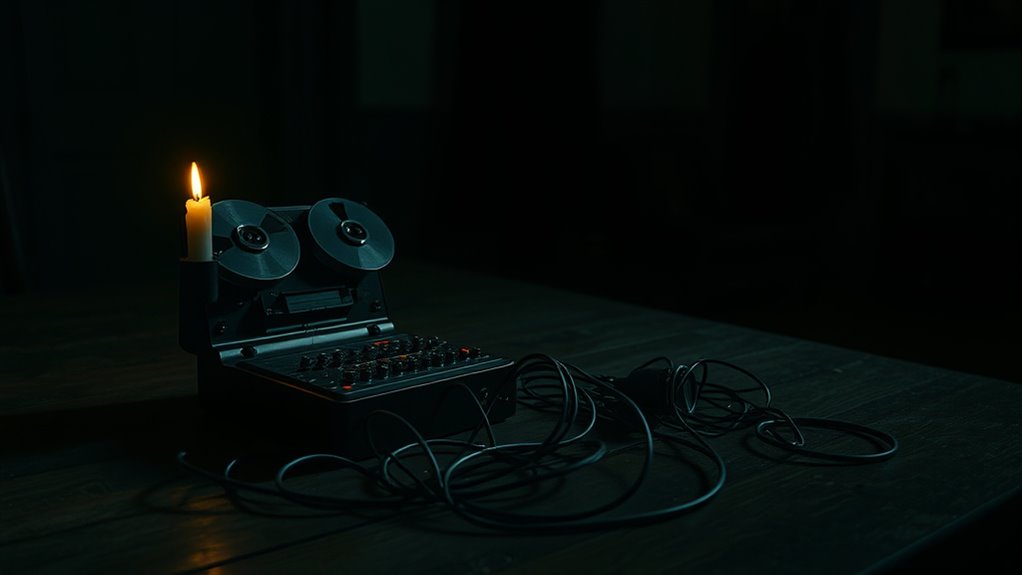
Have you ever wondered how sound transforms a simple scene into a terrifying experience? It’s not just about loud noises or sudden jumps; it’s about how carefully crafted sounds shape your perception and evoke fear. Ambient noise plays a huge role here, filling the background with subtle, often unnoticed sounds that establish an unsettling atmosphere. Imagine walking through a deserted house in a horror film—faint creaks, distant whispers, or the hum of old pipes all blend into the background, making your mind fill in the gaps with potential threats. These sounds don’t need to be loud or intrusive; their presence alone can heighten your sense of vulnerability and anticipation.
Subtle ambient sounds create an eerie atmosphere, heightening vulnerability and anticipation in horror scenes.
Binaural effects take this a step further by mimicking the way your ears naturally perceive sound in real life. When sound designers use binaural recording techniques, they craft audio that seems to come from specific directions, creating a 3D soundscape you can almost pinpoint with your own ears. As you watch a horror scene, you might hear footsteps approaching from behind or a whisper right beside you, even if you’re just sitting in your room. This spatial realism amplifies the feeling of being immersed in the scene, making the threat feel immediate and personal. It’s like the sound is actively engaging your brain, tricking it into perceiving danger where there isn’t any, which intensifies your fear response.
The clever use of ambient noise and binaural effects doesn’t just make scenes more immersive; it manipulates your emotional state. For instance, a quiet room suddenly filled with the distant sound of a child crying or a clock ticking offbeat can heighten anxiety. These sounds set a mood that primes you for something ominous to happen, even before anything visually occurs. When combined with precise binaural effects, it feels as if the unseen threat is lurking right beside you, enhancing the feeling of helplessness and tension.
Recent research in AI Security also highlights how carefully curated audio cues can influence subconscious responses, similar to how sound design manipulates our emotions in horror films. Sound designers understand that these auditory cues tap directly into your subconscious fears. They craft ambient noise that seems ordinary but is subtly unsettling, and employ binaural effects to make you feel as if danger is circling around you. This combination creates an intense, visceral experience that heightens your emotional response and makes horror scenes unforgettable. So next time you watch a horror movie and find yourself on the edge of your seat, remember—it’s not just the visuals; it’s the masterful use of sound that truly makes it terrifying.

OneOdio Pro-30 Over Ear Headphone, Wired Premium Stereo Sound Headsets with 50mm Driver, Foldable Comfortable Headphones with Protein Earmuffs and Shareport for Recording Monitoring Podcast PC
BASS SOUND: Enjoy powerful bass and comfort with the OneOdio Studio headphones. Large 50 millimeter speaker unit drivers…
As an affiliate, we earn on qualifying purchases.
As an affiliate, we earn on qualifying purchases.
Frequently Asked Questions
How Do Sound Designers Choose Specific Sounds for Horror Scenes?
You choose sounds for horror scenes by focusing on ambient textures that create an unsettling atmosphere. You manipulate pitch to heighten tension or evoke fear, making familiar sounds seem eerie or unnatural. You experiment with layering sounds and adjusting their pitch to generate discomfort. By carefully selecting and manipulating ambient textures and pitch, you craft audio that keeps viewers on edge and intensifies the scene’s horror impact.
What Role Does Silence Play in Horror Sound Design?
Silence in horror sound design acts like a pause in a heartbeat, heightening ambient tension and unsettling your nerves. It creates a psychological impact by stripping away predictable noise, leaving you vulnerable and alert. When used strategically, silence amplifies fear, making sudden sounds more startling and moments of dread more intense. You feel the weight of the quiet, which primes you for the next scare and keeps your adrenaline racing.
Can Sound Effects Alone Induce Fear Without Visuals?
Yes, sound effects alone can induce fear without visuals by creating a strong psychological impact. When you hear unsettling noises or dissonant sounds, your mind fills in the gaps, heightening your emotional response. This engages you on a deeper level, making the experience more intense even without images. Clever use of sound effects captures your attention and sustains suspense, effectively frightening you through pure auditory cues and audience engagement.
How Has Horror Sound Design Evolved With Modern Technology?
Did you know that 85% of modern horror films use binaural recording techniques? You can feel more immersed through ambient noise and 3D soundscapes that make scares hit harder. With advancements like spatial audio and digital effects, you’re now enveloped in a world where sound design heightens tension and fear. You experience a more visceral, real-time scare, making horror movies more intense and engaging than ever before.
Are There Cultural Differences in Horror Sound Preferences?
Yes, cultural sound perceptions influence your horror sound preferences. Regional horror sounds reflect local folklore, traditions, and fears, shaping what you find terrifying. For example, in some cultures, whispers or chants evoke dread, while others fear specific instruments or animal sounds. These regional horror sounds tap into deep-seated cultural fears, making horror experiences more intense and personalized for you based on your cultural background and exposure to these regional audio cues.

HyperX Cloud Alpha Wireless – Gaming Headset for PC, 300-hour battery life, DTS Headphone:X Spatial Audio, Memory foam, Dual Chamber Drivers, Noise-canceling mic, Durable aluminum frame,Red
Up to 300 hours of wireless gaming: Play knowing you’ll get weeks of gaming out of a single…
As an affiliate, we earn on qualifying purchases.
As an affiliate, we earn on qualifying purchases.
Conclusion
Now, imagine every creak, whisper, and distant scream swirling around you like an unstoppable storm of terror. Sound design doesn’t just set the mood—it *unleashes* a tidal wave of fear so intense, it could shatter your very soul. It’s the secret behind every spine-tingling moment that leaves you trembling long after the lights turn on. So, next time you’re scared in a horror film, thank the genius behind the sound—because they’ve just orchestrated your worst nightmare.
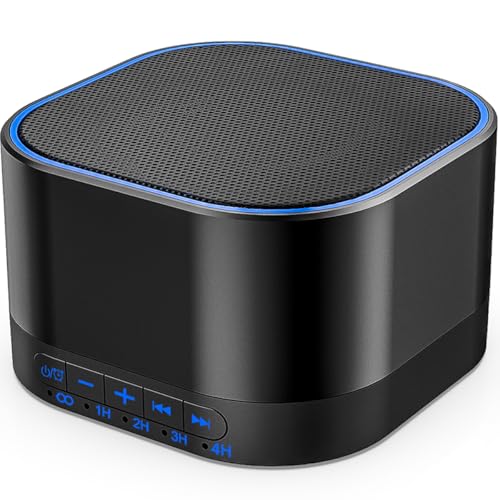
Magicteam Sound White Noise Machine with 20 Non Looping Natural Soothing Sounds and Memory Function 32 Levels of Volume Powered by AC or USB and Sleep Sound Timer Therapy for Baby Kids Adults
❤20 Non-Looping Sleep Sounds: White noise ,Brown noise, pink noise, blue noise, fan,brook, rain, ocean,bird and Bonfire,suitable for…
As an affiliate, we earn on qualifying purchases.
As an affiliate, we earn on qualifying purchases.

JLab JBuds Lux ANC Wireless Headphones, Graphite, Hybrid Active Noise Cancelling, Customizable Sound, Spatial Audio Compatible, Premium Over-Ear Bluetooth Headset
🔊 IMMERSIVE LAB QUALITY SOUND: Enjoy exceptional sound quality via 40mm drivers, bringing depth and clarity to your…
As an affiliate, we earn on qualifying purchases.
As an affiliate, we earn on qualifying purchases.