
Esports athlete unions are making progress in advocating for players’ rights, health, and fair pay, despite facing hurdles like industry resistance and decentralization. Efforts focus on improving mental health support, ensuring transparent contracts, and promoting better working conditions. However, cultural resistance and organizational obstacles make unionization challenging across the industry. If you want to understand how players are overcoming these barriers and pushing for change, there’s more to explore.
Key Takeaways
- Esports athlete unions aim to improve player rights, health, and pay but face resistance from industry stakeholders.
- Progress includes increased awareness of mental health issues and efforts to establish supportive resources for players.
- Challenges stem from industry decentralization, cultural resistance, and fears of losing control or profit.
- Contract transparency and fair compensation remain key focus areas despite ongoing negotiations and obstacles.
- Collective action by players is crucial for advancing unionization, industry standards, and better working conditions.
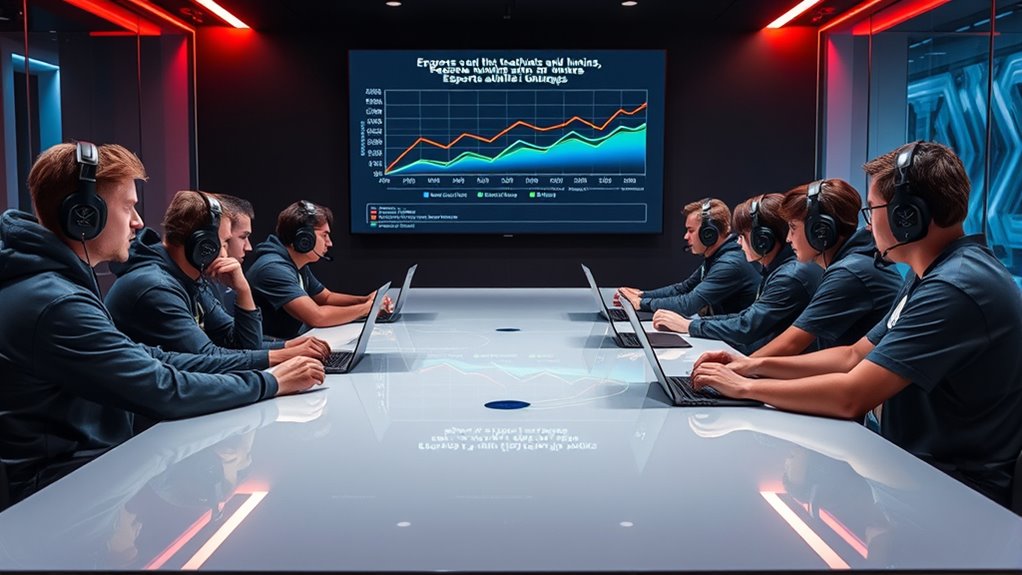
Have you ever wondered how professional esports athletes are protected and supported? As the industry grows rapidly, players face unique challenges that demand organized efforts to advocate for their rights. Esports athlete unions have emerged as a way to address issues like mental health advocacy and fair compensation. These unions aim to create a unified voice for players, pushing for better working conditions, health support, and equitable pay. But establishing these unions isn’t simple, and progress often encounters hurdles rooted in the industry’s structure and culture.
Esports athlete unions seek to improve player rights, health, and pay amid industry challenges and cultural resistance.
Mental health has become a critical concern for esports professionals. The intense pressure to perform, long gaming hours, and public scrutiny can take a toll on players’ mental well-being. Athlete unions work to prioritize mental health advocacy by pushing organizations to provide access to counseling, stress management programs, and safe spaces for players to express their concerns. When players have a collective platform, they can push for policies that recognize mental health as a essential component of their overall health, rather than an afterthought. It’s about breaking down the stigma and making mental health resources standard in the industry. Additionally, understanding the risks associated with cryptocurrency investments can help players make informed financial decisions and avoid scams that could threaten their earnings and savings.
It’s about breaking down the stigma and making mental health resources standard in the industry.
Fair compensation is another major focus of these unions. Many esports athletes often sign contracts with unclear terms, and their earnings can be inconsistent or insufficient to cover living expenses, especially for those just starting out. Unions aim to negotiate better pay structures, prize pool distributions, and sponsorship deals that fairly reward players for their skills and dedication. They also fight for transparency in contract negotiations, ensuring that players aren’t left vulnerable to exploitative agreements. The goal is to establish a baseline of fair compensation that recognizes players’ talents and efforts, promoting a sustainable career path within esports.
However, pushing for these changes faces significant obstacles. The industry’s decentralized nature makes it difficult to implement unified policies across different leagues and organizations. Many teams and organizers are hesitant to recognize unions, fearing it could disrupt their control or profitability. Additionally, cultural resistance exists within parts of the esports community, where players may feel that unionizing is unnecessary or could threaten their independence. Despite these hurdles, the push for athlete unions continues, driven by players who understand that collective action is essential to securing their rights and well-being.
Frequently Asked Questions
How Do Athlete Unions Impact Game Publishers’ Policies?
You might wonder how athlete unions impact game publishers’ policies. Through union negotiations, they advocate for player rights, pushing publishers to adopt fairer rules, better working conditions, and transparent practices. These unions give players a collective voice, encouraging publishers to weigh their concerns. As a result, policies often shift toward more equitable treatment, fostering a healthier esports environment where players feel supported and valued.
What Legal Challenges Do Esports Unions Face Worldwide?
You’ll find that esports unions face significant legal challenges worldwide, mainly due to legal ambiguities and jurisdictional conflicts. These issues make it tough to establish clear regulations across different countries, often leading to inconsistent protections for athletes. You must navigate varying laws, which can delay union formation and enforcement. Addressing these legal hurdles requires international cooperation and adaptable policies to make sure athletes’ rights are protected globally.
How Do Unions Influence Tournament Prize Structures?
You see that unions influence tournament prize structures through player bargaining, pushing for fairer prize distribution. They advocate for better payouts, guaranteeing top players get a larger share, and promote transparency in how prizes are allocated. By uniting players, unions leverage collective power to negotiate more equitable terms, shaping tournament policies to benefit athletes. Your involvement can help ensure that prize structures reflect players’ contributions and industry standards.
Are Esports Athlete Unions Similar to Traditional Sports Unions?
Imagine esports athlete unions as superhero capes for players, offering protection and voice. While they share traditional sports unions’ goal of player representation and union benefits like fair pay and working conditions, they’re still catching up. Unlike classic unions, they often face unique hurdles in legitimacy and organization. So, yes, they’re similar in spirit but still working out their superpowers in the digital arena.
What Are the Success Stories of Existing Esports Athlete Unions?
You’ll find that some esports athlete unions have achieved notable success in securing player representation and union funding. For example, the Overwatch Players Association has improved working conditions and negotiated better contracts. Similarly, the League of Legends Players Association has increased player voice in league decisions. These success stories show that, with organized effort, esports unions can advocate effectively for players, overcoming hurdles and setting positive precedents in the industry.
Conclusion
As you navigate the world of esports athlete unions, remember the progress made, recognize the hurdles faced, and embrace the ongoing journey. You can advocate for fair treatment, push for better protections, and foster a unified voice. You can challenge the status quo, break down barriers, and build a stronger community. Ultimately, your involvement matters—your voice matters—because only together can you shape a fairer, more sustainable future for esports athletes worldwide.