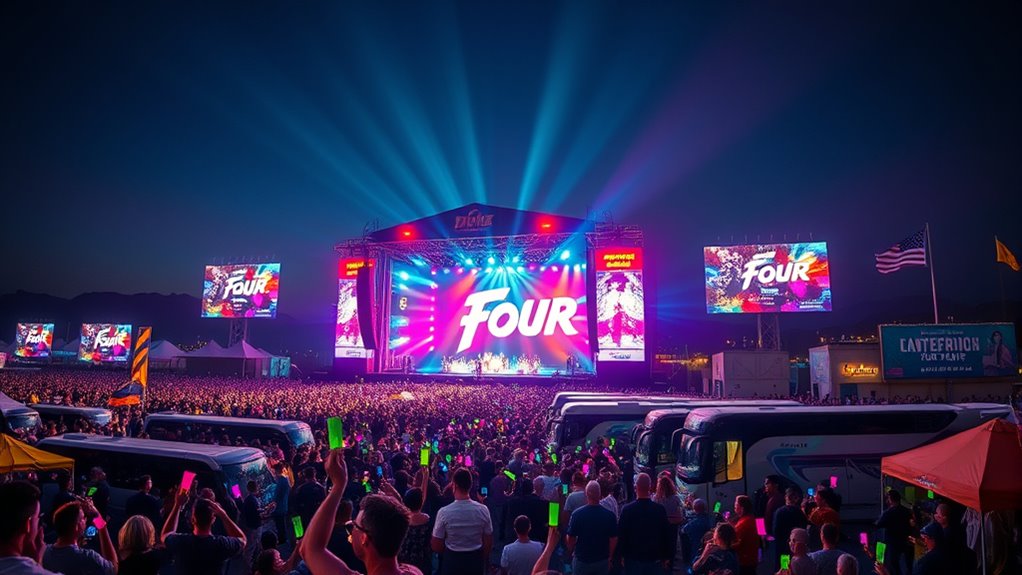

The economics of concert tours involve balancing ticket prices, costs, and audience demand to maximize profit. You need to set strategic prices, using market research and dynamic pricing, to attract fans while covering expenses like venue rentals, wages, and transportation. Promotions and merchandise sales boost revenue, and careful scheduling ensures high attendance. If you’re interested, you’ll discover how all these factors work together to make a tour financially successful.

Get the latest gadgets delivered free — and shop member deals
- Fast, free delivery on millions of items
- Access to Prime Big Deal Days deals on October 6–7
- Prime Video, Amazon Music and more included
Key Takeaways
- Ticket pricing strategies balance affordability and profitability, influenced by market demand, venue size, and audience segmentation.
- Market research and data analysis inform dynamic pricing and scheduling to maximize attendance and revenue.
- Controlling costs like venue rentals, wages, and transportation is essential for tour profitability.
- Merchandise sales, especially bundled with tickets or VIP packages, significantly contribute to overall tour revenue.
- Effective promotion and strategic scheduling boost attendance, filling venues and ensuring financial success.

Have you ever wondered what goes into making a concert tour financially successful? It all starts with understanding how ticket pricing impacts tour profitability. Setting the right ticket prices isn’t just about covering costs; it’s about balancing value for fans with the financial goals of the tour. If prices are too high, you risk alienating potential attendees, leading to lower attendance and reduced revenue. Conversely, pricing tickets too low might fill venues but could undermine the tour’s profitability by failing to cover expenses or generate enough profit. Successful tours carefully analyze their target audience, venue size, and market demand to determine ideal pricing strategies. Dynamic pricing, which adjusts ticket costs based on demand, has become increasingly common, helping promoters maximize revenue from high-demand shows while ensuring tickets remain accessible during less popular dates. You also need to consider different ticket tiers—VIP packages, early bird discounts, and group rates—each designed to attract various segments of fans and increase overall sales. Pricing strategies are often informed by detailed market research and historical data, making sure the tour remains competitive while maximizing income. Additionally, understanding the economics of concert tours helps organizers allocate resources efficiently and forecast potential profits more accurately.
Beyond ticket prices, tour profitability hinges on controlling costs. These include venue rentals, artist and crew wages, transportation, accommodation, and marketing expenses. Keeping these costs in check while maintaining a high-quality experience is essential. For example, negotiating better deals with venues or transportation providers can greatly boost overall profitability. Additionally, merchandise sales—such as T-shirts, posters, and exclusive memorabilia—serve as key revenue streams that complement ticket income. Promoters often bundle merchandise with ticket purchases or offer exclusive items for VIP packages, increasing revenue per attendee.
Another essential element is tour scheduling. Strategically planning stops in markets with high demand ensures strong ticket sales and minimizes empty seats. You also want to consider the timing of shows—weekends or holiday seasons tend to attract larger crowds, boosting overall revenue and profitability. The promotion of the tour itself plays a role, too; effective marketing campaigns can generate buzz and drive ticket sales, ensuring venues fill up as planned.
In the end, the key to a successful, profitable concert tour lies in balancing ticket pricing with cost management and market demand. When all these elements align perfectly, you’ll find the tour not only covers its expenses but also delivers a healthy profit. This careful orchestration of pricing, costs, and scheduling creates a sustainable model that can propel an artist’s career forward while ensuring the tour’s financial success.
Frequently Asked Questions
How Do Artists Negotiate Tour Contracts With Venues?
When negotiating tour contracts with venues, you focus on contract clauses that protect your interests, like guarantees and cancellation policies. You also discuss revenue sharing, ensuring you get a fair percentage of ticket sales and merchandise. You might negotiate upfront fees or performance bonuses. Clear communication about technical requirements and set times is essential. Ultimately, you aim for a deal that maximizes your earnings while maintaining a good relationship with the venue.
What Are the Environmental Impacts of Large Concert Tours?
You might think large concert tours only bring entertainment, but they substantially impact the environment. They increase carbon footprints through extensive travel, logistics, and energy use. Resource consumption spikes with the production of stage setups, merchandise, and transportation. While some artists and organizers are adopting greener practices, the overall environmental impact remains substantial, highlighting the need for sustainable touring methods to reduce the ecological footprint of these massive events.
How Does Ticket Pricing Vary Across Different Countries?
You’ll notice ticket pricing strategies vary widely across countries due to cultural price differences and economic factors. In some places, prices are higher because of local purchasing power, while in others, they’re lower to attract larger audiences. Local regulations and market demand also influence pricing. You should expect artists and promoters to adjust ticket costs accordingly, aiming to balance affordability with profitability based on these cultural and economic differences.
What Role Do Sponsorships Play in Tour Profitability?
Sponsorships considerably boost your tour’s profitability through brand partnerships that provide sponsorship revenue. These deals often cover a substantial portion of your expenses, allowing you to allocate more funds to marketing and production. By securing strong sponsorships, you enhance your tour’s financial stability, reach wider audiences, and create valuable promotional opportunities that benefit both you and your sponsors. Sponsorship revenue is a crucial component of maximizing your tour’s overall success.
How Do Concert Tours Influence Local Economies?
Imagine your town as a vibrant stage, where a concert tour acts as the spotlight drawing crowds. Your local economy benefits through merchandise sales and increased fan engagement, like applause echoing beyond the venue. As visitors spend on food, hotels, and souvenirs, they energize small businesses and create a ripple effect. Your community shines brighter, proving that concerts don’t just entertain—they transform local economies into thriving scenes.
Conclusion
Just like a well-planned concert tour, mastering the economics means balancing risks and rewards. Remember when Beyoncé’s surprise album release boosted her tour sales overnight? It’s a reminder that understanding your audience and timing can turn a good show into a blockbuster hit. By managing costs and maximizing revenue, you’ll guarantee your tour’s success, proving that, in this game, strategic moves hit the high notes and keep your financial encore going strong.
Fall Picks
fall essentials
As an affiliate, we earn on qualifying purchases.