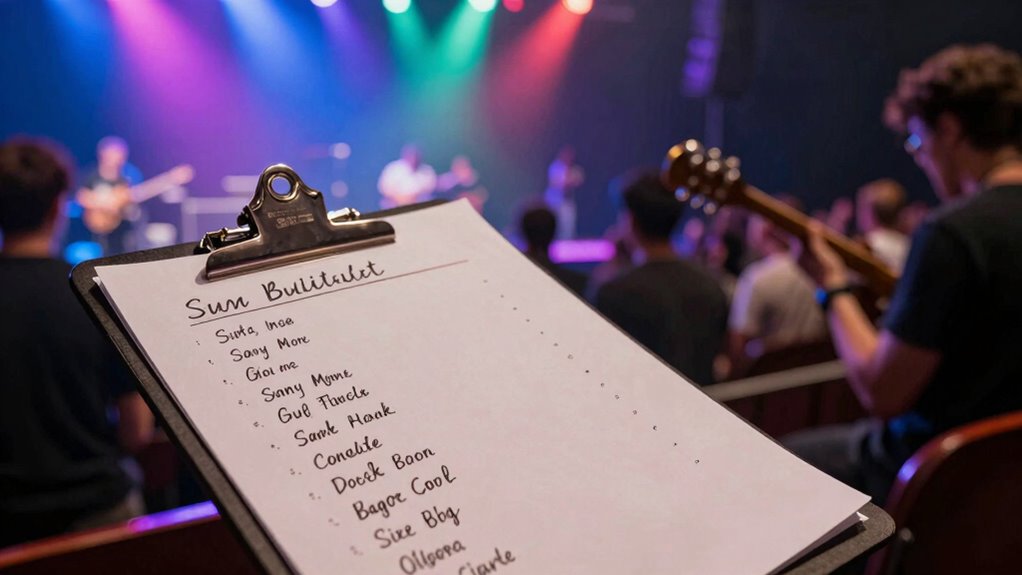

When designing a setlist, you focus on creating a seamless flow by carefully sequencing songs to match energy levels and moods. You place popular hits early to hook your audience and use links, lighting, and stage cues to smoothly shift between tempos or emotional moments. By thinking about how each song connects and builds, you keep energy high and engagement strong throughout. To see how these strategies come together, keep exploring the details behind crafting a perfect setlist.
Key Takeaways
- Songs are carefully sequenced to ensure smooth transitions between tempos and moods, maintaining continuous energy flow.
- Popular hits are placed early to engage the audience immediately and sustain interest throughout the set.
- Transitions are enhanced with visual and sonic cues, such as lighting or instrumental interludes, to create seamless shifts.
- The setlist builds toward emotional or experimental moments, creating peaks and valleys in energy and engagement.
- Lighting, stage setup, and audience participation are strategically integrated to amplify the overall concert experience.

When a concert feels seamless and exhilarating, it’s no accident—it’s the result of careful planning behind the setlist. As the artist or concert organizer, you know that the way songs are ordered can make or break the entire experience. A well-crafted setlist keeps the audience engaged from start to finish, ensuring their energy never dips and that every moment feels intentional. You focus on creating a flow that builds excitement and sustains it, which means carefully considering how each song transitions into the next. Audience engagement is your top priority, so you plan the setlist to evoke emotional highs and lows, creating a dynamic journey rather than just a collection of songs.
A well-crafted setlist creates an engaging, seamless, and emotionally dynamic concert experience.
Stage transitions are a critical part of this planning process. You want to minimize awkward pauses or disjointed moments, so you carefully sequence songs to allow smooth shifts between different tempos or moods. For example, after a high-energy song, you might choose a slightly mellower track to give the audience a breather before ramping up again. When changing from a slow ballad to an upbeat anthem, you think about how to bridge the gap visually and sonically, perhaps with lighting cues or a brief instrumental interlude. These transitions aren’t just about music—they’re about maintaining momentum and keeping the energy flowing effortlessly. Additionally, understanding the importance of audience engagement helps in designing setlists that create memorable moments and foster a sense of shared experience.
You also consider how the setlist can enhance audience engagement. Strategic song placement encourages sing-alongs, dancing, or emotional connection at just the right moments. You might place a well-loved hit early on to hook the crowd, then build toward more experimental or emotional songs later. Planning moments for audience participation, like call-and-response sections or interactive visuals, makes the experience more memorable. It’s about creating a shared journey where the audience feels involved and emotionally invested.
Every detail, from song selection to how one song flows into the next, is designed to maximize energy and connection. You think about the physical space—how the stage setup and lighting can complement transitions—and how to keep the audience captivated throughout. When all these elements come together, the result is a concert that feels spontaneous yet perfectly coordinated. That’s the power of a thoughtfully designed setlist: it transforms a series of songs into a cohesive, exhilarating experience that leaves everyone buzzing long after the final note.

ZICOTO Beautiful Daily Planner And Notebook With Hourly Schedule – Aesthetic Spiral To do List Notepad to Easily Organize Your Work Tasks And Appointments – The Perfect Office Supplies For Women
- Stay Organized and Reduce Stress: Easily track tasks and appointments
- Boost Productivity with Time Blocks: Plan half-hour focus sessions daily
- Ample Planning Space: 80 days of detailed scheduling
As an affiliate, we earn on qualifying purchases.
As an affiliate, we earn on qualifying purchases.
Frequently Asked Questions
How Do Artists Decide Which Songs to Include in a Setlist?
You decide which songs to include based on song sequencing and thematic coherence. You consider the energy level of each track, placing high-energy songs at key moments to keep the crowd engaged. You also make certain the setlist flows smoothly, connecting songs thematically to create a cohesive story. By balancing popular hits with new material and adjusting for audience response, you craft a memorable, dynamic concert experience.
Do Setlists Vary Between Different Venues or Audiences?
Yes, setlists can vary between venues and audiences. You notice differences when venue acoustics influence song choices, perhaps favoring more energetic tracks in smaller spaces or acoustically rich environments. Audience demographics also matter—if you’re at a younger concert, artists might include current hits, while at a more mature event, they might choose nostalgic songs. These adjustments help maintain energy and connect more deeply with the specific crowd.
How Much Input Do Performers Have in Setlist Creation?
You often have significant input in setlist creation, especially during soundcheck strategies and stage positioning. Your preferences, song flow, and audience energy influence choices, allowing you to suggest or tweak song orders. You work closely with the director or band members, ensuring the setlist fits the venue and audience. This collaborative process helps craft a dynamic performance, keeping everyone engaged and the energy flowing seamlessly from start to finish.
What Role Does Crowd Feedback Play in Setlist Adjustments?
Crowd feedback plays a pivotal role in shaping setlist flexibility. When you notice audience reactions—cheers, chants, or silence—you can quickly adjust, adding energy or easing into softer songs. Performers stay attentive to the crowd’s cues, making spontaneous shifts to maximize engagement. This real-time responsiveness helps craft a dynamic, memorable performance, ensuring the setlist resonates with the audience’s mood, mood, and momentum.
How Are Encore Songs Chosen for a Concert?
You choose encore songs based on crowd energy and favorites, often saving the most popular for last. As you plan, stage lighting and sound engineering come into play, highlighting these moments and enhancing the audience’s experience. You analyze the concert’s flow, ensuring the encore energizes the crowd while seamlessly blending with previous songs. This strategic selection creates a memorable finale, leaving fans excited and satisfied.
Conclusion
You might be surprised to learn that a well-crafted setlist can boost audience energy by up to 40%. When you pay attention to how songs flow together, you’ll notice that artists intentionally build momentum, creating memorable moments that keep fans engaged from start to finish. So, next time you’re at a concert, appreciate the art behind the playlist—it’s designed to make your experience unforgettable and keep the vibe alive all night long.