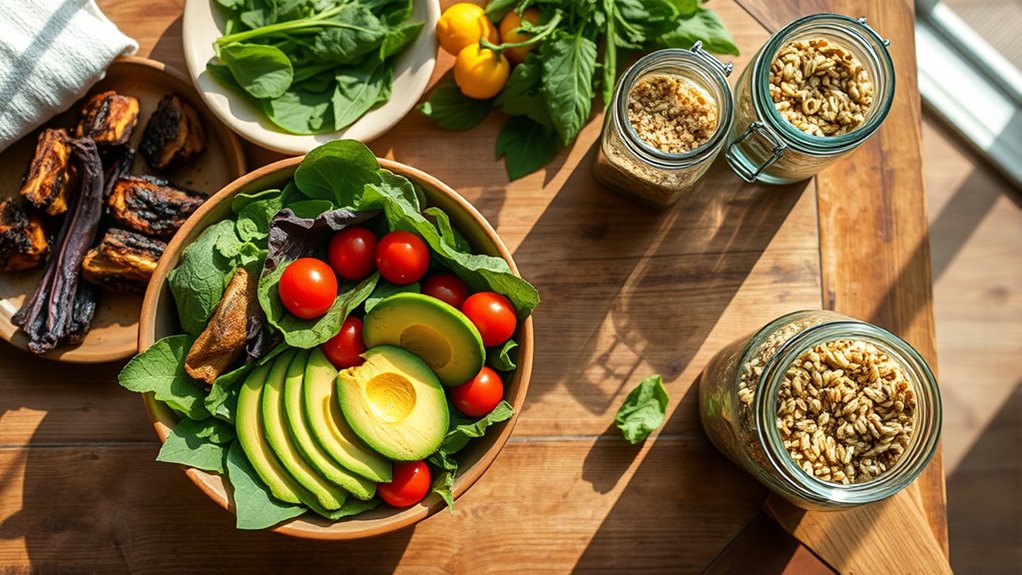

A climatarian diet means making food choices that cut your carbon footprint by focusing on plant-based, locally sourced, and sustainably farmed foods. You’ll reduce reliance on energy-intensive animal products and support farms practicing eco-friendly methods. Opt for seasonal produce, limit packaged foods, and compost waste to lower environmental impact. Embracing these habits helps fight climate change while promoting healthier, more resilient food systems. Keep exploring to discover more ways to align your diet with ecology.
Key Takeaways
- Prioritize plant-based foods like vegetables, fruits, grains, nuts, and legumes to reduce greenhouse gas emissions.
- Support sustainable farming practices such as regenerative agriculture and local, organic sourcing.
- Choose seasonal, local produce to minimize energy used in transportation and processing.
- Minimize packaging, use reusable containers, and compost food scraps to reduce waste and environmental impact.
- Align dietary habits with ecological goals to promote a healthier planet and resilient food systems.
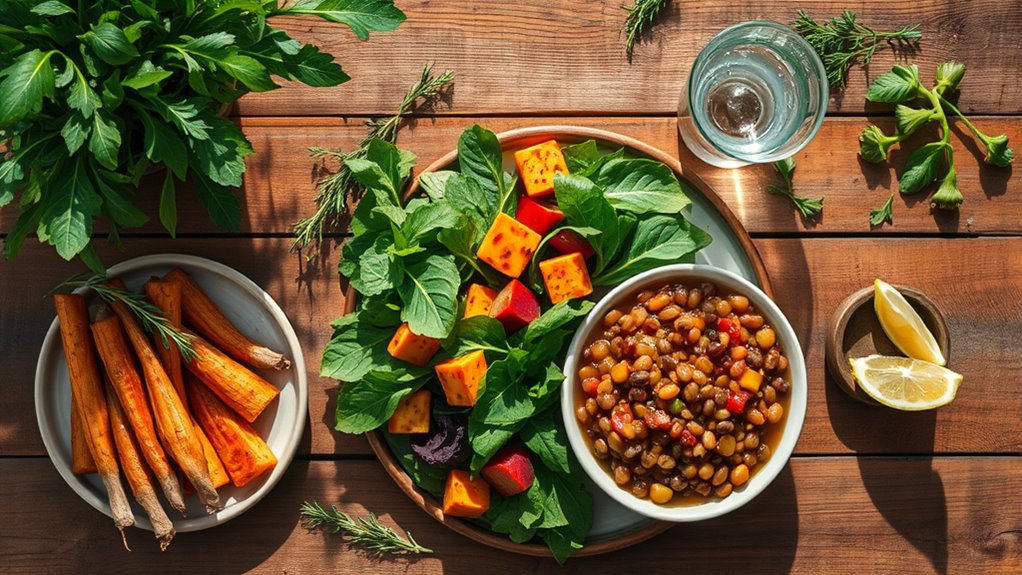
The climatarian diet is a sustainable eating plan designed to reduce your carbon footprint by making environmentally conscious food choices. When you adopt this approach, you actively participate in lowering greenhouse gas emissions associated with your diet. One of the key ways to do this is by choosing foods that are produced through sustainable farming methods. Sustainable farming emphasizes practices that protect the environment, conserve water, maintain healthy soil, and minimize the use of synthetic chemicals. By supporting farms that prioritize these methods, you help reduce the overall environmental impact of your food consumption.
Your food choices directly influence your carbon footprint, which measures the total greenhouse gases released into the atmosphere due to your lifestyle. The climatarian diet encourages you to eat more plant-based foods like vegetables, fruits, grains, nuts, and legumes, as these typically require less land, water, and energy to produce compared to animal products. Livestock farming, for example, generates significant methane emissions, a potent greenhouse gas, and consumes vast amounts of resources. By reducing your intake of meat and dairy, you actively cut down on these emissions, making your diet more climate-friendly.
Switching to foods derived from sustainable farming practices further enhances your positive impact. Many farms are now adopting regenerative agriculture techniques, which restore soil health, increase biodiversity, and sequester carbon from the atmosphere. Choosing produce from local and organic farms not only supports sustainable farming but also cuts down on transportation emissions associated with long-distance food shipping. When you prioritize seasonal and local foods, you reduce the energy used in food processing and transportation, further shrinking your carbon footprint.
In addition, being mindful of packaging and waste contributes to your climate efforts. Opt for minimally packaged foods and bring reusable bags and containers when shopping. Composting food scraps and choosing products with eco-friendly packaging help lessen landfill waste and the release of methane from organic waste. Incorporating climate-conscious food choices into your diet amplifies your positive environmental impact and encourages a broader shift toward sustainability.
Ultimately, the climatarian diet empowers you to take control of your food choices and align them with ecological priorities. By selecting foods from sustainable farming systems, reducing reliance on resource-intensive animal products, and minimizing waste, you actively participate in combating climate change. Your efforts not only benefit the planet but also promote a healthier, more resilient food system for future generations. Making these changes might seem small individually, but collectively, they can lead to a significant positive impact on our environment.

100 Piece (50 Pack) Meal Prep Containers with Lids, 28 oz Cornstarch Food Storage Containers Plant-based Lunch Box for Salad,BPA Free Plastic Take Out Containers Microwave and Freezer Safe
✅ Corn Starch-Based Plant Containers & Lids: Set includes 50 containers and 50 matching lids. Odor-Free Lunch Box!…
As an affiliate, we earn on qualifying purchases.
As an affiliate, we earn on qualifying purchases.
Frequently Asked Questions
How Does the Climatarian Diet Compare to Other Eco-Friendly Diets?
You might wonder how the climatarian diet stacks up against other eco-friendly diets. It emphasizes plant-based benefits, reducing your carbon footprint compared to diets high in meat or processed foods. While vegan or vegetarian diets focus solely on plant foods, the climatarian diet encourages conscious choices that balance ecological impact with practicality. Overall, it offers a flexible approach, making it easier for you to lower your carbon footprint while enjoying diverse, sustainable meals.
Are There Specific Foods to Avoid on a Climatarian Diet?
When it comes to avoiding certain foods, you should steer clear of high-impact foods and processed ingredients that harm the environment. Think of it as cutting out the middleman — focus on minimizing your carbon footprint. On a climatarian diet, you’re encouraged to avoid foods like red meat, heavily processed snacks, and foods with excessive packaging, as they often have a larger ecological footprint and don’t align with sustainable eating practices.
Can the Climatarian Diet Support Athletes’ Nutritional Needs?
You can definitely support your athletic needs on a climatarian diet by focusing on plant-based proteins like beans, lentils, and tofu, which provide essential amino acids. To maintain energy and recovery, guarantee you get nutrient diversity through a variety of fruits, vegetables, whole grains, and nuts. This approach helps meet your protein, iron, and calcium needs while staying aligned with ecological principles, making your diet both sustainable and performance-friendly.
What Are the Economic Impacts of Adopting a Climatarian Diet?
Adopting a climatarian diet can lead to significant economic benefits by encouraging market shifts toward sustainable foods. You might see lower healthcare costs due to better health from nutritious choices, and farmers could benefit from growing eco-friendly crops. These changes promote local economies and reduce reliance on expensive, environmentally harmful imports. Overall, embracing this diet supports a more resilient economy while helping the environment.
How Can Individuals Transition Gradually to a Climatarian Lifestyle?
Imagine taking small steps on a winding path—you gradually shift your habits. To evolve to a climatarian lifestyle, start with simple changes like meal planning that emphasize plant-based meals. Seek community support through local groups or online forums to stay motivated. Over time, these small, steady efforts will help you embrace sustainable choices naturally, making the journey feel less overwhelming and more like a rewarding adventure.

30 Pack Natural Pulp Fiber Berry Basket (4.3×4.3×2.75 Inch), Natural Pulp Produce Baskets & Berry Containers, Vented Strawberry Baskets for Farmers Market Decor, Grocery Store and Kitchen Display
Ample Supply for All Needs: This pack includes 30 natural pulp fruit baskets, providing plenty for daily use…
As an affiliate, we earn on qualifying purchases.
As an affiliate, we earn on qualifying purchases.
Conclusion
By choosing a climatarian diet, you actively align your appetite with the planet’s well-being. Making mindful modifications to your meals minimizes your carbon footprint and maximizes your impact. Embrace eco-friendly eating habits, empower the environment, and enjoy the enriching rewards of responsible food choices. Remember, small shifts can spark significant sustainability, so step confidently into a conscientious culinary course. Your commitment can create a compassionate, conscious climate, one conscientious choice at a time.

ROLL'EAT ® Boc'n'Roll Tiles | Reusable Sandwich Bag | Sandwich Container | Eco Friendly Food Bag | Reusable and Washable Sandwich Wrap | Green Color
🥑 Reusable: It’s the Perfect Sustainable, adjustable, foldable, and washable food wrap solution. Fit all Size sandwiches –…
As an affiliate, we earn on qualifying purchases.
As an affiliate, we earn on qualifying purchases.

EPICA Countertop Compost Bin Kitchen | 1.3 Gallon | Odorless Composting Bin with Carbon Filters | Indoor Compost Bin with Lid | Stainless Steel Kitchen Composter for Food Scraps & Waste Recycling
FEATURED IN BON APPETIT & FORBES: Recognized by renowned magazines, EPICA’s compost bin is a perfectly sized marvel…
As an affiliate, we earn on qualifying purchases.
As an affiliate, we earn on qualifying purchases.