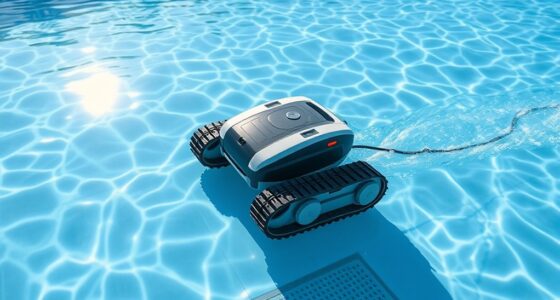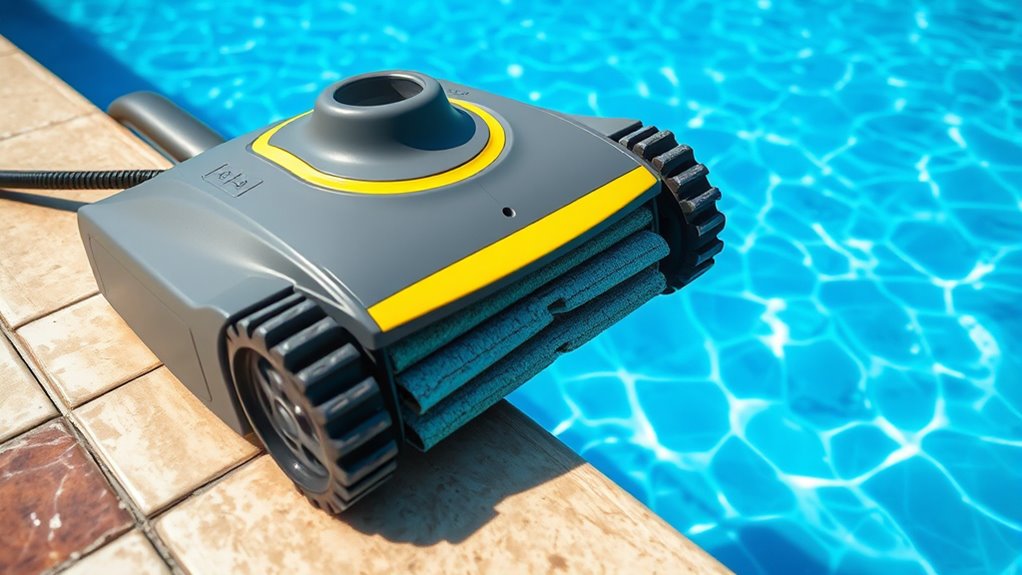

If your automatic pool cleaner starts missing spots, needs frequent repairs, or shows signs of outdated technology, it’s time to replace it. Pay attention to decreased cleaning performance, higher energy bills, or if your pool size or usage has changed markedly. An aging model with worn parts and inefficient features won’t keep up. Recognizing these signs now can save you headaches later—keep going to discover more tips for making the right decision.
Key Takeaways
- Notice a decline in cleaning efficiency despite regular maintenance and filter cleaning.
- Experience frequent repairs or rising costs indicating worn-out parts or outdated technology.
- Your pool cleaner is over 5 years old and shows signs of decreased performance or energy inefficiency.
- It struggles with your pool’s size, shape, or increased debris, requiring more powerful or newer equipment.
- Your cleaner lacks modern features like smart sensors or eco-friendly functions, making upgrades beneficial.
Top picks for "replace automatic pool"
As an affiliate, we earn on qualifying purchases.
Signs of Declining Cleaning Performance

If your pool cleaner isn’t picking up debris as efficiently as it used to, it’s a clear sign that its performance is declining. Reduced cleaning efficiency means your cleaner isn’t scrubbing the pool floor or walls as thoroughly, leaving dirt and debris behind. You might notice it missing spots or taking longer to complete its cycle. Additionally, a drop in energy efficiency can occur, with your cleaner using more power to perform the same tasks. This increased energy consumption often indicates worn parts or misaligned components. Regular maintenance and tuning adjustments can help maintain optimal performance. Proper cleaning and storage of the parts can also prevent issues that lead to decreased efficiency. For example, debris buildup can impact the performance of the cleaner’s brushes and filters. If these signs persist, it’s a clear indication that your pool cleaner’s performance is waning, and it may be time to think about repair or replacement to restore ideal cleaning and energy efficiency.
Frequent Repairs and Increasing Costs

Frequent repairs and rising maintenance costs are clear signs that your pool cleaner may be nearing the end of its lifespan. If you’re constantly fixing parts or the costs keep adding up, it’s probably time to contemplate a replacement. Older models tend to be less energy-efficient, driving up your electricity bills, and may no longer be covered by warranty coverage. Additionally, security vulnerabilities in outdated equipment can increase the risk of malfunctions or damage. Upgrading to a newer model often provides better performance and reliability, making maintenance less burdensome over time. Furthermore, understanding the personality traits of your equipment, such as resilience and adaptability, can help you determine when a replacement is truly necessary. Recognizing signs of wear and decreased efficiency can also indicate that it’s time for an upgrade. Regularly assessing your cleaner’s operational condition can help prevent unexpected breakdowns and extend its effective lifespan.
Outdated Technology and Features

When your pool cleaner starts showing signs of outdated technology and features, it’s a clear indicator that it may be time for an upgrade. Older models often lack the latest robotic advancements that improve cleaning performance and navigation, making your pool less spotless. Additionally, outdated cleaners tend to be less energy-efficient, costing you more in electricity bills over time. Modern models incorporate smarter sensors, better maneuverability, and eco-friendly features that reduce power consumption. If your current cleaner struggles with complex pool shapes or takes longer to clean, it’s a sign that technology has moved ahead. Upgrading ensures you benefit from the latest innovations, saving you time, money, and effort while keeping your pool cleaner and more inviting. As automation and robotics continue to evolve, technology integration plays a key role in enhancing your pool cleaning experience. Furthermore, newer models often come with automated features that allow for more thorough and efficient cleaning routines, reducing manual intervention.
Changes in Pool Usage or Size

As your pool’s usage or size changes, your current cleaning setup may no longer be effective. If your pool has become larger or sees more frequent use, the existing cleaner might struggle to keep up with the increased debris or coverage demands. Regular pool maintenance relies on a cleaner that matches your pool’s current needs, so upgrading your cleaner can improve efficiency and water quality. For instance, a more powerful or larger-capacity cleaner might be necessary for a bigger pool or higher usage. Neglecting this can lead to dirt buildup, algae growth, and more frequent maintenance issues. Recognizing these changes helps guarantee your pool stays clean and inviting, making cleaner upgrades a crucial part of ongoing pool maintenance. Additionally, understanding different cleaner types can help you select the most suitable option for your updated pool conditions, especially considering the power source that best fits your setup. Proper filter maintenance also plays a vital role in ensuring your cleaner functions optimally over time. Staying informed about pool size adjustments can further assist in choosing the right cleaning equipment for your evolving needs and ensure effective cleaning performance in the long run.
Age of the Pool Cleaner

Over time, the age of your pool cleaner becomes a key factor in determining whether it still performs effectively. As your cleaner ages, it may lose energy efficiency, causing it to consume more power and run less effectively. Older models often lack the advanced features found in newer designs, which can impact cleaning performance. Additionally, the brand’s reputation for durability plays a role; trusted brands usually produce longer-lasting equipment. If your cleaner is several years old, consider whether its performance justifies the energy costs. Worn-out parts or outdated technology might mean it’s time for a replacement. Regular maintenance, such as cleaning filters and inspecting hoses, can prolong its lifespan, but eventually, vacuum maintenance may no longer be enough. Investing in modern technology can significantly improve cleaning outcomes and reduce operational issues. Upgrading to a newer model can improve energy efficiency and ensure reliable cleaning, saving you money and effort in the long run. Moreover, technological advancements in newer models often provide better coverage and smarter navigation, further enhancing your pool cleaning experience. Understanding product lifespan can help you make informed decisions about when to replace your equipment.
Frequently Asked Questions
How Do I Compare Different Automatic Pool Cleaner Models?
When comparing automatic pool cleaner models, focus on their features like suction power, navigation, and compatibility with your pool size. Check out model features to see which suits your needs best. Also, do price comparisons to find options that fit your budget. Don’t forget to take into account reviews and warranties. This way, you make sure you pick a reliable, efficient cleaner that offers great value for your money.
What Are the Environmental Impacts of Replacing My Pool Cleaner?
When you replace your pool cleaner, consider the environmental impacts. Your decision affects recycling programs and material sustainability. Opt for models made from recyclable materials, and check if your local recycling programs accept old pool cleaners. By choosing sustainable options and recycling responsibly, you reduce waste and support environmental health. This way, you make a positive impact while ensuring your pool remains clean with eco-friendly practices.
Can I Upgrade My Current Pool Cleaner Instead of Replacing It?
Think of your pool cleaner as a trusty steed; upgrading it can give you new strength without starting from scratch. You can explore pool cleaner upgrades that boost performance and guarantee maintenance compatibility, saving you money and time. If your current cleaner still runs well but needs a boost, upgrades are your best bet. Just check compatibility first, so your investment keeps riding smoothly through pool season.
How Does Replacement Affect My Pool’s Warranty Coverage?
Replacing your automatic pool cleaner can impact your warranty coverage, so it’s crucial to check the manufacturer’s replacement policies. Warranty implications vary; some brands require repairs or upgrades to be authorized to keep coverage intact. If you replace your cleaner without following these policies, you might void your warranty. Always review your warranty terms and consult with the manufacturer or authorized dealer to ensure your replacement doesn’t affect your coverage.
What Are the Safety Considerations When Installing a New Pool Cleaner?
When installing a new pool cleaner, you should prioritize safety by following pool chemical safety guidelines to avoid harmful fumes or reactions. Confirm electrical grounding requirements are met to prevent electrical shocks. Always turn off power before installation, and check that all connections are secure. Wearing protective gear and consulting the manufacturer’s instructions helps ensure a safe setup. Proper safety precautions protect both you and your pool equipment during installation.
Conclusion
Think of your pool cleaner like a trusted friend—you rely on it to keep your pool sparkling. When you notice it’s missing spots, costing more to fix, or just isn’t up to the task anymore, it’s time to contemplate replacing it. Like an old tool that’s lost its edge, an outdated cleaner can do more harm than good. Stay ahead and keep your pool pristine by recognizing the signs and knowing when to make the switch.