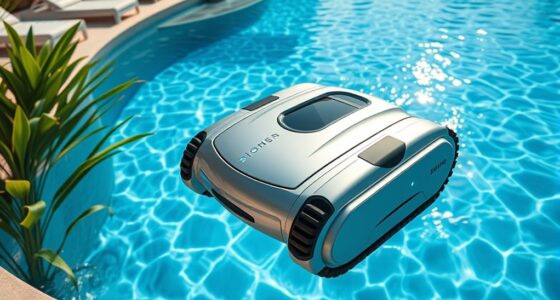
Pressure pool cleaners are effective for quickly covering large pool surfaces and removing debris, especially in big or hard-to-reach areas. They operate independently of your pool’s filtration system, saving energy, but can consume a lot of power and miss some spots. They work best on smooth surfaces and require proper setup for ideal performance. While easy to install and durable with good maintenance, they may not suit all pool types. Keep exploring to learn about their pros and cons in detail.

Get the latest gadgets delivered free with Prime
- Fast, free delivery on millions of items
- Prime Video, Amazon Music and more included
- Member-only deals all year
Key Takeaways
- They efficiently clean large and flat pool surfaces quickly, saving time and effort.
- They consume high energy and may increase utility bills significantly.
- Limited reach and movement patterns can result in missed spots or uneven cleaning.
- Easy to install and maintain with proper care, ensuring durability and consistent performance.
- Less effective on textured surfaces and tight spots without supplementary manual cleaning.
As an affiliate, we earn on qualifying purchases.
How Pressure Pool Cleaners Work
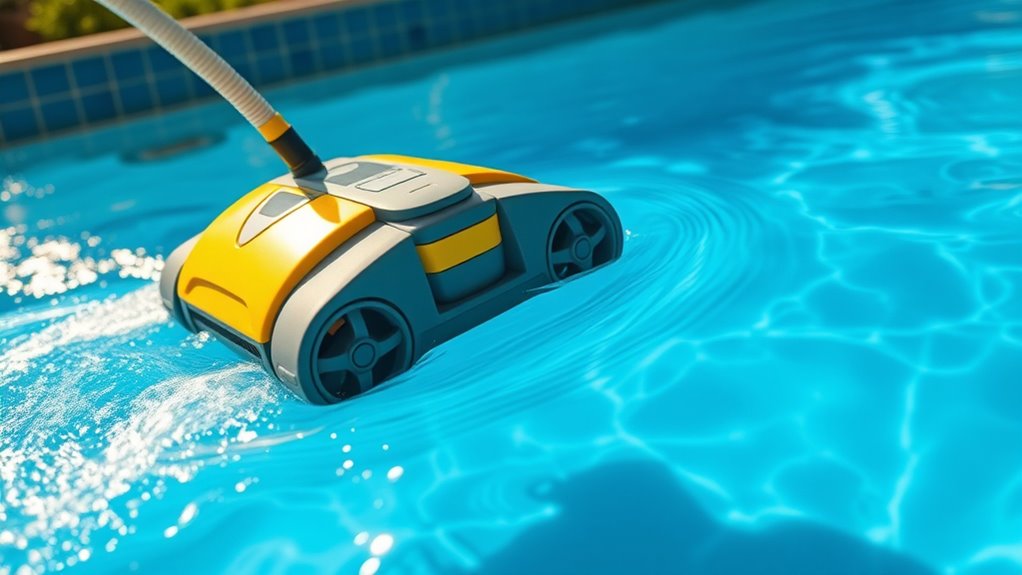
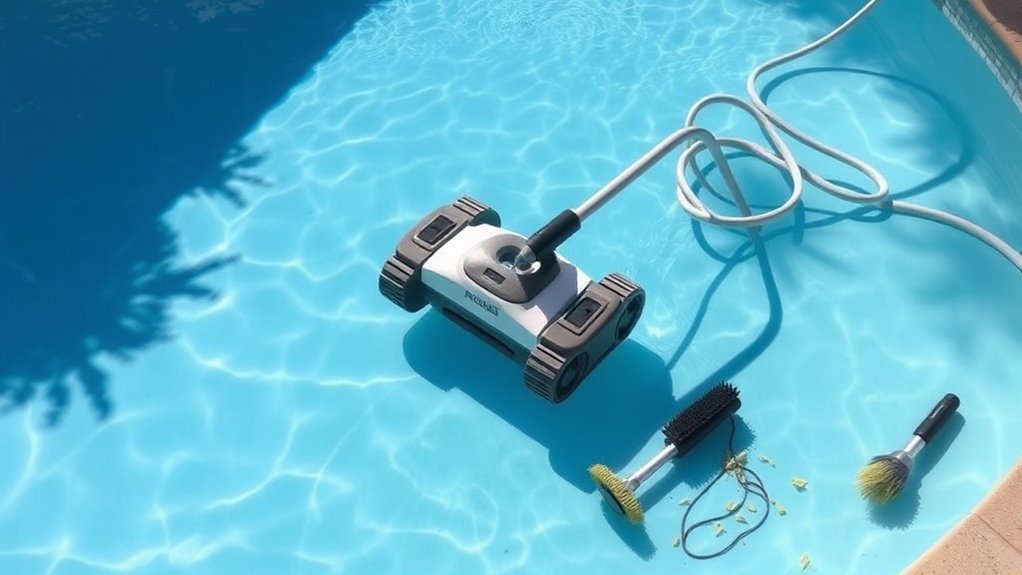
Have you ever wondered how pressure pool cleaners efficiently scrub and vacuum your pool? It all comes down to their pool cleaner mechanism and pressure system operation. These cleaners use a high-pressure water flow, generated by a dedicated pump or your pool’s existing filtration system, to propel the cleaner around the pool. The pressure system operation creates the force needed to move the device and dislodge dirt and debris from surfaces. As water flows through jets or hoses, it powers the cleaner’s movement while simultaneously vacuuming debris into an onboard filter or hose. This simple yet effective mechanism allows pressure pool cleaners to cover large areas quickly, making them a popular choice for pool maintenance. Additionally, understanding pool cleaning systems can help you choose a fitting name if you’re a pet owner. Knowing the pressure system operation can also improve your ability to troubleshoot issues with your cleaner and ensure optimal performance. Regular maintenance of the pressure components ensures the cleaner functions efficiently and extends its lifespan, making it a crucial aspect of pressure pool cleaner longevity. Properly maintaining the automated cleaning process can further enhance cleaning efficiency and prolong the device’s operational life.
Benefits of Using Pressure Pool Cleaners
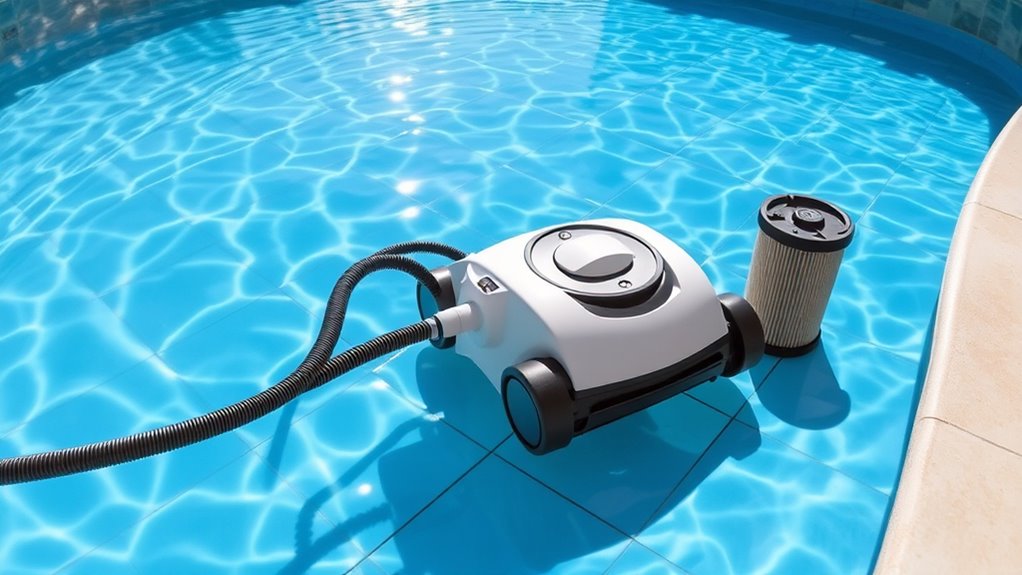
Pressure pool cleaners offer several advantages that make them a popular choice for pool owners. They handle large pools efficiently, making them ideal for bigger pool sizes where other cleaners might struggle. These cleaners are effective at removing debris from hard-to-reach areas, ensuring a thorough clean. Additionally, they perform well regardless of water temperature, maintaining cleaning power in both warm and cool conditions. Because they operate independently of your pool’s filtration system, they don’t put extra strain on it, saving energy and extending equipment lifespan. You’ll appreciate how quickly they cover your pool’s surface, reducing overall cleaning time. Their ability to adapt to different water conditions highlights their versatility in cleaning. Incorporating easy to maintain equipment can further enhance your pool management experience. Plus, their independent operation means less reliance on your pool’s existing systems, making maintenance simpler. Furthermore, many models are designed with energy efficiency in mind, helping to lower your operational costs. Regular maintenance of these cleaners can also improve longevity and ensure optimal performance over time.
Common Drawbacks of Pressure Pool Cleaners
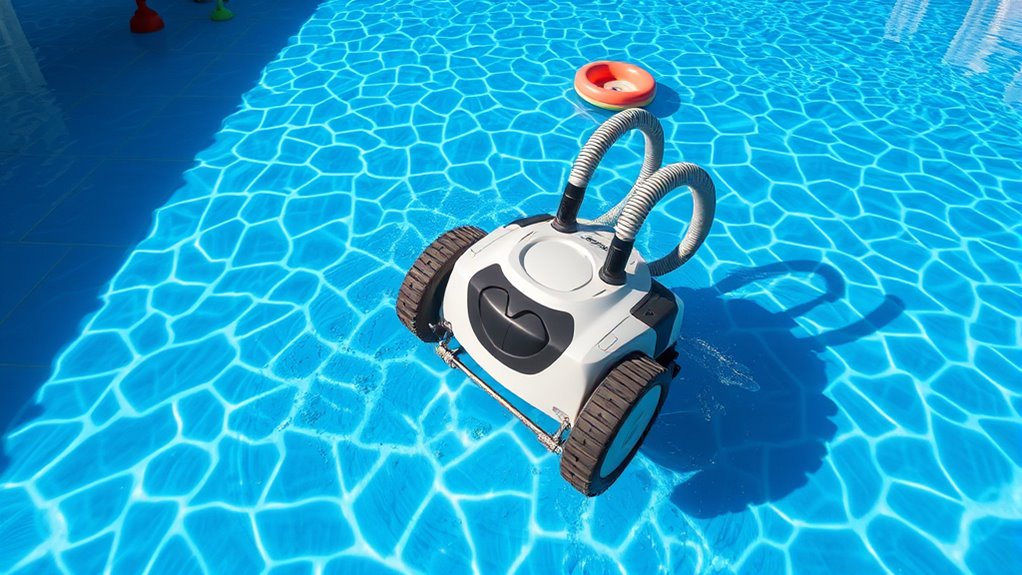
Pressure pool cleaners can use a lot of energy, which might increase your utility bills. They also have a limited cleaning reach, so some areas of your pool may stay dirty. Understanding these drawbacks can help you decide if they’re right for your pool maintenance. Additionally, they may not be suitable for cultural and regional breakfast environments that require more delicate or specialized cleaning methods. Since they often operate with necessary cookies, their efficiency may be affected if settings are not properly configured. Moreover, their performance can be influenced by engine tuning modifications that alter water flow and pressure.
High Energy Consumption
While pressure pool cleaners are effective at cleaning your pool, they often consume a significant amount of energy. This high energy consumption leads to unnecessary energy waste, increasing your utility bills. These cleaners rely on high power usage to operate their pumps and motors, which can be inefficient compared to other cleaning options. If you’re conscious of energy costs, you’ll notice that running a pressure cleaner regularly can add up quickly. The more powerful the cleaner, the more energy it consumes, making it less eco-friendly and more expensive in the long run. Reducing energy waste is a challenge with pressure pool cleaners, especially if they run for extended periods or require high-pressure settings. Incorporating energy-efficient practices can help mitigate some of these issues and promote a more sustainable approach to pool maintenance. Additionally, choosing models with energy-saving features can further reduce power usage and environmental impact. It’s also important to consider the overall energy footprint of your pool cleaning equipment to make more sustainable choices. Exploring advanced technology can lead to more efficient cleaning methods that consume less power.
Limited Cleaning Reach
Despite their effectiveness, pressure pool cleaners often struggle to reach every corner of your pool. Their limited reach means they might miss tight spots or edges, leading to uneven coverage. You may notice debris accumulating in areas the cleaner can’t access, requiring manual intervention. This limited coverage can leave your pool less thoroughly cleaned, especially along the walls and corners. Since pressure cleaners rely on water pressure to move, their movement patterns are limited, preventing them from covering the entire surface efficiently. You might find yourself running multiple cleaning cycles or manually cleaning certain spots. Additionally, digital literacy programs have been shown to encourage playful communication among seniors, which can include humorous texting. Overall, while pressure pool cleaners are good for general cleaning, their restricted reach can be a significant drawback if you want a thoroughly spotless pool without extra effort.
Effectiveness in Cleaning Different Pool Surfaces
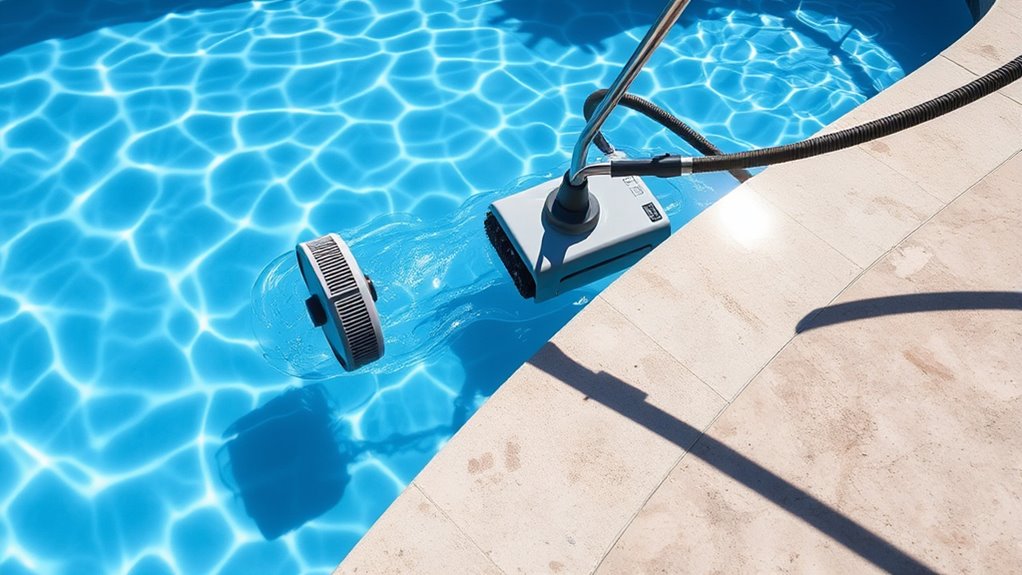
Pressure pool cleaners work differently depending on the surface they clean, so it’s important to consider surface compatibility. Some models handle smooth surfaces like plaster or fiberglass better, while others struggle with textured or vinyl finishes. Additionally, their debris removal efficiency can vary based on the surface, affecting how thoroughly your pool gets cleaned. For optimal performance, selecting a cleaner designed for your specific pool surface can make a significant difference in cleaning effectiveness. Proper maintenance of the cleaner’s components, such as brushes and filters, can also enhance performance longevity and ensure consistent cleaning results. Regularly inspecting and replacing worn parts can further improve overall cleaning efficiency and extend the lifespan of your pressure pool cleaner.
Surface Compatibility Variance
Different pool surfaces require specific considerations when choosing a pressure pool cleaner, as their materials and textures affect how well the cleaner can effectively remove debris. Surface texture plays a significant role; rougher surfaces like textured concrete may challenge the cleaner’s ability to navigate smoothly, while smoother surfaces like vinyl or fiberglass allow for easier movement. Material compatibility is also vital, as some cleaners may be too aggressive for delicate surfaces, risking damage. For example, a cleaner designed for concrete might scratch or etch softer materials. Understanding these differences helps guarantee you select a pressure pool cleaner suited to your pool’s surface, maximizing cleaning efficiency without risking surface damage. Proper match between the cleaner and pool surface ultimately leads to better performance and longer equipment lifespan.
Debris Removal Efficiency
How well a pressure pool cleaner removes debris depends largely on the surface it’s cleaning. For effective algae removal, a cleaner needs good suction and agitation, especially on textured or porous surfaces. Smooth surfaces like vinyl or fiberglass are easier to clean thoroughly, while rough concrete may require multiple passes. Debris such as leaves, dirt, and bugs are generally removed efficiently if the cleaner’s flow rate matches the pool’s size. Chemical compatibility is also vital; some cleaners work better with certain pool chemicals and surfaces, preventing damage or residue buildup. Keep in mind that stubborn algae or debris on delicate surfaces may need manual intervention. Overall, pressure cleaners excel in removing debris, but their efficiency varies based on surface type and chemical interactions.
Cost Considerations and Investment
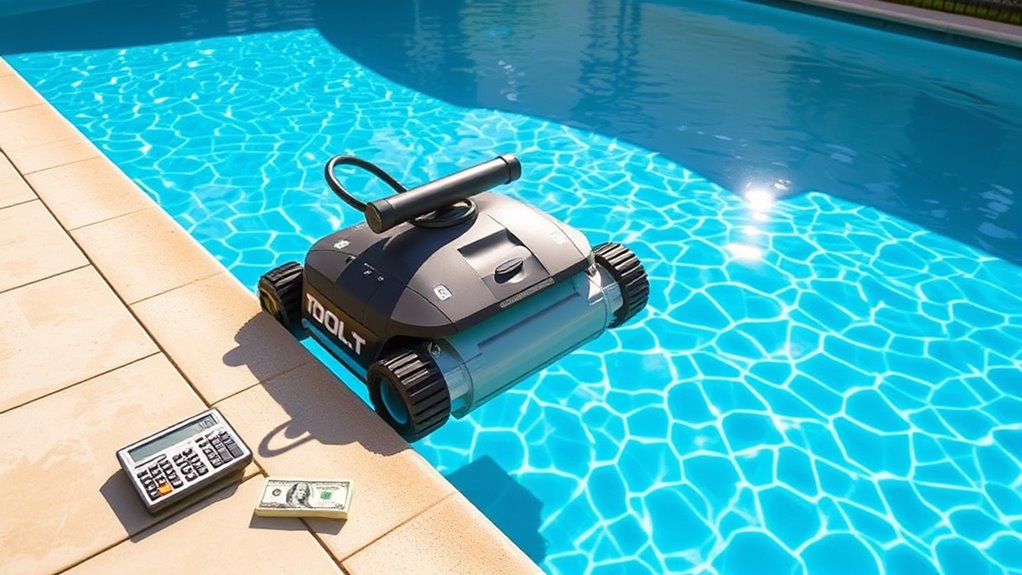
While pressure pool cleaners can be a convenient way to keep your pool spotless, it’s important to contemplate the initial costs and ongoing investments involved. Market availability influences your options, with various models and prices to choose from, so research is essential. Well-known brands with strong reputations may cost more upfront but often offer better durability and reliability, reducing long-term expenses. Consider the total investment, including replacement parts and maintenance, to avoid surprises. Cheaper, lesser-known options might save money initially but could require frequent repairs or replacements. Balancing cost with quality and reputation helps ensure you make a smart investment that keeps your pool clean without draining your budget over time.
Ease of Installation and Use
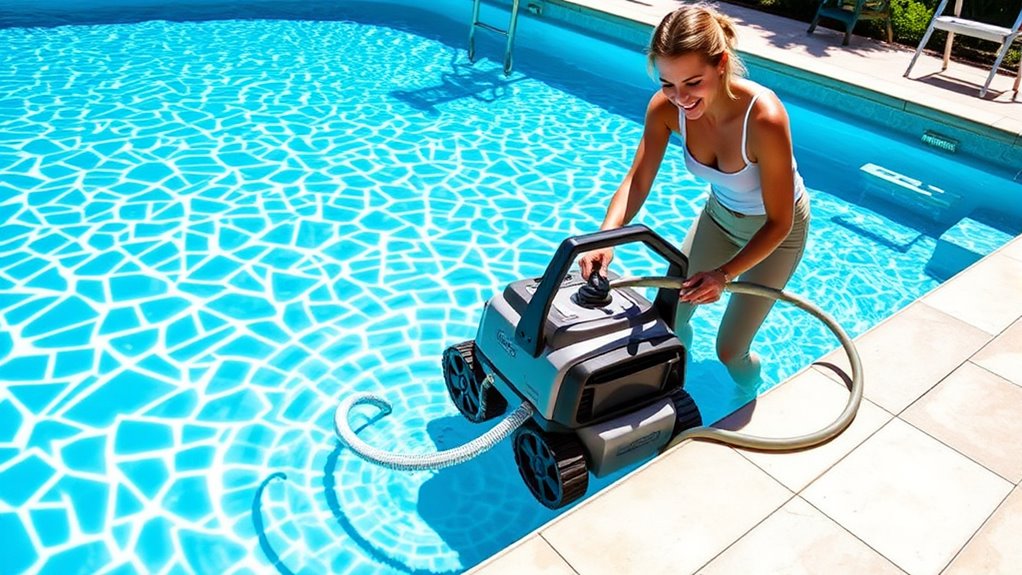
When choosing a pressure pool cleaner, ease of installation and use can considerably impact your overall experience. You’ll want a model with installation simplicity, so setting it up doesn’t become a chore. Many pressure cleaners are designed for user friendliness, allowing you to connect hoses and secure parts quickly without frustration. Look for models that come with clear instructions and minimal components, saving you time and effort. Once installed, a user-friendly design means you can operate the cleaner easily, often with simple controls or automatic functions. This simplifies routine cleaning, letting you maintain your pool without hassle. Overall, selecting a pressure cleaner known for its straightforward setup and intuitive operation makes pool maintenance smoother and more enjoyable.
Maintenance and Durability Factors
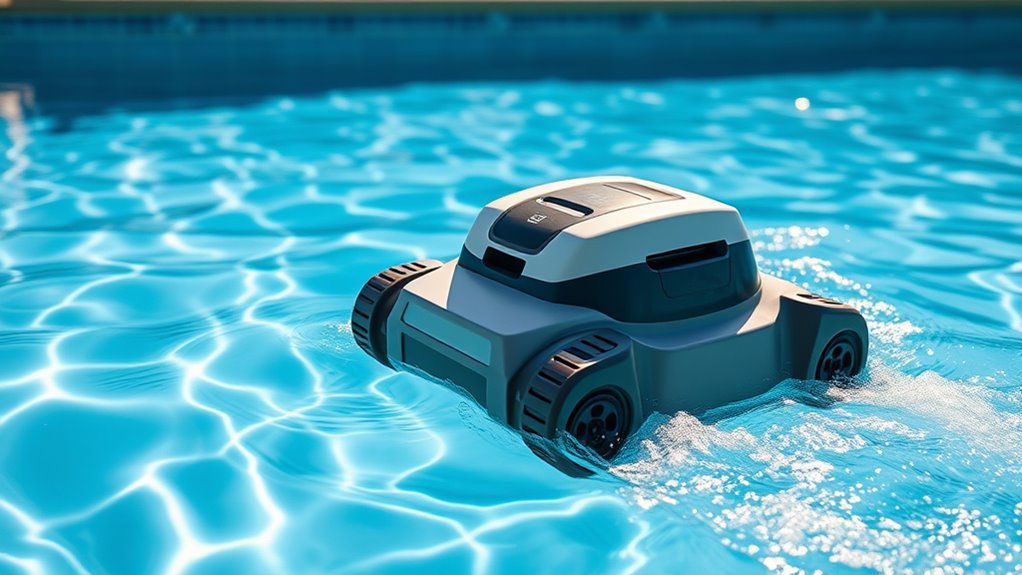
To guarantee your pressure pool cleaner remains effective over time, paying attention to maintenance and durability factors is essential. First, ensure it has good chemical resistance to withstand pool chemicals like chlorine and algaecides, which can degrade materials over time. Regularly inspect hoses and connections for signs of wear or leaks. Address corrosion issues promptly by rinsing the cleaner after use and storing it in a dry, protected area. Using high-quality materials designed for durability can extend its lifespan. Avoid exposing the cleaner to harsh chemicals or abrasive debris that could weaken the components. Proper maintenance not only prevents breakdowns but also preserves the cleaner’s cleaning efficiency, saving you money in the long run.
Suitable Pool Types for Pressure Cleaners
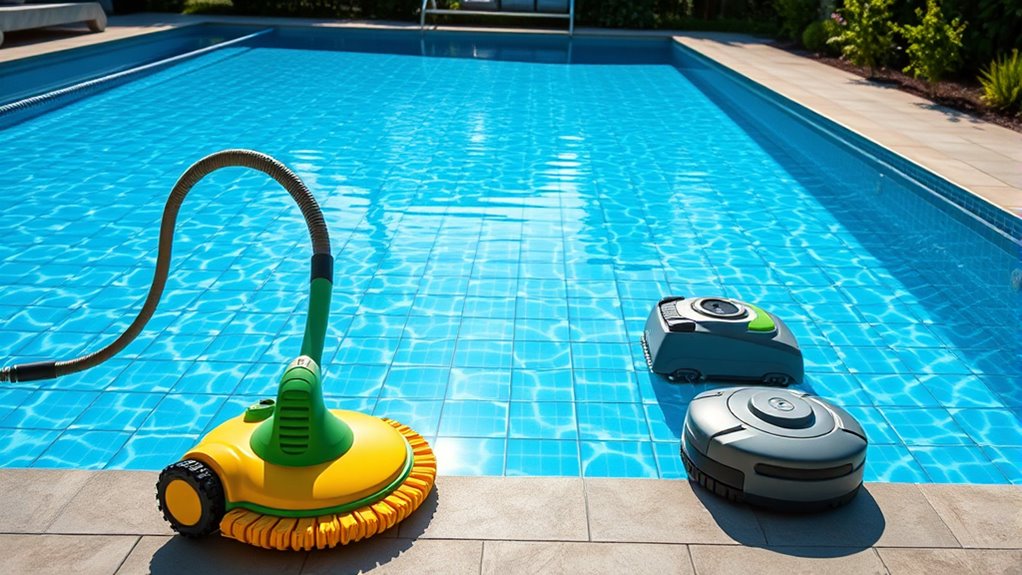
Pressure pool cleaners work best with pools that have consistent water circulation and accessible surfaces. They are ideal for certain pool types, such as:
Pressure pool cleaners excel with pools featuring steady water flow and accessible surfaces for efficient cleaning.
- Inground pools with wide, flat surfaces, allowing the cleaner to move smoothly.
- Above ground pools with simple shapes, making navigation easier.
- Pools with few obstructions, ensuring the cleaner can cover the entire surface efficiently.
- Pools with dedicated return jets, which help improve water flow and cleaning performance.
While they work well in these settings, avoid using pressure cleaners with pools that have intricate features or uneven surfaces, as these can hinder their effectiveness. Knowing your pool type helps you choose the right cleaner for a thorough, hassle-free clean.
Frequently Asked Questions
How Long Do Pressure Pool Cleaners Typically Last?
Pressure pool cleaners usually last around 3 to 5 years, depending on how well you maintain your pool. Regular pool maintenance helps keep the cleaner in good shape, ensuring it operates efficiently. To maximize its lifespan, clean the filter and hoses regularly and check for wear and tear. Proper care boosts cleaning efficiency, saving you money and time on repairs or replacements down the line.
Can Pressure Pool Cleaners Handle Algae and Stubborn Stains?
You might wonder if pressure pool cleaners can handle algae removal and stain treatment. They’re generally effective at cleaning algae buildup and most stubborn stains, especially when paired with appropriate cleaning solutions. However, for heavy algae infestations or deep stains, you may need to manually scrub or use specialized treatments. Regular use of a pressure cleaner can keep your pool cleaner and reduce the need for intensive stain treatment later.
Do Pressure Pool Cleaners Require Special Pool Liner Considerations?
Ever wonder if your pressure pool cleaner can handle your pool’s liner? You might be surprised—pool liner compatibility is vital. While these cleaners are generally safe, liner damage concerns can arise if the device isn’t suitable for your specific liner type. Check your pool’s specifications first. With the right pressure and proper use, you can avoid damage and keep your liner looking pristine. Don’t take chances—get the info you need now!
Are Pressure Pool Cleaners Effective in Removing Fine Debris?
Pressure pool cleaners are effective at removing fine debris, especially when paired with good pool filtration. They use powerful jets to dislodge dirt and tiny particles that might otherwise linger. However, their efficiency depends on your pool’s filtration system; a high-quality filter helps trap the fine debris, ensuring cleaner water. Regular maintenance of both the cleaner and filtration system maximizes their ability to keep your pool spotless.
What Are Common Troubleshooting Issues With Pressure Pool Cleaners?
Ever feel like your pressure pool cleaner is fighting you instead of cleaning? Common issues include clogs, which can be caused by debris blocking the hose or filter. Check pool chemical compatibility to prevent damage, and follow user maintenance tips like regular hose checks and filter cleaning. Sometimes, adjusting the pressure or replacing worn parts can turn your stubborn cleaner into a powerhouse. Don’t let small problems sink your cleaning routine!
Conclusion
Ultimately, pressure pool cleaners can save you time and effort—just like Sarah, who struggled with her manual vacuum until switching. Now, her pool stays spotless with minimal hassle. If you’re looking for a reliable, easy-to-maintain option, pressure cleaners might be perfect. Consider your pool’s surface and size to find the best fit. With the right choice, you’ll enjoy cleaner, clearer water all season long.
Columbus Day / Indigenous Peoples' Day Picks
long weekend sales
As an affiliate, we earn on qualifying purchases.