When I compare the best 100-inch Hisense TVs, I start with the picture and room demands, then look at gaming, sound, and smart features. My leading all-around choice is the 100-inch U8 Series, with its high stated peak brightness, extensive local dimming, and built-in surround-style audio. The U7 is a compelling alternative for buyers who want Google TV and a fast native panel without moving up to the U8’s headline specifications, while the E6 is the simpler route to a huge QLED screen and Fire TV.

Get the latest gadgets delivered free with Prime
- Fast, free delivery on millions of items
- Prime Video, Amazon Music and more included
- Member-only deals all year
The biggest tradeoff is not just which model has the most ambitious specification sheet. It is whether your room can handle a screen nearly 88 inches wide, how much glare and contrast matter, and whether you prefer Google TV or Fire TV. The E6 uses direct LED backlighting, while the U6 Pro, U7, E7, and U8 add Mini-LED and local dimming. That distinction can affect dark-scene contrast, but the models also differ in stated brightness, audio, and gaming features. I rank them by the combination of those capabilities and how clearly each one suits a particular buyer.
Complete the kit



Key Takeaways
- The U8 is my premium pick: it has the strongest stated brightness and zone counts in this group, plus a 4.1.2-channel audio system and anti-reflection technology.
- The U7 stands out for gaming and Google TV, pairing a 165 Hz native panel with up to 3,000 local dimming zones and Devialet-tuned sound.
- The U6 Pro is the bright-room-leaning Fire TV choice, combining Mini-LED local dimming, a glare-reducing screen, and a built-in subwoofer.
- The E7 is a more cinema-oriented Fire TV alternative to the E6, adding Mini-LED local dimming and Dolby Atmos audio with a subwoofer.
- The E6 is the straightforward QLED option, but its direct LED backlight lacks the local dimming specified for the other four models.
| Hisense 100-inch U8 Series Mini-LED 4K UHD Smart Google TV (100U8QG) |  | Best Premium | Screen size: 100 inches | Resolution: 4K UHD | Backlight: Mini-LED Pro | VIEW LATEST PRICE | See Our Full Breakdown |
| Hisense 100-inch U7 Mini-LED ULED 4K UHD Smart Google TV (100U7SG, 2026) |  | Best for Gaming and Google TV | Screen size: 100 inches | Resolution: 4K UHD | Backlight: Mini-LED ULED with Hi-QLED | VIEW LATEST PRICE | See Our Full Breakdown |
| Hisense 100-inch U6 Pro Mini-LED 4K UHD Smart Fire TV |  | Best Fire TV for Bright Rooms | Screen size: 100 inches | Resolution: 4K UHD | Backlight: Mini-LED full-array local dimming | VIEW LATEST PRICE | See Our Full Breakdown |
| Hisense E7 Cinema Series 100-Inch 4K UHD Mini-LED Smart Fire TV |  | Best for a Fire TV Cinema Setup | Model: 100E7SF | Screen size: 100 inches | Resolution: 4K UHD | VIEW LATEST PRICE | See Our Full Breakdown |
| Hisense 100-Inch E6 Series QLED 4K UHD Smart Fire TV (2025 Model) |  | Best Straightforward QLED Choice | Screen size: 100 inches | Resolution: 4K | Display technology: LCD, LED, QLED, wide color gamut | VIEW LATEST PRICE | See Our Full Breakdown |
| 100-inch Hisense TV | Screen size | Resolution | Backlight | Audio |
|---|---|---|---|---|
| Hisense 100-inch U8 Series Min | 100 inches | 4K UHD | Mini-LED Pro | 4.1.2-channel, up to 82 W, Dolby Atmos |
| Hisense 100-inch U7 Mini-LED U | 100 inches | 4K UHD | Mini-LED ULED with Hi-QLED | 2.1.2-channel, tuned by Devialet |
| Hisense 100-inch U6 Pro Mini-L | 100 inches | 4K UHD | Mini-LED full-array local dimming | Built-in subwoofer and Dolby Atmos |
| Hisense E7 Cinema Series 100-I | 100 inches | 4K UHD | Mini-LED with full-array local dimming | Dolby Atmos with built-in subwoofer |
| Hisense 100-Inch E6 Series QLE | 100 inches | 4K | Direct LED | — |
More Details on Our Top Picks
Hisense 100-inch U8 Series Mini-LED 4K UHD Smart Google TV (100U8QG)
I rank the U8 first because it brings the most complete set of high-end claims in this group together: Mini-LED Pro, up to 5,600 local dimming zones, up to 5,000 nits peak brightness, a 165 Hz panel, and a substantial built-in audio system. Those advertised ceilings give it the broadest stated toolkit for a mixed-use room, from bright HDR material to games and movie nights. Its anti-reflection technology is another meaningful distinction for a large screen, where windows and lamps can occupy a lot of the viewing area.
Compared with the U7, the U8 offers higher stated peak brightness and more local dimming zones, and its 4.1.2-channel, up-to-82-watt system is more elaborate on paper than the U7’s 2.1.2-channel setup. Both use Google TV and offer a native 165 Hz panel, so the U7 remains a sensible alternative if those shared basics matter more than the U8’s larger stated ceilings. The E7 and U6 Pro also use Mini-LED, but the product details do not list comparable zone or brightness figures for them.
The tradeoff is that the U8’s headline figures are maximums, not a promise of the same result across every scene, picture mode, or game. Its scale still calls for careful placement and installation, and I would check inputs and mounting requirements before buying because the supplied details do not specify port count. I would choose it for a buyer who wants the most feature-rich picture, gaming, and audio package here—not someone seeking a basic giant screen.
Pros:- Mini-LED Pro with up to 5,600 stated local dimming zones and up to 5,000 nits peak brightness.
- Native 165 Hz panel with VRR, AMD FreeSync Premium Pro, and other gaming tools.
- Anti-reflection technology and a built-in 4.1.2-channel Dolby Atmos system.
- Google TV with support for multiple HDR formats and IMAX Enhanced.
Cons:- The brightness, zone count, refresh-rate range, and audio output are stated as maximums.
- A 100-inch display demands substantial room, delivery planning, and installation help.
- The supplied product details do not specify connectivity or port count.
Best for: Buyers building a premium 100-inch movie-and-gaming setup who value Google TV, glare reduction, and robust built-in audio.
Not ideal for: Shoppers who want a simple, easy-to-install television, do not need advanced gaming or HDR features, or need confirmed connectivity details before choosing.
- Screen size:100 inches
- Resolution:4K UHD
- Backlight:Mini-LED Pro
- Peak brightness:Up to 5,000 nits
- Local dimming zones:Up to 5,600
- Native refresh rate:165 Hz
- Audio:4.1.2-channel, up to 82 W, Dolby Atmos
- Smart platform:Google TV
Our verdict“I would choose the U8 for the most ambitious all-around feature set in this 100-inch group, provided its size and installation demands fit the room.”
Hisense 100-inch U7 Mini-LED ULED 4K UHD Smart Google TV (100U7SG, 2026)
The U7 is my gaming-and-Google-TV pick, with a native 165 Hz refresh rate, VRR features, and Game Booster 330. Its Mini-LED backlight is paired with up to 3,000 local dimming zones and up to 3,000 nits peak brightness, giving this model a more detailed contrast specification than the E6 provides. Google TV with Gemini adds a different kind of convenience: buyers can search across apps and use conversational content discovery rather than relying on Fire TV’s Alexa-centered interface.
Against the U8, the U7 keeps the same headline native refresh rate and Google TV foundation but lists lower maximum brightness and fewer local dimming zones. That makes the U8 the more ambitious choice for buyers prioritizing the strongest stated HDR and audio package. The U7 still has a clear role: it pairs gaming-forward motion features with a 2.1.2-channel Devialet-tuned sound system and IMAX Enhanced, without simply repeating the U8’s premium specification stack.
I would not pick it on the assumption that every connection needed for a console or receiver is confirmed; the supplied details omit HDMI and port counts. Nor do the maximum brightness and zone figures guarantee what a viewer sees in every mode. Like the other 100-inch options, it requires a room and installation plan sized for a screen almost as wide as a wall. For a buyer who values gaming flexibility and Google’s content ecosystem, however, the U7 has a more specific case than the Fire TV models.
Pros:- Native 165 Hz refresh rate with VRR features and Game Booster 330.
- Mini-LED backlighting with up to 3,000 local dimming zones and up to 3,000 nits peak brightness.
- Google TV with Gemini supports conversational content discovery across apps.
- 2.1.2-channel audio tuned by Devialet, plus IMAX Enhanced.
Cons:- Its stated brightness and zone ceilings are below the U8’s.
- The product details do not specify HDMI or other connectivity counts.
- A 100-inch screen makes room layout and installation a significant commitment.
Best for: Gamers and streaming households who prefer Google TV, want a native 165 Hz panel, and value local dimming and built-in spatial-style audio.
Not ideal for: Buyers seeking the highest stated brightness and dimming-zone figures in this lineup, or anyone who needs port details confirmed before purchase.
- Screen size:100 inches
- Resolution:4K UHD
- Backlight:Mini-LED ULED with Hi-QLED
- Native refresh rate:165 Hz
- VRR:Up to 330 Hz with Game Booster 330
- Local dimming zones:Up to 3,000
- Peak brightness:Up to 3,000 nits
- Audio:2.1.2-channel, tuned by Devialet
- Smart platform:Google TV with Gemini
Our verdict“I would pick the U7 over the Fire TV models when Google TV and gaming features matter more than the U8’s higher stated brightness and zone counts.”
Hisense 100-inch U6 Pro Mini-LED 4K UHD Smart Fire TV
The U6 Pro earns a distinct place as the Fire TV option with an explicit glare-reducing screen. That matters when a 100-inch display faces windows or room lighting: reflections can spread across a huge portion of the image. Its Mini-LED full-array local dimming and Hi-QLED color also set it apart from the E6, whose supplied specifications list direct LED backlighting without local dimming. The U6 Pro adds a native 144 Hz refresh rate, Dolby Vision IQ, and a built-in subwoofer.
Compared with the E7, the U6 Pro makes its bright-room angle more obvious by specifically calling out the screen finish. Both have Fire TV, Mini-LED, a native 144 Hz panel, Dolby Atmos support, and a subwoofer. The E7 provides a longer explicit list of HDR formats and names MEMC and AI picture processing, while the U6 Pro calls out Motion Rate 480, AI picture adjustments, and its glare-reducing display. Neither description gives a comparable local-dimming zone count or peak-brightness figure, so I would not assume one outperforms the other on those measures.
This is a practical, feature-rich choice, but the lack of detailed connectivity information is a real limitation for a buyer planning multiple consoles, a receiver, or other components. The listed description also does not give dimensions or weight, so installation planning needs extra verification. I would choose the U6 Pro for a bright room and Alexa-friendly Fire TV household; I would move to the U7 or U8 for the more detailed gaming and picture ceilings stated in their product information.
Pros:- Glare-reducing screen is designed for rooms with ambient light.
- Mini-LED full-array local dimming and Hi-QLED color.
- Native 144 Hz refresh rate for sports, fast motion, and compatible gaming.
- Fire TV with Alexa+, Dolby Atmos support, and a built-in subwoofer.
Cons:- The supplied details do not include a local-dimming zone count or peak-brightness figure.
- Connectivity and port specifications are not provided.
- The 100-inch size still requires substantial space and careful installation planning.
Best for: Fire TV households placing a 100-inch screen in a brighter room who want Mini-LED, a stated glare-reducing finish, and built-in bass support.
Not ideal for: Buyers who need confirmed port counts, precise installation dimensions, or the highest published brightness and dimming-zone figures.
- Screen size:100 inches
- Resolution:4K UHD
- Backlight:Mini-LED full-array local dimming
- Color technology:Hi-QLED Quantum Dot
- Native refresh rate:144 Hz
- HDR formats:Dolby Vision, Dolby Vision IQ, HDR10, HDR10+, HDR10+ Adaptive, HLG
- Audio:Built-in subwoofer and Dolby Atmos
- Smart platform:Fire TV
- Screen finish:Flat, glare-reducing
Our verdict“I would choose the U6 Pro for a bright-room Fire TV setup, but check its connections and installation dimensions before committing.”
Hisense E7 Cinema Series 100-Inch 4K UHD Mini-LED Smart Fire TV
The E7 is my cinema-leaning Fire TV pick. It combines Mini-LED with full-array local dimming and supports Dolby Vision IQ, HDR10+ Adaptive, HDR10, and HLG. That broad HDR list gives viewers multiple format options across films and streaming services, while the 144 Hz native refresh rate and MEMC also give the set a role beyond movie nights. Its built-in subwoofer and Dolby Atmos support may help reduce the need to add a separate bass component immediately.
Its closest comparison is the U6 Pro: both are 100-inch Fire TVs with Mini-LED, a native 144 Hz panel, and Atmos-capable sound with a subwoofer. The E7 gives more explicit detail on HDR formats and AI picture processing, while the U6 Pro specifically names a glare-reducing screen and Alexa+. The U6 Pro’s stated Motion Rate 480 is not directly interchangeable with the E7’s native refresh rate and MEMC description, so I would compare the underlying panel and processing details rather than treating those labels as a simple contest.
Against the U7 and U8, the E7 has less detailed published gaming information and no stated brightness or zone maximums. That does not establish how it performs in a room; it means buyers looking to compare those particular figures have less information here. The size and listed 120.2-pound weight make installation planning unavoidable, and its speaker output specification is presented without a unit, so I would not use that figure to predict loudness. It makes the most sense for Fire TV viewers who want Mini-LED and broad HDR support without needing Google TV.
Pros:- Mini-LED backlighting with full-array local dimming.
- Supports Dolby Vision IQ, HDR10+ Adaptive, HDR10, and HLG.
- Native 144 Hz refresh rate with MEMC and AI picture processing.
- Built-in subwoofer and Dolby Atmos support.
Cons:- No peak-brightness or local-dimming zone count is specified.
- At 100 inches and 120.2 pounds, it requires a careful delivery and mounting plan.
- The speaker maximum output figure is listed without a unit.
Best for: Fire TV users who mainly watch films and streaming content and want Mini-LED, local dimming, broad HDR compatibility, and a built-in subwoofer.
Not ideal for: Buyers who prioritize published brightness or zone figures, need a glare-reducing screen explicitly specified, or prefer Google TV.
- Model:100E7SF
- Screen size:100 inches
- Resolution:4K UHD
- Backlight:Mini-LED with full-array local dimming
- Refresh rate:144 Hz
- HDR formats:Dolby Vision, Dolby Vision IQ, HDR10, HDR10+, HDR10+ Adaptive, HLG
- Audio:Dolby Atmos with built-in subwoofer
- Dimensions:3.7 × 87.8 × 50.6 inches
- Weight:120.2 pounds
Our verdict“I would choose the E7 over the E6 for a Fire TV cinema setup when Mini-LED local dimming and broad HDR support are priorities.”
Hisense 100-Inch E6 Series QLED 4K UHD Smart Fire TV (2025 Model)
The E6 is the simplest route to a 100-inch QLED Fire TV in this lineup. It has 4K resolution, a wide-color-gamut QLED display, a native 144 Hz panel, Alexa voice control, and support for Dolby Vision, HDR10+, HDR10, and HLG. AI 4K upscaling can help lower-resolution material fit a 4K screen, while the ambient light sensor adjusts brightness for changing room conditions. For households that want a large display with familiar Fire TV features, its spec sheet is easier to parse than the more elaborate U-series options.
The key compromise is its direct LED backlight. The U6 Pro, U7, E7, and U8 specify Mini-LED and local dimming, while the E6 does not list either. That makes the other four the more compelling starting points for buyers who care about controlling contrast across dark and bright parts of a scene. On the other hand, the E6 still lists variable refresh from 48 to 144 Hz and AMD FreeSync Premium, so it is not simply an everyday-TV choice; it also includes meaningful gaming support.
Compared with the E7, the E6 gives up Mini-LED local dimming and a built-in subwoofer while retaining Fire TV, Alexa, 144 Hz, and broad HDR compatibility. I would pay attention to that distinction if films in a dim room are a priority. Its listed weight is 120.2 pounds and its width is 87.8 inches, so “straightforward” describes its feature mix, not installation. Choose it when you want a large QLED screen and Fire TV more than the extra contrast-focused hardware in the Mini-LED models.
Pros:- QLED wide-color-gamut display with 4K resolution and multiple HDR formats.
- Native 144 Hz panel with 48–144 Hz VRR and AMD FreeSync Premium.
- Fire TV with Alexa voice control and AI 4K upscaling.
- Ambient light sensor adjusts screen brightness to room conditions.
Cons:- Direct LED backlighting; local dimming is not specified, unlike the other four picks.
- No built-in subwoofer is listed in the supplied product details.
- The 100-inch set is listed at 120.2 pounds and needs substantial installation space.
Best for: Buyers who want a 100-inch QLED screen, Fire TV, Alexa, and a native high-refresh panel without prioritizing Mini-LED local dimming.
Not ideal for: Movie viewers focused on dark-room contrast, buyers seeking a glare-reducing screen, or anyone wanting the strongest published brightness and local-dimming specifications.
- Screen size:100 inches
- Resolution:4K
- Display technology:LCD, LED, QLED, wide color gamut
- Backlight:Direct LED
- Refresh rate:144 Hz
- VRR:48–144 Hz
- HDR formats:Dolby Vision, HDR10, HDR10+, HDR10+ Adaptive, HLG
- Smart platform:Fire TV with Alexa
- Dimensions and weight:3.7 in D × 87.8 in W × 50.6 in H; 120.2 lbs
Our verdict“I would choose the E6 for a large, gaming-capable Fire TV with QLED color, but the E7 is the better fit if Mini-LED contrast is a priority.”
How We Picked
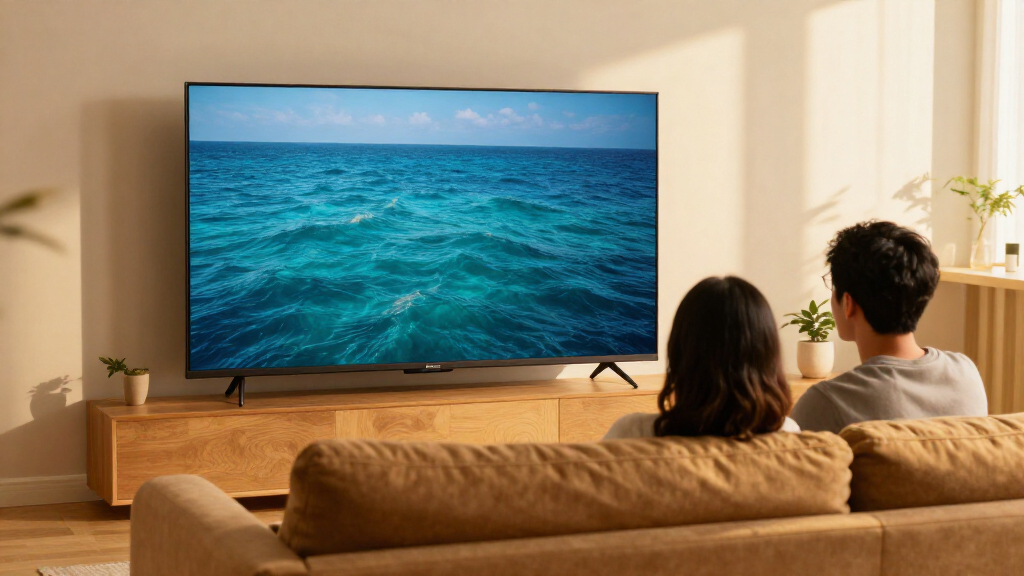
I ranked these five Hisense models around the decisions a 100-inch buyer actually faces: picture control, room suitability, motion and gaming, audio, and smart platform. A very large screen magnifies both strengths and weaknesses. Local dimming and HDR support can matter more when a viewer is looking across a wall-sized image, while glare, seating distance, and installation logistics are harder to ignore than they are with a smaller television.
I gave weight to the backlighting approach and the detail provided about it. Four models specify Mini-LED with local dimming; the E6 lists direct LED and QLED color. Where manufacturers state maximums—such as brightness, local dimming zones, refresh rates, or audio output—I treat them as advertised ceilings, not guaranteed performance in every scene or setting. The product information does not provide independent measurements, so I do not claim that a model will deliver a particular measured contrast or brightness level.
I also compared how each TV fits a distinct buyer. The U8 ranks first for its particularly ambitious combination of stated Mini-LED specifications, gaming support, glare control, and built-in audio. The U7 follows as a strong Google TV and gaming choice, though its stated brightness and zone ceiling are below the U8’s. The U6 Pro and E7 both add Mini-LED to Fire TV, but the U6 Pro calls out a glare-reducing screen, while the E7 emphasizes cinema-friendly processing and multiple HDR formats. The E6 rounds out the list as the simpler QLED option. Each ranking reflects the supplied features and tradeoffs, not hands-on testing.
Finally, I treated physical fit as part of the buying decision, not a footnote. These are all 100-inch televisions, and the listed dimensions for models that include them are close to 88 inches wide. Buyers should check the wall, stand, doorways, mounting plan, and help needed for installation. The available product details do not give complete connectivity information for every model, so I avoid ranking them on port count.
| 100-inch Hisense TV | Backlight | Smart platform | HDR formats |
|---|---|---|---|
| Hisense 100-inch U8 Series Min | Mini-LED Pro | Google TV | — |
| Hisense 100-inch U7 Mini-LED U | Mini-LED ULED with Hi-QLED | Google TV with Gemini | — |
| Hisense 100-inch U6 Pro Mini-L | Mini-LED full-array local dimming | Fire TV | Dolby Vision, Dolby Vision IQ, HDR10, HDR10+, HDR10+ Adaptive, HLG |
| Hisense E7 Cinema Series 100-I | Mini-LED with full-array local dimming | — | Dolby Vision, Dolby Vision IQ, HDR10, HDR10+, HDR10+ Adaptive, HLG |
| Hisense 100-Inch E6 Series QLE | Direct LED | Fire TV with Alexa | Dolby Vision, HDR10, HDR10+, HDR10+ Adaptive, HLG |
Factors to Consider When Choosing Best 100-inch Hisense TVs
For a 100-inch Hisense TV, I would settle the room, viewing habits, and platform questions before choosing between model names. The main dividing line in this group is direct LED versus Mini-LED local dimming; after that, compare gaming details, glare handling, built-in sound, and whether Fire TV or Google TV fits your household.
Choose backlighting for the scenes you watch
The E6 lists a direct LED backlight, QLED color, and several HDR formats. That can suit a buyer who wants a large, colorful 4K display, but it is different from the local-dimming systems specified for the other models. Mini-LED with full-array local dimming is designed to control groups of backlight zones separately, which can help a television manage bright highlights and darker areas in the same image. It does not guarantee a particular black level or eliminate every halo effect, and the supplied product details do not include independent picture measurements.
The E7 and U6 Pro name Mini-LED local dimming without giving a zone count or peak-brightness ceiling. The U7 specifies up to 3,000 zones and up to 3,000 nits; the U8 lists up to 5,600 zones and up to 5,000 nits. I treat those as manufacturer-stated maximums, not a direct promise of real-world results. If a detailed comparison is central to your choice, the U7 and U8 provide more numeric information than the Fire TV Mini-LED models.
Match refresh and gaming features to your devices
Four models list a native refresh rate of 144 Hz or higher: the E6, U6 Pro, and E7 specify 144 Hz, while the U7 and U8 specify 165 Hz. A faster native panel can be useful for compatible games and fast-moving content, but the source, settings, and connection also matter. The E6 lists 48–144 Hz VRR and AMD FreeSync Premium; the U8 lists 48–165 Hz VRR, FreeSync Premium Pro, Auto Low Latency Mode, and other gaming tools. The U7 calls out VRR and Game Booster 330, while the U6 Pro and E7 describe motion support in different ways.
I would check the TV’s full port list before building a gaming setup. The supplied details do not specify HDMI counts for the U6 Pro or U7, and the other product information here is also not a full connectivity table. Buyers who need several high-bandwidth connections should confirm that information with the manufacturer or retailer instead of inferring it from refresh-rate claims.
Think about glare, seating, and room layout
A 100-inch screen can dominate a room. The listed E6 and E7 dimensions are 87.8 inches wide; the E7 and E6 are also listed at 120.2 pounds. The other descriptions do not provide the same full physical details, so I would verify each model’s dimensions, stand footprint, mounting pattern, and shipping requirements. Measure the route into the room as well as the final wall or furniture space. Installation may require more than one person and suitable mounting hardware.
The U6 Pro specifically lists a glare-reducing screen, and the U8 lists anti-reflection technology. Those features give them a clearer pitch for rooms where reflections are a concern. They cannot replace sensible placement: a very large screen facing a bright window can still be difficult to watch, and reflection behavior depends on the room and lighting. Measure the intended viewing distance, too; a huge panel is most satisfying when seating and sightlines suit its width.
Pick the smart platform your household prefers
The E6, U6 Pro, and E7 use Fire TV, with Alexa or Alexa+ voice control specified for the models that list it. The U7 and U8 use Google TV; the U7 also names Gemini and conversational content discovery. Both platforms are intended to bring streaming apps and search into one interface, but their menus, voice features, and household familiarity differ. I would choose based on the services and devices already used at home rather than assuming one interface is universally better.
There is also a practical difference in how the lineup is organized: the Fire TV choices range from the E6’s direct LED QLED setup to Mini-LED options, while both Google TV models use Mini-LED. That makes platform preference part of the picture decision rather than a separate afterthought. App availability and voice features can change, so verify current support for the services you rely on.
Decide whether built-in audio is enough
The U8 has the most elaborate listed built-in system at 4.1.2 channels, with Dolby Atmos and up to 82 watts. The U7 lists a 2.1.2-channel system tuned by Devialet, and the U6 Pro and E7 include a built-in subwoofer with Dolby Atmos support. The E6’s supplied description lists Dolby Atmos but does not specify a subwoofer or channel layout. These features may reduce the need to add sound equipment immediately, but channel labels alone do not tell me how a system will sound in a particular room.
A 100-inch TV can make a built-in speaker system feel less proportionate than the image, especially for film dialogue or bass-heavy soundtracks. If audio quality is a leading priority, consider the listed system as a convenience feature and confirm outputs and connections for any soundbar or receiver you plan to add. The E7’s speaker maximum output is listed without a unit, so I would not use that number to compare it with another model.
Read headline numbers as ceilings, not guarantees
Several supplied specifications include “up to” figures: U8 peak brightness and zone count, U7 brightness and zones, and U8 refresh range and audio output. Actual results can vary with content, picture mode, settings, and other conditions. A model with a higher stated maximum may look more capable on paper, but I would not treat that alone as proof it will look better in every room.
For this ranking, I use those figures to show how each product is positioned, not to claim lab-tested performance. The U8 leads on stated brightness and zone count; the U7 offers its own detailed Mini-LED and gaming figures; the other models still have useful features but less published numeric detail in the supplied descriptions. Buyers who need a precise comparison should consult the complete manufacturer specifications and, where possible, independent measurements for the exact screen size and model.
Frequently Asked Questions
Which 100-inch Hisense TV is the best overall choice?
I rank the U8 Series first for its combination of Mini-LED Pro, up to 5,600 stated dimming zones, up to 5,000 nits peak brightness, a 165 Hz panel, anti-reflection technology, and 4.1.2-channel audio. Those figures are manufacturer-stated maximums, so I would not treat them as guaranteed performance in every viewing mode. The U7 is a strong alternative for buyers who want Google TV and gaming features but do not need the U8’s higher stated brightness and zone counts.
Which model should I choose if I want Fire TV?
The E6, U6 Pro, and E7 all use Fire TV, but they suit different priorities. I would choose the E6 for a straightforward QLED setup with Alexa and gaming support, the U6 Pro for its explicitly glare-reducing screen and Mini-LED local dimming, or the E7 for its cinema-oriented HDR list and built-in subwoofer. If dark-scene contrast matters, the E7 or U6 Pro has a more fitting backlight specification than the E6.
Is Mini-LED worth prioritizing on a 100-inch TV?
It is worth comparing if contrast across bright and dark parts of a picture matters to you. Four TVs in this group specify Mini-LED with local dimming, while the E6 specifies direct LED without a local-dimming feature. Mini-LED local dimming is designed to manage backlight areas separately, but the product descriptions do not include independent measurements. I would use the feature as a selection factor, not as a guarantee of a particular picture result.
Can a 100-inch Hisense TV work in a bright room?
It can, but room lighting and screen placement matter. The U6 Pro lists a glare-reducing finish, and the U8 lists anti-reflection technology, making those the clearest candidates here for buyers concerned about reflections. A large screen can still catch window and lamp glare, so I would measure the room, consider seating and window positions, and check the screen’s physical dimensions before ordering. Glare-control features do not make placement irrelevant.
What should I check before buying a 100-inch TV?
I would measure the wall or furniture space, the delivery path, the stand footprint, and the mounting location, then confirm the exact model’s weight, mounting requirements, and port list. The E6 and E7 are listed at 87.8 inches wide and 120.2 pounds, while some other supplied descriptions omit full dimensions or connectivity details. If you plan to connect several consoles, a receiver, or a sound system, confirm the number and type of ports rather than assuming them from refresh-rate or gaming claims.
Conclusion
For the most feature-rich 100-inch setup, I would start with the U8, especially if high stated brightness, extensive local dimming, anti-reflection technology, gaming tools, and built-in audio all matter. I would choose the U7 for Google TV and gaming when its 165 Hz panel and Devialet-tuned audio fit the brief better than the U8’s higher stated ceilings. For a Fire TV room with ambient light, the U6 Pro’s glare-reducing screen gives it a distinct role; for films and broad HDR support on Fire TV, I would look closely at the E7. The E6 makes the most sense when a large QLED display, Alexa, and gaming support matter more than Mini-LED local dimming. Whichever model you favor, I would confirm the dimensions, delivery route, installation plan, and connections before committing to a screen this large.
Black Friday Picks

Bose SoundLink Max Portable Bluetooth Speaker, IP67 Waterproof, Black
As an affiliate, we earn on qualifying purchases.