
TL;DR

Get the latest gadgets delivered free with Prime
- Fast, free delivery on millions of items
- Prime Video, Amazon Music and more included
- Member-only deals all year
A GitHub project called ps2-web-recomp translates PlayStation 2 game code ahead of time into C++, then compiles it to WebAssembly for browser use. Its author reports that Gran Turismo 4 and God of War II run in Chrome, with game data supplied by users rather than included in the project.
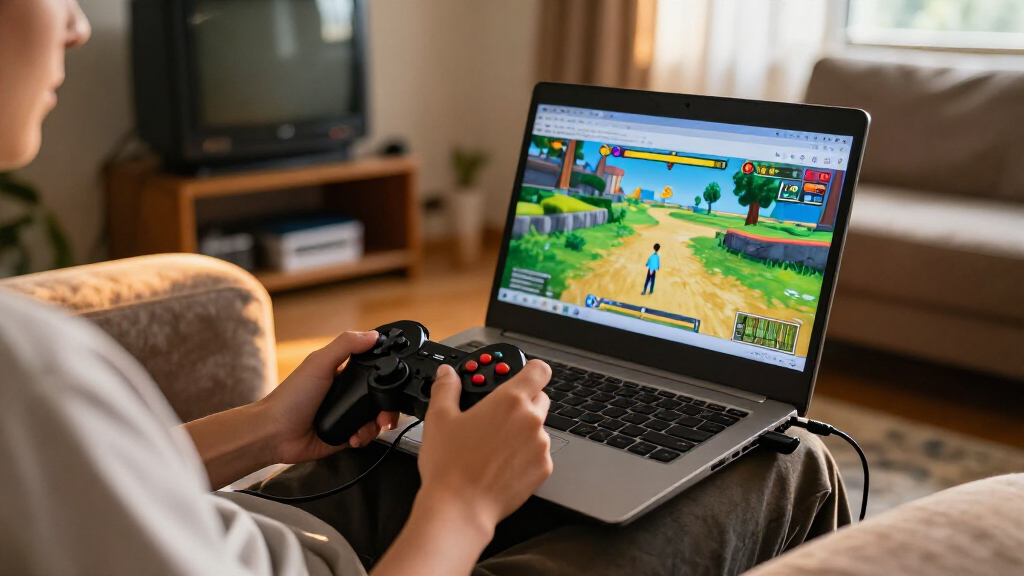
A developer has demonstrated Gran Turismo 4 and God of War II running in Chrome through a project that statically recompiles PlayStation 2 code into WebAssembly, rather than running the games inside a conventional emulator. The GitHub project, ps2-web-recomp, requires users to supply their own game disc image; it says no game data is included.
The project translates PlayStation 2 Emotion Engine machine code ahead of time into C++, then compiles that output to WebAssembly. A software layer reimplements parts of the console’s operating system and hardware, while WebGPU compute shaders handle graphics. The project’s author describes it as a sibling of psp-web-recomp, which uses the same general method for PSP games.
The first demonstrated game was Gran Turismo 4, selected by the author as a demanding test of the system. The project report says it runs from startup through its opening movie, menus and races, with sound and browser-stored memory-card saves. In a recording, the PAL release runs at 50 frames per second in Chrome on a laptop with integrated graphics, at twice the PS2’s resolution.
God of War II was added later using the same scripts, the author says, without game-specific code. It runs through menus and cutscenes into combat, reaching 60 frames per second in heavy combat at the console’s resolution in Chrome. At double resolution, the report gives a range of 48 to 60 frames per second on the test laptop. Those figures describe the author’s tests, not results independently verified in the supplied material.
Browser Play Without a Console Emulator
The demonstration matters because it applies static recompilation to full PS2 games in a web browser: game instructions are translated into host code before execution, instead of being interpreted instruction by instruction as they run. The approach could make some older games easier to access on devices with a modern browser, though it still depends on users having a suitable game image and the project supporting the title.
Its performance also reflects how much depends on the graphics pipeline and browser workload, not just CPU translation. The author reports that an early version managed about three frames per second at native resolution, using software graphics and an interpreter for the PS2’s vector unit. Moving graphics work to WebGPU and compiling vector-unit programs brought performance to about 70 frames per second in the author’s account. That development history illustrates both the potential and the engineering work behind the current results.
For readers, the key distinction is that this is not a browser-based game release: the project supplies the recompiler and console-system components, while the user supplies the disc image. The report does not establish that every PS2 game will work, or that performance will match across browsers and computers.
As an affiliate, we earn on qualifying purchases.
How the PS2 Code Reaches WebAssembly
The project’s recompiler, called eerecomp, reads a game executable, traces control flow and emits C++ in units of 16 KiB of guest code. The generated code accounts for PS2-specific features such as 128-bit registers, branch delay slots and the console’s distinctive floating-point behavior. The author says the system also models timing details in vector-unit programs that games rely on.
Rather than reproduce every console component at the same level, the project uses a high-level implementation of the main PS2 kernel and an interpreter for the I/O processor’s R3000 CPU. Graphics are rendered through WebGPU while retaining the PS2 Graphics Synthesizer’s memory layouts and drawing rules, according to the repository. Sound is handled by a reimplementation of the SPU2, and an implementation of the console’s MPEG-2 decoder handles movies. The game disc is read using HTTP Range requests, so the report says only the executable is downloaded at the outset.
The author’s performance notes describe further changes to reduce browser overhead. An initial renderer made roughly 650 compute dispatches per frame; reorganizing texture and palette uploads cut that to about 80 while preserving the same output, the report says. A GPU cache for recently uploaded texture contents reduced data sent per frame by about 60 percent in the described test. These are project-reported optimization results, not a general benchmark.
“No game data is included here. You bring a disc image of a game you own.”
— The ps2-web-recomp project report
Compatibility and Test Conditions
The supplied report does not provide a list of supported games, independent testing, or results across different computers and browsers. It is also unclear how broadly the current scripts work beyond the two named titles, or what setup and performance users should expect on other hardware.
The author notes that host arithmetic can differ from the PS2’s in the last bit, and says God of War II exposed bugs in the recompiler and vector-unit timing that Gran Turismo 4 had not triggered. Those details show that testing one game does not establish compatibility with another. The report also mentions performance falling to 23 frames per second at three times native resolution, but the supplied material ends before explaining the full profiling result.
Legal terms and permissions for using particular disc images are not detailed in the supplied project description. The report’s instruction to bring a game image the user owns should not be read as legal advice or as a guarantee that every image format will work.
Further Games and Performance Tests
The immediate next step is for users and developers to test the scripts with additional game images and report compatibility issues. The project report describes an ongoing technical effort, but the supplied material does not give a release schedule, a target list of future games or a date for a broader compatibility update.
Further work will also be needed to establish performance across different browsers and graphics hardware. The author’s results rely on Chrome and a laptop’s integrated GPU; dedicated graphics cards and other browser engines may behave differently. Because some vector-unit programs are translated when first encountered and the project models many separate PS2 components, testing more games could expose additional missing system functions or timing bugs.
Readers can follow the repository for changes to the recompiler and its game support. Until broader results are published, the confirmed scope remains the project author’s demonstrations of Gran Turismo 4 and God of War II under the stated conditions.
Key Questions
Does the project include PS2 game files?
No. The project report says game data is not included. Users must supply a disc image; the report does not specify that every image or format is supported.
Is this a conventional PS2 emulator?
The project describes a different approach: it translates game machine code ahead of time into C++, compiles it to WebAssembly and pairs it with reimplemented PS2 system components. It does not describe the games as running inside a conventional emulator.
Which games have been demonstrated?
The report names Gran Turismo 4 and God of War II. It does not provide a confirmed compatibility list for other PS2 games.
What performance did the developer report?
In Chrome on a laptop with integrated graphics, the PAL version of Gran Turismo 4 ran at 50 frames per second at twice the PS2’s resolution in the reported recording. God of War II reportedly reached 60 frames per second at native resolution in heavy combat, and 48 to 60 at double resolution. These are project-reported results, not independently verified benchmarks.
Will every game run accurately?
That has not been established. The author says God of War II exposed bugs not found while testing Gran Turismo 4, and notes that some host arithmetic may differ from the PS2’s in its last bit. Support and accuracy across other games remain unclear.
Source: hn
Columbus Day / Indigenous Peoples' Day Picks
long weekend sales
As an affiliate, we earn on qualifying purchases.