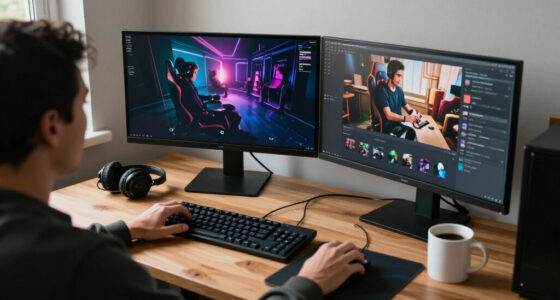
🔍 Read the full analysis: Find A Home Studio Mic Among These 10 Best Condenser Microphones For 2026 on ThorstenMeyerAI.com

Get the latest gadgets delivered free — and shop member deals
- Fast, free delivery on millions of items
- Access to Prime Big Deal Days deals on October 6–7
- Prime Video, Amazon Music and more included
TL;DR
A ThorstenMeyerAI.com buyer’s guide for 2026 ranks the RØDE NT1 5th Generation first, citing its USB-C and XLR connections. The supplied material names eight microphones, although the title promises 10; it does not identify two additional picks.
ThorstenMeyerAI.com’s 2026 condenser microphone guide ranks the RØDE NT1 5th Generation first, pointing to its USB-C and XLR connections as a way to accommodate different recording setups. The supplied guide material names eight microphones, despite a title promising 10, so two picks and their details remain unidentified.
The guide’s ranking favors microphones for different home recording needs, weighing connection type, included accessories, controls and compatibility with a growing recording chain, topics also covered in microphone trends for AI. It describes the NT1 5th Generation as the most adaptable pick because it supports both USB-C and XLR. The guide characterizes the Audio-Technica AT2020 and AKG P120 as focused XLR options for buyers with, or planning to add, an audio interface.
Three named models are presented as kits with setup gear: the FIFINE T669, MAONO A04 Gen2 and PM320S. The guide says bundles can reduce the number of separate purchases for someone starting out, while cautioning that included stands and other accessories may not be as adjustable or sturdy as separate equipment. It also lists the RØDE NT1 Signature Series and TZ Stellar X2 as dedicated XLR choices for buyers prioritizing a conventional recording chain over USB convenience.
The supplied text gives selection criteria and broad use cases, but does not provide prices, test measurements, detailed model-by-model specifications or the identities of two more microphones. Its ranking and product characterizations are the guide’s editorial judgments, not independently verified test results in the provided source.
The 10 picks
- 1
 RØDE NT1 5th Generation Studio Condenser Microphone, XLR and USB-C, SilverView on Amazon →
 - 2
 TZ Stellar X2 Large Diaphragm Cardioid Condenser XLR MicrophoneView on Amazon →
 - 3
 RØDE NT1 Signature Series Studio Condenser Microphone, BlackView on Amazon →
 - 4
 Audio-Technica AT2020 Cardioid Condenser XLR Studio MicrophoneView on Amazon →
 - 5
 AKG Pro Audio P120 – Affordable 2/3-Inch Diaphragm Condenser Microphone for C…View on Amazon →
 - 6
 MAONO A04 Gen2 XLR/USB Condenser Microphone Kit for PC Podcast RecordingView on Amazon →
 - 7
 Maono PM320S Condenser PC Microphone with XLR Cable, Boom Arm, Pop FilterView on Amazon →
 - 8
 FIFINE T669 Studio Condenser USB Microphone for Recording PodcastingView on Amazon →
 - 9
 Mackie EM-Series Large-Diaphragm Condenser Microphone (EM-91C)View on Amazon →
 - 10
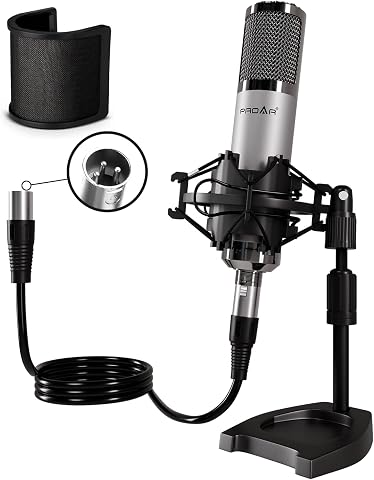 XLR Condenser Microphone with Desktop Stand for Vocals and PodcastingView on Amazon →
Choosing a Mic for a Home Setup
The guide’s central point is that a microphone purchase affects the rest of a recording setup. An XLR microphone requires an interface or mixer and usually a cable, while a USB model can connect directly to a computer. A dual-connection option can serve both workflows, though the source advises checking how each connection mode works before assuming controls are identical.
Room conditions also shape the result. The guide warns that condenser microphones can capture room reflections and nearby sounds such as fans, keyboards or traffic. A sensitive microphone cannot make an untreated room quiet or remove echo by itself. For home recorders, placement, a stable mount and acoustic control may matter as much as the model selected.
How the Guide Frames Its Picks
The source groups its advice around four decisions: whether to use USB, XLR or both; how well the room suits a condenser; what equipment must be bought alongside the mic; and which sources the buyer expects to record. It notes that cardioid pickup is intended to favor sound in front of the microphone, but does not eliminate sound from other directions.
It also cautions against paying for features that a recording routine will not use. A pad or high-pass filter may help in particular recording situations, while multi-pattern control may suit different placements or more than one person. The supplied material does not give enough model-specific information to compare those features across all the named picks.
“The RØDE NT1 5th Generation ranks first because it supports both USB-C and XLR.”
— ThorstenMeyerAI.com guide
Two Promised Picks Are Missing
The supplied source material names eight models, not 10. It does not say whether the original guide contains two further entries that were omitted from the source, or whether its title and list are inconsistent. No identities, ranking positions or descriptions for additional picks can be confirmed here.
The material also does not state when the guide was published, provide prices or explain whether the microphones were tested under standardized conditions. Claims about adaptability, starter-kit value and suitability reflect the source’s recommendations; the supplied text does not include independent measurements or comparative recordings.
Verify the Complete Ten-Model List
A complete account of the title’s 10 picks would require the two missing model names and their supporting details from the full guide or its publisher. Readers comparing options can use the published criteria—connection, room, included equipment and intended recording sources—but should check current specifications and what each package includes before buying.
For anyone setting up a home studio, the source recommends planning the full recording chain and testing the room before treating a microphone upgrade as the solution. The supplied material does not announce a later update or provide a date for one.
Key Questions
Which microphone does the guide rank first?
The guide ranks the RØDE NT1 5th Generation first, citing its USB-C and XLR connections. That rationale is the publisher’s assessment in the supplied material.
Does the supplied source identify all 10 microphones?
No. It names eight models. The other two promised by the title are not identified in the supplied text.
Which listed microphones are described as XLR options?
The guide describes the Audio-Technica AT2020 and AKG P120 as focused XLR choices. It also characterizes the RØDE NT1 Signature Series and TZ Stellar X2 as favoring a dedicated XLR chain.
Do the bundled kits include everything needed to record?
The guide says the FIFINE T669, MAONO A04 Gen2 and PM320S bundle setup gear, which may reduce separate purchases. It does not itemize each bundle, so buyers should check the package contents and whether an included stand suits their setup.
Will a condenser microphone improve recordings in a noisy room?
The guide cautions that condensers can capture room reflections and nearby noise. It recommends considering placement and room conditions alongside the microphone; the supplied material does not claim that any listed model removes room noise.
Source: ThorstenMeyerAI.com
Halloween Picks
halloween
As an affiliate, we earn on qualifying purchases.