
📊 Full opportunity report: Why A Well-Organized Logistics Space Matters For Civic Programs on IdeaNavigator AI — validation score, market gap, and execution plan.
TL;DR
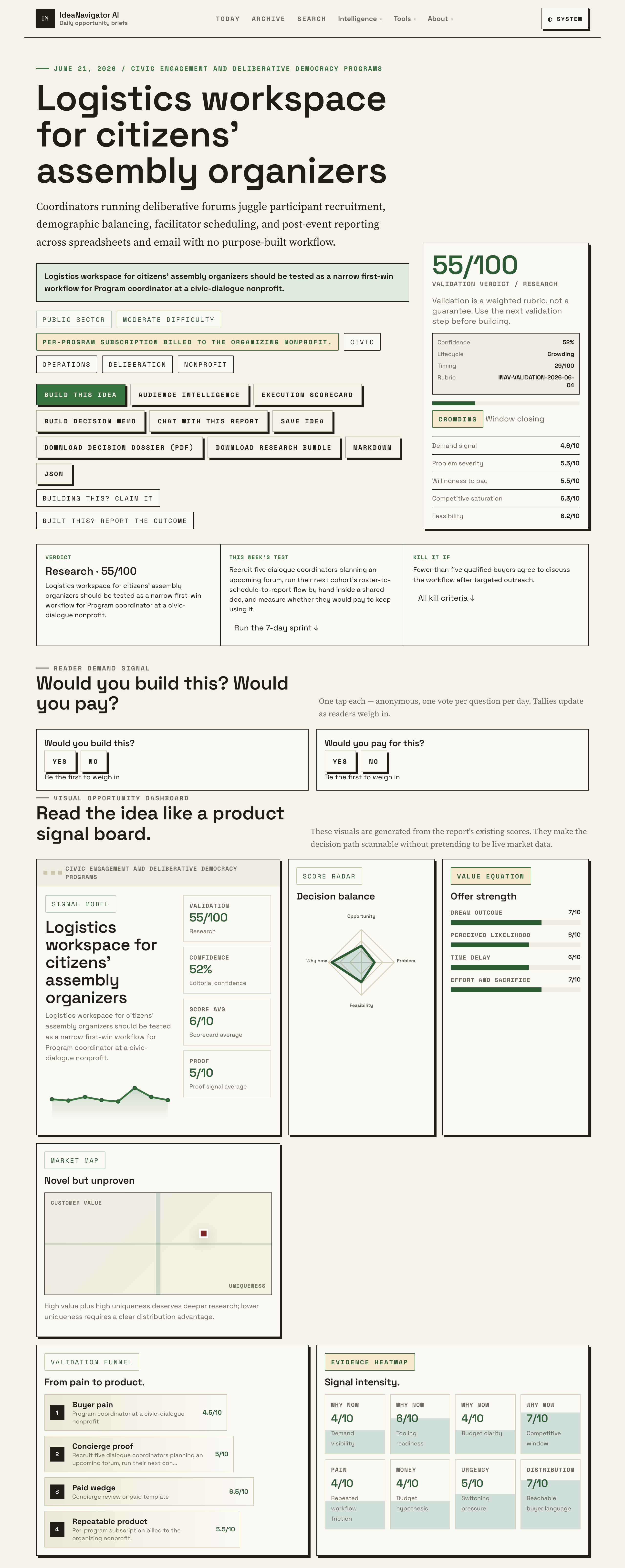
A civic-dialogue nonprofit is testing a dedicated logistics workspace to streamline the planning of citizens’ assemblies. This development aims to improve efficiency and scalability, addressing current manual workflows. The initiative could transform how civic programs are organized and executed.
A civic-dialogue nonprofit is testing a new logistics workspace designed to streamline the planning and execution of citizens’ assemblies and deliberative panels. This initiative aims to address manual, spreadsheet-based workflows that hinder scalability, especially as funders and local governments increasingly commission such programs. The development could significantly improve operational efficiency for civic organizations.
The proposed logistics workspace is a guided, digital platform that manages participant recruitment, demographic balancing, facilitator scheduling, and post-event reporting in a single workflow. Currently, coordinators rely on spreadsheets and email, which are prone to errors and inefficiencies. The nonprofit plans to test this MVP by recruiting five coordinators and comparing their manual roster-to-schedule-to-report process with the new system. Success would be measured by their willingness to adopt and pay for the platform.
This effort is motivated by the growing demand for citizens’ assemblies, driven by funders and governments seeking more participatory governance. However, small nonprofits delivering these forums lack scalable, purpose-built tools, limiting their capacity to expand and improve. The new workspace aims to fill this gap, offering a subscription-based model tailored to civic engagement programs.
Why Organized Logistics Are Critical for Civic Engagement
A well-structured logistics system is essential for scaling civic participation and ensuring the quality of deliberative forums. By automating participant management, scheduling, and reporting, nonprofits can reduce errors, save time, and focus on facilitating meaningful dialogue. This development could enable smaller organizations to handle larger cohorts, increasing community impact and fostering more inclusive decision-making processes.
Moreover, a dedicated workspace aligns with the broader trend toward digital transformation in civic engagement, making it easier to coordinate complex programs and demonstrate transparency and accountability. As governments and funders seek more reliable, scalable civic initiatives, operational tools like this could become standard infrastructure in participatory democracy.
digital logistics management platform for civic programs
As an affiliate, we earn on qualifying purchases.
As an affiliate, we earn on qualifying purchases.
Growing Demand for Civic Deliberation and Operational Challenges
Over recent years, there has been a surge in funded citizens’ assemblies and deliberative panels worldwide, aimed at increasing public participation in governance. These programs often involve diverse participants and require meticulous planning to ensure demographic balance and effective facilitation. However, many small civic nonprofits still rely on manual workflows, such as spreadsheets and emails, which are inefficient and difficult to scale.
Despite the increasing demand, there are limited dedicated tools designed specifically for the operational needs of civic dialogue organizers. This gap has led to bottlenecks that restrict program expansion and reduce overall effectiveness. The current project by the nonprofit aims to validate whether a purpose-built logistics platform can address these issues and become a core tool for civic engagement programs.
“Streamlining logistics is vital for scaling civic programs and maintaining quality.”
— an anonymous researcher
Uncertainties About Adoption and Impact
It is not yet clear whether the proposed logistics workspace will be widely adopted by civic nonprofits or if it will effectively address all operational challenges. The pilot involves only five coordinators, and their feedback will determine the platform’s viability. Broader scalability and integration with existing civic tools remain uncertain at this stage.
Next Steps for Validation and Expansion
The nonprofit plans to run the pilot with five coordinators, measuring their experience and willingness to pay. If successful, they will refine the platform and seek broader adoption through outreach to other civic organizations. Further development may include integrating additional features like real-time participant tracking and reporting dashboards, with the goal of establishing the platform as a standard tool in civic program management.
Key Questions
How will the new logistics workspace improve civic program planning?
The platform consolidates participant recruitment, scheduling, demographic balancing, and reporting into a single digital workflow, reducing manual work and errors.
Who will use this logistics platform?
The primary users will be program coordinators at civic-dialogue nonprofits organizing citizens’ assemblies and deliberative panels.
What are the main challenges in scaling civic forums today?
Manual workflows, reliance on spreadsheets, difficulty coordinating diverse participants, and limited tools for managing complex logistics hinder scalability.
When will the platform be available for wider use?
The nonprofit plans to evaluate pilot results over the coming months, with potential broader rollout contingent on positive feedback and refinement.
Could this platform be adapted for other civic or community programs?
Yes, if successful, the core features could be customized for various participatory initiatives beyond citizens’ assemblies.
Source: IdeaNavigator AI