

📊 Full opportunity report: The Critical Energy Bottleneck Facing AI Innovation on ThorstenMeyerAI.com — validation score, market gap, and execution plan.
TL;DR
AI development is constrained not by chips or funding but by the physical capacity of power grids to supply electricity. The bottleneck is in building and permitting new energy infrastructure, especially in the US and China. This limits how quickly AI can scale globally.
AI infrastructure expansion is now limited by the capacity of power grids to supply electricity, not by chip availability or funding. Despite significant investment, the physical and regulatory constraints of building new energy infrastructure are delaying AI scaling efforts, especially in the US and China. This bottleneck could slow down AI innovation and deployment worldwide.
Over the past three years, the focus in AI infrastructure has shifted from chip supply to the availability of electricity, with the bottleneck now in the physical capacity of power grids. Global data-center capacity is projected to nearly triple from 132 GW in 2026 to about 290 GW by 2030, but the demand for peak power supply strains existing infrastructure.
In the US, the interconnection queue alone holds projects totaling around 2,300 GW, with wait times extending to about five years. Despite the $650 billion committed by major tech companies to AI infrastructure, the physical constraints of transformers, transmission lines, and permitting processes are delaying deployment. Experts warn of a significant power shortfall, with estimates of a 9.3 GW gap in 2026, widening to 45 GW by 2028.
Meanwhile, China is rapidly expanding its energy capacity, adding approximately 543 GW in 2025, far surpassing the US’s 55 GW. China’s ability to deploy new capacity quickly and at lower costs gives it an advantage in powering AI growth, despite US restrictions on chip exports affecting AI compute capabilities.
For three years AI was a chip story. It quietly stopped being the binding constraint — the way it always does in a physical build-out, from the clever thing to the boring thing underneath.
When someone says AI is “only 3% of electricity,” they’re quoting consumption to make it sound modest. Capacity is where the bottleneck bites.
Implications of Energy Infrastructure Constraints on AI Progress
This energy bottleneck directly impacts the pace of AI development, as the physical infrastructure needed to support large-scale AI models is lagging behind demand. The inability to rapidly expand power capacity could slow innovation, deployment, and competitiveness for both the US and China. It also raises geopolitical concerns, as access to reliable, scalable electricity becomes a strategic factor in AI leadership.
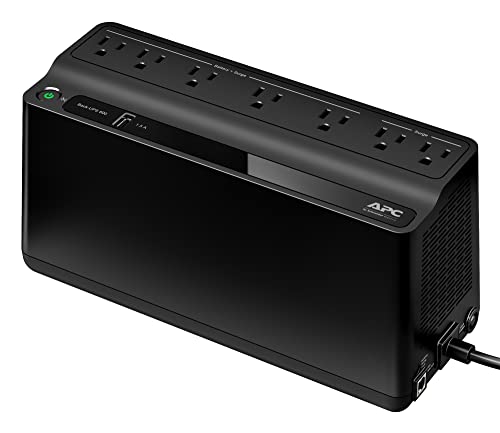
APC UPS 600VA/330W UPS Battery Backup for Computer, Router, NAS, BE600M1
- Battery Backup for Power Outages: Provides short-term power during outages
- 23 Minutes Runtime at 100W: Guards against power interruptions
- Surge Protection for Devices: Protects against unexpected power surges
As an affiliate, we earn on qualifying purchases.
As an affiliate, we earn on qualifying purchases.
Underlying Factors Behind the Energy Bottleneck in AI
For years, the AI conversation centered on chip supply, particularly NVIDIA GPUs, and export controls. Recently, attention has shifted to the physical infrastructure required to power AI at scale. The rapid growth of data centers and AI demand has outpaced the expansion of power grids, especially in the US, where aging infrastructure and lengthy permitting processes hinder new capacity additions. China’s aggressive energy expansion and lower power costs give it an advantage in supporting AI growth, creating a structural asymmetry in the global AI race.
Despite high levels of investment, the physical and regulatory constraints in building new energy infrastructure remain the primary obstacles. The US’s interconnection queue alone indicates a significant backlog, with projects requiring years to connect, while China’s capacity expansion has been swift and large-scale. This disparity influences the strategic positioning of AI leadership between the two countries.
"The primary constraint on AI growth has shifted from chips to the physical capacity of power grids to supply electricity."
— Thorsten Meyer
Unresolved Questions About Future Energy Expansion
It remains unclear how quickly the US and other countries can overcome permitting and infrastructure delays to significantly expand their energy capacity. The timeline for resolving these bottlenecks and the potential impact of technological innovations in energy storage or grid management are still uncertain.
Next Steps for Addressing the Energy Bottleneck in AI
Efforts are likely to focus on streamlining permitting processes, investing in grid modernization, and deploying new energy sources. Monitoring the pace of infrastructure development and regulatory reforms over the next 1-3 years will be critical to understanding how quickly the energy bottleneck can be alleviated and how it will influence AI's global growth trajectory.
Key Questions
Why is the energy capacity now considered a bottleneck for AI?
The physical limits of power grids to supply peak electricity are constraining the deployment of new data centers and AI infrastructure, despite high investment and demand.
How does China’s energy expansion compare to the US?
China added approximately 543 GW of capacity in 2025, far surpassing the US’s 55 GW, giving China a significant advantage in powering AI growth.
What are the main obstacles to expanding energy infrastructure in the US?
Permitting delays, aging infrastructure, and the physical challenge of building new transformers and transmission lines are primary obstacles.
Could technological innovations help overcome the energy bottleneck?
Potential solutions include energy storage, grid management improvements, and new energy sources, but their impact depends on deployment speed and regulatory support.
What is the geopolitical significance of this energy constraint?
The disparity in energy capacity growth between the US and China influences global AI leadership, with access to reliable power becoming a strategic advantage.
Source: ThorstenMeyerAI.com