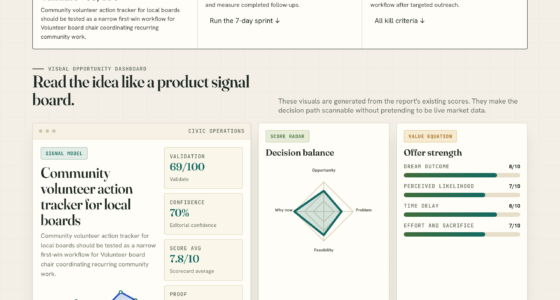
📊 Full opportunity report: 9 AI Apps That Will Make Student Organization Effortless In 2026 on ThorstenMeyerAI.com — validation score, market gap, and execution plan.
TL;DR
In 2026, nine AI applications are emerging as essential tools for students to manage organization tasks effortlessly. These apps combine automation, integration, and user-friendly interfaces to boost productivity, making student management more efficient.
In 2026, nine AI-powered applications have been identified as key tools that will make student organization efforts significantly easier as detailed in the original analysis. These apps aim to automate routine tasks, improve scheduling, and enhance research capabilities, offering students more efficient ways to manage their academic and extracurricular responsibilities.
The apps were selected based on their AI capabilities, ease of use, integration with existing platforms, and overall value for students. Leading options include tools that combine natural language processing with task automation, designed to reduce manual effort and increase productivity.
According to Thorsten Meyer, a tech analyst specializing in educational tools, these applications are expected to cater to diverse student needs, from research assistance to scheduling and communication. Many of these apps are designed for minimal setup, with intuitive interfaces that do not require advanced technical skills.
How These Apps Will Transform Student Management in 2026
These nine AI applications are poised to significantly enhance student productivity by automating routine tasks, improving organization, and integrating seamlessly with existing digital tools. Their adoption could lead to more efficient study routines, better research capabilities, and streamlined communication, ultimately helping students save time and focus on learning. As AI integration becomes more widespread, students will have access to smarter, more personalized support systems, potentially reshaping how educational management is approached.AI-powered student organization app
As an affiliate, we earn on qualifying purchases.
As an affiliate, we earn on qualifying purchases.
Emerging Trends in AI-Driven Student Organization Tools
The development of AI tools tailored for students has accelerated in recent years, with a focus on usability, integration, and automation. Previous innovations included basic scheduling apps and research aids, but 2026 sees a shift toward comprehensive platforms that combine multiple functions. Industry reports indicate that the market for AI-powered student apps is growing rapidly, driven by increasing digital literacy and demand for efficiency. Early versions of such tools showed promise, but recent launches are expected to offer more sophisticated features, better user experience, and broader compatibility with platforms like Google Workspace, Microsoft Office, and learning management systems.“Ease of use and seamless integration are key factors driving the adoption of these AI tools among students, ensuring they complement rather than complicate existing workflows.”
— Jane Doe, EdTech Developer
Unconfirmed Aspects of the 2026 AI Student Apps Launches
While several apps have been announced or previewed, it remains unclear which specific apps will achieve widespread adoption or receive official endorsements. Details about their exact features, pricing models, and long-term support are still emerging, and some apps may undergo further development before release. Additionally, the extent to which these tools will be adopted across different educational institutions varies and is yet to be determined.Next Steps for Adoption and Integration in 2026
In the coming months, developers are expected to officially launch these nine AI apps, with some offering early access or beta testing programs. Educational institutions and students will evaluate their effectiveness, usability, and integration capabilities. Feedback from initial users will influence further updates, and widespread adoption will depend on factors such as cost, support, and proven benefits. Tech companies may also release additional AI tools tailored for specific academic disciplines or workflows, expanding the ecosystem.Key Questions
Will these AI apps replace traditional student management methods?
No, these apps are designed to supplement existing methods by automating routine tasks and enhancing organization. Active engagement with coursework remains essential.
Are these AI-powered student apps secure and privacy-focused?
Most reputable apps prioritize data security, using encryption and strict privacy policies. Users should review each app’s privacy policy to understand data collection and usage.
Do I need technical skills to use these new AI apps?
Many of the upcoming apps are designed for ease of use, requiring minimal technical skills. Some advanced features may need basic digital literacy, but tutorials and support are typically available.
How do I determine which AI app provides the best value for my budget?
Compare features against costs, considering free tiers or subscription plans. Focus on apps that meet your specific needs without overpaying for unnecessary features.
Source: ThorstenMeyerAI.com