📊 Full opportunity report: Unveiling MiMo Code: Open-Source Tool For Better AI Signal Monitoring on IdeaNavigator AI — validation score, market gap, and execution plan.
TL;DR
MiMo Code is now available as an open-source tool designed to help operations leaders monitor AI capability and policy changes. It filters relevant signals from sources like Hacker News, enabling faster decision-making for small teams deploying AI tools.
MiMo Code, an open-source tool for monitoring AI signals, has been released to help operations teams track AI capability and policy shifts more efficiently. This development offers a targeted solution for small teams deploying AI tools, enabling faster and more informed decision-making amid rapidly evolving AI landscapes.
The MiMo Code project was officially released as open-source by its developers, aiming to provide a focused monitoring system for AI operations. It scans sources such as Hacker News and similar feeds to identify signals related to AI capability advances and policy changes that could impact small teams.
This tool filters relevant signals, like the recent announcement of MiMo Code’s open-source release, and generates concise briefs explaining what has changed, why it matters, and recommended actions. It is designed specifically for operations leads who need quick, role-specific updates rather than broad weekly summaries.
According to the developers, the initial focus is on creating a minimum viable product (MVP) that effectively filters and summarizes AI-related signals, with plans for future enhancements based on user feedback. The project is intended to be a subscription-based service, targeting operations teams managing AI deployments in small organizations.
Impact of MiMo Code on AI Operations Monitoring
The release of MiMo Code as an open-source tool addresses a critical gap in AI operations: the need for timely, filtered information about AI capability and policy shifts. As AI developments accelerate, small teams often struggle to keep up with scattered news, forums, and filings that could influence their deployment strategies.
This tool enables faster decision-making by providing role-specific updates, reducing the risk of missing important signals that could affect AI rollout or compliance. Its open-source nature also encourages collaboration and customization, potentially setting a new standard in AI operational monitoring.
As an affiliate, we earn on qualifying purchases.
Rapid Rise of AI Signal Monitoring Tools
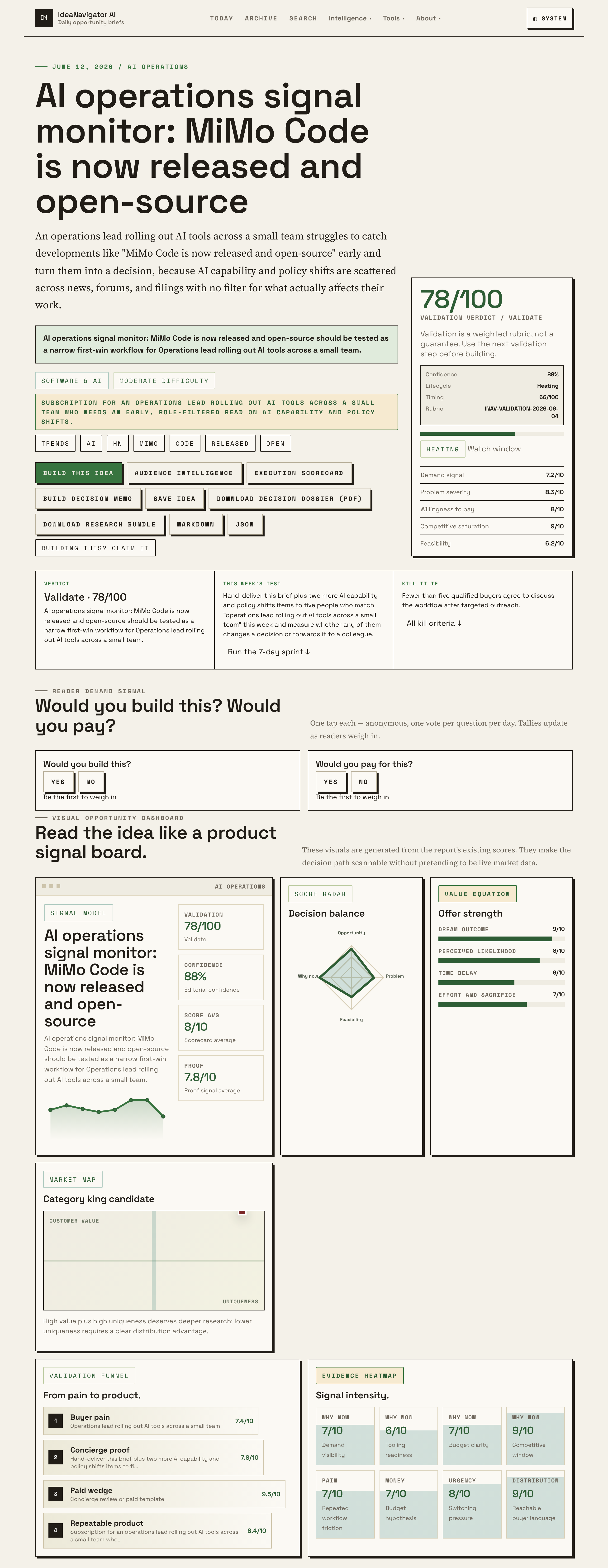
In recent months, the AI community has seen a surge in tools designed to track and interpret AI capability and policy shifts. Hacker News has emerged as a key source for such signals, with recent reports indicating an 88/100 signal strength for relevant updates like MiMo Code’s release.
Until now, operations teams lacked dedicated, role-specific tools to filter these signals effectively, often relying on broad news summaries that could delay critical decisions. The release of MiMo Code responds to this need, aiming to streamline the process and improve responsiveness in AI deployment workflows.
“MiMo Code is designed to be a lightweight, role-focused monitor that helps small teams stay ahead of AI capability and policy shifts.”
— an anonymous developer
Unanswered Questions About MiMo Code’s Effectiveness
It is not yet clear how widely adopted MiMo Code will become or how effectively it will filter signals in practice. User feedback and real-world testing are still pending, and the scope of future updates remains to be seen.
Additionally, the specifics of how the tool integrates with existing operational workflows and its performance across different sources are still under evaluation.
Next Steps for Development and Adoption
Developers plan to release additional features based on early user feedback, including enhanced filtering, alerting, and integration capabilities. They aim to validate the tool’s effectiveness through pilot programs with small teams managing AI deployments.
In the coming months, the project will likely see broader community engagement, with potential for commercial offerings or further open-source collaborations. Monitoring its adoption and feedback will be crucial to understanding its long-term impact.
Key Questions
What is MiMo Code and what does it do?
MiMo Code is an open-source tool designed to monitor AI capability and policy shifts by filtering signals from sources like Hacker News, helping small teams make faster, informed decisions.
Who is the target user for MiMo Code?
The primary users are operations leads managing AI tool deployment in small organizations who need role-specific, real-time updates on AI developments.
How does MiMo Code differ from existing monitoring tools?
It offers a focused, role-specific filter that targets relevant signals, rather than broad news aggregation, enabling quicker decision-making for AI operations teams.
Is MiMo Code available for public use?
Yes, it has been released as open-source, allowing users to test, customize, and contribute to its development.
What are the limitations or uncertainties about MiMo Code?
Its effectiveness in real-world scenarios remains to be validated through user feedback, and its ability to filter signals across diverse sources is still being tested.
Source: IdeaNavigator AI