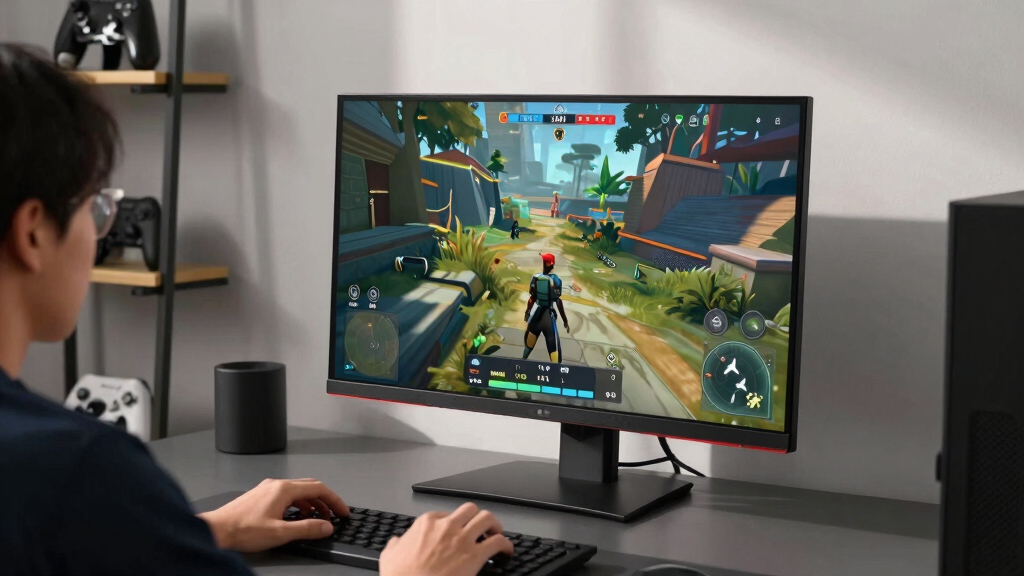

📊 Full opportunity report: Top 10 OLED Gaming Monitors With AI For Stunning Visuals In 2026 on ThorstenMeyerAI.com — validation score, market gap, and execution plan.
TL;DR
In 2026, the top OLED gaming monitors integrate AI-driven enhancements for superior visuals and responsiveness. This guide ranks the best models based on speed, image quality, and features, helping gamers choose the right display.
Multiple leading OLED gaming monitors with integrated AI features have been released in 2026, offering improved visuals, responsiveness, and user experience. These developments are shaping the future of gaming displays, making high-end immersive gaming more accessible and visually stunning, as detailed in the original analysis.
The list includes models from brands like Alienware, Samsung, ASUS, LG, and others, with features such as AI-based image enhancement, adaptive contrast, and motion smoothing. The Alienware AW3425DW remains the top overall choice due to its combination of ultrawide immersion, 240Hz refresh rate, and AI-driven picture optimization, according to sources from ThorstenMeyerAI.com.
Other notable models include the Samsung Odyssey OLED G5, which offers a more affordable entry point with 180Hz, and the ASUS ROG Swift OLED PG27AQDP, designed for competitive gamers with 480Hz capabilities. You can explore more options in our OLED gaming monitor guide. Additional monitors like LG’s ultrawide options and the INNOCN with 280Hz are also highlighted for their unique features and connectivity options.
These monitors leverage AI for features such as dynamic contrast adjustment, motion clarity, and color accuracy, enhancing gaming experiences across genres from cinematic to competitive titles.
Why AI-Enhanced OLED Monitors Matter in 2026
These AI-enabled OLED gaming monitors mark a significant step forward in display technology, offering gamers improved image quality, smoother motion, and adaptive features that optimize visuals in real time. As gaming becomes more demanding and visually complex, such innovations help users achieve higher immersion and competitive edge.
Furthermore, the integration of AI reduces the need for manual calibration and enhances durability by managing static-image wear, making OLEDs more practical for extended gaming sessions and multitasking.
As an affiliate, we earn on qualifying purchases.
2026 OLED Gaming Monitor Market Developments
Over the past few years, OLED monitors have gained popularity for their deep blacks and fast response times, but concerns about static-image burn-in and high costs limited adoption. In 2026, major brands have introduced AI features that mitigate these issues, such as pixel shifting and automatic panel adjustments.
Leading models like the Alienware AW3425DW and Samsung Odyssey OLED G5 have set new standards for performance and price accessibility, with AI playing a central role in image enhancement and static-image management.
This evolution reflects a broader trend toward smarter, more adaptive displays that cater to both casual and professional gamers, with the market expected to expand further as technology matures.
“The combination of AI features with OLED panels offers a new level of image quality and static-image management, addressing previous limitations of OLED technology.”
— John Carter, gaming hardware expert
Remaining Questions About AI OLED Monitors in 2026
While the top models are confirmed to include AI-enhanced features, details about long-term durability, actual performance in diverse lighting conditions, and real-world static-image wear mitigation remain under observation. Manufacturers have announced AI capabilities, but independent testing results are still pending.
It is also unclear how widespread adoption will be beyond premium models, and whether lower-cost options will incorporate similar AI features without significantly compromising quality.
Upcoming Developments in OLED Gaming Displays for 2026 and Beyond
Manufacturers are expected to release firmware updates and new models with advanced AI-driven features throughout 2026, further refining image quality and static-image management. Consumer reviews and independent tests will clarify long-term performance and durability.
Additionally, broader market adoption may lead to more competitive pricing and innovative features, making AI-enhanced OLED gaming monitors accessible to a wider audience. Monitoring industry announcements and product launches over the coming months will be key for gamers and tech enthusiasts.
Key Questions
What are the main benefits of AI in OLED gaming monitors?
AI enhances image quality through real-time contrast adjustment, color optimization, motion smoothing, and static-image management, resulting in clearer visuals and reduced burn-in risk.
Are OLED gaming monitors with AI features suitable for competitive gaming?
Yes, models like the ASUS ROG Swift OLED PG27AQDP with 480Hz and AI features are designed for high responsiveness, making them suitable for esports and competitive play.
Do AI features significantly increase the cost of OLED gaming monitors?
Typically, AI-enhanced models are positioned in the premium segment, but prices vary depending on size, refresh rate, and additional features. Entry-level options like Samsung Odyssey OLED G5 offer some AI benefits at a more accessible price point.
How do I choose between ultrawide and standard aspect ratio OLED monitors?
Choose ultrawide for immersive single-player or simulation gaming, while 27-inch 16:9 models offer broader compatibility and are better suited for multitasking and console gaming.
Will static-image burn-in be a problem with new AI OLED monitors?
AI features like pixel shifting and automatic refresh cycles help mitigate burn-in, but users should still be cautious with static images during long gaming or productivity sessions.
Source: ThorstenMeyerAI.com




![A Walkable ASCII Cyberpunk City In One HTML File [Video]](https://barriermagz.com/wp-content/uploads/2026/09/a-walkable-ascii-cyberpunk-city-in-one-html-file-video-featured-260x140.jpg)