
📊 Full opportunity report: The Eye Over the City: How Wide-Area Motion Imagery Works — and Where It Goes Blind on ThorstenMeyerAI.com — validation score, market gap, and execution plan.
TL;DR
Wide-Area Motion Imagery (WAMI) captures city-wide footage, enabling detailed tracking of movements over large areas. It combines advanced sensors and AI but faces physical and operational limits. Its evolution impacts military, security, and civilian surveillance.
Wide-Area Motion Imagery (WAMI) is transforming surveillance by capturing entire cityscapes in a single frame, allowing analysts to track every vehicle and pedestrian over several square kilometers. This technology, used by military and civilian agencies, offers a level of persistent, forensic surveillance previously unavailable, making it one of the most significant advancements in the last two decades.
WAMI systems, such as DARPA’s ARGUS-IS, use an array of thousands of cameras to produce gigapixel images that can resolve objects as small as six inches from high altitudes. These images are stabilized, stitched, and processed through complex pipelines that detect and track moving objects frame by frame, archiving everything for later review. The data rates are enormous, requiring automation and AI to analyze the footage effectively.
Originally developed in the early 2000s at Lawrence Livermore National Laboratory, WAMI transitioned into military use in Iraq and Afghanistan, deployed on aircraft like the Reaper drone. Its applications have since expanded to border security, wildfire mapping, and disaster response, demonstrating its versatility beyond military contexts. However, WAMI faces physical limitations: it relies on optical sensors affected by weather and darkness, requires platforms to loiter overhead, and incurs high operational costs.
To address these limits, WAMI is often paired with synthetic aperture radar (SAR), which can see through clouds, smoke, and darkness, providing all-weather, deep-denied coverage. This sensor fusion creates layered sensing capabilities, combining optical detail with radar’s resilience, for comprehensive surveillance.
The eye over the city: how Wide-Area Motion Imagery works — and where it goes blind
A normal drone sees through a soda straw. WAMI watches an entire city at once, tracks every mover, and records it all for forensic rewind. Immense reach — with hard limits that make radar and AI its necessary partners.
- City-scale motion, fine detail
- Forensic rewind
- Cloud / smoke / dark degrade it
- Needs a platform loitering overhead
sensing
+ AI
- Sees through cloud & total dark
- Tasked over denied airspace
- Persistent, wide-area from orbit
- Sovereign · on-prem · air-gap
The same archive that traces a bomber to a safe house can trace anyone home — retroactively, without prior suspicion. Baltimore’s secret 2016 deployment led to a 2021 federal ruling that persistent aerial tracking violated the Fourth Amendment. The security value is real; so is the mass-surveillance risk. Who owns the sensor, the archive, and the AI is the accountability question.
WAMI’s power is the archive and the AI reading it; its weakness is weather, airspace, and oversight. The mature posture isn’t optical-vs-radar or capability-vs-liberty — it’s layered sensing (optical WAMI + all-weather SAR), AI-enabled exploitation, and sovereign, auditable control of the whole chain. WAMI shows what a persistent eye can do with clear skies and owned airspace; for the cloud, the night, and the denied area, the radar layer is where the resilient coverage lives.
Impacts of WAMI on Modern Surveillance and Security
WAMI’s ability to provide persistent, detailed, city-wide surveillance has significant implications for security, military operations, and emergency response. It enhances the capacity to investigate incidents, track criminal or terrorist movements, and support disaster management efforts. However, its extensive data collection also raises important governance and privacy concerns, prompting ongoing legal debates and policy considerations.

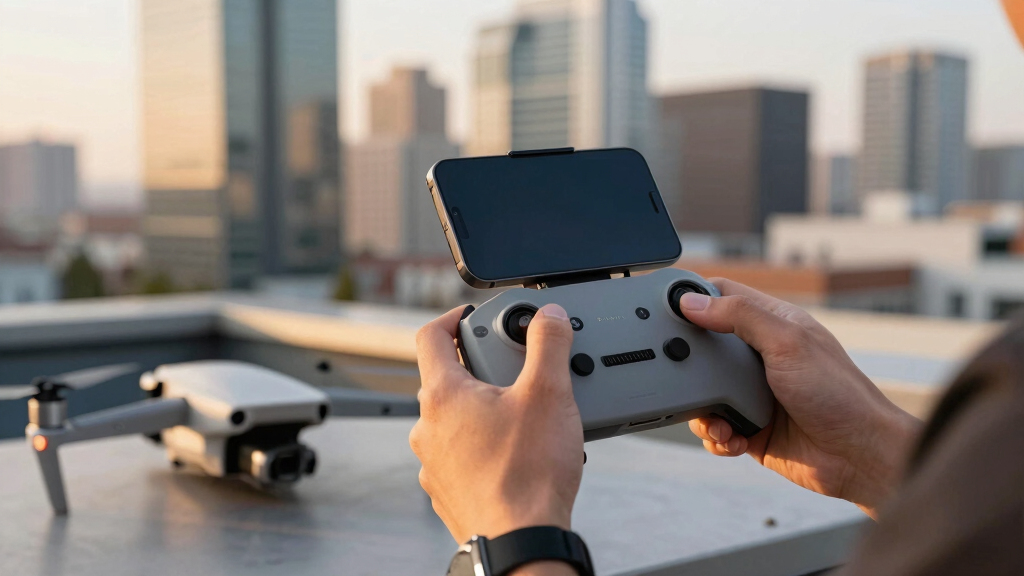
DJI Mini 4K Camera Drone Combo, Drone with 4K UHD Camera for Adults, Under 249 g, 3-Axis Gimbal Stabilization, 10km Video Transmission, Auto Return, 2 Batteries for 62-Min Max Flight Time, QuickShots
- No Registration Required: Under 249g, no FAA registration needed
- 4K UHD & 3-Axis Gimbal: Cinematic-quality 4K footage with stabilization
- Wind Resistant up to Level 5: Stable flight in strong winds at 38kph
As an affiliate, we earn on qualifying purchases.
As an affiliate, we earn on qualifying purchases.
Evolution and Deployment of City-Wide Imaging Systems
WAMI technology originated in the early 2000s with the Sonoma Persistent Surveillance Program and was later adopted by the US Department of Defense. It evolved from experimental rigs to deployable systems on aircraft, drones, and aerostats, with key milestones including DARPA’s ARGUS-IS and the Gorgon Stare pods. Its deployment has increased in both military and civilian contexts, reflecting a broader trend toward persistent, wide-area surveillance.
Despite advancements, WAMI’s reliance on optical sensors makes it vulnerable to weather and lighting conditions, leading to the development of complementary radar systems like SAR. This layered approach aims to overcome individual sensor limitations and enhance operational effectiveness.
“WAMI is less a camera than a city-sized time machine, capable of rewinding and analyzing movements over large areas with unprecedented detail.”
— Thorsten Meyer, surveillance technology expert
Current Limitations and Challenges Facing WAMI
While WAMI provides extensive coverage, it remains limited by weather, optical visibility, and high operational costs. The integration with radar sensors like SAR is promising but still evolving, and the legal and privacy implications of such pervasive surveillance are actively debated. It is not yet clear how widespread or regulated future deployments will be.
Future Directions for WAMI and Sensor Fusion Technologies
Research continues into making WAMI more resilient to weather and lighting conditions, including enhanced infrared capabilities and improved AI analysis. The integration of WAMI with advanced radar systems is expected to become more seamless, offering comprehensive, all-weather surveillance solutions. Regulatory frameworks and governance policies will likely evolve to address privacy concerns as deployment scales up.
Key Questions
What is Wide-Area Motion Imagery (WAMI)?
WAMI is a surveillance technology that captures high-resolution images of entire cities or large areas, allowing detailed tracking of moving objects over time.
How does WAMI differ from traditional video cameras?
Unlike conventional cameras that focus on narrow fields of view, WAMI covers several square kilometers in a single frame and archives everything for forensic analysis.
What are the main limitations of WAMI?
Its effectiveness is limited by weather, darkness, and the need for platforms to loiter overhead, which can be costly and contested in some areas.
How does sensor fusion improve surveillance capabilities?
Combining optical WAMI with radar sensors like SAR creates layered sensing, providing continuous coverage regardless of weather or lighting, and filling each other’s blind spots.
What are the privacy concerns related to WAMI?
Persistent, city-wide surveillance raises questions about privacy rights and governance, leading to ongoing legal debates about its use and regulation.
Source: ThorstenMeyerAI.com