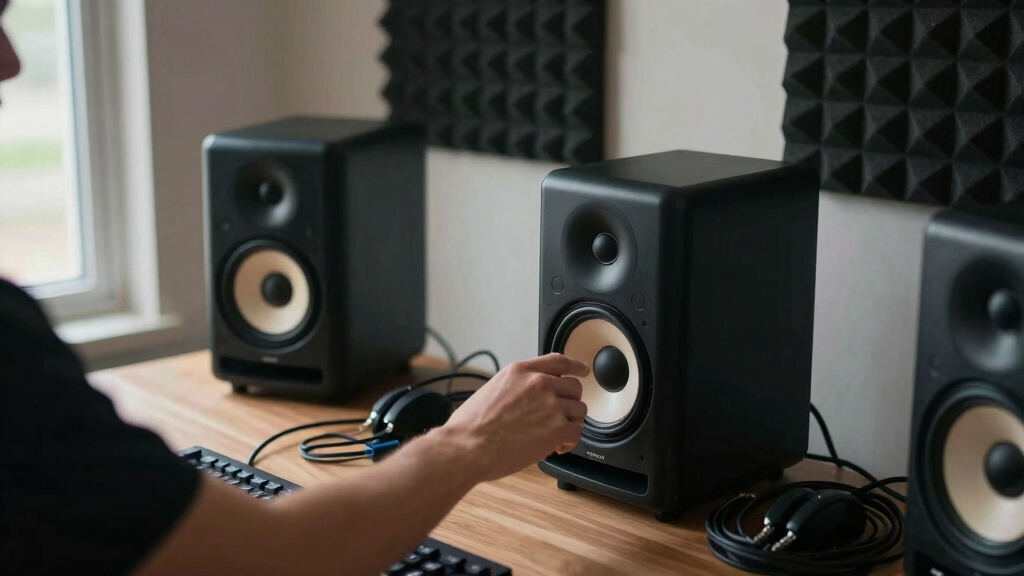

Finding the best studio monitors under 1500 a pair requires balancing performance, size, and value. The KRK Kreate 3 stands out for its affordability and compact design, ideal for small spaces. The Yamaha HS8 offers a flatter response suited for critical mixing, while the PreSonus Eris E7 XT provides a broader frequency range at a competitive price. Most options in this range involve tradeoffs between size, power, and precision. Continue reading for a detailed breakdown of each model’s strengths and limitations to help you make an informed choice.
Key Takeaways
- The top-performing monitors balance flat frequency response with sufficient power for versatile use.
- Smaller speakers like the Eris 3.5 excel for desktop setups but may lack deep bass for larger rooms.
- Premium picks such as the Yamaha HS8 deliver more accurate sound but come with a higher price point.
- Size and power are tradeoffs—larger monitors often provide better low-end but require more space and power.
- Build quality varies, with some budget options sacrificing durability for cost savings, impacting long-term reliability.
| KRK Kreate 3 Powered Studio Monitors Pair |  | Best Overall | Mounting Type: Tabletop | Speaker Size: 3.5 Inches | Item Weight: 12 Pounds | VIEW LATEST PRICE | See Our Full Breakdown |
| Yamaha HS3 Powered Studio Monitor in Black, Pair (HS3 B) |  | Best for Beginners | Frequency Response: 70Hz – 22kHz | Power Output: 26 W | Speaker Size: 3.5 Inches | VIEW LATEST PRICE | See Our Full Breakdown |
| PreSonus Eris E7 XT 2-Way Active Studio Monitor with EBM Waveguide |  | Best for Intermediate Producers | Frequency Response: 45Hz – 20kHz | Woofer Diameter: 6.55 Inches | Power Output: 130 Watts | VIEW LATEST PRICE | See Our Full Breakdown |
| PreSonus Eris 3.5 Studio Monitors, Pair |  | Best Compact Choice | Speaker Size: 3.5 Inches | Frequency Response: 70Hz – 20kHz | Power Output: 50 Watts | VIEW LATEST PRICE | See Our Full Breakdown |
| Mackie CR3.5 3.5″ Creative Reference Powered Studio Monitors | 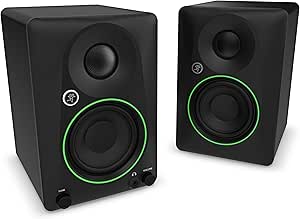 | Best Budget Pick | Speaker Size: 3.5 Inches | Frequency Response: 70Hz – 20kHz | Power Output: 50 Watts | VIEW LATEST PRICE | See Our Full Breakdown |
| Yamaha HS8 Studio Monitor Powered Studio Monitor Pair – Slate Grey |  | Best Overall for Professional Clarity | Frequency Response: 38 Hz – 20 kHz | Power: 120W | Inputs: XLR, TRS | VIEW LATEST PRICE | See Our Full Breakdown |
| PreSonus Eris Studio 5 5.25-inch 2-Way Active Studio Monitors with EBM Waveguide |  | Best Value for Compact Precision | Frequency Response: 48 Hz – 20 kHz | Power: 80W | Drivers: 5.25-inch woofer, silk dome tweeter | VIEW LATEST PRICE | See Our Full Breakdown |
| PreSonus Eris 3.5BT Studio Monitors, Pair — 3.5″ Inch Powered Bookshelf Speakers |  | Best for Compact Wireless Convenience | Frequency Response: 55 Hz – 20 kHz | Power: 50W | Drivers: 3.5-inch woofer, 1-inch tweeter | VIEW LATEST PRICE | See Our Full Breakdown |
| Ortizan C7 Dual-Mode 2.0 Studio Monitors, Active Monitor Speakers (Pair) |  | Best Wireless Flexibility for Versatile Use | Frequency Response: 70 Hz – 20 kHz | Power: 24W | Drivers: 3.5-inch carbon fiber, 0.75-inch silk dome | VIEW LATEST PRICE | See Our Full Breakdown |
| PreSonus Eris E5 2-Way 5.25″ Near Field Studio Monitor |  | Best Overall | Woofer Diameter: 5.25 Inches | Tweeter Diameter: 1 Inch | Power Output: 80 Watts | VIEW LATEST PRICE | See Our Full Breakdown |
| PreSonus Eris E4.5-2-Way 4.5″ Near Field Studio Monitor (Pair) |  | Best Value Pick | Woofer Diameter: 4.5 Inches | Tweeter Diameter: 1 Inch | Power Output: 50 Watts | VIEW LATEST PRICE | See Our Full Breakdown |
More Details on Our Top Picks
KRK Kreate 3 Powered Studio Monitors Pair
This option stands out for its exceptional value and versatile features, making it ideal for both budding and experienced creators. Compared to the PreSonus Eris E7 XT, the KRK Kreate 3 offers a more compact footprint and wireless streaming, which is perfect for flexible setups. Its textile dome tweeter and woven fiber woofer deliver clear, balanced sound with a surprisingly punchy bass for a 3.5-inch driver, though some users note the Bluetooth pairing process can be less intuitive initially. The multiple audio inputs ensure compatibility with a wide range of devices, and its lightweight design makes it easy to move around. However, the smaller size limits its bass extension compared to larger monitors like the Yamaha HS8. Overall, this monitor makes the most sense for content creators who need quality sound in a small, versatile package without sacrificing clarity or connectivity.
Pros:- Excellent value with versatile connectivity options
- Pristine high and midrange clarity with textile dome tweeter
- Wireless Bluetooth input adds convenience
Cons:- Limited bass response due to small woofer size
- Bluetooth pairing instructions could be clearer
Best for: Creative professionals and hobbyists seeking a budget-friendly, wireless-capable monitor with good sound clarity.
Not ideal for: Large-scale mixing engineers who require deep bass and high SPL for expansive soundscapes.
- Mounting Type:Tabletop
- Speaker Size:3.5 Inches
- Item Weight:12 Pounds
- Warranty & Support:Amazon 30-Day Return
Bottom line: A compact, feature-rich monitor ideal for small studios, multimedia use, and wireless streaming enthusiasts.
Yamaha HS3 Powered Studio Monitor in Black, Pair (HS3 B)
This model makes the most sense for newcomers due to its straightforward design and reliable Yamaha sound signature. Compared with the PreSonus Eris E7 XT, the HS3 offers a slightly smaller 3.5-inch woofer and a narrower frequency response, which is suitable for near-field use but less ideal for detailed mixing. Its 70Hz – 22kHz range is adequate for casual listening and entry-level production, and the room control plus high trim response help tailor the sound to your space. Pros include its simple setup, durable build, and Yamaha’s reputation for balanced sound. On the downside, the smaller drivers mean less low-end punch and limited headroom at high volumes. This monitor is perfect for beginners or those with a small desk setup who want reliable, honest sound without fuss.
Pros:- Simple, plug-and-play setup with durable build
- Effective room and high-frequency adjustments
- Trusted Yamaha sound signature
Cons:- Limited low-frequency response for bass-heavy genres
- Size may be too small for detailed mixing
Best for: New producers, students, or home users needing a dependable entry-level monitor.
Not ideal for: Advanced professionals needing deep bass extension or high SPL for large rooms.
- Frequency Response:70Hz – 22kHz
- Power Output:26 W
- Speaker Size:3.5 Inches
- Inputs:XLR/TRS, RCA, Stereo Mini
- Mounting Type:Desk or shelf
- Item Weight:26 W
Bottom line: A solid, easy-to-use choice for beginners prioritizing clarity and reliability over deep bass.
PreSonus Eris E7 XT 2-Way Active Studio Monitor with EBM Waveguide
This monitor stands out for its detailed sound and impressive features, making it ideal for serious home studios. Compared to the smaller Eris 3.5, the E7 XT’s larger 6.5-inch driver delivers deeper lows and higher SPL, suitable for mixing and mastering. Its innovative 100˚(H) x 60˚(V) EBM waveguide provides a wide, controlled stereo image, especially helpful for collaborative work. Acoustic tuning controls allow customization based on your room, enhancing accuracy. While the size and power make it better suited for more experienced users, the setup can be more complex due to the advanced controls. Its price point is higher but justified by the rich, transparent sound and wider sweet spot. This makes it a top pick for those who need professional-grade accuracy in a slightly larger footprint.
Pros:- Wide, controlled stereo imaging with EBM waveguide
- Extensive acoustic tuning controls for room calibration
- Deep bass with 6.5-inch low-frequency driver
Cons:- Larger size requires more space and setup effort
- Higher price may be a barrier for casual users
Best for: Intermediate producers and home studio owners seeking a versatile, accurate monitor with tuning options.
Not ideal for: Beginners or those with very limited space who prefer smaller, plug-and-play options.
- Frequency Response:45Hz – 20kHz
- Woofer Diameter:6.55 Inches
- Power Output:130 Watts
- Connectivity:RCA, TRS, XLR
- Enclosure Material:Metal, Plastic
- Item Weight:10.2 Pounds
Bottom line: A high-performance monitor for users who need precise sound and flexible room tuning capabilities.
PreSonus Eris 3.5 Studio Monitors, Pair
This pick makes the most sense for those needing high-quality sound in a small, desktop-friendly form. When compared with the Mackie CR3.5, the Eris 3.5 offers slightly more refined audio clarity and a broader tuning range thanks to its acoustic controls. Its 50W dual amplification powers the 3.5-inch woven composite woofers and silk-dome tweeters to produce tight bass and clear highs, making it suitable for multimedia, gaming, and light music production. The front panel headphone and aux inputs add convenience for quick switching. The downsides include a limited bass response and less headroom at high volumes, which can be noticeable with bass-heavy genres. Overall, this monitor is perfect for desktop setups, multimedia enthusiasts, and beginners who prioritize space-efficiency without sacrificing sound quality.
Pros:- Compact size fits well on desks and shelves
- Powerful 50W dual amplifier with acoustic tuning
- Front panel headphone and auxiliary inputs
Cons:- Bass response is limited compared to larger monitors
- Not suitable for high-volume, professional mixing environments
Best for: Desktop users, multimedia creators, and entry-level producers needing a small but capable monitor.
Not ideal for: Professional mixing engineers requiring deep bass extension and high SPL for large rooms.
- Speaker Size:3.5 Inches
- Frequency Response:70Hz – 20kHz
- Power Output:50 Watts
- Inputs:TRS, RCA, ⅛-inch Aux
- Mounting Type:Tabletop
- Item Weight:10.2 Pounds
Bottom line: A highly capable compact monitor for small spaces and multimedia use, with enough power for most desktop needs.
Mackie CR3.5 3.5″ Creative Reference Powered Studio Monitors
This model exceeds expectations for its size, providing clear, articulate sound that suits a variety of uses. Compared to the PreSonus Eris 3.5, the Mackie CR3.5 offers a more customizable sound profile with its tone knob and adjustable location switch, making it adaptable for both near-field and larger room listening. Its 3.5-inch driver produces surprisingly punchy bass and crisp highs, with the front-panel volume and headphone controls adding convenience. The build quality feels solid, and the included cables simplify setup. The main tradeoff is that, like other small monitors, it lacks deep bass extension, which limits use for genres demanding heavy bass or critical mixing. Overall, these monitors are ideal for casual listening, gaming, or entry-level home studios that need a versatile, affordable solution.
Pros:- Affordable with versatile tone controls
- Compact, desk-friendly design
- Includes useful cables and front panel controls
Cons:- Limited low-end compared to larger models
- Not suitable for large or professional studio environments
Best for: Students, gamers, or casual producers seeking affordable, flexible desktop speakers with good sound for their budget.
Not ideal for: Professional audio engineers requiring high SPL and extended low-frequency response for mixing or mastering.
- Speaker Size:3.5 Inches
- Frequency Response:70Hz – 20kHz
- Power Output:50 Watts
- Inputs:TRS, RCA, ⅛-inch
- Mounting Type:Desk or shelf
- Item Weight:10.2 Pounds
Bottom line: An excellent budget-friendly choice for casual use and small space setups, blending versatility with decent sound quality.
Yamaha HS8 Studio Monitor Powered Studio Monitor Pair – Slate Grey
This Yamaha HS8 stands out for delivering a broad frequency response with deep bass and crisp highs, making it ideal for critical listening and mixing. Compared with the PreSonus Eris 3.5BT, it offers a more neutral and detailed sound profile suitable for professional environments, though it lacks Bluetooth connectivity. Its high-performance bi-amp system and adjustable ROOM CONTROL and HIGH TRIM enable precise tuning to any space, which is a step above many entry-level monitors. The sleek slate gray finish complements modern studios, but its size and power may be less ideal for small or portable setups. Overall, this model makes the most sense for experienced producers needing accurate sound reproduction, accepting that it’s not the most compact option.
Pros:- Wide frequency response with deep bass and crisp highs
- Customizable sound with ROOM CONTROL and HIGH TRIM adjustments
- Supports balanced (XLR) and unbalanced (TRS) inputs for versatile setup
- Modern, durable, and professional-looking design
Cons:- Size and weight may be cumbersome for small or portable spaces
- No Bluetooth or wireless features for ease of use with mobile devices
Best for: Professional musicians or mixing engineers who need accurate, detailed sound and room tuning options.
Not ideal for: Small home studios or users seeking wireless convenience, as it lacks Bluetooth and is larger in size.
- Frequency Response:38 Hz – 20 kHz
- Power:120W
- Inputs:XLR, TRS
- Size:13 x 9 x 15 inches
- Finish:Slate Gray
- Weight:22 lbs
Bottom line: This monitor is ideal for professionals demanding precise sound and room customization, but less suited for casual or mobile use.
PreSonus Eris Studio 5 5.25-inch 2-Way Active Studio Monitors with EBM Waveguide
The PreSonus Eris Studio 5 offers a balanced sound profile with extended low end thanks to its 5.25-inch drivers, making it a great choice for small studios or desktop setups. Its all-wood woven composite woofer and silk dome tweeter provide a natural, clear high frequency that rivals the more expensive Yamaha HS8, though it doesn’t quite match the flatness and neutrality. The EBM waveguide broadens the sweet spot, improving stereo imaging, which gives it an advantage over many smaller speakers like the KRK Kreate 3. Still, its power output is more modest at 80W, making it less suitable for large or high-volume environments. As a budget-friendly monitor with professional features, it’s perfect for entry-level producers or home musicians, provided they accept its size and power limits.
Pros:- Balanced, natural sound with extended bass response
- Wide stereo image due to EBM waveguide
- Supports versatile inputs including XLR and TRS
- Compact and suitable for desktop use
Cons:- Lower power output limits volume for large rooms
- Not as flat or neutral as high-end monitors like Yamaha HS8
Best for: Beginners or home studio owners needing accurate sound at a budget without sacrificing essential features.
Not ideal for: Large professional studios or those needing high SPL, as it’s less powerful and designed for smaller spaces.
- Frequency Response:48 Hz – 20 kHz
- Power:80W
- Drivers:5.25-inch woofer, silk dome tweeter
- Inputs:XLR, TRS, RCA
- Size:8 x 5.5 x 9 inches
- Weight:12 lbs
Bottom line: A strong choice for budget-conscious users seeking accurate, well-rounded sound for small or home studios.
PreSonus Eris 3.5BT Studio Monitors, Pair — 3.5″ Inch Powered Bookshelf Speakers
The PreSonus Eris 3.5BT pair excels in small spaces, offering Bluetooth 5.0 streaming and a surprisingly full sound for their size. Their 3.5-inch drivers deliver a clear, balanced audio profile with a notably strong low end for such small speakers, comparable favorably to the Eris Studio 5 in terms of sound quality, but with a more portable form factor. The built-in high- and low-frequency controls allow some room tuning, and the front headphone jack is a practical addition. However, their 50W power rating means they’re best suited for near-field, desktop listening rather than large rooms or high-volume applications. These monitors are perfect for content creators, students, or casual music enthusiasts who value wireless connectivity and compact design over absolute loudness or neutrality.
Pros:- Wireless Bluetooth 5.0 for easy streaming
- Compact and stylish, ideal for desktops
- Built-in tonal controls for room tuning
- Includes front headphone output for private monitoring
Cons:- Limited power output for large or loud environments
- Sound profile less neutral than larger monitors
Best for: Content creators, students, or casual listeners needing wireless, space-saving monitors with decent sound quality.
Not ideal for: Professional mixing or large-room use, due to limited power and size constraints.
- Frequency Response:55 Hz – 20 kHz
- Power:50W
- Drivers:3.5-inch woofer, 1-inch tweeter
- Connectivity:Bluetooth 5.0, RCA, 3.5mm
- Size:8.3 x 6 x 5.5 inches
- Weight:4.5 lbs
Bottom line: A perfect choice for small spaces and wireless convenience, though not for high-volume or critical mixing tasks.
Ortizan C7 Dual-Mode 2.0 Studio Monitors, Active Monitor Speakers (Pair)
The Ortizan C7 monitors are notable for their dual-mode operation, offering both wired and Bluetooth 5.3 wireless connectivity, making them highly adaptable for various setups. Their 3.5-inch carbon fiber drivers and silk dome tweeter deliver a clean, detailed sound with a good low-end response for their size, suitable for near-field listening and multimedia. The inclusion of multiple input options, including RCA and AUX, plus Bluetooth pairing, makes them flexible for both studio and casual use. However, their modest power output of 24W limits volume and performance in larger or demanding environments. These monitors are well-suited for content creators and casual users who prioritize wireless convenience and compact size over absolute high-fidelity or volume.
Pros:- Dual wired and Bluetooth connectivity
- Compact, portable design
- Detailed sound with good low-end for size
- Multiple input options for flexibility
Cons:- Limited power output (24W), not suitable for large rooms
- Sound may lack neutrality compared to larger monitors
Best for: Content creators or casual users needing versatile, wireless monitors for desktop or multimedia use.
Not ideal for: Professional studios or users requiring high SPL and flat response for mixing, due to limited power and size.
- Frequency Response:70 Hz – 20 kHz
- Power:24W
- Drivers:3.5-inch carbon fiber, 0.75-inch silk dome
- Inputs:RCA, AUX, Bluetooth 5.3
- Size:9 x 6 x 5 inches
- Weight:4 lbs
Bottom line: A versatile, wireless-friendly monitor ideal for casual use and content creation in small spaces, with some compromises on volume and neutrality.
PreSonus Eris E5 2-Way 5.25″ Near Field Studio Monitor
The Eris E5 stands out as the best choice for serious creators who want a versatile, high-quality monitor under $1500 per pair. Its 5.25-inch woven composite woofer delivers solid low-end, while the silk-dome tweeter provides smooth high frequencies, making it a well-rounded option compared to the smaller Eris E4.5. The inclusion of acoustic tuning controls, RF shielding, and protection features makes it adaptable to various room environments and reduces unwanted noise interference, essential for precise mixing. However, its size may be less ideal for very compact setups, and some users might find the bass response less impactful than larger monitors. Overall, this model is perfect for mid-level producers or those upgrading from entry-level speakers who need reliable accuracy and flexible room calibration.
Pros:- Accurate frequency response with adjustable acoustic controls
- Solid build quality with RF shielding and protection features
- Powerful 80W Class AB bi-amp delivers ample headroom
Cons:- Larger footprint may be unsuitable for tight spaces
- Bass response, while solid, may lack the punch of larger monitors
Best for: Professional or semi-professional music producers seeking accurate monitoring and room calibration options.
Not ideal for: Small home setups or hobbyists with limited space who prefer ultra-compact monitors or minimal adjustments.
- Woofer Diameter:5.25 Inches
- Tweeter Diameter:1 Inch
- Power Output:80 Watts
- Frequency Response:22 KHz
- Maximum SPL:102 dB
- Inputs:XLR, 1/4-inch, RCA
Bottom line: This monitor makes the most sense for creators who prioritize accuracy and flexibility in a mid-sized studio environment.
PreSonus Eris E4.5-2-Way 4.5″ Near Field Studio Monitor (Pair)
The Eris E4.5 offers an exceptional balance of price and performance, making it the ideal choice for budget-conscious producers and hobbyists who still demand studio-quality sound. Its smaller 4.5-inch woven composite woofer produces tight, controlled bass that’s surprisingly capable at moderate levels, especially when compared to larger models like the Eris E5. The inclusion of multiple connection options—balanced TRS, RCA, and front-panel AUX—adds to its versatility for different setups. The 50W dual-class AB amplification provides enough volume for nearfield use without distortion, and the high-frequency response remains clear across the stereo image. The main tradeoff is its smaller size and reduced low-end depth compared to larger monitors, which may be less suitable for full mixing in larger rooms or genres that require deep bass. Overall, it’s best for home studios or multimedia use where space, budget, and clarity are priorities.
Pros:- Compact size with surprisingly full sound
- Multiple connection options, including front AUX
- Good clarity at moderate volumes with tight bass
Cons:- Limited low-end depth compared to larger monitors
- Lower maximum SPL may not suit very loud environments
Best for: Home studio owners, content creators, and hobbyists who need accurate sound in limited space without breaking the bank.
Not ideal for: Producers needing deep bass for large or bass-heavy genres, or those with very large rooms requiring high SPL levels.
- Woofer Diameter:4.5 Inches
- Tweeter Diameter:1 Inch
- Power Output:50 Watts
- Frequency Response:20 KHz
- Maximum SPL:Adjustable, suited for nearfield
- Inputs:TRS, RCA, AUX
Bottom line: This monitor provides excellent value for small spaces and budget-conscious setups, especially for casual or home use.

How We Picked
Products were selected based on their performance, build quality, usability, and overall value within the $1500 per pair budget. We prioritized monitors that offer balanced sound reproduction for professional and semi-professional use, ensuring they have sufficient power, flat frequency response, and durability. Ease of setup and user reviews also played key roles in the ranking. This lineup reflects a mix of flagship models and standout value options, with a clear focus on how each performs in real-world studio environments, not just on specs alone.Factors to Consider When Choosing Best Studio Monitors Under 1500 A Pair
Choosing the best studio monitors under 1500 a pair involves considering several key factors to match your specific needs. Size and power are essential; larger monitors generally handle low frequencies better but require more space and power. Sound quality, especially flat frequency response, ensures your mixes translate well across systems. Connectivity options and build quality influence ease of use and longevity. Lastly, consider your environment—smaller rooms benefit from near-field monitors, while larger spaces might need more powerful models. Avoiding common pitfalls like overestimating size or neglecting room acoustics can lead to better long-term results.Size and Power
The physical size of a monitor influences its low-end response and bass reproduction. Larger monitors, like the Yamaha HS8, typically deliver richer bass but may overwhelm small rooms or desktop setups. Power output, measured in watts, determines how loud the monitors can get without distortion. It’s essential to match monitor power to your room size and listening volume needs, ensuring you don’t push the speakers beyond their limits or undersize them for your space.
Sound Quality and Response
A flat frequency response allows you to hear an accurate representation of your audio, crucial for mixing. Monitors like the PreSonus Eris E7 XT are designed to deliver this neutrality, making them suitable for professional work. Cheaper models often boost certain frequencies, which can mislead your mixing decisions. Be aware that some monitors may color the sound, making them better suited for casual listening rather than precise editing.
Connectivity and Features
Most studio monitors include balanced XLR or TRS inputs, but some budget options may lack certain connections or features like volume control. Consider what equipment you’ll connect—audio interfaces, mixers, or computers—and ensure compatibility. Additional features such as adjustable EQ or room correction can improve your experience, especially in less-than-ideal acoustic environments. Make sure the monitors offer straightforward, reliable connectivity to avoid frustration during setup.
Build Quality and Durability
Durability varies significantly among models, with some budget monitors using cheaper materials that may wear over time. Well-constructed cabinets reduce unwanted vibrations and resonance, improving sound clarity. Investing in a sturdy pair can save money long-term by preventing early failure or damage. However, higher build quality often comes with a higher cost, so weigh the importance of longevity versus initial savings.
Room Size and Acoustic Environment
Your room size and acoustic treatment influence which monitors are suitable. Small near-field monitors like the PreSonus Eris 3.5 excel in tight spaces, minimizing room impact. Larger monitors such as the Yamaha HS8 require more space and proper acoustic treatment to avoid exaggerated bass or reflections. Understanding your environment helps prevent choosing monitors that either overpower a small room or underperform in a larger space.
Frequently Asked Questions
Can I use studio monitors for casual listening?
While many studio monitors can handle casual listening, they are optimized for accuracy rather than coloration or bass enhancement. Monitors like the PreSonus Eris E7 XT deliver a flat response, making music sound natural and revealing all details, which is ideal for mixing. However, if you prefer a warmer or bass-rich sound for casual enjoyment, you might opt for consumer speakers designed with that intent in mind. Keep in mind that using studio monitors for casual listening can reveal flaws in poorly mastered music.
Should I prioritize size or sound quality when choosing monitors for a small room?
In small rooms, smaller monitors like the PreSonus Eris 3.5 are often preferable because they won’t overpower the space or cause excessive bass buildup. Sound quality should not be sacrificed entirely, but it’s important to select monitors designed for near-field listening with a balanced response. Larger monitors, such as the Yamaha HS8, can produce more accurate low frequencies, but they may create acoustic issues without proper treatment. For tight spaces, compact monitors with sufficient clarity usually provide the best balance.
Is it worth paying extra for higher wattage monitors?
Higher wattage can translate into greater headroom and cleaner volume at higher levels, which is beneficial in larger rooms or if you need to listen at loud volumes frequently. However, for smaller spaces or near-field setups, wattage is less critical than frequency response and clarity. Overpaying for power that you won’t use can divert funds from other important features like accuracy or build quality. Assess your typical listening volume and room size before prioritizing wattage.
How important is room treatment when choosing monitors under $1500?
Room treatment is vital regardless of monitor quality because it controls reflections, standing waves, and bass buildup that color your sound. Monitors with flatter responses are more forgiving, but they still benefit from acoustic treatment to deliver the most accurate mix. If your space isn’t treated, even high-end monitors can produce misleading results. Balancing your monitor choice with room considerations can significantly improve your overall listening and mixing experience.
Should I choose active or passive studio monitors?
Active monitors, which include built-in amplifiers, are generally more convenient and easier to set up, especially for most users. They require fewer external components and are designed for direct connection to audio sources. Passive monitors, which need external amps, offer more flexibility for custom setups but add complexity and cost. For most buyers in the under-$1500 range, active monitors provide a straightforward, reliable solution with sufficient power and clarity.
Conclusion
For those seeking the best overall performance, the Yamaha HS8 offers exceptional accuracy and build quality, making it ideal for professional studio work. Budget-conscious buyers or those with limited space will appreciate the PreSonus Eris 3.5 for its compact size and solid sound. Beginners or casual producers should consider the Mackie CR3.5, which balances affordability with decent performance. For users prioritizing versatility, the PreSonus Eris E7 XT provides a versatile, all-around option with a broader frequency range. Ultimately, your choice depends on your room size, budget, and intended use—each monitor in this lineup offers a compelling reason to pick it based on your specific needs.