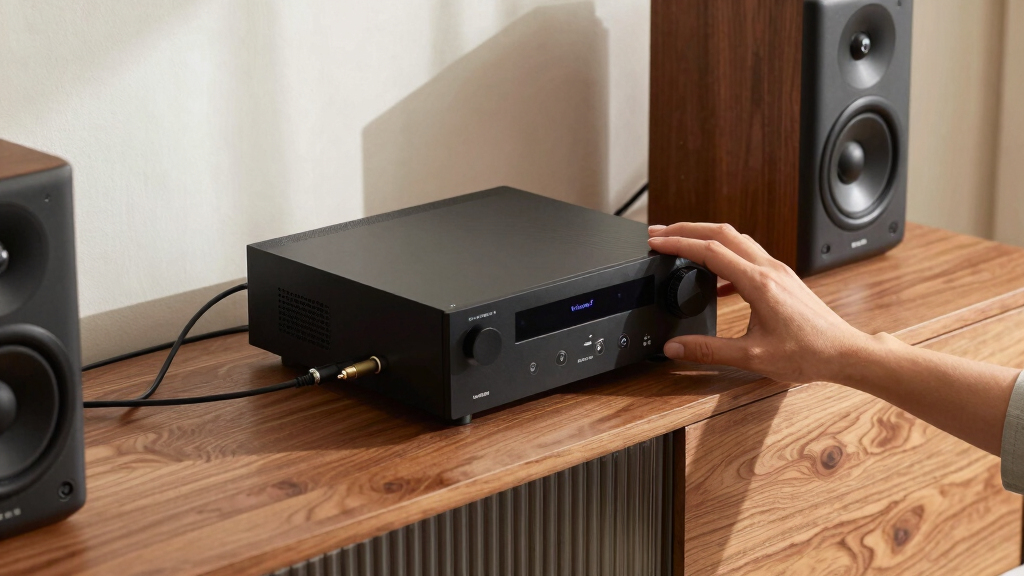

Choosing the best network streamer for your hi fi system involves balancing sound quality, ease of use, and compatibility. The WiiM Ultra makes a strong case as the overall top pick thanks to its versatile digital preamp and touchscreen interface. The Olio AirPlay 2 stands out for seamless Apple ecosystem integration, while the R-N600A offers a robust all-in-one receiver with built-in DAC. Each option faces tradeoffs: some prioritize audio fidelity, others focus on multiroom features or broad streaming support. Continue reading for a detailed breakdown of these top choices and how they compare to meet different needs.
Key Takeaways
- The most versatile streamers combine high-res audio support with broad streaming service compatibility.
- Ease of setup and user interface varies widely; touchscreen controls and app simplicity matter for everyday use.
- Some options, like the WiiM Ultra, double as preamps, offering extra flexibility for high-end systems.
- Bluetooth and WiFi connectivity are common, but true audiophile-grade streaming often relies on wired Ethernet or digital outputs.
- Price often correlates with audio quality and feature set, but premium models may offer features unnecessary for casual listeners.


More Details on Our Top Picks
Grace Link Internet Radio Tuner + SiriusXM, Pandora, Spotify Connect, with Chromecast Built-in: Stream Hi-Fi Music to Your Stereo System
This device stands out for its seamless integration with popular streaming services like Spotify Connect, Pandora, and SiriusXM, combined with Chromecast built-in, enabling easy control from various apps and devices. Compared with the Yamaha R-N600A, the Grace Link offers a more straightforward setup with a dedicated app interface, but lacks room correction features that the Yamaha provides. The Grace Link’s support for Hi-Res files up to 24-bit/192kHz ensures excellent sound quality, especially for those who prefer digital streaming without sacrificing fidelity. Its analog and digital outputs make it versatile for connecting to most stereo systems, though its lack of built-in room calibration means it’s less ideal for acoustically challenging spaces. The user-friendly controls, extensive preset and station options, and stable Wi-Fi make it perfect for audiophiles who want simple, high-quality streaming.
Pros:- Supports Hi-Res files up to 24-bit/192kHz for excellent sound quality
- Built-in Chromecast and support for multiple streaming services
- Simple setup with dedicated app, remote, and front panel controls
- Analog and digital outputs compatible with most stereo systems
Cons:- No built-in room calibration or EQ; less ideal for acoustically tricky rooms
- Limited to streaming and input functions, no amplification or speaker drive
Best for: Audiophiles seeking a plug-and-play internet radio with high-res support and broad app control.
Not ideal for: Users wanting advanced room correction or integrated amplifier features—this is strictly a streamer, no amplification included.
- Supports Hi-Res files:up to 24-bit/192kHz
- Outputs:Analog and digital
- Connectivity:Wi-Fi, Ethernet, Bluetooth 5.0
- Supported services:Spotify Connect, Pandora, SiriusXM, Amazon Music HD
- Display:2.8-inch color LCD
- Control:Smartphone app, IR remote, front panel
Bottom line: Ideal for audiophiles who want a reliable, high-res internet radio with broad app and device compatibility without needing room correction.
Olio AirPlay 2 Wireless Audio Receiver Adapter — WiFi & Bluetooth Music Streamer with Hi-Res 24bit/192kHz Output, Multiroom Audio, Spotify & Tidal Connect, Works with Siri&Alexa
This pick makes the most sense for users deeply invested in the Apple ecosystem, thanks to its robust AirPlay 2 support, allowing easy streaming from iPhone, iPad, or Mac with high-resolution audio up to 24-bit/192kHz. Compared with the WiiM Ultra, the Olio offers native support for Apple devices and seamless multiroom setup with other AirPlay-compatible speakers, but it doesn’t support HDMI ARC or analog inputs like the WiiM Ultra or Yamaha R-N600A. Its support for services like Spotify, Tidal, and online radio stations ensures flexible listening options, while voice control with Siri and Alexa adds convenience. However, it lacks a physical display, which may frustrate users who prefer visual feedback. Perfect for Apple users wanting a compact, high-quality wireless receiver with multiroom capabilities.
Pros:- Supports Hi-Res 24-bit/192kHz audio output
- Native AirPlay 2 support for seamless Apple device streaming
- Multiroom and multi-zone capable with other compatible AirPlay devices
- Supports Spotify, Tidal, and internet radio
Cons:- No analog or HDMI inputs, limiting connectivity options
- No built-in amplification—requires external speakers and amp
Best for: Apple enthusiasts wanting a high-res, multiroom wireless streamer with voice control.
Not ideal for: Users seeking an all-in-one receiver with amplification and multiple analog inputs—this is strictly a wireless receiver, no built-in power amp.
- Audio resolution:up to 24-bit/192kHz
- Connectivity:Wi-Fi, Bluetooth 5.2
- Supported platforms:AirPlay 2, Spotify, Tidal
- Multiroom:Yes
- Inputs:None (wireless only)
- Outputs:Digital optical, Coax
Bottom line: Best suited for Apple users wanting effortless high-res multiroom streaming with voice control and minimal setup.
WiiM Ultra Music Streamer & Digital Preamp | 3.5″ Touchscreen, Compatible with Google Cast & Alexa, Stream Spotify, Amazon Music, Tidal & More | HDMI ARC, Phono Input & Headphone Output | Space Gray
This model redefines the home audio experience with a sleek design, a high-quality ESS ES9038 Q2M DAC, and a vibrant touchscreen for easy control. Compared with the Yamaha R-N600A, the WiiM Ultra offers more digital input options, including HDMI ARC, and features a dedicated preamp function that can serve as a digital hub for both digital and analog sources. Its support for Hi-Res audio up to 24-bit/192kHz and gapless playback make it ideal for audiophiles seeking high fidelity, but it cannot function as a standalone amplifier—users must connect it to an external power amp or speakers. The inclusion of room correction and EQ features is limited, but the multiple inputs and outputs provide flexibility for complex setups. Perfect for users wanting a high-res digital preamp with extensive connectivity.
Pros:- Supports Hi-Res 24-bit/192kHz audio and gapless playback
- Multiple digital and analog inputs, including HDMI ARC and Phono
- Vibrant touchscreen for easy setup and control
- Supports advanced room correction and independent EQ
Cons:- No built-in power amplification—requires external amp or speakers
- Complex setup for non-technical users due to extensive options
Best for: Audiophiles and home theater enthusiasts needing digital and analog input versatility with high-res output.
Not ideal for: People looking for a simple plug-and-play streamer or all-in-one solution—requires external amplification.
- Supported audio:up to 24-bit/192kHz
- Inputs:HDMI ARC, USB, Optical, Coax, Phono, RCA
- Outputs:Line out, Headphone
- Display:3.5″ touchscreen
- Connectivity:Wi-Fi, Bluetooth
- Room correction:Limited
Bottom line: Best for users who need a high-fidelity digital preamp with flexible source inputs and control options, but no integrated power amp.
R-N600A Network Receiver with Streaming, Phono and Built-in DAC, Black
This receiver combines Yamaha’s proven Hi-Fi technology with a built-in DAC and streaming capabilities, making it a solid choice for dedicated stereo setups. Compared with the WiiM Ultra, the Yamaha R-N600A offers integrated amplification with 175W per channel, multiple inputs including phono for vinyl, and a built-in AM/FM tuner, making it more suited for those who want a complete stereo solution without needing external gear. Its ESS SABRE ES9010K2M DAC ensures high-quality digital-to-analog conversion, but it lacks the high-res streaming support of dedicated streamers like WiiM Ultra or WiiM Pro. This makes it ideal for audiophiles seeking a powerful, all-in-one receiver with both high-fidelity digital and analog inputs.
Pros:- Integrated 175W per channel amplification
- Supports high-resolution digital audio with ESS SABRE DAC
- Multiple inputs including Phono, HDMI, optical, and analog
- Built-in AM/FM tuner for radio listening
Cons:- No Wi-Fi or app-based multiroom features—requires wired or traditional setup
- Lacks support for Hi-Res streaming services like Tidal Master
Best for: Audiophiles seeking a comprehensive stereo receiver with integrated streaming, phono, and high-quality DAC.
Not ideal for: Users who want a dedicated network streamer without amplifier—this unit combines both functions.
- Power output:175 Watts per channel
- Supported formats:High-res digital up to 24-bit/192kHz
- Inputs:Phono, HDMI, optical, RCA
- Tuner:AM/FM
- DAC:ESS SABRE ES9010K2M
- Connectivity:Wi-Fi, Ethernet (not built-in)
Bottom line: Ideal for hi-fi enthusiasts wanting a powerful all-in-one stereo receiver with streaming, phono, and high-quality DAC built-in.
WiiM Pro AirPlay 2 Receiver, Google Cast Audio, WiFi Multiroom Streamer, Compatible with Alexa, Siri and Google Assistant, Stream Hi-Res Audio from Spotify, Amazon Music, Tidal and More
This device makes a compelling choice for users who want flexible wireless streaming across multiple platforms, including AirPlay 2, Google Cast, and Alexa, with high-resolution audio support up to 24-bit/192kHz. Compared to the Olio AirPlay 2, the WiiM Pro offers additional support for Amazon Alexa, Google Assistant, and seamless multiroom audio. Its support for various online services like Spotify, Tidal, and Amazon Music makes it highly versatile, but it does not support HDMI or analog inputs, limiting physical connection options. Its compact size and robust wireless performance make it ideal for those seeking a clean, multi-platform wireless setup, but users with traditional wired setups or those needing high-level room correction may find it lacking.
Pros:- Supports Hi-Res 24-bit/192kHz audio
- Compatible with AirPlay 2, Google Cast, Alexa, and Siri
- Supports multiple streaming services and multiroom groups
- Compact and easy to set up
Cons:- No analog or HDMI inputs, limiting wired connections
- Cannot function as a standalone amplifier—requires external speakers and amp
Best for: Users wanting a versatile, multi-platform wireless streamer with voice control and high-res audio support.
Not ideal for: Those needing physical inputs, amplification, or integrated room correction—this is strictly a streamer.
- Audio resolution:up to 24-bit/192kHz
- Connectivity:Wi-Fi, Bluetooth, Ethernet
- Supported platforms:AirPlay 2, Google Cast, Alexa, Tidal
- Inputs:None (wireless only)
- Outputs:Digital optical, Coax
- Multiroom:Yes
Bottom line: Best suited for multi-platform wireless streaming enthusiasts who want voice control and high-res audio in a compact device.
WiiM Ultra Music Streamer & Digital Preamp | 3.5″ Touchscreen, Compatible with Google Cast & Alexa, Stream Spotify, Amazon Music, Tidal & More | HDMI ARC, Phono Input & Headphone Output | Silver
The WiiM Ultra stands out for combining high-end audio components with an intuitive touchscreen interface, making it a compelling choice for serious audiophiles who want a comprehensive solution. Its ESS ES9038 Q2M DAC ensures detailed, transparent sound, rivaling dedicated standalone DACs, while the extensive connectivity—including HDMI ARC, Phono, and multiple analog options—offers unparalleled flexibility. Compared with the Arylic S10+, which excels in multi-platform streaming, the WiiM Ultra’s strength lies in its integrated home theater features and superior digital-to-analog conversion, making it a better fit for users seeking both hi-fi stereo and surround sound. However, its complexity and higher price point may deter casual listeners or those with simpler setups. The device’s large touchscreen simplifies control, and Wi-Fi 6 plus Bluetooth 5.3 ensure future-proof connectivity, but the full feature set comes with a steeper learning curve. This pick makes the most sense for audiophiles craving a multi-faceted, high-fidelity streamer that doubles as a digital preamp and home theater hub.
Pros:- Exceptional DAC with detailed, low-distortion sound
- Wide array of inputs and outputs for versatile integration
- Intuitive 3.5″ touchscreen for easy control
- Supports high-res streaming up to 24-bit/192kHz
Cons:- Higher price compared to simpler streamers
- Complex feature set may be intimidating for non-technical users
- No built-in AirPlay support, limiting Apple-centric ecosystems
Best for: Audiophiles who want an all-in-one device that delivers high-resolution sound and extensive connectivity options for both stereo and home theater use
Not ideal for: Casual listeners seeking a simple plug-and-play streamer, as the Ultra’s setup and features can be overwhelming for beginners
- DAC:ESS ES9038 Q2M
- Connectivity:Wi-Fi 6, Bluetooth 5.3, USB, Optical, Coaxial, HDMI ARC, Phono, RCA
- Streaming Resolutions:up to 24-bit/192kHz
- Controls:3.5″ touchscreen
- Inputs:RCA, Phono, Optical, HDMI
- Outputs:Headphone, HDMI ARC, Subwoofer
Bottom line: This device is ideal for audiophiles seeking premium sound quality and extensive connectivity in a single, versatile package.
Arylic S10+ AirPlay Audio Receiver, Multiroom Stereo with SPDIF Out, WiFi & Bluetooth Music Streamer, Streams HD Lossless Music from Spotify, Amazon Music, Tidal etc.
The Arylic S10+ is tailored for newcomers to high-fidelity streaming who want straightforward setup and compatibility with popular services. Its support for AirPlay, Spotify Connect, DLNA, and UPnP makes it a flexible choice for multi-room audio, especially when paired with multiple speakers or existing systems. Unlike the WiiM Ultra, which targets audiophiles with its premium DAC and home theater features, the S10+ prioritizes ease of use and broad device compatibility, making it well-suited for those new to hi-fi systems. Its ability to handle lossless formats like FLAC and WAV ensures sound quality isn’t compromised, but it lacks the advanced digital inputs or advanced room correction features of higher-end models. The inclusion of a dedicated app and web control simplifies management, but the audio tuning options are more basic. This device makes the most sense for casual users or households wanting reliable, high-quality wireless music without complex setup.
Pros:- Supports high-resolution lossless audio formats
- Easy setup via dedicated app and web interface
- Multi-platform support including AirPlay, Spotify Connect, DLNA
- Compact, unobtrusive design
Cons:- Limited advanced audio tuning features
- Lacks premium digital inputs like HDMI or dedicated analog preamp outputs
- Potentially lower sound detail compared to high-end DACs
Best for: Music enthusiasts seeking an easy-to-use, multi-platform streamer that supports lossless audio and is compatible with existing multiroom setups
Not ideal for: Audiophiles or tech-savvy users who need advanced inputs or professional tuning options, as the S10+ focuses on simplicity and convenience
- Supported Formats:MP3, APE, FLAC, WAV, AAC, ALAC
- Connectivity:Wi-Fi, Bluetooth, SPDIF Out
- Streaming Services:Spotify, Amazon Music, Tidal, Qobuz
- Control:Arylic app, Web interface
- Multiroom:Yes
- Resolution:up to 24-bit/192kHz
Bottom line: This streamer suits casual audiophiles or families wanting straightforward, high-quality multiroom streaming without the complexity of advanced setups.
How We Picked
Products were evaluated based on their audio performance, streaming platform support, usability, build quality, and integration options. We prioritized models that offer high-resolution audio, reliable network connectivity, and user-friendly controls. Cost was also a factor, with a balance struck between value and premium features. The ranking reflects which streamers provide the best overall experience for different types of hi fi enthusiasts—whether they prioritize sound fidelity, versatility, or ease of use.Factors to Consider When Choosing Best Network Streamers For Hi Fi Systems
When selecting a network streamer for your hi fi system, consider how the device fits into your existing setup and which features matter most to you. A good streamer should deliver high-quality audio, support your preferred streaming services, and be easy to operate without constant troubleshooting. Beyond specs, think about compatibility with your other equipment, future-proofing, and how much you’re willing to spend for added convenience or performance.Audio Quality and Output Options
High-resolution audio support (at least 24bit/192kHz) is essential for audiophile-grade systems. Look for streamers that offer digital outputs such as SPDIF or HDMI ARC, enabling direct connection to your DAC or amplifier. Internal DAC quality also matters—higher-end models often include premium DACs that can significantly improve sound clarity. Keep in mind that some streamers double as digital preamps, allowing connection directly to your power amplifier with minimal fuss.
Streaming Service Compatibility
Ensure the streamer supports your favorite platforms like Spotify, Tidal, Qobuz, or Apple Music. Some devices excel at broad compatibility, including niche services, while others focus on popular options. Check whether the device supports multiroom audio, voice assistants, or proprietary ecosystems (like Apple AirPlay 2 or Google Cast) that you might already use. This can dramatically simplify daily operation and integration with other smart devices.
Ease of Use and User Interface
Intuitive controls, whether via a touchscreen, app, or remote, can make a big difference in daily use. Devices with clear menus, fast response times, and consistent app updates tend to be more reliable and less frustrating. For those less comfortable with tech, a simple setup process and straightforward controls are worth prioritizing. More advanced users may prefer customizable options, digital inputs, and detailed settings for fine-tuning audio performance.
Connectivity and Integration
Reliable WiFi and Ethernet connections ensure smooth streaming without interruptions. Consider whether the device supports Bluetooth for quick device pairing or multiroom platforms for syncing multiple speakers. Digital outputs are crucial for integrating with high-end systems, while some models also include auxiliary inputs or phono stages for added flexibility. Compatibility with voice assistants can also streamline control through smart home setups.
Price and Future-Proofing
Higher-priced models generally offer better audio fidelity, more features, and longer software support, but they aren’t always necessary for casual listening. Think about your long-term needs—investing in a device with future-proof features (like support for newer streaming standards or multiroom capabilities) can save money later. Balance your budget with the features you value most, avoiding overpaying for extras you don’t need.
Frequently Asked Questions
Can I use a network streamer without a dedicated DAC?
Yes, many network streamers include internal DACs that are sufficient for most listening scenarios, but their quality varies. For true audiophile performance, choosing a streamer with a high-quality DAC or connecting it directly to a separate, high-end DAC will yield better sound. If your system already has a superior DAC, select a streamer that offers digital outputs for connection, rather than relying solely on internal conversion.
What is the difference between WiFi and Ethernet for streaming?
Ethernet connections generally provide a more stable and faster link, reducing dropouts and buffering issues, especially when streaming high-res audio. WiFi offers greater flexibility and easier setup but can be subject to interference, leading to potential interruptions. For premium sound quality and reliability, a wired Ethernet connection is usually recommended, particularly in larger or complex setups.
Are multiroom capabilities worth paying extra for?
If you want to play synchronized music across multiple rooms, investing in a streamer with multiroom features makes sense. It simplifies setup and control through a single app, creating a seamless listening experience. However, if your focus is solely on a high-quality single-zone system, a simpler device without multiroom support can be more cost-effective and easier to operate.
Should I prioritize a streamer with a touchscreen or app control?
Touchscreens can provide quick access and visual feedback, which some users find more intuitive. Conversely, well-designed apps offer more flexibility, remote control, and integration with voice assistants. For most, a combination of both—touchscreen for quick adjustments and a reliable app for daily control—delivers the best experience. Consider your comfort with technology and how you prefer to interact with your system.
Is it better to buy a dedicated streamer or an all-in-one receiver?
Dedicated streamers often excel in audio performance and support more formats or higher resolutions, making them ideal for audiophiles. All-in-one receivers provide convenience, combining amplification, radio, and streaming in a single unit, which can save space and simplify wiring. Your choice depends on whether your priority is maximum sound quality or ease of setup and integration into existing systems.
Conclusion
For most high-fidelity enthusiasts, the WiiM Ultra offers a compelling balance of features, sound quality, and flexibility, making it the best overall choice. If budget is a concern, the Arylic S10+ provides strong performance at a more accessible price point. Those seeking a premium, feature-rich experience should consider the WiiM Pro or R-N600A. Beginners or casual listeners will benefit from straightforward, app-based devices, while audiophiles will prioritize models with high-end DACs and digital outputs. Ultimately, your choice should reflect your listening habits, existing gear, and whether you value convenience over absolute fidelity.