
Understanding ultra-processed foods helps you make informed choices without fear. These foods are engineered for taste and convenience but often lack essential nutrients and contain high levels of added sugars, unhealthy fats, and salt. While it’s fine to enjoy them occasionally, focusing on minimally processed options and balanced eating is important. If you want to navigate your food choices wisely and enjoy both flavor and health, you’ll find useful insights ahead.
Key Takeaways
- Focus on moderation and informed choices rather than complete avoidance of ultra-processed foods.
- Recognize that ultra-processed foods can fit into a balanced diet when consumed mindfully.
- Develop food literacy to differentiate between nutritious options and less healthy ultra-processed foods.
- Understand the marketing influence and avoid unnecessary guilt about convenience foods.
- Incorporate whole, minimally processed foods regularly to support overall health while enjoying processed options responsibly.
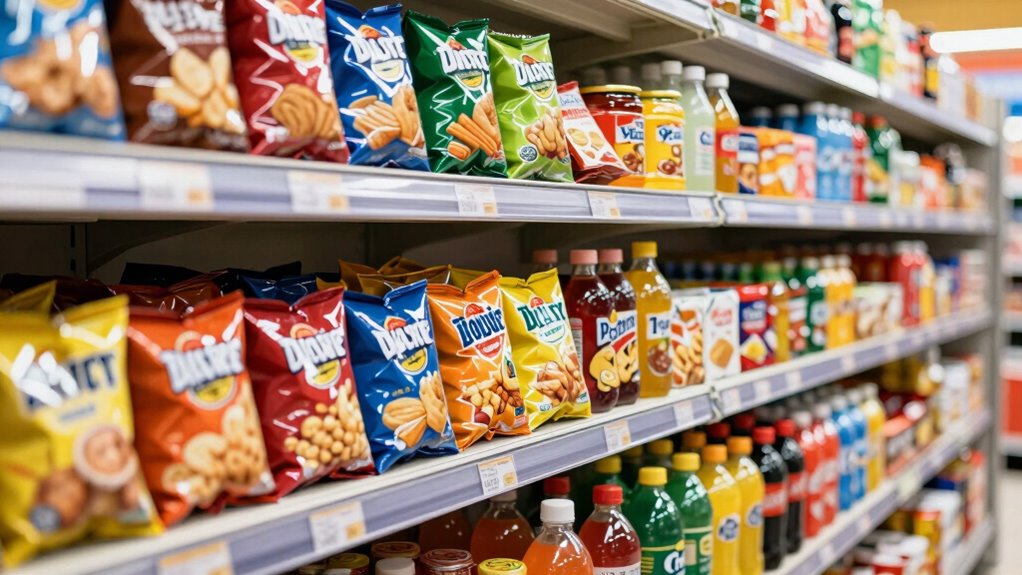
Have you ever wondered what makes some foods so addictive and convenient yet potentially harmful? Ultra-processed foods fit this description perfectly. They’re engineered for taste, shelf stability, and ease of consumption, often leading to questions about their nutritional impact and how consumers perceive them. It’s important to understand that not all ultra-processed foods are inherently bad, but their widespread presence influences how we eat and think about food. From a nutritional standpoint, these foods tend to be high in added sugars, unhealthy fats, and salt, while lacking essential nutrients like fiber, vitamins, and minerals. This imbalance can contribute to health issues such as obesity, diabetes, and heart disease over time. Yet, despite their nutritional shortcomings, many people find them irresistible because they’re designed to deliver quick gratification and a pleasurable eating experience. This creates a paradox where convenience and taste often override concerns about health, shaping consumer perceptions in complex ways.
You might see ultra-processed foods as simply convenient snacks or quick meal options, but many consumers underestimate their impact. The marketing of these products emphasizes their ease and flavor, often overshadowing their nutritional drawbacks. This influences how people perceive their healthfulness, with some viewing ultra-processed foods as harmless indulgences rather than potential contributors to long-term health problems. The perception that these foods are “just treats” can lead to overconsumption, especially when they’re readily available and affordable. Meanwhile, health experts warn that regular intake of such foods can displace more nutritious options in your diet, leading to nutrient deficiencies and increased health risks. Awareness of the food environment is essential to making better choices. Recognizing how food marketing influences consumer behavior can help you develop a more critical understanding of your food choices. Developing food literacy can empower consumers to identify the differences between nutritious and less healthy options more effectively. The challenge lies in balancing enjoyment with awareness, understanding that moderation is key.
It’s crucial to approach ultra-processed foods with a nuanced perspective. They can be part of a balanced diet if consumed mindfully and in moderation. Instead of demonizing all processed foods, focus on reading labels, choosing minimally processed options when possible, and incorporating a variety of whole foods into your meals. Understanding the modern food environment and its influence on consumer choices can help you develop healthier eating habits. Changing consumer perceptions about ultra-processed foods involves understanding their role in our modern food environment and acknowledging the importance of moderation. By doing so, you empower yourself to enjoy convenience without sacrificing your health. This framework allows you to navigate the food landscape intelligently, appreciating the convenience and flavor of ultra-processed foods while maintaining a focus on overall nutritional quality. Ultimately, it’s about making choices that align with your health goals without unnecessary fear or guilt.
As an affiliate, we earn on qualifying purchases.
Frequently Asked Questions
Are All Ultra-Processed Foods Unhealthy?
Not all ultra-processed foods are unhealthy. Some offer nutritional benefits, like fortified cereals or protein shakes, especially when you need quick, convenient options. However, it’s crucial to recognize the food industry influence that often promotes highly processed products with added sugars and unhealthy fats. By choosing minimally processed foods and reading labels carefully, you can enjoy certain ultra-processed foods without compromising your health.
How Can I Identify Ultra-Processed Foods Easily?
To identify ultra-processed foods easily, look at labeling techniques—check ingredient lists for unfamiliar chemicals or additives. Shopping tips include choosing whole foods or products with minimal, recognizable ingredients. Avoid items with long lists of artificial ingredients or preservatives. Familiarize yourself with common additives and prioritize fresh, unprocessed options. This approach helps you make healthier choices without overthinking, making it simple to steer clear of ultra-processed foods during your grocery trips.
Do Ultra-Processed Foods Contain Harmful Additives?
Yes, ultra-processed foods can contain harmful additives, but additive safety varies. Some additives are approved by regulatory agencies and considered safe in moderation, while others may raise concerns. To protect yourself, look for ingredient transparency on labels—clear lists help you identify what’s added. Being informed allows you to make better choices, reducing your intake of potentially harmful additives and enjoying ultra-processed foods more mindfully.
Can Ultra-Processed Foods Be Part of a Balanced Diet?
Yes, ultra-processed foods can be part of a balanced diet when consumed in moderation. You can incorporate them by maintaining nutritional balance and ensuring food variety. Focus on combining ultra-processed items with whole foods like fruits, vegetables, and lean proteins. This approach helps you enjoy convenience without sacrificing essential nutrients, supporting overall health and well-being. Remember, moderation and variety are key to a healthy, balanced diet.
What Are Some Healthier Ultra-Processed Food Options?
You can choose healthier ultra-processed food options by opting for nutrient-dense ultra-processed snacks like fortified granola bars, yogurt drinks with added probiotics, or whole-grain crackers. Look for options with minimal added sugars, artificial ingredients, and higher fiber or protein content. These healthy snack alternatives can satisfy your cravings while providing essential nutrients, helping you maintain a balanced diet without sacrificing convenience or flavor.
Conclusion
So, next time you’re at the grocery store, remember that the ultra-processed foods framework isn’t about fear but understanding. Think of it as your trusty compass in a world where fast food can sometimes feel like the new chariot. By making mindful choices—like a modern-day Socrates questioning everything—you can enjoy life’s flavors without guilt. After all, even in this digital age, knowing what’s in your food keeps you truly in control.