
Ultra-thin laptops are sleek and portable, but they come with hidden compromises. You may find your battery life shorter because smaller batteries struggle to keep up with demanding tasks. Overheating can happen more easily due to limited cooling space, which may slow down performance or cause noise. These tradeoffs can affect reliability and convenience. If you’re curious about how designers try to balance these issues, there’s more to uncover below.
Key Takeaways
- Ultra-thin laptops often sacrifice battery capacity, leading to shorter usage times and frequent charging needs.
- Compact design limits cooling options, increasing overheating risk during intensive tasks.
- Reduced internal space hampers effective heat dissipation, causing thermal throttling and performance drops.
- Overheating accelerates component wear, potentially shortening device lifespan.
- The slim profile balances portability with potential performance and reliability compromises.
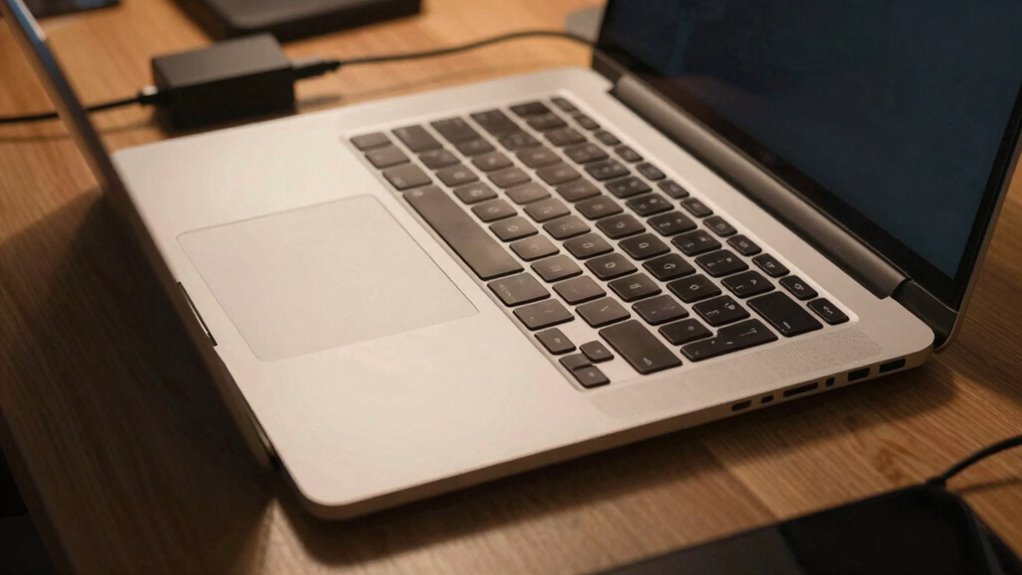
Ultra-Thin laptops have become popular for their sleek design and portability, but they come with notable tradeoffs. One of the biggest issues you might encounter is battery life concerns. Because these laptops are so slim, manufacturers often pack smaller batteries to keep the overall weight down. This means you might find yourself charging your device more frequently, especially if you’re running demanding applications or streaming video for hours. The compact design limits the space available for large batteries, so even if the laptop boasts impressive specs, its real-world battery performance might fall short. If you rely on your laptop for work or travel, this can be frustrating, forcing you to carry chargers everywhere or plan your usage carefully. Additionally, the limited space in ultra-thin laptops makes it challenging for manufacturers to include robust cooling systems**, which can lead to thermal performance issues. Thermal performance is another critical concern with ultra-thin laptops. Their slim frames leave little room for cooling systems, so heat tends to build up faster during intensive tasks like video editing, gaming, or multitasking. When the device overheats, it may throttle performance to protect its components, which can slow down your productivity. You might notice the laptop becoming noticeably warm to the touch, or the fans kicking in loudly and frequently. This thermal bottleneck not only affects performance but also risks long-term damage to internal parts if cooling isn’t managed properly. Manufacturers try to address this with innovative cooling solutions, but the limited space still makes it challenging to keep temperatures low under heavy load. As a result, thermal management remains a significant challenge for ultra-thin designs. You also need to consider how these tradeoffs impact your overall experience. The slim profile might make your device easier to carry around, but if you find yourself constantly looking for power outlets or dealing with overheating issues, the convenience diminishes. Additionally, the tradeoff in thermal performance can lead to reduced lifespan of internal components, as sustained high temperatures accelerate wear and tear. Despite their attractive appearance, ultra-thin laptops often require you to compromise on performance and endurance to enjoy their portability. Being aware of these limitations helps you make a more informed decision, ensuring your laptop meets your specific needs without unexpected frustrations. Recognizing these design tradeoffs can help you choose a device that strikes the right balance between form and function. Moreover, ongoing advancements in thermal management technology** are gradually helping manufacturers mitigate some of these issues, though challenges remain.
ultra-thin laptop battery extender
As an affiliate, we earn on qualifying purchases.
As an affiliate, we earn on qualifying purchases.
Frequently Asked Questions
How Durable Are Ultra-Thin Laptops in Everyday Use?
Ultra-thin laptops are generally less durable in everyday use due to their slim build, but their build quality and material durability play vital roles. If you choose one with high-quality materials like aluminum or magnesium alloy, it can withstand minor bumps and knocks better. However, their delicate design still makes them more prone to damage from drops or heavy pressure. Handle with care, and you’ll enjoy their portability without sacrificing too much durability.
Do Ultra-Thin Laptops Have Better or Worse Thermal Management?
You’ll find that ultra-thin laptops generally have worse thermal management, with heat dissipation often 20-30% less efficient than bulkier models. Their slim profiles limit airflow efficiency, making it harder to cool internal components during intensive tasks. This means you might notice the laptop getting warmer faster, and prolonged use could lead to thermal throttling, which reduces performance to prevent overheating.
Can Ultra-Thin Laptops Handle Intensive Software or Gaming?
Ultra-thin laptops generally struggle with intensive software or gaming due to performance limitations and cooling challenges. Their slim design restricts airflow and limits cooling options, causing thermal throttling during heavy tasks. You might notice decreased performance, lag, or overheating when pushing these laptops with demanding applications. If gaming or intensive software use is essential, you’ll need a more robust laptop with better cooling systems and higher performance capabilities.
What Are the Repair and Upgrade Options for Ultra-Thin Laptops?
You might be surprised, but ultra-thin laptops often limit your repair and upgrade options. Their sleek design usually means sealed components and minimal modularity. However, some models now offer limited upgradeability options, like RAM or storage, through modular design. Still, for most ultra-thin laptops, you’ll need to rely on professional repairs or consider replacements, making it essential to choose wisely from the start if long-term flexibility matters to you.
How Does Battery Life Compare to Thicker, Traditional Laptops?
You’ll notice that ultra-thin laptops generally have shorter battery longevity compared to thicker, traditional laptops. This is mainly because their slim design limits space for larger batteries, and they often prioritize power efficiency over battery capacity. As a result, you may need to charge them more frequently, especially during intensive tasks. While they’re portable and stylish, their power efficiency can’t fully compensate for the smaller battery size.

Kootek Laptop Cooling Pad, Laptop Cooler with 5 Quiet Fans for 12"-17" Computer PC Notebook Gaming Laptop Fan, Height Adjustable Laptop Cooling Stand Laptop Accessories, Blue
Whisper-Quiet Operation: Enjoy a noise-free and interference-free environment with super quiet fans, allowing you to focus on your…
As an affiliate, we earn on qualifying purchases.
As an affiliate, we earn on qualifying purchases.
Conclusion
As you consider an ultra-thin laptop, remember it’s all about balancing style and functionality. Despite their sleek look, nearly 60% of users report compromising battery life or processing power for portability. So, before you buy, weigh what matters most—whether it’s a lightweight design or performance. Sometimes, sacrificing a bit of thinness can give you a device that truly meets your needs and keeps you productive on the go.

INIU 140W Laptop Power Bank, Flight-Safe 27000mAh High Capacity Portable Charger with USB C Cable, Digital Display Phone Charger, 3 Ports Travel External Battery Pack for MacBook iPad Steam Deck etc
From INIU—the SAFE Fast Charge Pro: Experience the safest charging with over 38 million global users. At INIU,…
As an affiliate, we earn on qualifying purchases.
As an affiliate, we earn on qualifying purchases.
![A ADWITS [ 6-Pack ] Thermal Conductive Silicone Pads, Soft Safe Simple to Apply for SSD CPU GPU LED IC Chipset Cooling -Blue](https://m.media-amazon.com/images/I/31OzO1Rgp6L._SL500_.jpg)
A ADWITS [ 6-Pack ] Thermal Conductive Silicone Pads, Soft Safe Simple to Apply for SSD CPU GPU LED IC Chipset Cooling -Blue
Excellent thermal conductivity: Made of thermal silica gel with heat conductivity of 6.0 W/Mk
As an affiliate, we earn on qualifying purchases.
As an affiliate, we earn on qualifying purchases.