To keep your eye contact natural with a teleprompter, avoid looking directly at the screen or staring too intently. Instead, gently shift your gaze across the screen, glancing at the teleprompter occasionally to stay engaged. Practice balancing script flow with genuine eye contact and use natural body language to connect better with your audience. If you want to discover key techniques to make your delivery more authentic, keep exploring these tips.
Key Takeaways
- Maintain natural eye movement by occasionally glancing at the teleprompter to avoid staring fixedly at the lens.
- Practice blending eye contact with the script to create a more authentic, conversational appearance.
- Use strategic pauses and gestures to break monotony and enhance engagement.
- Record and review practice sessions to identify and correct unnatural eye contact habits.
- Adjust your positioning and script timing to foster smooth, relaxed eye contact during delivery.
When using a teleprompter, maintaining natural eye contact can quickly become awkward, making your delivery seem stiff or disconnected. If you’re not careful, you might find yourself staring too intently at the camera or glancing away too often, which can hurt audience engagement. The key is to strike a balance where your eyes seem natural and engaging, even while reading from the script. One common mistake is focusing too heavily on the words rather than the audience, which can cause your delivery to feel robotic or unrelatable. To avoid this, consider practicing your script multiple times so it feels more conversational. When you’re comfortable with the content, your eye movements will become more natural, helping you connect with viewers more effectively.
Another critical aspect is script pacing. If you read too quickly, your audience might miss key points, and if you go too slow, they might lose interest. Adjusting your pacing to match your natural speaking rhythm makes your presentation more engaging. It also allows you to look away from the teleprompter at appropriate moments, which breaks the monotony and enhances your connection. Use pauses strategically—this not only improves your pacing but also gives your audience time to absorb information. When your script flows smoothly and your eye contact appears genuine, your overall delivery feels more authentic, which keeps viewers attentive and involved. Developing eye contact skills can significantly boost your onscreen presence and audience rapport. Practicing these techniques regularly helps you develop a more natural delivery that resonates with viewers.
To improve your audience engagement, try to look directly into the camera lens as if you’re speaking to someone face-to-face. This creates a sense of intimacy and trust, making your message more compelling. Avoid the temptation to focus solely on the words; instead, let your eyes drift naturally across the screen, occasionally glancing at the teleprompter when needed. Incorporating body language into your delivery can also help convey confidence and sincerity, making your presentation more dynamic. Using visual cues like gestures or facial expressions can help maintain viewer interest and emphasize key points. Additionally, understanding the importance of camera awareness can help you adjust your positioning and movements for a more engaging presentation. Practice is essential—record yourself and review your delivery to see if your eye contact looks natural or stiff. Small adjustments, like changing your script’s placement or practicing different pacing techniques, can make a huge difference.
Ultimately, the secret to avoiding weird teleprompter eye contact is to practice consistently and become comfortable with your script. When you master your pacing and maintain genuine eye contact, your presentation will feel more spontaneous and engaging. Your audience will notice the difference, and your message will come across more clearly. With the right balance, you can make your teleprompter work for you rather than against you, creating a seamless and personable delivery every time.
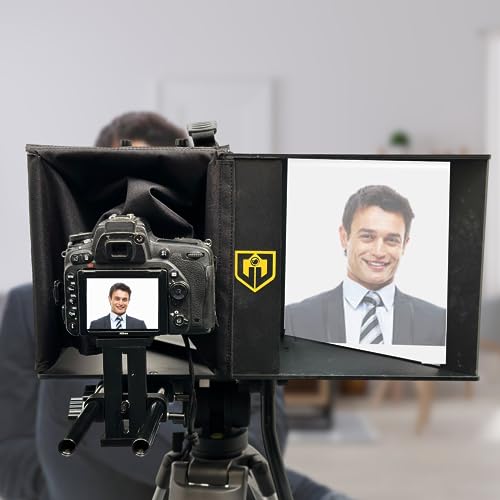
Glide Gear Face 2 Face Hybrid Interview Periscope and Teleprompter, Dual Mode for Eye-Contact Interviews or Script Reading, DSLR and Smartphone Compatible
- 2-in-1 Interview & Teleprompter: Combines periscope and teleprompter in one
- Enhanced Eye-Contact Design: Allows direct eye contact during interviews
- Device Compatibility: Fits tablets and smartphones (3-9 inches)
As an affiliate, we earn on qualifying purchases.
As an affiliate, we earn on qualifying purchases.
Frequently Asked Questions
How Can I Improve My Natural Eye Contact With a Teleprompter?
To improve your natural eye contact with a teleprompter, focus on script pacing and eye movement. Keep the script flowing smoothly, so your eyes don’t dart around or stare fixedly. Practice glancing naturally at the teleprompter, mimicking regular eye contact, and avoid excessive blinking. By maintaining steady eye movement and pacing your speech well, you’ll appear more authentic and engaging, making your delivery feel more genuine to your audience.
What Are the Common Signs of Awkward Teleprompter Use?
Awkward teleprompter use is like a dancer stumbling on stage; you notice it through signs like inconsistent lip movement and frequent gaze shifting. When your eyes dart away or your lips don’t match your speech, it creates discomfort for viewers. You might also appear tense or overly stiff. Recognizing these signs helps you adjust, making your delivery smoother and more natural, so your audience stays engaged without distraction.
Does Eye Contact Affect Audience Engagement During a Speech?
Eye contact profoundly impacts audience engagement during a speech because it builds audience trust. When you make genuine eye contact, you connect more deeply, making listeners feel involved and valued. Avoiding eye contact can make you seem distracted or unconfident, reducing engagement. To keep your audience engaged, look directly at your listeners periodically, balancing your gaze to foster trust and create a more compelling, authentic presentation.
Are There Specific Teleprompter Settings for Better Eye Contact?
You should adjust your teleprompter settings for better eye contact; studies show audiences respond more positively when speakers maintain natural eye contact. Position the teleprompter slightly below the camera lens to create a more genuine connection. Also, tweak script pacing so you don’t rush or lag, helping your eyes stay on the camera longer, making your delivery more engaging. Proper placement and pacing make your eye contact feel authentic and effortless.
How Do Professional Speakers Maintain Eye Contact With a Teleprompter?
You maintain eye contact with a teleprompter by adjusting its angles to match your natural gaze, making it feel like you’re speaking directly to your audience. Practice eye contact training regularly to build confidence and smoothness. Keep the teleprompter slightly below your eye level, so your eyes look natural and engaging. This combo helps you stay connected with your audience, making your delivery more authentic and compelling.
Conclusion
If you fix your gaze just right, it’s like the teleprompter becomes a window to your confidence, not a barrier. Imagine your eyes aligning naturally, as if you’re speaking directly to a friend, pulling your audience in instead of pushing them away. Think of the screen as a mirror reflecting your genuine self—no weirdness, just authentic connection. When you master this, your message flows effortlessly, making every word resonate with clarity and trust.