
When you use active noise-canceling headphones on a flight, they can alter ear pressure and disrupt the natural balance managed by your Eustachian tubes, making your ears feel blocked or full. This pressure change can lead to discomfort and fatigue as your brain works harder to cope. Understanding how ANC affects ear pressure helps you manage these sensations better. Keep exploring to find effective tips that can make your flights more comfortable and less tiring.
Key Takeaways
- Noise cancellation alters ear pressure balance, causing discomfort similar to airplane takeoff or landing sensations.
- Disrupted Eustachian tube function from ANC can lead to a feeling of fullness or blockage.
- Prolonged pressure shifts from ANC can cause physical fatigue and distract from the travel experience.
- Awareness of pressure changes helps in managing ear sensations and improving comfort during flights.
- Techniques like swallowing or yawning can help regulate ear pressure and reduce fatigue caused by ANC.
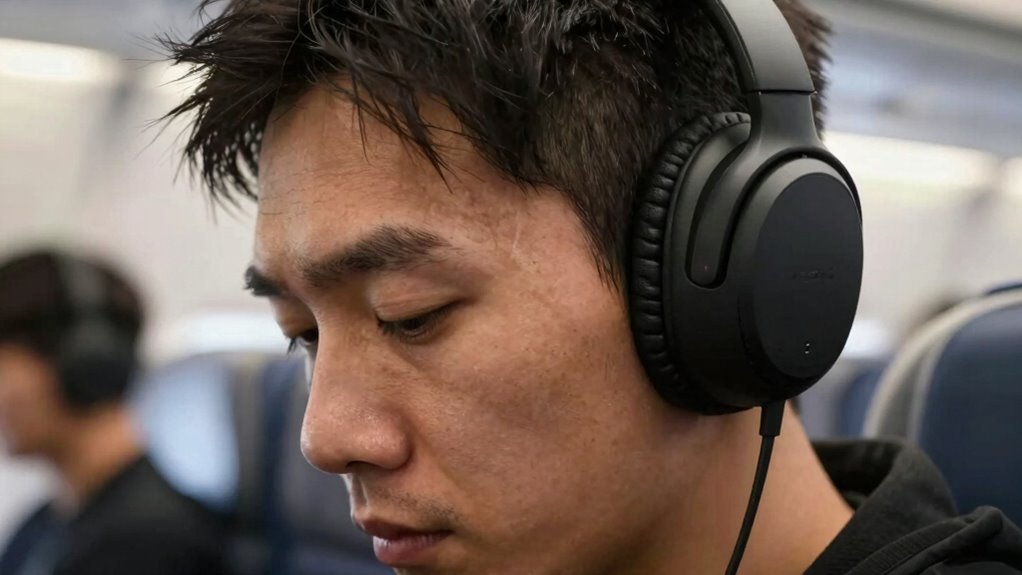
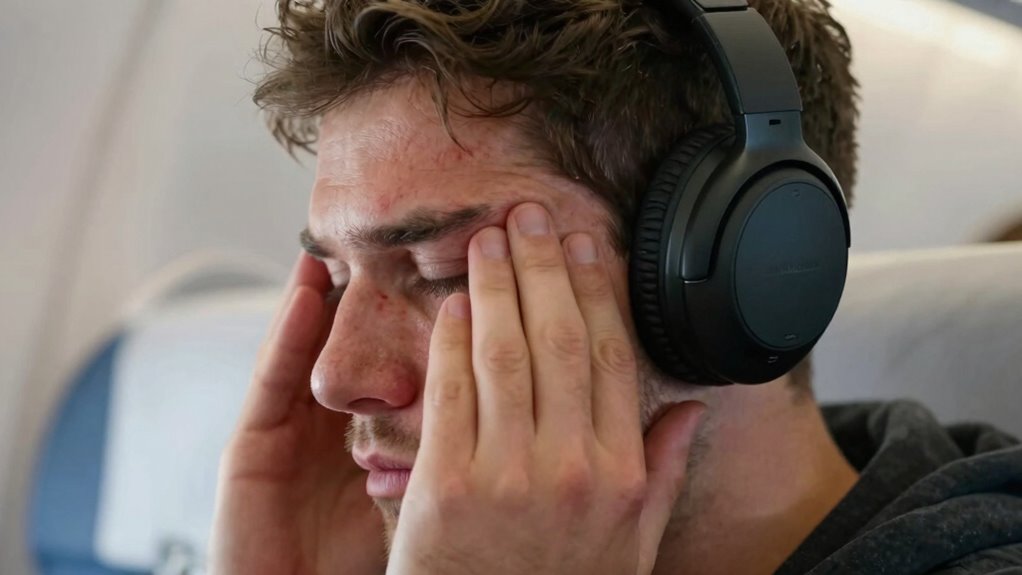
Have you ever felt unexpectedly exhausted after wearing active noise-canceling (ANC) headphones for extended periods? If so, you’re not alone. Many travelers experience a strange sense of fatigue when using ANC headphones on flights, and the culprit often comes down to how noise cancellation affects your ears. ANC technology works by creating sound waves that cancel out external noise, but this process can also influence the pressure inside your ears, leading to discomfort or fatigue. You might notice a weird feeling of ear pressure, similar to what you experience during takeoff or landing, even when you’re just sitting quietly. This sensation occurs because the headphones’ noise cancellation algorithms alter the usual pressure balance in your ear canals, sometimes making your ears feel blocked or full.
When you activate noise cancellation, the headphones generate anti-noise signals to reduce ambient sounds. This is highly effective at blocking out engine noise, chatter, or other background sounds, but it also impacts the pressure equilibrium in your ears. Normally, your eustachian tubes help equalize pressure between your middle ear and the environment, but the altered pressure caused by ANC can make this process feel disrupted. As a result, your ears might feel like they’re working harder to balance pressure, which can lead to fatigue or a sensation of fullness. Over time, this added effort can cause discomfort, making you feel drained even after just a short flight. Understanding ear pressure regulation can help you better manage these sensations and improve your comfort during travel. Additionally, air travel-related ear issues are common and understanding how to mitigate them can make a significant difference. Recognizing how the pressure changes caused by ANC interact with your ear anatomy can also help you adapt better to these sensations. Being mindful of ear pressure regulation techniques can further enhance your experience.
The fatigue isn’t just about physical discomfort; it’s also about how your brain processes the strange sensations. When your ears feel blocked or under pressure, your brain tries to compensate, which can be tiring. The sensation of ear pressure with ANC headphones isn’t dangerous, but it can be distracting and uncomfortable enough to diminish your overall experience. This is especially true if you’re wearing headphones for many hours, as the prolonged pressure shifts can accumulate and drain your energy. Being aware of how ANC influences ear pressure can help you manage discomfort better, making your flights more comfortable and less fatiguing.
noise cancelling headphones for flying
As an affiliate, we earn on qualifying purchases.
As an affiliate, we earn on qualifying purchases.
Frequently Asked Questions
Can Pressure Fatigue Affect Long-Term Hearing Health?
Pressure fatigue from headphones can temporarily affect your inner ear, but it’s unlikely to cause long-term hearing issues if you’re cautious. Prolonged or repeated exposure might lead to discomfort or minor damage to your auditory health. To protect your inner ear, take breaks and avoid excessive volume. Staying mindful of how your ears react helps prevent long-term harm, ensuring your auditory health remains intact over time.
Are Certain Headphone Brands More Prone to Causing Pressure Fatigue?
In summary, certain headphone brands are more prone to causing pressure fatigue because of their design and technology. If your headphones lack proper brand compatibility or a built-in pressure sensor, you might experience discomfort on flights. Like a knight’s armor, well-designed headphones with pressure sensors help equalize ear pressure, reducing fatigue. So, choose brands known for comfort and consider models with pressure sensors to avoid feeling like you’re battling a dragon every time you fly.
How Can I Prevent Pressure Fatigue During Flights?
To prevent pressure fatigue during flights, focus on improving your headphone fit and managing ear pressure. Make sure your headphones aren’t too tight, as tight fit can increase ear pressure. Take short breaks to remove your headphones and relieve ear pressure when possible. Using headphones with adjustable ear cups and opting for models that don’t create a tight seal can also help. Stay hydrated, and consider using ear pressure equalization techniques to keep comfortable.
Does Altitude Change Impact ANC Effectiveness?
In a flash, altitude effects can impact ANC performance. As you ascend, changes in air pressure and cabin altitude may slightly reduce noise-canceling efficiency. The headphones’ microphones might struggle with rapid pressure shifts, causing a weird feeling. However, most modern ANC headphones are designed to adapt to altitude effects, so your listening experience should remain mostly consistent during your flight. Just keep in mind, extreme altitude changes could momentarily affect ANC performance.
Are There Specific User Groups More Susceptible to Pressure Fatigue?
Certain user groups, like those with sensitive ears or sinus issues, are more prone to pressure fatigue. Your comfort and headphone fit play vital roles in how you experience pressure changes during flights. If your headphones don’t fit snugly or if you have pre-existing ear sensitivities, you might notice more discomfort or fatigue. Choosing well-fitting headphones and considering your ear health can help minimize pressure-related discomfort on flights.
ear pressure relief headphones
As an affiliate, we earn on qualifying purchases.
As an affiliate, we earn on qualifying purchases.
Conclusion
Next time you fly, remember that ANC pressure fatigue isn’t just in your head—it’s real. About 30% of travelers experience this discomfort, which can make even your favorite headphones feel strange. Understanding why it happens can help you manage it better. So, the next time your headphones feel weird, know you’re not alone. With a little awareness, you can make your flight more comfortable and enjoy your journey without unnecessary discomfort.
ANC headphones with pressure management
As an affiliate, we earn on qualifying purchases.
As an affiliate, we earn on qualifying purchases.
air travel ear pressure relief products
As an affiliate, we earn on qualifying purchases.
As an affiliate, we earn on qualifying purchases.