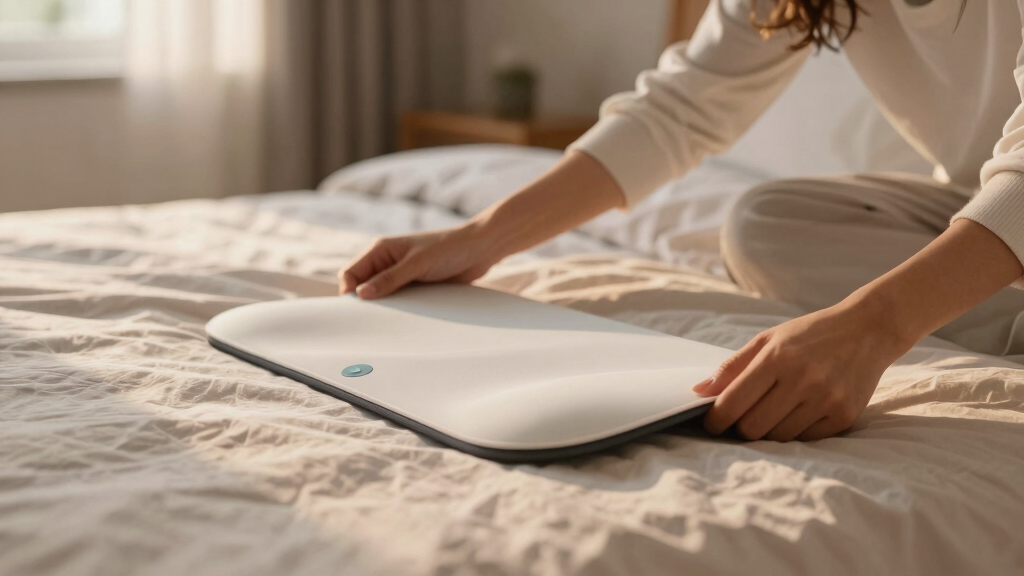

When searching for the best sleep tracking mats for under mattress monitoring, you’re likely looking for a reliable way to assess sleep quality without disturbing your sleep. The top pick, Withings Sleep, offers comprehensive cycle analysis with minimal setup. Standout alternatives like the Beautyrest Sleeptracker excel with their user-friendly apps, while budget-conscious options may sacrifice some accuracy or features. The main tradeoffs involve balancing ease of use, data precision, and setup complexity. Keep reading for a detailed breakdown of each option to find the best fit for your sleep needs.
Key Takeaways
- The most accurate sleep data generally comes from mats with advanced sensors like PVDF technology or multi-sensor arrays.
- Ease of setup and app usability are major factors that distinguish premium options from budget models.
- Some mats are better suited for specific needs, such as fall prevention or elderly monitoring, rather than general sleep tracking.
- Wireless and battery-free designs tend to offer more seamless integration but often come with higher costs.
- Tradeoffs between cost, data detail, and usability are common—spend more if you want detailed insights, save if you prioritize simplicity.




More Details on Our Top Picks
Grounding Mat for Bed, Grounding Pad for Sleeping, Improved Sleep, with grounding Test Pen and grounding Cord King Max(72.3 * 54.1 inch)
This grounding mat stands out for its focus on health benefits through natural energy transfer, making it ideal for those interested in holistic sleep improvement. Compared to the Withings Sleep pad, the Grounding Mat emphasizes grounding rather than sleep cycle analysis, which appeals to users seeking physical connection with Earth energy. The mat’s breathable, eco-friendly materials, along with its safety features like a 100k ohm resistor, ensure safe, reliable grounding. The setup is straightforward: place it under your sheet and connect with the grounding wire. However, it’s not a medical device and offers no detailed sleep metrics, which could be a drawback for those seeking precise sleep stage data. Its large size and emphasis on grounding make it less suitable for users who want detailed sleep analytics or for small beds.
Pros:- Promotes natural energy balance and stress reduction
- Made from environmentally friendly, breathable materials
- Easy to set up with a simple placement and grounding connection
Cons:- Does not provide detailed sleep stage or cycle data
- Requires connection to power outlet and grounding wire for effectiveness
Best for: Individuals interested in grounding therapy combined with sleep quality improvement, especially those seeking holistic health solutions.
Not ideal for: Sleep trackers seeking detailed sleep cycle insights or users with small or travel beds, as its size and grounding focus may be less practical.
- Product Size:72.3 * 54.1 inches
- Material:Conductive carbon fiber and PU
- Safety Features:100k ohm resistor
- Setup:Place under sheet, connect grounding wire
- Environmentally Friendly:Yes
- Breathability:Breathable holes design
Bottom line: This grounding mat is best suited for users interested in physical grounding and holistic sleep support rather than detailed sleep metrics.
Intelligent Sleep Monitoring Sensor Pad Mat Realtime Response Sleep Tracking Pad for Bedroom 5V
This sleep monitoring pad makes a strong case for real-time responsiveness, crucial for users who need instant feedback. Unlike the Withings Sleep pad, which offers sleep cycle analysis, this model emphasizes immediate detection of breathing and movements, making it suitable for clinical or bedside monitoring where responsiveness matters. Its thin, rollable design allows easy transport between home, hospital, or office environments. The sensor’s real-time response minimizes false triggers, providing accurate monitoring of breathing and bed presence. Yet, it offers limited sleep stage insights and lacks integration with other health metrics, which might be a concern for those seeking comprehensive sleep data. Its simplicity and portability make it less ideal for users wanting detailed analytics or long-term trend tracking.
Pros:- Real-time response minimizes false triggers
- Thin, lightweight, and rollable for portability
- Suitable for diverse environments including hospitals and offices
Cons:- Limited in providing detailed sleep stage or quality data
- Does not integrate with broader health monitoring systems
Best for: Healthcare providers or individuals requiring prompt, real-time sleep and breathing data in various locations.
Not ideal for: Users seeking in-depth sleep cycle analysis or long-term sleep trend reports, as this focuses mainly on immediate response rather than detailed insights.
- Power Supply:5V
- Sensor Type:Reinforced sensor pad
- Design:Thin, rollable, lightweight
- Use Scenario:Hospitals, bedrooms, offices
- Response Time:Realtime
- Compatibility:Multiple environments
Bottom line: This pad is ideal for users needing quick, reliable bed presence and breathing detection without extensive sleep analytics.
Intelligent Sleep Monitoring Sensor Pad Mat Realtime Response Sleep Tracking Pad for Bedroom 5V
Sharing similar features with the B0DTJWZ6JD, this model excels in portability and immediate responsiveness, making it suitable for users who need flexible monitoring across different settings. While it offers the same real-time detection of breathing and bed presence, it lacks specific sleep cycle analysis found in more advanced mats like the Beautyrest Sleeptracker. Its lightweight, rollable design makes it easy to carry and set up, but it doesn’t provide extensive sleep health insights, limiting its usefulness for those tracking sleep quality over time. This product’s primary role is immediate detection, not detailed sleep profiling, which is a key tradeoff for users wanting quick, on-the-go monitoring rather than comprehensive sleep reports.
Pros:- Fast, real-time response ensures accurate detection
- Lightweight and rollable for travel or multiple locations
- Simple setup suitable for various environments
Cons:- Limited in providing comprehensive sleep quality data
- No integration with broader health apps or devices
Best for: Travelers or caregivers needing quick, portable bed monitoring without in-depth sleep data.
Not ideal for: Individuals seeking detailed sleep cycle or health trend data, as this device focuses mainly on immediate bed and breathing detection.
- Power Supply:5V
- Sensor Type:Reinforced, rollable pad
- Design:Thin, lightweight
- Use Scenario:Hospitals, travel, home
- Response Time:Immediate
- Portability:Yes
Bottom line: Ideal for those who need quick, reliable bed presence and breathing detection without complex sleep analytics.
Sleep Sensor Pad PVDF Under Mattress Sleep Tracker, Flexible Curlable Design, Real Time Movement Detection, for Home and Travel Use
This PVDF-based under-mattress sensor shines in discreet, non-intrusive sleep tracking, making it a prime choice for those who prefer a less obtrusive device. Its flexible, curlable design allows it to fit seamlessly beneath bedding, unlike the larger, more conspicuous mats or grounding pads like the King Max. The high-sensitivity PVDF film provides accurate motion and vital sign detection, offering a step up from simple bed sensors. However, it doesn’t deliver detailed sleep stages or long-term health insights like the Withings Sleep system, which could limit its appeal for users focused on comprehensive sleep analysis. Its primary strength lies in ease of use and discreet placement, but it sacrifices advanced sleep metrics.
Pros:- Discreet, flexible, and curlable design
- Accurate movement and vital sign detection
- Suitable for home, travel, or hotel use
Cons:- Limited in providing detailed sleep cycle or health insights
- Requires correct placement for accuracy
Best for: Users seeking under-mattress, unobtrusive sleep tracking, especially travelers or those with sensitive sleeping setups.
Not ideal for: People wanting detailed sleep cycle reports or integration with smart home systems, as this focuses on basic movement and vital signs.
- Material:PVDF piezoelectric film
- Design:Flexible, curlable
- Detection Type:Movement, vital signs
- Use Scenario:Home, travel, hotels
- Setup:Under mattress
- Portability:Lightweight
Bottom line: This under-mattress PVDF sensor is perfect for discreet, portable sleep monitoring without the need for bulky devices.
Beautyrest Sleeptracker Monitor – Wearable-Free Sleep Tracker – Intuitive App and Alexa Enabled
The Beautyrest Sleeptracker distinguishes itself through its AI-powered, non-wearable design that integrates seamlessly with smart home systems, including Alexa. It offers highly accurate sensors for respiration, heart rate, and sleep behaviors, making it a strong choice for users who want detailed sleep cycle data and personalized coaching. Unlike the grounding mat or portable sensors, this monitor’s ability to track two sleepers independently makes it ideal for couples. Its intuitive app provides clear reports, and the Alexa integration adds convenience by enabling voice commands. However, its cost and reliance on a compatible app make it less appealing for those who prefer simple, standalone devices or limited budgets. It’s best for tech-savvy users who want comprehensive sleep insights and smart home compatibility.
Pros:- Highly accurate sensors for sleep and vital signs
- Supports two sleepers independently
- Smart home integration with Alexa
Cons:- Requires app installation and smartphone connectivity
- Higher price point and limited to US market
Best for: Couples or users wanting detailed sleep data, smart home integration, and personalized coaching.
Not ideal for: Budget-conscious users or those preferring non-app, straightforward devices, as this system requires a compatible app and is more expensive.
- Device Type:Wearable-free, sensor-based
- Connectivity:Wi-Fi, app compatible
- Sleep Metrics:Respiration, heart rate, sleep stages
- Supports:Two sleepers
- Smart Home:Alexa enabled
- Warranty:1 year
Bottom line: This monitor suits users seeking detailed sleep analysis, multi-user support, and smart home integration with a premium price.
Grounding Mat for Bed Sleep & Deep Relaxation – Premium Grounding Pad Kit – Grounding PU Mat for Natural Energy Balance, Stress Support & Wellness
This grounding mat stands out for those seeking to incorporate natural energy balancing into their sleep routine without complex electronics. Unlike the Withings Sleep or Lunderg Bed Alarm, which focus on sleep tracking or fall prevention, this mat emphasizes holistic wellness by connecting you to earth’s energy passively. It offers a luxurious vegan leather surface and highly conductive materials that promote relaxation and stress reduction. The plug-in grounding system is simple and safe, making it ideal for those who prefer a non-electronic approach. However, it doesn’t provide detailed sleep data or movement tracking, which may limit its appeal for users wanting precise sleep analytics. This pick works best for individuals prioritizing stress support and natural grounding over detailed sleep metrics.
Pros:- Passive, no electricity needed, ensuring safety and simplicity
- Luxurious vegan leather surface adds comfort and aesthetic appeal
- Supports overall wellbeing with grounding benefits
Cons:- Does not provide any sleep tracking or movement data
- Limited to grounding therapy without sleep analytics
Best for: Buyers interested in natural energy balancing and stress reduction integrated into their sleep environment.
Not ideal for: Those seeking detailed sleep cycle analysis or fall detection, as this mat does not monitor movement or sleep quality.
- Material:Vegan leather with conductive carbon fiber
- Power Source:No electricity needed
- Size:Full mattress coverage
- Connection:Plug into ground port of standard outlet
- Care:Wipe-clean surface
- Safety:Non-toxic, passive grounding
Bottom line: This grounding mat is perfect for wellness-focused users seeking natural stress relief rather than sleep monitoring features.
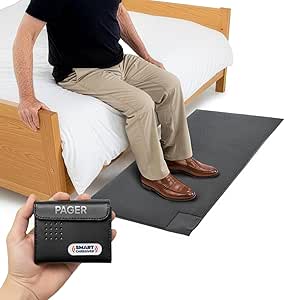
Smart Caregiver Floor Mat Alarm and Pager System – Includes Wireless Pager That Alerts When Someone Steps on The Durable 24in x 48in Floor Mat Sensor
Compared with sleep-focused options like Withings Sleep or Lunderg Bed Alarm, this system excels at safety for vulnerable seniors by alerting caregivers immediately when someone steps on the mat. The wireless, durable floor mat connects up to 300 feet to a caregiver pager, providing real-time alerts without disturbing the individual. Its strength lies in early detection—detecting movement before a person attempts to get out of bed—making it ideal for fall prevention. While it doesn’t track sleep stages or provide detailed sleep analytics like Withings, it offers peace of mind for nighttime safety. The system’s portability and adjustable alert volume make it highly adaptable to different caregiving environments. It’s best suited for those prioritizing fall prevention and immediate alerts over sleep cycle insights.
Pros:- Wireless, long-range connection up to 300 feet
- Early movement detection before person attempts to get up
- Adjustable volume and silent vibration options
Cons:- Does not provide sleep quality or cycle data
- Requires separate monitoring system for detailed sleep analytics
Best for: Caregivers of elderly or dementia patients needing early fall and wandering alerts at night.
Not ideal for: Users seeking comprehensive sleep tracking or heart rate monitoring, as this system is purely safety-oriented.
- Size:24in x 48in
- Range:Up to 300 feet
- Power Source:Battery powered (batteries not included)
- Alert Type:Audible, vibrate
- Connectivity:Wireless
- Warranty:1 year
Bottom line: This alarm system is ideal for caregivers prioritizing safety and fall prevention over sleep pattern analysis.
FutureCare Sleeping Mat Sensor
This sensor offers passive, under-mattress monitoring suitable for those already using the FutureCare HomeKit system. Unlike standalone sleep trackers like Withings or Lunderg, it doesn’t provide direct sleep analytics but adds valuable insight into overnight presence and movement when integrated into the broader system. Its slim, flexible design ensures comfort without interfering with sleep, making it ideal for users who want discreet monitoring without wearing devices or cameras. However, it’s limited to existing FutureCare users and cannot operate independently. This makes it less suitable for buyers seeking standalone sleep data but perfect for those who want seamless system integration for safety and sleep insights.
Pros:- Discreet, no interaction or setup required after installation
- Works automatically in the background
- Integrates with FutureCare HomeKit for expanded insights
Cons:- Requires an existing FutureCare system to function
- No standalone sleep tracking or detailed analytics
Best for: Existing FutureCare system users wanting additional under-mattress monitoring for safety and sleep insights.
Not ideal for: People looking for an all-in-one sleep tracker or who do not have the FutureCare HomeKit setup, as this is an add-on only.
- Placement:Under mattress
- Monitoring:Presence and movement
- Power:Passive, no batteries
- Compatibility:FutureCare HomeKit
- Design:Slim, flexible
- Use Case:Discreet overnight monitoring
Bottom line: This sensor is best for users already within the FutureCare ecosystem seeking discreet, passive monitoring.
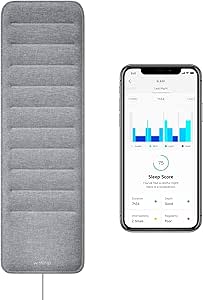
Withings Sleep – Sleep Tracking Pad Under The Mattress With Sleep Cycle Analysis
Compared with the Lunderg Bed Alarm or the simpler grounding mats, the Withings Sleep offers comprehensive sleep cycle analysis, snoring detection, and heart rate monitoring, making it ideal for those who want deep insights into their sleep quality. Its ability to track sleep stages and provide personalized advice sets it apart from basic safety alarms or grounding mats that don’t monitor sleep patterns. However, it doesn’t have fall prevention features or early movement alerts, limiting its use for safety-focused users. Its integration with health apps and smart home systems appeals to those seeking a holistic view of their sleep health. This product is best for individuals prioritizing sleep quality and cardiovascular health over immediate fall prevention.
Pros:- Provides comprehensive sleep cycle and snoring analysis
- Monitors heart rate and sleep depth
- Integrates with health apps for holistic tracking
Cons:- No fall detection or immediate safety alerts
- Requires stable Wi-Fi connection for full functionality
Best for: Sleep enthusiasts interested in detailed cycle analysis and health insights.
Not ideal for: Elderly or high-fall-risk users who need early alerts and fall prevention features, as it lacks safety alarms.
- Sleep Monitoring:Sleep cycles, snoring, heart rate
- Connectivity:Wi-Fi
- Power:Passive, under-mattress
- Integration:Health apps
- Design:Under mattress, slim
- Additional Features:Sleep analysis, snoring detection
Bottom line: This sleep tracker is perfect for users wanting in-depth sleep and health data rather than safety alerts.
Lunderg Under Mattress Bed Alarm for Elderly Adults – Wireless Sensor Pad with Early Alert & Pager – Bed Alarms and Fall Prevention for Elderly and Dementia Patients – Reduces False Alarms
Unlike the Withings or FutureCare sensors, the Lunderg Bed Alarm emphasizes early detection of movement, alerting caregivers before the patient attempts to get out of bed. Its wireless sensor pad and portable pager make it highly suitable for elderly or dementia patients, prioritizing fall prevention and safety. The system’s early alert capability reduces false alarms common with traditional bed alarms, providing timely intervention. It’s less focused on detailed sleep analytics but excels in immediate safety response. Its design ensures comfort and minimal disturbance, making it ideal for night-time use. This system is best for caregivers who need early, reliable alerts to prevent falls rather than detailed sleep or health data.
Pros:- Early movement detection before patient stands up
- Portable, adjustable volume pager
- Reduces false alarms with early alert system
Cons:- No sleep cycle analysis or health monitoring
- Limited to fall prevention and early alerting only
Best for: Caregivers for elderly or dementia patients needing early fall detection and alerting.
Not ideal for: Users seeking comprehensive sleep analytics or wellness features, as this system is safety-centric.
- Size:13 inches or less mattress
- Range:Up to 300 feet
- Connectivity:Wireless
- Alert:Audible, vibration
- Power:Batteries included
- Warranty:1 year
Bottom line: This system is ideal for caregivers focused on preventing falls through early alerts, rather than analyzing sleep quality.
How We Picked
Products in this roundup were evaluated based on accuracy of sleep data, ease of installation and daily use, build quality, and value for the price. We prioritized models with proven sensor technology, user-friendly interfaces, and reliable connectivity. Additional considerations included compatibility with smart home systems, the presence of alerts or fall detection features, and overall durability. The ranking reflects a balance between performance, usability, and cost, with top picks offering the best combination of these factors for most users.Factors to Consider When Choosing Best Sleep Tracking Mats For Under Mattress Monitoring
Choosing the best sleep tracking mat involves understanding key features and tradeoffs. Beyond basic sleep data, consider how the device integrates with your routine, its ease of setup, and whether it offers any health or safety alerts. The right choice depends on your specific needs—whether you want comprehensive sleep analysis, fall prevention, or a simple monitoring tool. Keep in mind that higher accuracy often comes with increased costs, but simpler models may lack detailed insights. Evaluating these factors helps ensure you select a device that genuinely improves your sleep health.Sensor Technology and Data Accuracy
The core of any sleep tracking mat is its sensors, which determine how precisely it captures sleep stages, movements, and vital signs. Mats with PVDF (piezoelectric film) sensors or multi-sensor arrays tend to produce more reliable data, especially for detailed sleep cycle analysis. Cheaper options may rely on basic pressure sensors that provide rough estimates but can miss subtle sleep disruptions. For those seeking detailed insights, investing in a model with advanced sensor tech is often worth the extra cost.
Ease of Installation and Daily Use
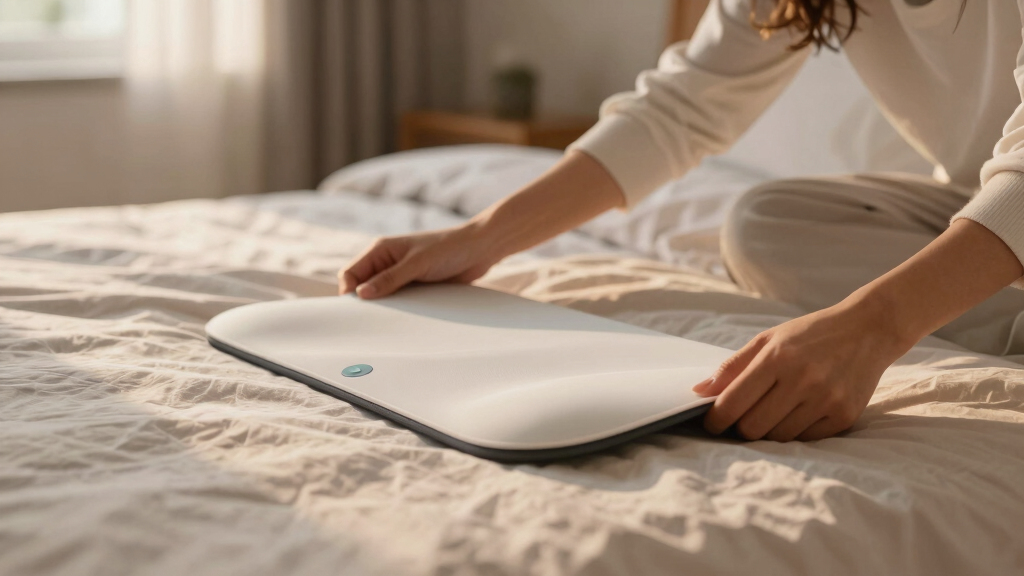
Since these mats are meant to stay under your mattress, simplicity is key. Look for models with straightforward setup instructions, minimal wiring, and features like wireless connectivity or auto-calibration. A device that requires frequent adjustments or complicated installation can detract from the convenience factor. Consider whether the app interface is intuitive and whether the device offers quick access to sleep reports without technical hurdles.
Compatibility and Smart Home Integration
Many users prefer devices that sync effortlessly with smartphones, smart home systems, or voice assistants like Alexa or Google Home. Compatibility enhances usability, enabling voice alerts, sleep tracking data sharing, or even integration with other health devices. However, compatibility isn’t universal, so verify that your preferred platform is supported before purchasing. Keep in mind that extra features may come with a higher price or increased complexity.
Safety and Additional Features
For elderly users or those with health concerns, fall detection or alert systems can be a vital addition. Some mats include alarm features or emergency alerts, making them more than just sleep trackers. These features often require additional setup or subscription services but can provide peace of mind. Weigh whether such safety features are worth the extra investment based on your specific needs.
Cost and Long-Term Value
Prices vary widely, from basic models under $100 to premium devices costing several hundred dollars. Cheaper mats may lack advanced sensors or integration features, but they can still offer decent sleep data for casual users. Higher-priced options usually provide more detailed insights, better build quality, and additional features like fall detection or smart home alerts. Consider your budget and how much value you place on detailed data versus simplicity and ease of use.
Frequently Asked Questions
Can sleep tracking mats accurately detect sleep stages?
Many sleep tracking mats can provide estimates of sleep stages like light, deep, and REM sleep, especially those with advanced sensors. However, their accuracy varies depending on sensor quality and underlying technology. Mats with PVDF or multi-sensor setups tend to deliver more reliable data, but even then, they may not match the precision of clinical-grade devices. Use these devices as helpful guides rather than definitive medical tools.
Are sleep mats suitable for elderly fall prevention?
Some sleep mats are designed specifically for fall detection and alerting caregivers, making them suitable for elderly or at-risk individuals. These models often include early warning systems or immediate alerts if abnormal movements or falls are detected. However, not all sleep mats have this feature, so if safety is your priority, choose a model explicitly marketed for fall prevention and verify its reliability in real-world conditions.
How difficult is it to set up a sleep tracking mat under the mattress?
Most modern sleep mats are designed for easy installation, often with plug-and-play setup that takes just a few minutes. Wireless models or those with auto-calibration features reduce the hassle, while wired or complex models may require more effort. Reading user reviews can reveal common setup issues, so look for models with clear instructions and good customer support to ensure a smooth experience.
Will a sleep tracking mat interfere with my mattress or bedding?
High-quality mats are generally designed to be thin and flexible enough to avoid discomfort or interference with your mattress comfort. However, cheaper or bulkier models may cause slight unevenness or noise. Ensure that the mat is compatible with your mattress thickness and type, and consider user reviews about comfort and noise to select a model that won’t disrupt your sleep environment.
Is it worth paying more for advanced features like smart home integration or fall alerts?
Paying more for added features makes sense if you value comprehensive safety or automation. Smart home integration can streamline your sleep data and enable voice commands, while fall alerts provide an extra layer of security, especially for vulnerable individuals. However, if your primary goal is basic sleep tracking, investing in a less expensive, straightforward model might be more cost-effective. Consider your specific needs and whether these extras will enhance your sleep health or safety.