To stay comfortable, sleep well, and prevent mold, aim to keep your indoor humidity between 40% and 60%. When levels are within this range, you’ll avoid problems like dry skin, sinus irritation, or mold growth. Too high or low humidity can cause issues for your health and your home’s structure. Monitoring these levels regularly helps you maintain the ideal balance. Keep going to discover more tips on how to keep your environment just right.
Key Takeaways
- The ideal indoor humidity range for comfort, sleep, and mold prevention is between 40% and 60%.
- Maintaining humidity below 40% can cause dry skin, sinus irritation, and sleep issues.
- Humidity above 60% increases mold, mildew, and dust mite risks, harming health and property.
- Use a hygrometer to monitor humidity levels and adjust with humidifiers or dehumidifiers accordingly.
- Proper ventilation and air quality management help sustain optimal humidity for health and comfort.
Maintaining the right humidity level in your home is essential for comfort, better sleep, and preventing mold growth. When humidity is too high, it creates a damp environment that fosters mold, mildew, and dust mites, which can compromise your health and damage your belongings. Conversely, if the air is too dry, you may experience dry skin, irritated sinuses, and difficulty sleeping. Striking the perfect balance helps you feel more comfortable and supports a healthier living space.
Maintaining balanced humidity improves comfort, health, and protects your home from moisture-related damage.
For many homes, the ideal indoor humidity range is between 40% and 60%. Staying within this range ensures your indoor plant health remains suitable, as plants thrive in moderate humidity. Too little moisture can cause plants to wilt and dry out, while excessive humidity can lead to fungal issues or root rot. Adjusting your home’s humidity to this range also enhances your HVAC system efficiency. When humidity levels are balanced, your heating and cooling systems don’t have to work as hard to maintain a consistent indoor climate. This can reduce energy consumption, lower utility bills, and extend the lifespan of your HVAC equipment.
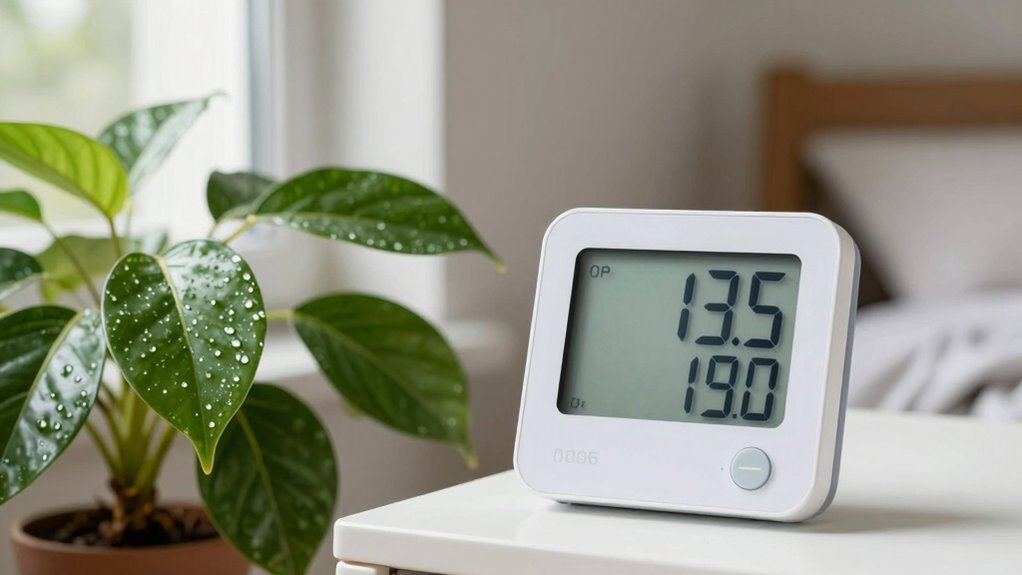
Monitoring humidity levels with a reliable hygrometer helps you stay aware of changes in real-time. If levels drop below 40%, especially during winter months, using a humidifier can add much-needed moisture to the air. Conversely, if humidity rises above 60%, a dehumidifier helps remove excess moisture, preventing mold spores from settling and proliferating. Proper ventilation is also key—use exhaust fans in bathrooms and kitchens to reduce indoor moisture sources and improve overall air quality. Additionally, understanding the importance of indoor air quality can guide you in selecting the right solutions for maintaining a healthy environment. Regularly checking airborne allergens and moisture levels can help prevent health issues related to poor indoor air quality. Ensuring proper ventilation can also help regulate humidity and reduce indoor pollutants.
Maintaining optimal humidity levels also supports mold prevention, which can cause health problems and structural damage. A balanced humidity level helps limit the growth of mold spores, keeping your home safer and cleaner. Keeping humidity within the recommended range doesn’t just benefit your health and HVAC system; it also preserves your home’s structure. Excess moisture can lead to peeling paint, warped wood, and compromised drywall. On the other hand, overly dry air can cause wood furniture to crack and paint to chip. Consistent humidity control creates a stable environment for your belongings and reduces maintenance costs over time.

TempPro TP49 Digital Hygrometer Indoor Thermometer Humidity Meter Room Thermometer with Temperature and Humidity Monitor Mini Hygrometer Outdoor Thermometer (Previously ThermoPro)
Face Icon Comfort Indicator: Humidity temperature gauge features face icons to indicate DRY/COMFORT/WET air conditions, quickly informs you…
As an affiliate, we earn on qualifying purchases.
As an affiliate, we earn on qualifying purchases.
Frequently Asked Questions
How Does Humidity Affect Indoor Allergy Symptoms?
Humidity levels directly impact your indoor allergy symptoms by influencing allergenic particles and mold growth. When humidity is too high, mold thrives, releasing spores that worsen allergies. Conversely, low humidity can dry out nasal passages, making you more sensitive to dust and other allergens. Maintaining ideal humidity helps reduce allergenic particles in the air and inhibits mold growth, easing allergy symptoms and creating a more comfortable indoor environment.
What Are the Best Humidity Levels for Different Climates?
Think of climate adaptation like adjusting a dimmer switch for perfect lighting. In dry climates, keep humidity around 30-40% to prevent dryness and static. In humid areas, aim for 40-50% to inhibit mold and mildew. Proper humidity regulation helps your indoor environment stay comfortable, regardless of outside weather. Tailoring humidity levels ensures you stay comfortable and healthy, no matter where you are, by actively managing moisture for ideal living conditions.
Can Humidity Control Reduce Energy Costs?
Yes, humidity control can reduce your energy costs. When you maintain ideal humidity levels, your HVAC system doesn’t have to work as hard to heat or cool your home, leading to energy savings. Proper humidity control also keeps your home comfortable and reduces strain on your heating and cooling systems. By managing humidity effectively, you can lower your utility bills and improve overall energy efficiency.
How Do Humidity Levels Impact Electronic Device Longevity?
You might not realize it, but high humidity can cut your electronics’ lifespan by up to 50%. Excess moisture causes humidity corrosion, damaging sensitive components and shortening device longevity. Keeping indoor humidity between 30-50% minimizes this risk, protecting your electronics from moisture-related damage. Proper humidity control not only extends your device’s life but also saves you money on replacements and repairs, making it a smart maintenance habit.
Are There Health Risks Associated With Too Low Humidity?
Yes, low humidity can pose health risks. When air is too dry, airborne bacteria can become more concentrated, increasing your risk of respiratory infections. It also causes skin dehydration, leading to dryness, irritation, and discomfort. You might notice your skin feeling tight or flaky. Maintaining balanced humidity levels helps reduce these risks, supporting your respiratory health and keeping your skin hydrated and comfortable.

DREO Humidifiers for Bedroom, 3L Top Fill 30H & 26dB Quiet Runtime for Large Room, Cool Mist Ultrasonic Humidifier with Humidity Sensor, Night Light for Home, Baby, Nursery, Plants, New Edition
𝐅𝐨𝐫𝐠𝐞𝐭 𝐚𝐛𝐨𝐮𝐭 𝐜𝐨𝐧𝐬𝐭𝐚𝐧𝐭 𝐫𝐞𝐟𝐢𝐥𝐥𝐬: With a 3L tank and convenient top-fill design, this humidifier large room for baby…
As an affiliate, we earn on qualifying purchases.
As an affiliate, we earn on qualifying purchases.
Conclusion
Maintaining ideal humidity levels guarantees comfort and restful sleep, creating a sanctuary from discomfort. Yet, too little moisture leaves you dry and fatigued, while too much invites mold and health risks. Striking the right balance is like walking a tightrope—precise, mindful, essential. In this delicate dance, your environment becomes both refuge and potential hazard. By understanding these ranges, you hold the power to nurture a healthy, cozy space—where comfort thrives and dangers fade into the background.

Dehumidifier, 95OZ Dehumidifier for Home 1000 Sq.Ft – Quiet with Auto Shut Off & Relaxing 7 Color Ambient Light,Ideal for Livingroom, Bedroom, Basement(Black)
Semiconductor dehumidifiers use thermoelectric cooling to remove moisture from the air. They create a drier, more comfortable environment…
As an affiliate, we earn on qualifying purchases.
As an affiliate, we earn on qualifying purchases.

iLIVING 12" Wall Mounted Shutter Exhaust Fan, Automatic Shutter, with Thermostat and Variable Speed controller, 0.6A, 960 CFM, 1400 SQF Coverage Area Silver (ILG8SF12V-ST)
POWERFUL AIR VENTILATOR – 960 CFM, 115V, 0.6A, 1/20 Horse Power, 1650 RPM, Coverage up to 1400 square…
As an affiliate, we earn on qualifying purchases.
As an affiliate, we earn on qualifying purchases.