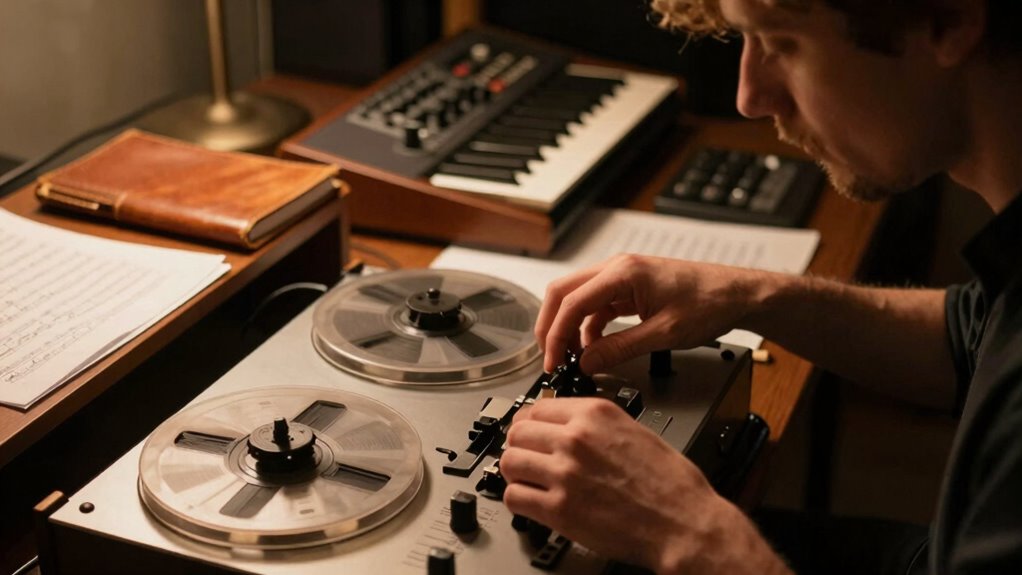

Film composers create memorable themes by crafting simple, recognizable melodies and motifs that evoke strong emotions. They carefully layer harmonies, rhythms, and instrumentation to match each scene’s mood. Repeating and evolving these themes throughout the film reinforces their emotional impact, creating a deep connection with viewers. This deliberate development and mastery of musical storytelling make these themes stick with you long after the credits roll. Keep exploring to discover how these techniques come together to shape unforgettable soundtracks.
Key Takeaways
- Craft simple, recognizable melodies or motifs that evoke core emotions or themes.
- Reintroduce and vary motifs strategically to reinforce their emotional impact.
- Layer and develop musical ideas to mirror character growth and story progression.
- Use consistent instrumentation and harmony to create a cohesive auditory identity.
- Experiment with rhythm, harmony, and instrumentation to deepen emotional resonance.

Film composers play a vital role in shaping the emotional impact of a movie, often creating memorable themes that stick with audiences long after the credits roll. These themes aren’t just background music; they’re carefully crafted musical motifs designed to forge a deep emotional resonance. When you hear a familiar melody, it instantly transports you back to a specific scene, feeling, or character—an achievement that relies on the composer’s skillful use of musical motifs. By repeating and developing these motifs throughout the film, they create a cohesive auditory experience that enhances storytelling and makes the emotional moments unforgettable.
Creating a memorable theme begins with understanding the core emotion or idea you want to convey. As a composer, you aim to distill complex feelings into simple, recognizable musical snippets. These motifs become the musical shorthand for a character’s journey, a theme’s significance, or the film’s mood. You might use a particular melody, rhythm, or harmony that immediately evokes a sense of nostalgia, tension, or hope. When these motifs are woven into the fabric of the film, they act like emotional anchors, allowing you, as an audience member, to connect more deeply with what’s happening on screen.
Memorable film themes distill emotions into simple melodies that emotionally anchor viewers to the story.
To forge these emotional resonances, you often experiment with different musical elements—melody, harmony, rhythm, and instrumentation. For example, a soaring string motif might evoke heroism, while a dissonant chord can generate unease. The key is to match the musical motif to the scene’s emotional tone precisely. Once you’ve found that perfect motif, repeating it at strategic moments reinforces the emotional connection. Subtle variations keep the theme fresh while maintaining its core identity, ensuring it stays memorable without becoming monotonous.
Another technique is layering motifs over different scenes, gradually evolving them to reflect character development or plot twists. This ongoing musical dialogue allows the theme to grow alongside the story, deepening the emotional resonance. When you listen to these carefully crafted themes, you sense a deliberate effort on the composer’s part to evoke specific feelings each time the motif appears. Over time, these recurring musical ideas become ingrained in your memory, making the film’s emotional landscape feel entirely personal. Additionally, understanding musical motifs and their development can help audiences appreciate the depth of the composition and its contribution to storytelling. Recognizing how motifs are developed and varied reveals the composer’s mastery in creating a cohesive musical narrative. Furthermore, the deliberate use of motif development enhances the audience’s emotional engagement and connection to the story.

Complete Guide to Film Scoring – The Art and Business of Writing Music for Movies and TV | Berklee Guide for Composers and Songwriters | Learn Film Composition, Royalties and Contracts
- Page Count: 424 pages
As an affiliate, we earn on qualifying purchases.
As an affiliate, we earn on qualifying purchases.
Frequently Asked Questions
How Do Composers Choose the Right Instruments for a Theme?
You choose the right instruments by considering your theme’s emotional tone and story. Instrument selection is essential; for a heroic feel, you might pick bold brass or strings, while a mysterious vibe could call for woodwinds or synths. You build a tonal palette that matches the mood, ensuring each instrument enhances the theme’s impact and helps it resonate with audiences long after they watch the film.
Do Composers Revisit Themes for Different Film Installments?
Yes, composers often revisit themes for different film installments, using music improvisation and thematic variation to keep the core emotion alive while adapting to new stories. They tweak melodies, harmonies, or orchestration, ensuring the theme resonates with both old and new audiences. This process helps create continuity across sequels, allowing viewers to feel connected to the characters and narrative through familiar, evolving musical motifs.
How Long Does It Typically Take to Create a Memorable Theme?
Typically, creating a memorable theme takes anywhere from a few days to several weeks, depending on complexity. Curiously, about 60% of top film scores use music symbolism to evoke emotional resonance instantly. You might be surprised how composers craft these themes quickly, focusing on strong melodies and emotional connections, allowing audiences to remember them long after the film ends. Your favorite themes often have a deep, emotional resonance that sticks with you.
Can Audience Feedback Influence Theme Development During Filming?
Audience reactions can profoundly influence theme development during filming. As you observe their feedback, you might use improvisation techniques to tweak or refine the theme in real-time, making it more impactful. This dynamic process allows you to connect more deeply with viewers, ensuring the music resonates emotionally. Incorporating audience insights helps shape a memorable theme that leaves a lasting impression long after the film ends.
What Role Does Collaboration With Directors Play in Theme Creation?
You play a crucial role in collaboration with directors, where mood alignment and vision synchronization become your guiding stars. Imagine weaving melodies that mirror the director’s cinematic universe, each note resonating with their creative intent. By working closely, you guarantee your music enhances scenes perfectly, capturing emotions and themes. This partnership transforms a simple tune into an unforgettable motif, forging a lasting connection between your composition and the audience’s memories.
Conclusion
As the credits roll and the screen dims, you carry those melodies with you—like a favorite whisper echoing through your mind. The composer’s craft turns fleeting moments into timeless memories, painting vivid soundscapes that cling to your heart. Just as a familiar tune can brighten your day or deepen your dreams, their themes become part of your story, forever woven into the tapestry of your imagination. That’s the magic of a truly memorable film theme.