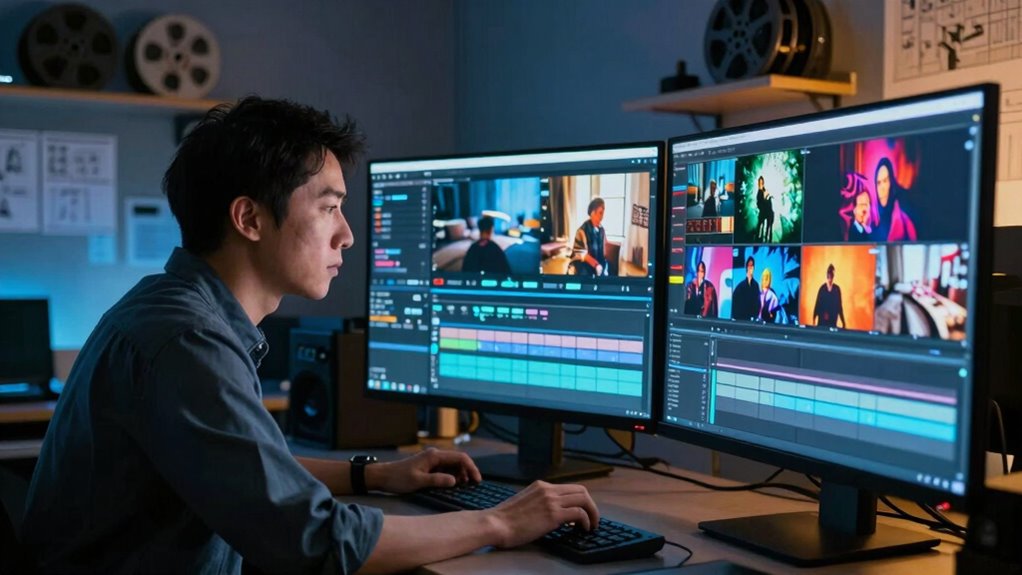

Trailer editors sell a story in 90 seconds by carefully choosing scenes that reflect the film’s core themes, tone, and mood. They use quick cuts, powerful visuals, and sound to build excitement and emotional impact, creating momentum without overwhelming viewers. By balancing fast-paced action with quiet moments, they craft a rhythm that connects emotionally and visually. If you want to discover how they shape perceptions and captivate audiences, there’s more to uncover below.
Key Takeaways
- Select and sequence scenes that quickly convey core themes, characters, and conflicts to build intrigue.
- Use visual shorthand, color, and camera angles to establish tone and mood immediately.
- Incorporate music and sound effects strategically to heighten emotion and emphasize key moments.
- Balance fast-paced action with quiet moments to maintain momentum and emotional engagement.
- Craft a cohesive narrative that sparks curiosity and emotional connection within 90 seconds.
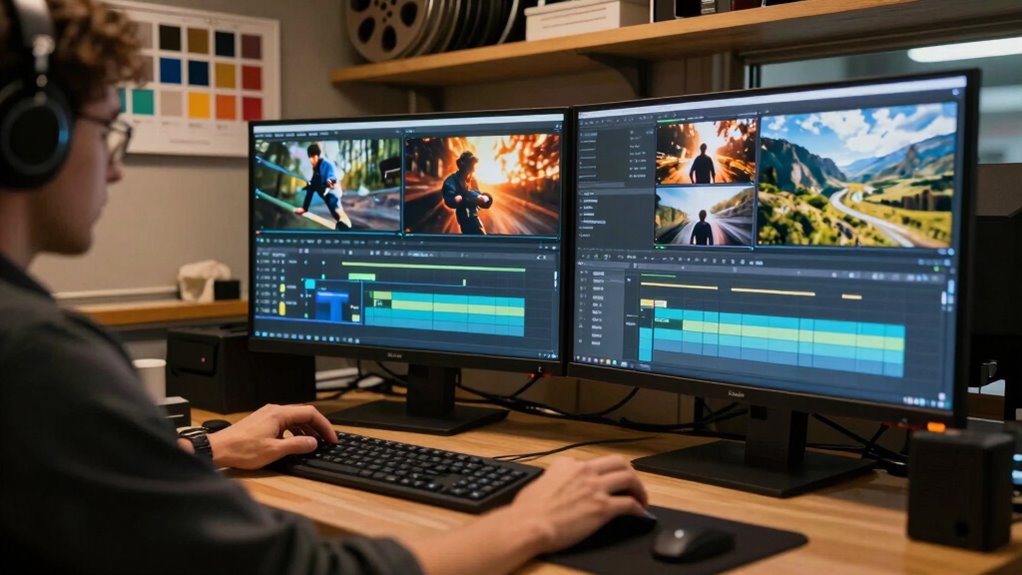
Trailer editors have a unique power: they craft short, compelling stories that shape your expectations before a film even hits theaters. In just 90 seconds, your experience is carefully curated to spark curiosity, emotion, and anticipation. The goal is simple but powerful: get you excited enough to see the movie. To do this, trailer editors lean heavily on audience engagement. They know what grabs your attention and what makes you want to learn more. Every shot, sound, and line is chosen with precision to evoke a specific reaction, whether it’s thrill, laughter, or suspense. Your emotional response is the key driver behind these edits, making sure you feel connected to the story even before watching it.
Trailer editors craft 90-second stories that ignite curiosity, emotion, and anticipation, making you eager to see the film.
Visual storytelling plays an essential role in these short narratives. Within a limited timeframe, trailer editors select scenes that visually communicate the film’s core themes, tone, and mood. They craft a visual language that’s immediately recognizable, whether it’s the dark shadows of a thriller or the bright colors of a comedy. The imagery isn’t random; it’s carefully pieced together to suggest a story arc, introduce characters, or hint at conflicts. This visual shorthand allows you to quickly grasp what the film is about and decide if it’s something you want to pursue further. The editing pace, the use of color grading, and camera angles all work together to reinforce the story’s vibe—sometimes frenetic and energetic, other times slow and mysterious. Additionally, effective trailer editing involves understanding audience engagement, which guides how scenes are selected and ordered to maximize emotional impact.
Your attention span is short, and trailer editors know this better than anyone. They focus on crafting a narrative that’s engaging from the first second. Every cut is deliberate, building momentum while maintaining clarity. They blend action-packed sequences with quieter moments, creating a rhythm that pulls you in without overwhelming you. The music and sound effects are equally important, amplifying emotions and emphasizing key moments. This combination of audio-visual elements ensures that the trailer isn’t just a collection of scenes but a cohesive story that resonates with you emotionally and visually.
In essence, trailer editors sell a story in 90 seconds by expertly balancing audience engagement with visual storytelling. They know how to distill a complex film into a compact, enticing glimpse that sparks your curiosity and stirs your emotions. It’s a skillful art—one that influences your perception and decision-making, making you enthusiastic to see the full story unfold on the big screen.
![WavePad Audio Editing Software - Professional Audio and Music Editor for Anyone [Download]](https://m.media-amazon.com/images/I/B1fcLEGCs6S._SL500_.png)
WavePad Audio Editing Software – Professional Audio and Music Editor for Anyone [Download]
- Professional Audio Editor: Record and edit music and voice
- Audio Effects: Add echo, noise reduction, reverb, and more
- Format Support: Supports WAV, MP3, FLAC, OGG, and more
As an affiliate, we earn on qualifying purchases.
As an affiliate, we earn on qualifying purchases.
Frequently Asked Questions
How Do Trailer Editors Choose the Best Footage?
You choose the best footage by focusing on visual storytelling that highlights key emotions and plot points. You look for clips that create a strong narrative flow, using pacing techniques to build excitement or suspense. You prioritize shots that are visually striking and concise, ensuring each piece advances the story within seconds. This careful selection keeps viewers engaged, making the trailer compelling and effective at selling the film’s essence.
What Tools Do Trailer Editors Use for Editing?
Think of trailer editing as weaving a visual tapestry; you need the right tools. You use editing software like Adobe Premiere Pro or Final Cut Pro for cutting and timing. Color grading tools, such as DaVinci Resolve, help set the tone, while visual effects software like After Effects adds excitement. These tools work together, allowing you to craft a compelling story in just 90 seconds, engaging viewers instantly.
How Long Does It Take to Edit a Trailer?
It typically takes several days to a few weeks to edit a trailer, depending on the project’s complexity. You focus on narrative pacing to guarantee the story flows smoothly and builds excitement, while maintaining visual consistency to keep the tone cohesive. You’ll review and refine multiple cuts, balancing quick edits with impactful moments, all to create a compelling 90-second preview that hooks viewers instantly.
How Do Editors Decide on Music for Trailers?
Music selection acts as the heartbeat of a trailer, guiding your emotional journey. You decide based on the film’s tone, genre, and target audience, choosing tracks that amplify suspense, excitement, or tenderness. The right music creates a resonance, making viewers feel connected and enthusiastic. As an editor, you seek melodies that enhance emotional impact, ensuring the soundtrack not only complements visuals but amplifies the story’s core message.
What Skills Are Essential for a Trailer Editor?
You need strong visual storytelling skills to craft compelling trailers that captivate your audience quickly. Your ability to select and synchronize shots with music keeps viewers engaged and builds anticipation. Attention to pacing, creativity, and understanding the genre also matter, as does the skill to highlight key moments without giving too much away. Ultimately, your goal is to create a trailer that sparks curiosity and invites viewers to experience the story firsthand.
Conclusion
You hold the pen that sketches the heartbeat of a story in just 90 seconds. Like a master chef blending ingredients, you mix visuals, music, and timing to serve a feast for the eyes. Your work is a bridge, guiding viewers into a world they’ve yet to explore. Remember, a trailer isn’t just a tease—it’s a window into the soul of a story. With every cut, you reveal a universe waiting to be discovered.