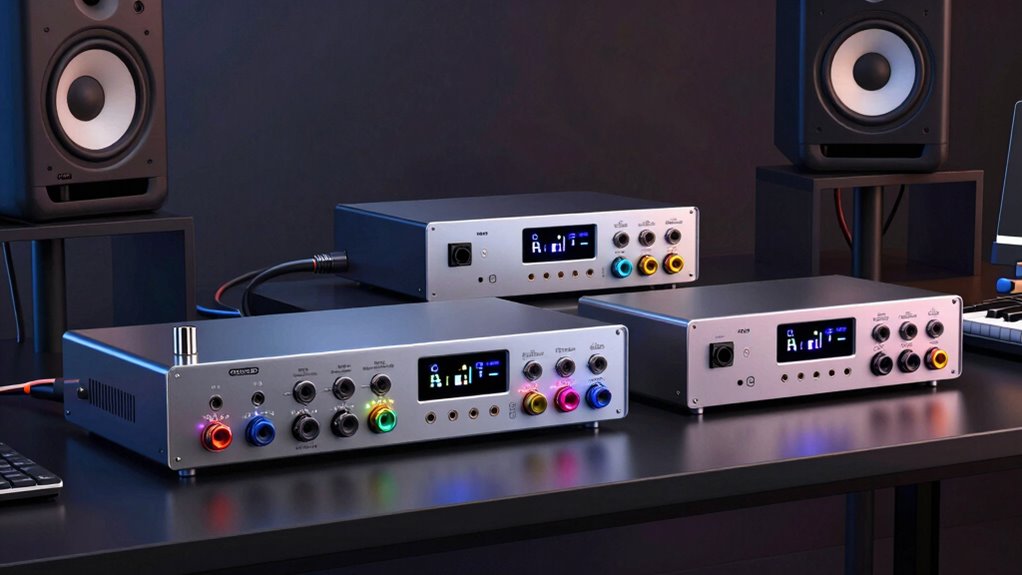

If you’re looking for the best audio interfaces with four or more inputs in 2026, I’ve got you covered. The options include models like the Focusrite Scarlett 18i16, PreSonus Quantum ES 4, and Arturia MiniFuse 4, which offer versatile connections, high-quality preamps, and reliable performance. These interfaces are perfect for multi-source recording, streaming, and production. Keep exploring to find out more about these top choices and what suits your needs best.
Key Takeaways
- Top audio interfaces offer multiple input types like XLR, TRS, and combo jacks for versatile gear connection.
- They support high-resolution sampling rates up to 192kHz for professional-quality recordings.
- Features include multiple high-quality preamps, phantom power, and onboard effects for enhanced audio processing.
- Connectivity options such as USB-C, Thunderbolt, and digital ports ensure fast, reliable data transfer.
- Durable build quality with rugged chassis and reinforced connectors ensures long-term reliability in various recording environments.
| Tascam US-4x4HR 4-Channel USB Audio Interface | 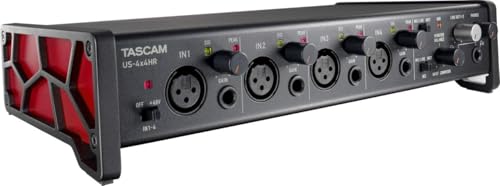 | Streamlined Professional | Number of Inputs: 4 combo XLR/TRS inputs | Sample Rate Support: 192kHz | Connectivity Type: USB | VIEW LATEST PRICE | See Our Full Breakdown |
| M-AUDIO AIR 192×14 USB-C Audio Interface | 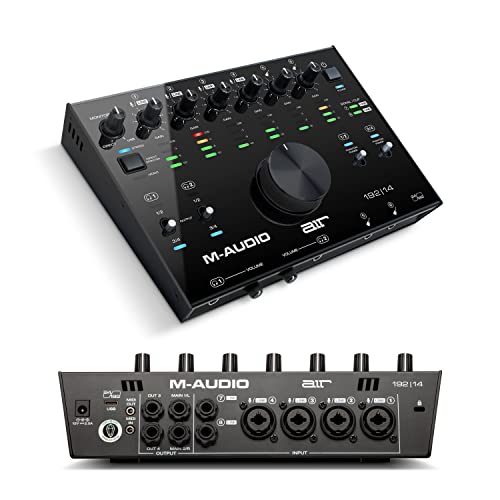 | High-Fidelity Studio | Number of Inputs: 4 combo XLR/TRS inputs + 2 instrument | Sample Rate Support: 192kHz | Connectivity Type: USB-C | VIEW LATEST PRICE | See Our Full Breakdown |
| Focusrite Scarlett 18i16 4th Gen USB Audio Interface |  | Versatile Powerhouse | Number of Inputs: 4 combo XLR/TRS + 4 line + MIDI | Sample Rate Support: 192kHz | Connectivity Type: USB-C | VIEW LATEST PRICE | See Our Full Breakdown |
| Zoom AMS-44 USB Audio Interface with Loopback |  | Compact Connectivity | Number of Inputs: 4 XLR/TRS inputs + 2 headphone outputs | Sample Rate Support: 192kHz | Connectivity Type: USB | VIEW LATEST PRICE | See Our Full Breakdown |
| USB Audio Interface with 4 Outputs and Phantom Power |  | Budget-Friendly Quality | Number of Inputs: 2 combo XLR/TRS + 2 line inputs | Sample Rate Support: 192kHz | Connectivity Type: USB/USB-C | VIEW LATEST PRICE | See Our Full Breakdown |
| 4-Channel USB Audio Interface for Recording and Streaming |  | Easy-Use Interface | Number of Inputs: 4 XLR/TRS combo + 2 line | Sample Rate Support: 192kHz | Connectivity Type: USB/USB-C | VIEW LATEST PRICE | See Our Full Breakdown |
| M-AUDIO AIR 192×4 USB-C Audio Interface |  | Premium Sound Quality | Number of Inputs: 1 combo XLR/TRS + 1 instrument + 2 line | Sample Rate Support: 192kHz | Connectivity Type: USB-C | VIEW LATEST PRICE | See Our Full Breakdown |
| Yamaha URX44C USB-C Audio/MIDI Interface |  | Multi-Platform Compatibility | Number of Inputs: 4 combo XLR/TRS + 2 line + MIDI | Sample Rate Support: 192kHz | Connectivity Type: USB-C | VIEW LATEST PRICE | See Our Full Breakdown |
| Fender Quantum LT 4 USB-C Audio Interface | 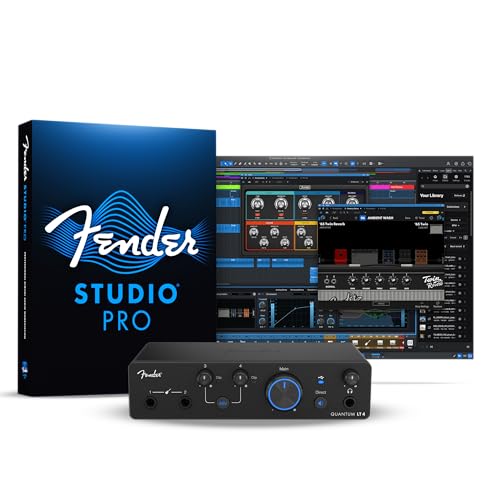 | Guitar & Vocal Focus | Number of Inputs: 2 MAX-HD mic preamps + 2 instrument | Sample Rate Support: 192kHz | Connectivity Type: USB-C | VIEW LATEST PRICE | See Our Full Breakdown |
| 4-Channel Audio Mixer with Effects and Phantom Power | All-in-One Mixer | Number of Inputs: 4 XLR/TRS combo + 2 line + Bluetooth | Sample Rate Support: 192kHz | Connectivity Type: USB | VIEW LATEST PRICE | See Our Full Breakdown | |
| HXBER 4-Channel USB Sound Card for Recording and Streaming | | Portable Performance | Number of Inputs: 4 preamp channels + 4 outputs | Sample Rate Support: 192kHz | Connectivity Type: USB2.0/Type-C | VIEW LATEST PRICE | See Our Full Breakdown |
| Steinberg UR44C 6×4 USB 3.0 Audio Interface with Cubase AI and Cubasis LE |  | Industry Standard | Number of Inputs: 4 combo XLR/TRS + 2 instrument | Sample Rate Support: 192kHz | Connectivity Type: USB-C | VIEW LATEST PRICE | See Our Full Breakdown |
| 6-Channel Audio Mixer with DSP and Bluetooth |  | Wireless Flexibility | Number of Inputs: 4 XLR/TRS combo + 1/4″ jack + Bluetooth | Sample Rate Support: 192kHz | Connectivity Type: USB/USB-C | VIEW LATEST PRICE | See Our Full Breakdown |
| PreSonus Quantum ES 4 USB-C Audio Interface |  | High-End Precision | Number of Inputs: 4 mic preamps + 2 instrument + 2 line | Sample Rate Support: 192kHz | Connectivity Type: USB-C | VIEW LATEST PRICE | See Our Full Breakdown |
| Arturia MiniFuse 4 USB Audio & MIDI Interface |  | Feature-Rich Design | Number of Inputs: 4 combo XLR/TRS + 2 line + MIDI | Sample Rate Support: 192kHz | Connectivity Type: USB-C | VIEW LATEST PRICE | See Our Full Breakdown |
More Details on Our Top Picks
-
M-AUDIO AIR 192x14 USB-C Audio Interface for Studio Recording with 8 In and 4 Out, MIDI Connectivity, and Software from MPC Beats and Ableton Live Lite
Capture every detail - premium component selection and 24-bit/192kHz resolution for professional recording and monitoring to your Mac/...
As an affiliate, we earn on qualifying purchases.
Tascam US-4x4HR 4-Channel USB Audio Interface
If you’re looking for a reliable audio interface that can handle multiple sources simultaneously, the Tascam US-4x4HR is an excellent choice. It features 4 inputs and 4 outputs, supporting 24-bit/192kHz audio quality. The combo XLR/TRS inputs have Ultra-HDDA preamps and +48V phantom power, perfect for microphones and instruments. With USB connectivity, it works seamlessly with Windows, and its improved driver offers ultra-low latency with adjustable buffer sizes. Whether you’re recording, streaming, or podcasting, this interface provides versatile input options and high-resolution audio, making it a solid tool for professional and hobbyist creators alike.
- Number of Inputs:4 combo XLR/TRS inputs
- Sample Rate Support:192kHz
- Connectivity Type:USB
- Built-in Preamps:Yes, Ultra-HDDA
- Additional I/O (MIDI, ADAT, S/PDIF, etc.):MIDI via USB (not specified)
- Software Bundle:TASCAM driver, no bundle
- Additional Feature:Low-latency buffer options
- Additional Feature:Supports high-resolution 24-bit/192kHz
- Additional Feature:Designed for multiple workflows
-
Focusrite Scarlett 18i16 4th Gen USB Audio Interface, for Songwriting, Music Production, Recording, and Podcasting — High-Fidelity, Studio Quality Recording, and All the Software You Need to Record
The producer's interface: Scarlett 18i16 features 18 inputs and 16 outputs, including four mic preamps, Hi-Z, line inputs,...
As an affiliate, we earn on qualifying purchases.
M-AUDIO AIR 192×14 USB-C Audio Interface
The M-AUDIO AIR 192×14 USB-C Audio Interface stands out as an excellent choice for musicians and producers who need multiple inputs for complex recording setups. Its 4 combo XLR/TRS inputs, 2 instrument inputs, and 2 line inputs provide versatile connectivity, while stereo outputs and assignable aux outputs support all-encompassing monitoring. The interface features premium 24-bit/192kHz conversion, crystal preamps, and ultra-pristine AD converters, ensuring studio-quality sound. With MIDI in/out, rugged metal construction, and low-latency performance, it’s built for professional use. Included software like Ableton Live Lite and creative plugins make it a powerful, all-in-one solution for recording, producing, and mixing.
- Number of Inputs:4 combo XLR/TRS inputs + 2 instrument
- Sample Rate Support:192kHz
- Connectivity Type:USB-C
- Built-in Preamps:Yes, Crystal preamps
- Additional I/O (MIDI, ADAT, S/PDIF, etc.):MIDI in/out
- Software Bundle:Ableton Live Lite, MPC Beats
- Additional Feature:Includes professional software suite
- Additional Feature:2 assignable auxiliary outputs
- Additional Feature:Class-leading 2.59 ms latency
-
Zoom AMS-44 USB Audio Interface for Musicians & Podcasters, with 4 Inputs, 4 Outputs, Loopback, Direct Monitoring, Bus-Powered, for Recording and Streaming on PC, Mac, iOS, and Android
FOUR INPUTS, FOUR OUTPUTS, ZERO HASSLE – Features four XLR/TRS combo inputs with four low-noise preamps and 48V...
As an affiliate, we earn on qualifying purchases.
Focusrite Scarlett 18i16 4th Gen USB Audio Interface
The Focusrite Scarlett 18i16 4th Gen stands out as an ideal choice for musicians, producers, and podcasters who need multiple high-quality inputs for complex recording setups. With 18 inputs and 16 outputs, it supports multitrack recording, featuring four premium mic preamps with 69dB gain, Hi-Z, line inputs, ADAT, S/PDIF, and MIDI I/O. The 24-bit, 192kHz converters guarantee studio-grade sound quality, enhanced by Air modes that add presence and warmth. Its extensive routing is managed via Focusrite Control software, and the device supports USB-C and USB 2.0 connections across Mac, Windows, and iOS. Built for professional use, it combines durability with versatile connectivity.
- Number of Inputs:4 combo XLR/TRS + 4 line + MIDI
- Sample Rate Support:192kHz
- Connectivity Type:USB-C
- Built-in Preamps:Yes, 4 Scarlett preamps
- Additional I/O (MIDI, ADAT, S/PDIF, etc.):ADAT, S/PDIF, MIDI
- Software Bundle:Pro Tools Intro+, Ableton Live Lite
- Additional Feature:Air mode for harmonic enhancement
- Additional Feature:Auto Gain and Clip Safe
- Additional Feature:Durable aluminum chassis
Zoom AMS-44 USB Audio Interface with Loopback
Designed for streamers and multi-instrument musicians, the Zoom AMS-44 USB Audio Interface with Loopback stands out with its versatile connectivity and user-friendly features. It offers four inputs and outputs, supporting seamless recording and streaming across PC, Mac, iOS, and Android devices. With four XLR/TRS inputs—including one for guitar—and two headphone outputs, it provides flexible monitoring options. The innovative Music/Streaming switch makes toggling between modes effortless, while hardware controls like Loopback and Direct Monitoring streamline your workflow. Its bus-powered design guarantees portability, making it ideal for professional-quality audio production and live streaming on the go.
- Number of Inputs:4 XLR/TRS inputs + 2 headphone outputs
- Sample Rate Support:192kHz
- Connectivity Type:USB
- Built-in Preamps:Yes, 4 XLR/TRS preamps
- Additional I/O (MIDI, ADAT, S/PDIF, etc.):No additional I/O
- Software Bundle:No software specified
- Additional Feature:Switchable Music/Streaming modes
- Additional Feature:Loopback for routing sources
- Additional Feature:Compatible with Android and iOS
USB Audio Interface with 4 Outputs and Phantom Power
If you need a versatile audio interface capable of delivering high-quality sound and reliable monitoring, a USB model with 4 outputs and phantom power is an excellent choice. It supports up to 24-bit/192kHz for studio-level recording clarity. Its combo inputs (XLR/¼”) and balanced ¼” outputs handle microphones, instruments, and monitors seamlessly. With two direct monitoring modes—MONO and STEREO—you get real-time, latency-free playback. The 48V phantom power guarantees compatible microphones operate correctly. Designed for compatibility with most DAWs, it’s perfect for musicians, podcasters, and vocalists seeking professional-grade audio with flexible connection options.
- Number of Inputs:2 combo XLR/TRS + 2 line inputs
- Sample Rate Support:192kHz
- Connectivity Type:USB/USB-C
- Built-in Preamps:Yes, proprietary preamps
- Additional I/O (MIDI, ADAT, S/PDIF, etc.):MIDI in/out
- Software Bundle:No software specified
- Additional Feature:Independent MONO/STEREO monitoring
- Additional Feature:Proprietary preamp technology
- Additional Feature:Multiple input/output configurations
4-Channel USB Audio Interface for Recording and Streaming
Looking for a reliable USB audio interface that can handle multiple sources simultaneously? I recommend this 4-channel model, perfect for recording and streaming. It offers 4-in/4-out, high-resolution 24-bit/192kHz sound quality, and connects easily via USB to computers or smartphones. Its compact, portable design makes it ideal for on-the-go use. Independent gain controls, signal indicators, and switchable impedance modes ensure flexible microphone and instrument connections. Real-time monitoring with headphone outputs and onboard controls for reverb and delay enhance your sound. Whether you’re streaming, recording, or performing live, this interface provides professional-grade audio with versatile features.
- Number of Inputs:4 XLR/TRS combo + 2 line
- Sample Rate Support:192kHz
- Connectivity Type:USB/USB-C
- Built-in Preamps:Yes, 4 preamps
- Additional I/O (MIDI, ADAT, S/PDIF, etc.):No additional I/O
- Software Bundle:No software specified
- Additional Feature:Built-in reverb and delay
- Additional Feature:Switchable impedance modes
- Additional Feature:Supports multiple scenarios
M-AUDIO AIR 192×4 USB-C Audio Interface
The M-AUDIO AIR 192×4 USB-C Audio Interface stands out as an ideal choice for musicians, podcasters, and producers who need high-quality, reliable multi-input recording. It offers professional-grade sound with 24-bit/192kHz resolution, ensuring crystal-clear audio capture. Its premium components, like transparent crystal preamps and ultra-pristine A/D converters, deliver studio-quality sound. The interface features versatile connectivity, including XLR+¼” combo inputs, instrument inputs, stereo outputs, and independent headphone monitoring. With a low latency of just 2.59ms and a durable metal chassis, it’s perfect for both studio and mobile setups. Plus, it comes with powerful production software to jumpstart your projects.
- Number of Inputs:1 combo XLR/TRS + 1 instrument + 2 line
- Sample Rate Support:192kHz
- Connectivity Type:USB-C
- Built-in Preamps:Yes, 4 preamps
- Additional I/O (MIDI, ADAT, S/PDIF, etc.):No additional I/O
- Software Bundle:No software specified
- Additional Feature:Rugged metal chassis
- Additional Feature:Includes comprehensive production tools
- Additional Feature:24-bit/192kHz high fidelity
Yamaha URX44C USB-C Audio/MIDI Interface
Designed for musicians and producers who need versatile input options, the Yamaha URX44C USB-C Audio/MIDI Interface offers six inputs and four outputs, supporting high-quality 32-bit/192kHz audio. It features four combo XLR/TRS inputs with Class-A D-PRE mic preamps that support +48V phantom power, along with two Hi-Z instrument inputs, two TRS line inputs, and four TRS line outputs. The rugged full-metal chassis guarantees durability, while latency-free DSP monitoring includes REV-X reverb, Channel Strip, and Guitar Amp Classics effects. Compatible with Windows, macOS, and iOS, it also comes with bundled software like Cubase AI, making it a flexible solution for recording and production.
- Number of Inputs:4 combo XLR/TRS + 2 line + MIDI
- Sample Rate Support:192kHz
- Connectivity Type:USB-C
- Built-in Preamps:Yes, 4 preamps
- Additional I/O (MIDI, ADAT, S/PDIF, etc.):MIDI, ADAT, S/PDIF
- Software Bundle:Cubase AI, Cubasis LE
- Additional Feature:Built-in DSP effects
- Additional Feature:Supports VST 3 and AU
- Additional Feature:Bundled Cubase AI software
Fender Quantum LT 4 USB-C Audio Interface
If you need a versatile audio interface that seamlessly combines professional sound quality with user-friendly connectivity, the Fender Quantum LT 4 USB-C is an excellent choice. It features a 4×2 USB-C interface, dual MAX-HD mic preamps with 75 dB gain, and purpose-built instrument inputs, ensuring clear, high-fidelity recordings of vocals and instruments. The interface offers low-latency direct monitoring, loopback routing, and compatibility with both Mac and PC systems, making streaming and content creation straightforward. Its balanced TRS outputs and powerful headphone amp support professional monitoring, while Fender’s My Fender Access simplifies setup and updates. Overall, it’s a reliable, feature-rich option for any recording setup.
- Number of Inputs:2 MAX-HD mic preamps + 2 instrument
- Sample Rate Support:192kHz
- Connectivity Type:USB-C
- Built-in Preamps:Yes, MAX-HD preamps
- Additional I/O (MIDI, ADAT, S/PDIF, etc.):No additional I/O
- Software Bundle:No software specified
- Additional Feature:Dual MAX-HD mic preamps
- Additional Feature:Near-zero-latency direct monitoring
- Additional Feature:Built-in loopback routing
4-Channel Audio Mixer with Effects and Phantom Power
A 4-channel audio mixer with effects and phantom power is an excellent choice for live performers and small venue setups that require versatile sound shaping. It features four XLR/TRS combo jacks, adjustable GAIN, 2-band EQ, and PEAK indicators, handling microphones, instruments, and line sources with ease. Built-in 99 DSP effects like reverb and echo, plus a 5-band graphic equalizer, let you craft your sound precisely. It also supports USB playback and recording, including MP3 and computer input. Plus, the +48V phantom power guarantees condenser mics work flawlessly. Overall, it’s a compact, powerful solution for enhancing live sound and recording.
- Number of Inputs:4 XLR/TRS combo + 2 line + Bluetooth
- Sample Rate Support:192kHz
- Connectivity Type:USB
- Built-in Preamps:Yes, 4 preamps + effects
- Additional I/O (MIDI, ADAT, S/PDIF, etc.):No, Bluetooth only
- Software Bundle:MPC Beats, effects bundle
- Additional Feature:Built-in DSP effects
- Additional Feature:3-band EQ per channel
- Additional Feature:Supports USB MP3 playback
HXBER 4-Channel USB Sound Card for Recording and Streaming
The HXBER 4-Channel USB Sound Card stands out as an ideal choice for musicians, streamers, and content creators who need professional-grade audio with multiple inputs. It offers a 24-bit/192kHz sampling rate for clear, low-noise sound. With four preamps, it supports 4-in/4-out, and includes a 48V phantom power supply for condenser mics. The device connects via USB2.0 or Type-C, with independent gain controls, signal indicators, and external outputs. Its features like real-time monitoring, onboard reverb, and switchable impedance modes make it versatile for various recording and streaming scenarios, ensuring high-quality audio in a compact, user-friendly package.
- Number of Inputs:4 preamp channels + 4 outputs
- Sample Rate Support:192kHz
- Connectivity Type:USB2.0/Type-C
- Built-in Preamps:Yes, 4 preamps
- Additional I/O (MIDI, ADAT, S/PDIF, etc.):External outputs, no MIDI
- Software Bundle:No software specified
- Additional Feature:Switchable high/low impedance modes
- Additional Feature:Built-in reverb control
- Additional Feature:Supports USB and Type-C
Steinberg UR44C 6×4 USB 3.0 Audio Interface with Cubase AI and Cubasis LE
Designed for musicians and producers who need reliable multi-input recording, the Steinberg UR44C offers six inputs and four outputs, making it ideal for capturing complex setups. Its industry-leading converters deliver up to 32-bit/192 kHz resolution, ensuring high-fidelity sound. The interface connects via SuperSpeed USB 3.1 Gen 1 with USB-C, providing fast, stable communication with Mac, PC, and iOS devices. Equipped with Class-A D-PRE mic preamps, it captures subtle nuances, while the dspmixfx app offers zero-latency monitoring with effects. It includes Cubase AI and Cubasis LE, plus access to Steinberg’s VST instruments and sound libraries, expanding creative possibilities.
- Number of Inputs:4 combo XLR/TRS + 2 instrument
- Sample Rate Support:192kHz
- Connectivity Type:USB-C
- Built-in Preamps:Yes, D-PRE class-A
- Additional I/O (MIDI, ADAT, S/PDIF, etc.):MIDI, ADAT, S/PDIF
- Software Bundle:Cubase AI, VST instruments
- Additional Feature:Industry-leading 32-bit/192kHz converters
- Additional Feature:Zero-latency DSP monitoring
- Additional Feature:Includes Cubase AI
6-Channel Audio Mixer with DSP and Bluetooth
If you’re looking for a versatile mixer that combines multiple input options with advanced digital effects and wireless streaming, a 6-channel audio mixer with DSP and Bluetooth is an excellent choice. It offers four XLR inputs plus a 1/4 inch jack, supporting microphones, guitars, and other instruments. With built-in Bluetooth, you can stream music wirelessly from your phone or tablet. The mixer also features DSP reverberation, 16 effects, and a 3-band equalizer for precise tone shaping. Its compact design makes it perfect for live gigs, karaoke, or studio use. Plus, USB playback and recording guarantee seamless music management and high-quality audio.
- Number of Inputs:4 XLR/TRS combo + 1/4″ jack + Bluetooth
- Sample Rate Support:192kHz
- Connectivity Type:USB/USB-C
- Built-in Preamps:Yes, DSP-powered preamps
- Additional I/O (MIDI, ADAT, S/PDIF, etc.):Bluetooth, no MIDI
- Software Bundle:No software specified
- Additional Feature:Wireless Bluetooth streaming
- Additional Feature:16 DSP effects
- Additional Feature:Independent faders for control
PreSonus Quantum ES 4 USB-C Audio Interface
For musicians and producers seeking high-quality recording with multiple inputs, the PreSonus Quantum ES 4 USB-C Audio Interface stands out thanks to its four advanced microphone preamps and instrument inputs. It delivers high-performance signal flow with custom low-latency drivers and high-definition converters, ensuring crystal-clear sound. The four MAX-HD preamps provide +75 dB gain, offering transparent, low-noise amplification, while Fender-designed instrument inputs are perfect for guitar and bass. With included Studio One Pro software and Universal Control app support, managing gain and phantom power is simple, whether on the device or remotely. Its robust build and user-friendly controls make it ideal for professional and home studios alike.
- Number of Inputs:4 mic preamps + 2 instrument + 2 line
- Sample Rate Support:192kHz
- Connectivity Type:USB-C
- Built-in Preamps:Yes, high-def preamps
- Additional I/O (MIDI, ADAT, S/PDIF, etc.):No additional I/O
- Software Bundle:Studio One Pro, others
- Additional Feature:Perpetual Studio One Pro
- Additional Feature:Auto Gain feature
- Additional Feature:Fender-designed instrument inputs
Arturia MiniFuse 4 USB Audio & MIDI Interface
The Arturia MiniFuse 4 stands out as an ideal choice for musicians and content creators who need versatile connectivity in a compact, portable package. Its durable build is backed by a 5-year warranty and over 200 reliability tests, ensuring long-term performance. The interface’s small size makes it perfect for recording on the go, whether at home or outdoors. It delivers high-quality audio with four inputs—including combo XLR/¼” with phantom power and line/instrument options—and four balanced line outputs. Dual headphone outputs, MIDI I/O, and two USB hubs add to its flexibility. Plus, the included software suite supports all skill levels, making creativity effortless.
- Number of Inputs:4 combo XLR/TRS + 2 line + MIDI
- Sample Rate Support:192kHz
- Connectivity Type:USB-C
- Built-in Preamps:Yes, 4 preamps
- Additional I/O (MIDI, ADAT, S/PDIF, etc.):No additional I/O
- Software Bundle:No software specified
- Additional Feature:5-year warranty
- Additional Feature:Includes multiple creative software
- Additional Feature:Compact portable design
Factors to Consider When Choosing Audio Interfaces With 4+ Inputs
When selecting an audio interface with 4 or more inputs, I focus on the types and number of inputs it offers to suit my setup. I also consider the quality of preamps, device compatibility, and how well it performs with low latency. Finally, I look at software options to guarantee seamless integration with my workflow.
Input Types and Counts
Choosing an audio interface with 4 or more inputs requires careful consideration of the types and numbers of connections it offers. I look for a mix of XLR, TRS, and sometimes RCA or MIDI ports, which provide flexibility in connecting microphones, instruments, and other gear. The number of microphone, instrument, and line inputs directly impacts my ability to record multiple sources simultaneously. Some interfaces combine combo XLR/TRS inputs with dedicated instrument or line inputs, offering versatile options. Higher input counts often include features like phantom power for condenser mics or Hi-Z switches for guitars, making them compatible with different equipment. Ultimately, the total number and variety of inputs determine whether an interface suits complex recording setups, live sessions, or multi-instrument projects.
Preamps Quality and Power
High-quality preamps are key to capturing clear, accurate recordings, especially when using an audio interface with multiple inputs. Good preamps provide clean, transparent amplification that preserves the original tone without adding noise or coloration. Preamps with higher gain—75dB or more—are ideal for handling low-output microphones and instruments, giving you more flexibility during recording. Low-noise preamps are essential to prevent hiss and background noise, which becomes more noticeable when recording several sources simultaneously. Power is equally important; phantom power (+48V) is necessary for condenser microphones and active gear. The number and quality of preamps directly influence your overall sound clarity and versatility, making them a critical factor in choosing the right audio interface for your needs.
Compatibility With Devices
Selecting an audio interface with 4+ inputs requires making certain it’s compatible with your devices and setup. First, check that it supports your operating system, whether Windows, macOS, iOS, or Android. Compatibility also depends on connection types like USB, USB-C, Thunderbolt, or MIDI—make sure your hardware matches these ports. It’s vital to verify that drivers and firmware are regularly updated for stable performance and smooth operation. Some interfaces offer plug-and-play functionality, while others need additional software; understanding this helps avoid setup headaches. If you work across multiple platforms, choose an interface that connects seamlessly to both computers and mobile devices. Overall, compatibility ensures your recording process remains hassle-free and reliable, regardless of your gear or system.
Latency and Performance
When evaluating an audio interface with 4 or more inputs, latency and performance are critical factors that can directly impact your recording experience. Low latency ensures minimal delay between input and output, which is essential for real-time monitoring. Achieving this often depends on optimized drivers and faster connections like USB-C or Thunderbolt, which offer lower transfer times compared to USB 2.0. A round trip latency below 5ms typically provides seamless, real-time feedback. High-performance models also incorporate dedicated DSP or hardware acceleration to reduce latency during complex processing tasks. Buffer size settings play a role too—smaller buffers lower delay but increase CPU load, so finding a balance is necessary. Overall, a combination of these elements determines how smoothly your recordings will go.
Software Compatibility Options
Choosing an audio interface with 4 or more inputs requires careful attention to software compatibility to guarantee it works smoothly within your setup. First, verify the device supports your operating system, whether that’s Windows, macOS, iOS, or Android, to prevent any driver or connectivity issues. Check if it’s compatible with your DAW, using standards like ASIO, Core Audio, or WDM, for peak performance. Additionally, see if the interface comes with bundled software or virtual instruments that complement your existing production or streaming tools. It’s also essential to confirm that firmware and driver updates are regularly released, keeping your device compatible with new OS versions and software updates. Finally, consider interfaces supporting multiple plugin formats and third-party software integration for greater creative flexibility.
Build Quality and Durability
Since durability is vital for audio interfaces with 4 or more inputs, I always look for models built with rugged metal chassis that can withstand regular use and transport. A sturdy build guarantees the unit survives accidental bumps and drops, especially when moving between venues or studios. Reinforced connectors and high-grade internal components resist wear and corrosion, extending the lifespan of the device. Well-designed input jacks and secure mounting options prevent damage from pulls or slips. Professional-grade circuit boards help the interface resist overheating and electrical faults over time, maintaining consistent performance. Manufacturers that offer extensive warranties also demonstrate confidence in their products’ durability, giving me peace of mind. Overall, a solid build quality is vital to ensure long-term reliability and value.
Connectivity Versatility
A durable build can keep an audio interface functioning over time, but the variety of connection options it offers truly determines how versatile it is across different recording setups. I look for interfaces that support multiple connection types like XLR, TRS, and MIDI, ensuring compatibility with various microphones, instruments, and controllers. Quick data transfer is essential, so I prefer models with both USB-C and USB 3.0/3.1 support for reliable, fast connections across different devices. Adequate inputs are vital, including combo jacks that handle microphones, instruments, and line-level sources simultaneously. Additionally, features like switchable impedance modes and phantom power expand compatibility with a wider range of gear. Flexible routing and monitoring options, such as direct monitoring and multiple outputs, further enhance workflow versatility.
Additional Features and Effects
Have you considered how built-in effects can elevate your recording and live performance experience? Many audio interfaces with 4+ inputs come with effects like reverb, echo, and equalization, which can markedly enhance your sound. Some models feature DSP-powered effects that enable real-time processing without burdening your computer, making live adjustments seamless. Additional features such as loopback routing and customizable effects simplify workflows for streaming, podcasting, or multi-track recording. The range of effects varies widely; higher-end units often include professional-grade plugins and multiple effect send options, offering greater flexibility. Onboard effects can also reduce the need for external processors, streamlining your setup—ideal for complex recording sessions or live sound environments. These features add versatility and professionalism to your audio gear.
Frequently Asked Questions
What Are the Best Features to Look for in a 4+ Input Audio Interface?
When choosing a 4+ input audio interface, I look for high-quality preamps to guarantee clear sound, multiple input types for versatility, and low latency for real-time recording. I also consider the build quality, ease of use, and compatibility with my software. Additional features like MIDI connectivity, good phantom power, and sturdy construction help me get professional results and make my workflow smoother.
How Does Latency Impact Multi-Input Recording Sessions?
Latency can really impact my multi-input recording sessions by causing noticeable delays between playing or singing and hearing the playback. This lag makes it difficult to perform accurately and stay in sync. To minimize this, I choose interfaces with low latency performance, optimized drivers, and direct monitoring options. Reducing latency helps me record smoothly, ensuring my timing stays tight and my sessions are productive.
Are There Compatibility Issues With Certain DAWS or Operating Systems?
Think of compatibility like a puzzle—sometimes, pieces fit smoothly, and other times, they don’t. I’ve found that most modern DAWs work well with popular audio interfaces, but issues can arise with older or less common software, especially on certain operating systems. To avoid headaches, I always check the manufacturer’s compatibility list before buying and make sure my OS and DAW are up to date.
What Are the Differences Between USB-C and USB 3.0 Audio Interfaces?
USB-C and USB 3.0 audio interfaces differ mainly in speed and compatibility. USB-C offers faster data transfer, which means lower latency and more reliable connections, especially with newer devices. It also tends to be more durable and versatile, supporting power delivery and multiple protocols. USB 3.0 is more common and widely compatible with older systems, but it’s slightly slower. If you want future-proofing, go for USB-C; for immediate compatibility, USB 3.0 works fine.
How Does Phantom Power Affect Condenser Microphones Used With These Interfaces?
Did you know that over 70% of condenser microphones require phantom power? It’s essential because phantom power supplies the necessary voltage (usually 48V) for these mics to operate. When I use a condenser mic with an interface, I make sure phantom power is switched on; otherwise, I risk no sound or damaging the mic. Always double-check your interface’s phantom power settings to keep your gear safe and sounding great.
Conclusion
Choosing the right audio interface can truly elevate your recording setup. Did you know that over 60% of home studio owners now opt for interfaces with 4 or more inputs? That’s because they offer the flexibility to record multiple sources simultaneously, perfect for bands, podcasts, or complex projects. No matter your needs, investing in a reliable 4+ input interface guarantees professional-quality sound and smooth workflows—so take your time and pick the one that fits you best!