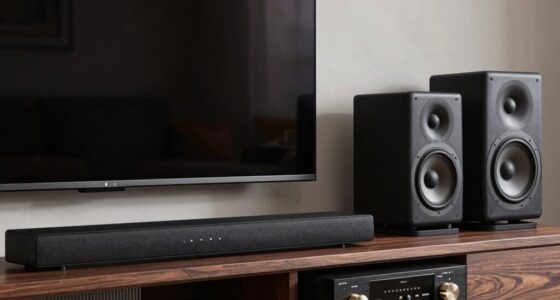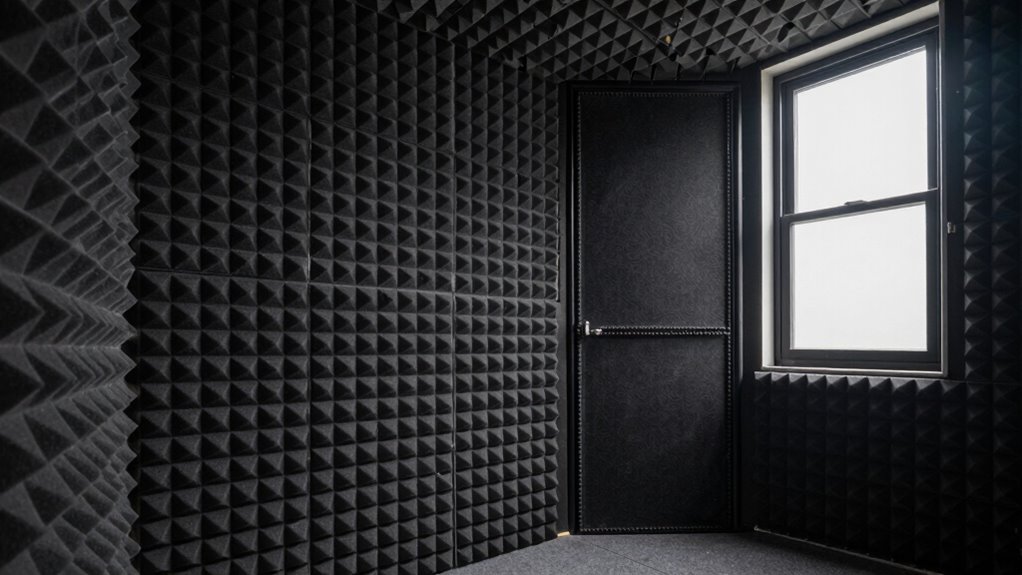

Many believe only expensive soundproofing products work, but that’s a myth. Proper installation and technique often matter more than price. Budget-friendly solutions can be effective if applied correctly, preventing noise leaks without overspending. Focus on understanding your noise issues and choosing the right methods aligned with standards like STC ratings. Keep exploring to discover proven strategies that save money and deliver the results you need.
Key Takeaways
- High-end soundproofing products are effective but not always necessary; proper installation of budget solutions can achieve similar results.
- Budget-friendly soundproofing options can work well when techniques are correctly applied, avoiding unnecessary expenses.
- Proper installation methods are critical; even expensive materials fail if not correctly applied.
- Meeting building code standards, like STC ratings, is essential for effective and legal noise control.
- Focusing on proven techniques and standards, rather than just product cost, yields better noise reduction outcomes.
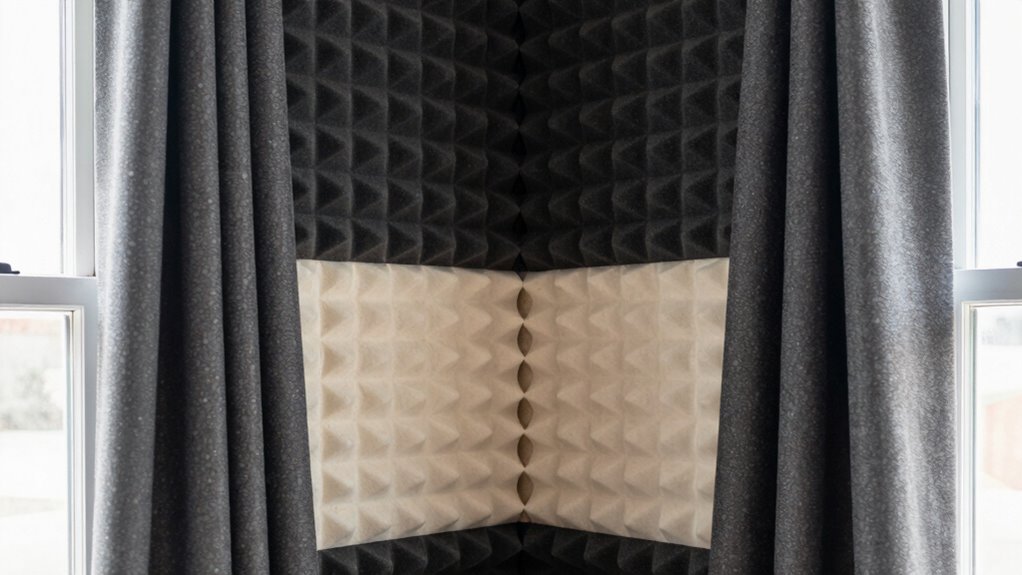
Many people also believe that expensive, high-end soundproofing products are the only way to achieve quiet. While some premium options are effective, there are also budget-friendly solutions that work well if applied correctly. Proper installation and understanding the specific noise problem are key. Whether you’re trying to quiet a noisy neighbor or adhere to local noise ordinances, your approach should be based on proven methods rather than assumptions. Overdoing it with expensive materials might not be necessary, but underestimating the importance of proper techniques can lead to subpar results and possible violations of building codes. Additionally, understanding the sound transmission class (STC) standards required by building codes can help ensure your solutions meet legal requirements and effectively reduce noise.
budget soundproofing panels
As an affiliate, we earn on qualifying purchases.
As an affiliate, we earn on qualifying purchases.
Frequently Asked Questions
Can Plants Help Reduce Noise Effectively?
Plants can help reduce noise, especially if you use plant barriers with dense foliage. While they won’t block sound entirely, their foliage effectiveness can absorb and diffuse noise, making your space quieter. Place shrubs or thick greenery around noisy areas, and you’ll notice some improvement. Just remember, plants are more of a supplementary solution and work best when combined with other soundproofing methods for a noticeable difference.
Do Heavy Curtains Block All Sound?
Heavy curtains, especially thick fabrics used as window treatments, can substantially reduce noise but won’t block all sound. They work best at dampening high-frequency noises and reflections but can’t completely eliminate sound transmission. To improve noise reduction, choose dense, layered window treatments like blackout curtains or add additional insulation behind them. Remember, no single solution offers total soundproofing, so combining methods gives you the best results.
Is Soundproofing Permanent or Temporary?
Soundproofing can be both permanent and temporary, depending on your approach and goals. Permanent solutions, like wall insulation and special drywall, offer lasting soundproofing durability. Temporary noise barriers, such as portable panels or curtains, provide quick relief but aren’t built to last. You choose based on your needs—permanent fixes for long-term quiet or temporary barriers for short-term noise control.
Can Sealing Gaps Completely Eliminate Noise?
Sealing gaps alone can’t completely eliminate noise, but it substantially reduces sound transmission. To improve soundproofing, you should combine sealing gaps with soundproofing insulation and installing acoustic panels. These methods work together to block and absorb sound waves, making your space quieter. Remember, no solution is perfect, but an all-encompassing approach with proper sealing, insulation, and acoustic treatments offers the best results for minimizing noise effectively.
Are DIY Soundproofing Methods as Effective as Professional Ones?
Think of DIY soundproofing as a hopeful knight—valiant but sometimes under-equipped. While DIY methods can improve noise reduction, their effectiveness often falls short compared to professional solutions. Professional soundproofing offers tailored, high-quality results that DIY can’t match, especially in complex spaces. For critical noise issues, investing in experts guarantees you get the best soundproofing, whereas DIY might only serve as a decent, budget-friendly starting point.
soundproof curtains for windows
As an affiliate, we earn on qualifying purchases.
As an affiliate, we earn on qualifying purchases.
Conclusion
Now that you know what works and what’s a waste, you can make smarter choices. Don’t fall for myths that promise instant silence or cheap fixes that won’t last. Invest in proven solutions, stay realistic about expectations, and prioritize quality over quick fixes. With the right knowledge, you’ll create a quieter space, save money, and avoid frustration. Take control, make informed decisions, and turn your noise issues into a thing of the past.
acoustic sealant for gaps
As an affiliate, we earn on qualifying purchases.
As an affiliate, we earn on qualifying purchases.
STC rated drywall
As an affiliate, we earn on qualifying purchases.
As an affiliate, we earn on qualifying purchases.