
If you’re seeking the best GPUs for immersive, high-resolution VR in 2026, I recommend models like the GIGABYTE RTX 3060, ASUS RTX 3050 OC, GTX 1060 6GB, XFX Radeon RX 580, and GTX 1080, as they offer the right mix of VR compatibility, power, and cooling. These cards support advanced features like ray tracing and high VRAM, ensuring smooth experiences. Stay with me to explore what factors matter most for your perfect VR setup.
Key Takeaways
- Prioritize GPUs with high VRAM (8GB+) for handling demanding high-resolution VR content.
- Ensure the GPU supports HDMI 2.1 and DisplayPort 1.4 for optimal VR connectivity and bandwidth.
- Look for models with advanced cooling solutions to prevent overheating during extended VR sessions.
- Choose GPUs with strong processing power, high CUDA cores, and real-time ray tracing for immersive VR experiences.
- Consider future-proof features like DLSS, VRWorks, and high refresh rates to maintain performance in upcoming VR titles.
| GIGABYTE GeForce RTX 3060 Gaming OC 12G Graphics Card | 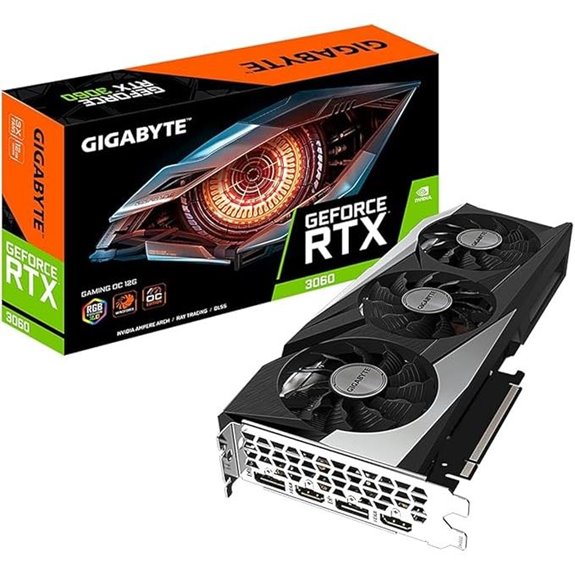 | High-Performance Gaming | Memory Size: 12GB GDDR6 | Connectivity Ports: 2x HDMI 2.1, 2x DisplayPort 1.4 | Ray Tracing Support: Yes | VIEW LATEST PRICE | See Our Full Breakdown |
| ASUS NVIDIA GeForce RTX 3050 OC Gaming Graphics Card |  | Compact Powerhouse | Memory Size: 6GB GDDR6 | Connectivity Ports: HDMI 2.1, DisplayPort 1.4a | Ray Tracing Support: Yes | VIEW LATEST PRICE | See Our Full Breakdown |
| GTX 1060 6GB Gaming Graphics Card with HDMI | 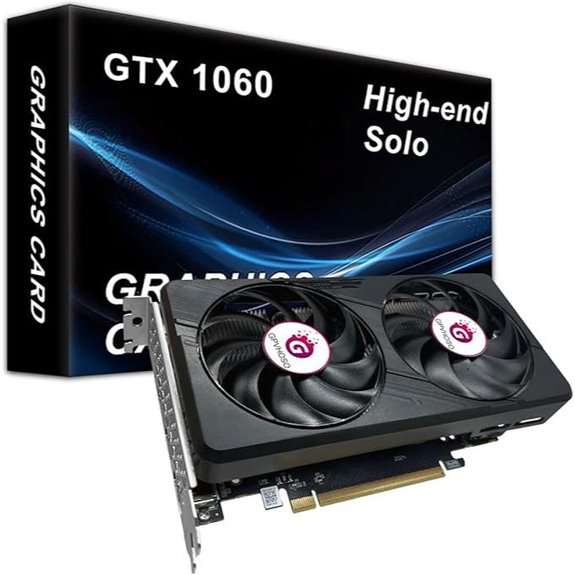 | Budget VR Ready | Memory Size: 6GB GDDR5 | Connectivity Ports: HDMI, 2x DisplayPort | Ray Tracing Support: Yes | VIEW LATEST PRICE | See Our Full Breakdown |
| XFX Radeon RX 580 GTS XXX Edition 8GB Graphics Card | 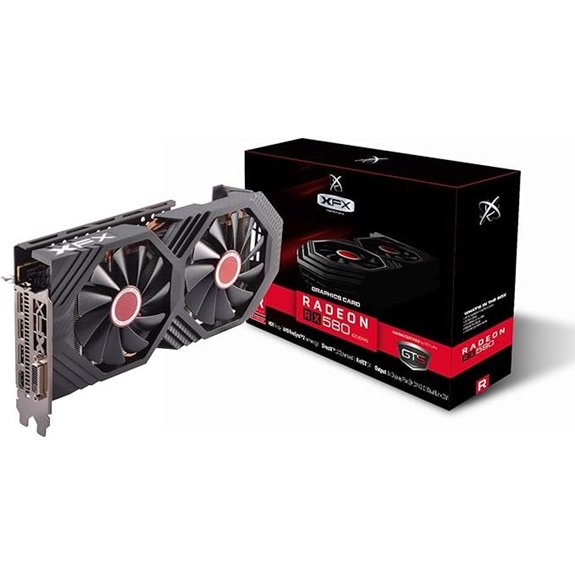 | Overclocked Excellence | Memory Size: 8GB GDDR5 | Connectivity Ports: 3x DisplayPort, HDMI, DVI | Ray Tracing Support: Yes | VIEW LATEST PRICE | See Our Full Breakdown |
| GTX 1080 8GB GDDR5X Gaming Graphics Card | 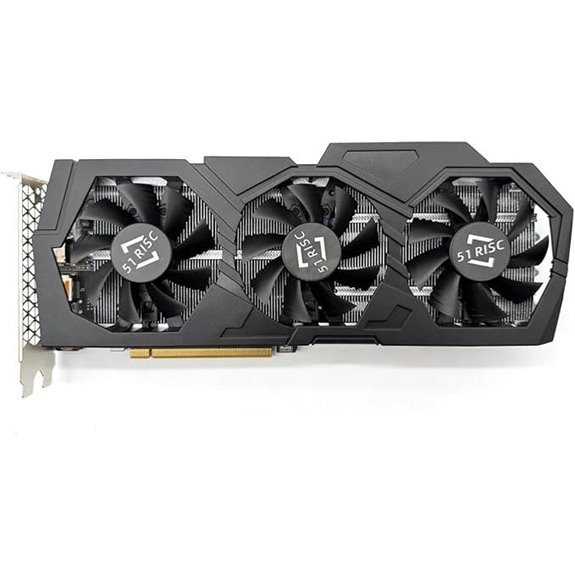 | Premium Ray Tracing | Memory Size: 8GB GDDR5X | Connectivity Ports: HDMI, 2x DisplayPort | Ray Tracing Support: Yes | VIEW LATEST PRICE | See Our Full Breakdown |
| GTX 1060 6GB Gaming Graphics Card with Dual Fans | 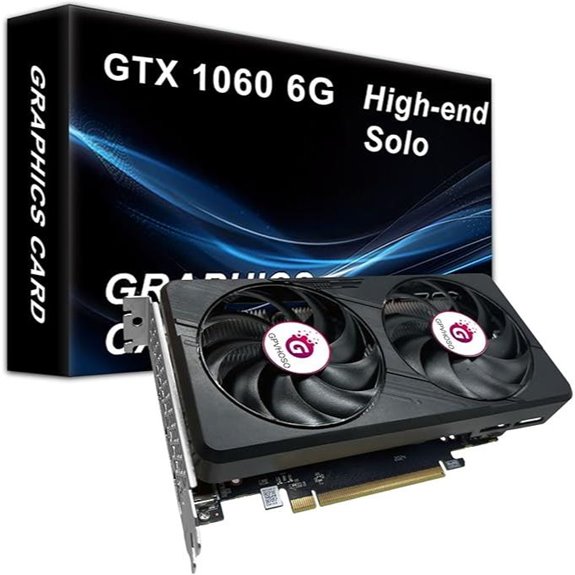 | Solid Entry-Level | Memory Size: 6GB GDDR5 | Connectivity Ports: HDMI, 2x DisplayPort | Ray Tracing Support: Yes | VIEW LATEST PRICE | See Our Full Breakdown |
More Details on Our Top Picks
GIGABYTE GeForce RTX 3060 Gaming OC 12G Graphics Card
If you’re looking for a reliable GPU that can handle high-resolution VR experiences in 2026, the GIGABYTE GeForce RTX 3060 Gaming OC 12G is a strong contender. It features NVIDIA’s advanced Ampere architecture with second-generation Streaming Multiprocessors, RT Cores, and Tensor Cores, ensuring top-tier performance. With 12GB of GDDR6 memory and a 192-bit interface, it’s optimized for demanding gaming and creative workloads. The WINDFORCE 3X cooling system keeps temperatures low during intense use, and its high core clock speed of 1837 MHz boosts performance. Connectivity options include HDMI 2.1 and DisplayPort 1.4, making it ideal for immersive VR setups.
- Memory Size:12GB GDDR6
- Connectivity Ports:2x HDMI 2.1, 2x DisplayPort 1.4
- Ray Tracing Support:Yes
- VR Compatibility:Yes
- Cooling System:WINDFORCE 3X cooling
- Power Requirement:550W recommended
- Additional Feature:RGB Fusion 2.0 lighting
- Additional Feature:WINDFORCE 3X cooling system
- Additional Feature:Metal backplate protection
ASUS NVIDIA GeForce RTX 3050 OC Gaming Graphics Card
The ASUS NVIDIA GeForce RTX 3050 OC Gaming Graphics Card is an excellent choice for gamers seeking a compact yet powerful GPU capable of delivering high-resolution VR experiences. Its NVIDIA Ampere architecture provides double the ray-tracing throughput and enhanced efficiency, making immersive visuals smoother. The 6GB GDDR6 memory ensures crisp textures, while HDMI 2.1 and DisplayPort 1.4a support high-resolution displays. The 2-slot design with axial-tech fans offers effective cooling in small cases, and the durable steel bracket adds stability. Plus, features like 0dB technology keep noise low during lighter loads, making it a versatile option for immersive VR gaming.
- Memory Size:6GB GDDR6
- Connectivity Ports:HDMI 2.1, DisplayPort 1.4a
- Ray Tracing Support:Yes
- VR Compatibility:Yes
- Cooling System:Axial-tech fans
- Power Requirement:450W minimum
- Additional Feature:Axial-tech fan design
- Additional Feature:2-Slot cooling design
- Additional Feature:Steel bracket construction
GTX 1060 6GB Gaming Graphics Card with HDMI
Looking for a reliable GPU that handles high-resolution VR seamlessly? The GTX 1060 6GB Gaming Graphics Card with HDMI is a solid choice. It offers high clock speeds, CUDA cores, and 6GB GDDR5 memory, supporting DirectX 12, HDR, and even 8K resolution. Its VRWorks technology guarantees low latency and immersive visuals, perfect for virtual reality. Multiple outputs, including HDMI and DisplayPort, make connecting various displays or VR devices easy. With an enhanced cooling system, it stays cool under pressure, boosting performance and lifespan. Just remember to keep your drivers updated for smooth, stable operation. This card remains a dependable option for immersive gaming experiences.
- Memory Size:6GB GDDR5
- Connectivity Ports:HDMI, 2x DisplayPort
- Ray Tracing Support:Yes
- VR Compatibility:Yes
- Cooling System:Dual fans
- Power Requirement:400W minimum
- Additional Feature:Supports 8K resolution
- Additional Feature:Dual display outputs
- Additional Feature:VRWorks technology
XFX Radeon RX 580 GTS XXX Edition 8GB Graphics Card
The XFX Radeon RX 580 GTS XXX Edition stands out for VR enthusiasts who prioritize solid performance and reliable connectivity in their high-resolution setups. With a true clock of 1366 MHz and boost OC up to 1386 MHz, it delivers smooth, responsive visuals essential for immersive VR. Its 8GB GDDR5 memory handles demanding textures effortlessly, while the Polaris architecture with 4th gen GCN cores ensures efficiency. The card’s dual BIOS, multiple display outputs (3xDP, HDMI, DVI), and XFX double dissipation cooling keep it stable and cool during extended sessions. Supported by AMD LiquidVR tech, it promises low latency and stutter-free experiences, making it a dependable choice.
- Memory Size:8GB GDDR5
- Connectivity Ports:3x DisplayPort, HDMI, DVI
- Ray Tracing Support:Yes
- VR Compatibility:Yes
- Cooling System:Double dissipation cooling
- Power Requirement:500W minimum
- Additional Feature:Multiple factory overclocked settings
- Additional Feature:14nm FinFET process
- Additional Feature:AMD LiquidVR support
GTX 1080 8GB GDDR5X Gaming Graphics Card
If you’re aiming for smooth, high-fidelity VR experiences in 2026, the GTX 1080 8GB GDDR5X stands out as a solid choice, especially for gamers and enthusiasts who demand reliable performance at high resolutions. Its Pascal architecture delivers impressive efficiency and performance, while the 8GB GDDR5X VRAM handles demanding applications and ultra-high-res visuals. Ray tracing adds realistic lighting, shadows, and reflections, boosting immersion. Features like G-SYNC and DLSS ensure crisp, tear-free visuals, and the VR Ready certification guarantees smooth virtual reality experiences. Plus, the triple-fan cooling system keeps temperatures in check, guaranteeing consistent performance and longevity.
- Memory Size:8GB GDDR5X
- Connectivity Ports:HDMI, 2x DisplayPort
- Ray Tracing Support:Yes
- VR Compatibility:Yes
- Cooling System:Triple-fan cooling
- Power Requirement:600W minimum
- Additional Feature:Triple-fan cooling system
- Additional Feature:Ray tracing technology
- Additional Feature:G-SYNC supported
GTX 1060 6GB Gaming Graphics Card with Dual Fans
For gamers and VR enthusiasts aiming for smooth, immersive experiences in 2026 high-resolution VR, the GTX 1060 6GB Gaming Graphics Card with Dual Fans remains a reliable choice. It delivers solid performance with high clock speeds, CUDA cores, and 6GB GDDR5 memory, supporting DirectX 12 and PCIe 3.0 x16 for seamless gameplay and stunning visuals. Its VR-Ready technology guarantees low latency and compatibility with various VR devices. The dual fans and efficient thermal design keep temperatures low during intense sessions, boosting stability and longevity. Just remember to guarantee a 400W power supply and keep drivers updated for optimal performance.
- Memory Size:6GB GDDR5
- Connectivity Ports:HDMI, 2x DisplayPort
- Ray Tracing Support:Yes
- VR Compatibility:Yes
- Cooling System:Dual fans
- Power Requirement:400W minimum
- Additional Feature:Dual cooling fans
- Additional Feature:Supports multi-monitor setups
- Additional Feature:6-pin power cable required
Factors to Consider When Choosing a GPU for High Resolution VR
When choosing a GPU for high-resolution VR, I focus on several key factors to guarantee a smooth experience. Things like VR compatibility standards, available memory, and processing power matter a lot, along with cooling and connectivity options. Keeping these in mind helps me pick the right card for immersive, high-quality VR sessions.
VR Compatibility Standards
Choosing the right GPU for high-resolution VR hinges on meeting specific compatibility standards that guarantee smooth, immersive experiences. First, your GPU needs support for HDMI 2.0 or DisplayPort 1.4, which are essential for transmitting high-resolution visuals with low latency. It should also meet or exceed the VR Ready certification, ensuring it can handle demanding VR workloads without lag or stutter. Support for technologies like AMD LiquidVR or NVIDIA VRWorks is essential for optimizing latency and performance. Additionally, compatibility with high refresh rate displays—90Hz or higher—is critical for fluid visuals and reducing motion sickness. Finally, robust driver support and certification guarantee ongoing updates and stability, keeping your VR setup reliable and ready for future advancements.
Graphics Memory Size
A GPU’s graphics memory size plays a vital role in delivering smooth, high-quality VR experiences, especially at high resolutions. With 8GB or more VRAM, a GPU can handle larger textures and assets, preventing performance issues like stuttering or frame drops. For high-resolution VR, I recommend at least 6GB of GDDR6 or GDDR5 VRAM to effectively manage demanding visual details. Increasing VRAM capacity allows for better performance with complex VR applications and future games that demand higher graphical fidelity. Adequate memory not only guarantees current smooth experiences but also future-proofs your setup against upcoming titles. Fundamentally, sufficient graphics memory is essential for immersive, high-resolution VR, enabling a seamless, crisp experience without sacrificing visual quality.
GPU Processing Power
To guarantee smooth and immersive high-resolution VR experiences, it’s essential to take into account the GPU’s processing power. A powerful GPU with more CUDA cores or equivalent processing units can handle complex VR scenes and detailed graphics more effectively, reducing latency and stuttering. The core clock speed directly influences how quickly the GPU processes VR data, which is critical for maintaining high frame rates and preventing motion sickness. Modern architectures with dedicated RT and Tensor Cores enhance real-time ray tracing and AI capabilities, creating more realistic environments. Sufficient processing power ensures compatibility with demanding VR applications and supports the higher frame rates needed for a comfortable experience. Ultimately, investing in a GPU with robust processing capabilities is necessary for immersing yourself in the most demanding high-resolution VR content.
Cooling Efficiency Levels
Since high-resolution VR workloads demand intense processing, effective cooling systems are vital to keep the GPU operating at ideal temperatures. Multiple fans or liquid cooling setups can prevent thermal throttling, guaranteeing consistent performance. Higher cooling efficiency maintains stable GPU clock speeds, which is essential for smooth VR experiences. Good thermal management also reduces overall GPU temperatures, helping extend the lifespan of the hardware and prevent overheating failures. Adequate airflow within the PC case supports the cooling solution, especially during long VR sessions. When choosing a GPU, consider its thermal design power (TDP) ratings; higher TDP models typically need more robust cooling solutions. Prioritizing efficient cooling ensures your high-resolution VR setup remains stable, quiet, and long-lasting.
Connectivity Options Available
When selecting a GPU for high-resolution VR, it’s essential to pay close attention to its connectivity options, as these determine how seamlessly you can connect your headset and peripherals. Look for multiple high-bandwidth outputs like HDMI 2.1 and DisplayPort 1.4a, which are critical for supporting high-resolution displays without lag or compression. Verify the ports support the latest standards to handle the demanding data transfer rates required for immersive VR. Check the number of available ports to accommodate multi-monitor setups or additional VR accessories simultaneously. Additionally, verify that the GPU’s connectivity supports VR-specific features like low latency and high refresh rates, which are indispensable for a smooth experience. Finally, consider the physical size and placement of ports to ensure compatibility with your VR setup and workspace.
Ray Tracing Capabilities
Connectivity options set the stage for a smooth VR experience, but achieving true realism depends on a GPU’s ray tracing capabilities. Ray tracing enhances VR by accurately simulating light behavior, reflections, and shadows in real-time, making virtual worlds feel more lifelike. GPUs equipped with dedicated RT Cores provide higher performance, reducing latency and guaranteeing seamless immersion in high-resolution VR environments. Since ray tracing demands significant processing power, choosing a GPU with robust capabilities is essential for smooth visuals. The level of detail in ray tracing directly affects visual fidelity; more advanced effects create more immersive, realistic virtual environments. An architecture optimized for real-time calculations ensures efficient rendering, minimizing performance drops during demanding scenes. Prioritizing strong ray tracing support is key for the most immersive VR experience.
Power Supply Requirements
Choosing the right power supply is vital for high-resolution VR setups because demanding GPUs can draw significant power. Most high-performance VR GPUs require at least a 500W to 650W power supply, depending on their TDP, which indicates the maximum heat and power they’ll consume. It’s essential to verify your power supply has the appropriate connectors, typically 6-pin or 8-pin PCIe, for high-end GPUs. An inadequate power supply can cause system instability, crashes, or failure to boot during intensive VR sessions. To avoid these issues, opt for a high-quality, certified power supply that provides stable voltage delivery and sufficient capacity. This not only guarantees peak performance but also protects your components from potential damage, ensuring a smooth, immersive VR experience.
Price and Budget
Have you considered how your budget impacts the GPU you choose for high-resolution VR? High-end VR gaming demands a GPU with a high price tag due to its advanced features and performance. If you’re working with a limited budget, you might have to settle for mid-range options, which could compromise VR experience quality and smoothness. It’s crucial to find a balance between cost and performance, ensuring your GPU meets VR requirements like VR Ready certification and ample VRAM. Keep in mind, the total cost may also include peripherals, power supply upgrades, and cooling solutions. Prices fluctuate, and market availability can change quickly, so regularly comparing options helps you find the best deal without sacrificing essential features.
Frequently Asked Questions
How Does VR Headset Compatibility Influence GPU Choice?
VR headset compatibility is vital when choosing a GPU because it guarantees smooth performance and proper display. If the GPU isn’t compatible, you might face issues like low frame rates, visual glitches, or even inability to run the headset at all. I always check the headset’s recommended specifications and compatibility lists before picking a GPU, so I know I’ll get the best immersive experience without hiccups.
What Future GPU Technologies Could Impact VR Performance in 2026?
Future GPU technologies like advanced ray tracing, AI-driven rendering, and increased VR-specific optimizations will markedly boost VR performance by delivering more realistic visuals and smoother experiences. I believe these innovations will reduce latency and improve frame rates, making immersive VR even more compelling. As these technologies evolve, I’ll look for GPUs that incorporate them to ensure my high-res VR experiences remain seamless and breathtaking in 2026.
Are There Specific GPU Features Optimized for High-Resolution VR?
Think of a GPU as the heartbeat of your VR experience—its features set the rhythm of immersion. For high-resolution VR, I look for ultra-fast ray tracing, large frame buffers, and advanced VR-specific optimizations like variable rate shading. These features work together to smooth out every pixel and keep your immersion seamless. As technology evolves, GPUs will need to prioritize low latency and high bandwidth to truly bring virtual worlds to life.
How Important Is GPU Driver Support for Seamless VR Experiences?
GPU driver support is vital for seamless VR experiences. I’ve seen how optimized drivers reduce latency, prevent crashes, and improve compatibility with VR headsets and software. When drivers are regularly updated, they fix bugs and enhance performance, which is necessary for high-resolution VR. I always recommend keeping your GPU drivers current to guarantee smooth, immersive gameplay without glitches or interruptions.
What Is the Expected Price Range for High-End VR GPUS in 2026?
I expect high-end VR GPUs in 2026 to cost around $800 to $1500, depending on their capabilities and features. As technology advances, prices may fluctuate, but premium models with top-tier performance for high-resolution VR will likely stay in that range. If you’re planning an immersive experience, be prepared to invest in a GPU that can handle the demanding graphics and smooth gameplay that future VR will require.
Conclusion
So, if you thought choosing a GPU for 2026 VR was complicated, think again—these six should have you covered. Who knew that a modest GTX 1060 or a slightly more robust RTX 3060 could still deliver immersive worlds? It’s almost poetic how the tech landscape hasn’t changed much, and you might just get away with a “vintage” card. After all, when it comes to VR, sometimes old school still wins the game.