
If you’re aiming for smooth 120Hz VR in 2026, I recommend considering the ASUS RTX 3050 OC Gaming, the RTX 2060 8GB Super, or the GIGABYTE RTX 3060 Gaming OC 12G. These GPUs balance high performance, VR compatibility, and affordability, ensuring immersive experiences without compromises. Each offers strong enough power and features like ray tracing and ample VRAM. Stick with me, and you’ll discover even more about choosing the perfect GPU for your needs.
Key Takeaways
- Mid-range GPUs like the ASUS RTX 3050 OC and RTX 3060 provide excellent 120Hz VR performance at a balanced cost.
- 8GB or more VRAM is essential to handle high-res textures and maintain stable frame rates in demanding VR titles.
- High CUDA cores, fast clock speeds, and ray tracing support ensure smooth, immersive VR experiences.
- Advanced cooling features and multiple high-bandwidth outputs optimize performance and system stability.
- Investing in scalable, future-proof GPUs with PCIe 4.0 and AI capabilities prolong relevance for upcoming VR advancements.
| ASUS RTX 3050 OC Gaming Graphics Card | 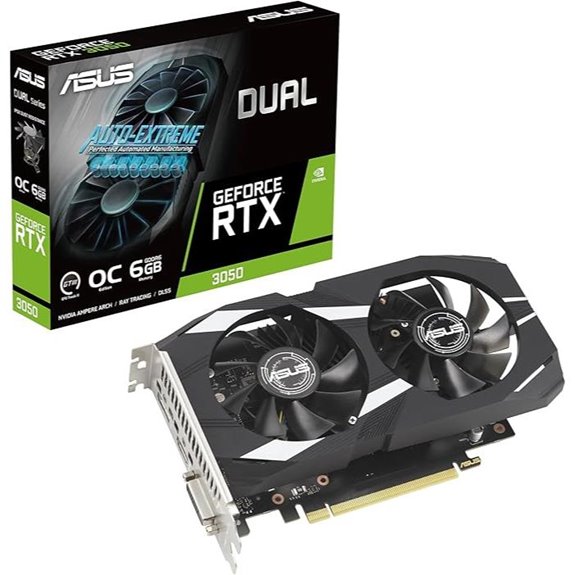 | Compact Powerhouse | Memory: 6GB GDDR6 | Ray Tracing: 2nd Gen RT Cores, ray-tracing supported | Connectivity: HDMI 2.1, DisplayPort 1.4a | VIEW LATEST PRICE | See Our Full Breakdown |
| RTX 2060 8GB Super Graphics Card with Ray Tracing | 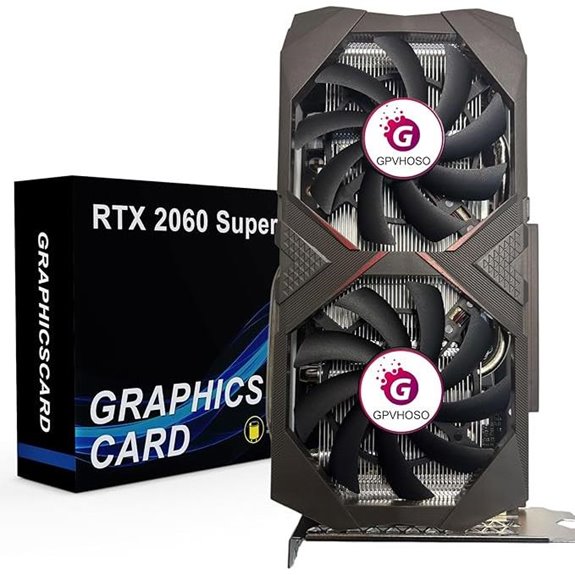 | High-Performance Ray Tracing | Memory: 8GB GDDR6 | Ray Tracing: Supported via Turing architecture | Connectivity: HDMI 2.0b, DisplayPort 1.4, DVI | VIEW LATEST PRICE | See Our Full Breakdown |
| GIGABYTE GeForce RTX 3060 Gaming OC 12G | 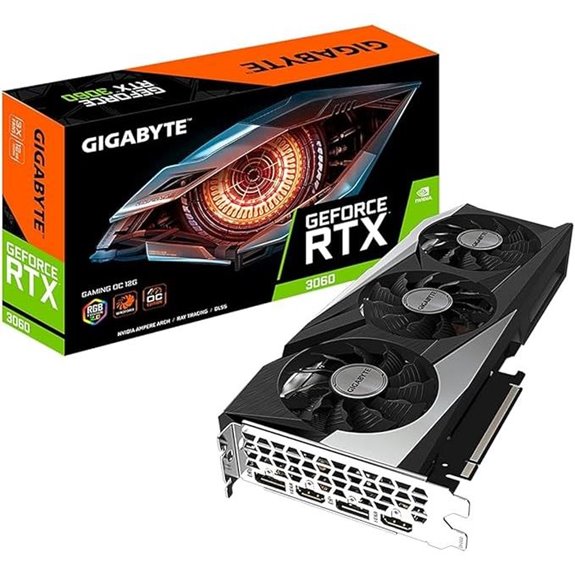 | Balanced Gaming Excellence | Memory: 12GB GDDR6 | Ray Tracing: 3rd Gen RT Cores, ray-tracing supported | Connectivity: HDMI 2.1, 2x DisplayPort 1.4 | VIEW LATEST PRICE | See Our Full Breakdown |

More Details on Our Top Picks
-

GPVHOSO RTX 2060 8GB Super Graphics Card 256Bit GDDR6 Video Card with Ray Tracing, Dual Fans, PCI Express x 16 3.0 HDMI Display Port DVI, Supports Up to 8K for PC Gaming Office Creative Work
Enhanced Performance: The RTX 2060 Super delivers exceptional gaming performance with 8GB of GDDR6 memory and a boost...
As an affiliate, we earn on qualifying purchases.
ASUS RTX 3050 OC Gaming Graphics Card
If you’re looking for a reliable GPU that can handle 120Hz VR gaming without breaking the bank, the ASUS RTX 3050 OC Gaming Graphics Card is a solid choice. It features the NVIDIA Ampere architecture, offering double the ray-tracing throughput and improved power efficiency. With 6GB GDDR6 memory and PCIe 4.0 support, it delivers smooth performance and fast data transfer. Its axial-tech fans and 2-slot design ensure effective cooling in small cases. Plus, the HDMI 2.1 and DisplayPort 1.4a outputs support high-resolution displays. Overall, it balances performance and affordability, making it ideal for immersive VR experiences at 120Hz.
- Memory:6GB GDDR6
- Ray Tracing:2nd Gen RT Cores, ray-tracing supported
- Connectivity:HDMI 2.1, DisplayPort 1.4a
- Cooling System:Axial-tech fans, 2-slot design
- Architecture:NVIDIA Ampere
- Target Use:Compact gaming, AI performance
- Additional Feature:Compact 2-slot design
- Additional Feature:Steel bracket construction
- Additional Feature:0dB noise technology
-
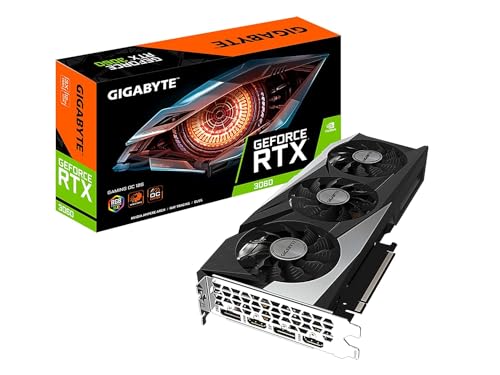
GIGABYTE GeForce RTX 3060 Gaming OC 12G (REV2.0) Graphics Card, 3X WINDFORCE Fans, 12GB 192-bit GDDR6, GV-N3060 Video Card
NVIDIA Ampere Streaming Multiprocessors
As an affiliate, we earn on qualifying purchases.
RTX 2060 8GB Super Graphics Card with Ray Tracing
The RTX 2060 8GB Super with Ray Tracing stands out as an excellent choice for gamers seeking smooth 120Hz VR experiences without breaking the bank. It packs 8GB of GDDR6 memory, a boost clock up to 1650 MHz, and supports real-time ray tracing for enhanced lighting, shadows, and reflections. Compatible with DLSS, it boosts frame rates and sharpens visuals at high resolutions. Optimized for VR, it offers low latency and high performance, making immersive experiences seamless. With multiple outputs for multi-monitor setups and a dual-fan cooling system, the RTX 2060 Super balances power, efficiency, and affordability, perfect for elevating your gaming in 2026.
- Memory:8GB GDDR6
- Ray Tracing:Supported via Turing architecture
- Connectivity:HDMI 2.0b, DisplayPort 1.4, DVI
- Cooling System:Dual fans
- Architecture:Turing
- Target Use:Gaming, VR, high settings
- Additional Feature:Supports DLSS AI technology
- Additional Feature:Multiple display outputs
- Additional Feature:VR optimized performance
GIGABYTE GeForce RTX 3060 Gaming OC 12G
The GIGABYTE GeForce RTX 3060 Gaming OC 12G stands out as an excellent choice for gamers seeking smooth 120Hz VR experiences thanks to its high-performance NVIDIA Ampere architecture and ample 12GB GDDR6 memory. With a core clock of 1837 MHz and advanced second-generation Streaming Multiprocessors, it delivers solid frame rates and stunning visuals. The WINDFORCE 3X cooling system keeps the card cool during intensive gaming sessions, ensuring stability. Connectivity options like HDMI 2.1 and DisplayPort 1.4 support high-resolution displays. Overall, this card combines power, cooling, and features, making it a reliable option for immersive VR gameplay.
- Memory:12GB GDDR6
- Ray Tracing:3rd Gen RT Cores, ray-tracing supported
- Connectivity:HDMI 2.1, 2x DisplayPort 1.4
- Cooling System:WINDFORCE 3X cooling system
- Architecture:NVIDIA Ampere
- Target Use:Gaming, creative workloads
- Additional Feature:RGB Fusion 2.0 lighting
- Additional Feature:Metal backplate protection
- Additional Feature:WINDFORCE triple fan cooling
Factors to Consider When Choosing a GPU for 120Hz VR

When choosing a GPU for 120Hz VR, I focus on several key factors. These include the required frame rate, GPU power, and compatibility features to guarantee smooth performance. Additionally, I consider memory capacity and resolution support to meet the demands of immersive VR experiences.
Frame Rate Demands
Achieving smooth and immersive 120Hz VR experiences hinges on a GPU’s ability to consistently deliver at least 120 frames per second. If the frame rate drops below this threshold, motion becomes juddery, and users risk motion sickness, ruining immersion. Higher frame rates are essential—they reduce motion blur and latency, making the experience more natural and comfortable. To meet these demands, a GPU must have substantial processing power, often indicated by high CUDA or RT cores, to handle demanding VR scenes. Additionally, efficient rendering and support for AI-based upscaling technologies like DLSS help maintain stable, high frame rates. Ultimately, selecting a GPU capable of sustaining 120 fps guarantees smooth visuals, minimizes discomfort, and delivers the seamless experience VR demands.
GPU Power Requirements
Choosing the right GPU power requirements is essential for maintaining smooth 120Hz VR experiences. A suitable GPU should have at least 6-8 GB of VRAM to handle high-resolution textures and immersive environments without lag. High-end GPUs with more CUDA cores and faster clock speeds are necessary to consistently hit 120 frames per second in demanding VR titles. It’s also important that the GPU’s power consumption aligns with your system’s power supply; high-performance cards often draw 200W or more. Proper cooling solutions are necessary to prevent thermal throttling during extended VR sessions at high frame rates. Finally, verify your GPU supports necessary interfaces like PCIe 4.0 or PCIe 3.0, and has adequate output ports such as HDMI 2.1 or DisplayPort 1.4a for seamless VR display connectivity.
VR Compatibility Features
Selecting a GPU with the right VR compatibility features is essential for a smooth and immersive 120Hz experience. First, verify it supports VR headsets via HDMI 2.0 or DisplayPort 1.4a, which are necessary for high-bandwidth video transfer. Real-time ray tracing is another key feature, as it markedly enhances visual realism within VR environments. A minimum of 8GB GDDR6 memory is required to handle the large data loads at 120Hz, preventing bottlenecks. Low-latency rendering and advanced tracking support are also indispensable for responsiveness and seamless movement. Finally, confirm the GPU’s compatibility with popular VR software and drivers to avoid integration issues. These features collectively guarantee that your VR setup delivers smooth visuals, quick response times, and a truly immersive experience.
Memory Capacity Needs
Since VR experiences at 120Hz demand rapid data processing, having enough VRAM is essential to maintain smooth visuals and responsiveness. I recommend a GPU with at least 8GB of VRAM to handle high-resolution textures and complex scenes without stuttering. Insufficient memory can cause frame drops, lower visual quality, and disrupt immersion. For demanding VR applications or multi-monitor setups, opting for 10GB or more ensures smoother gameplay and better performance. Future-proofing is also important, as upcoming games and updates will likely require more memory. A higher VRAM capacity helps you stay prepared for these advancements, providing a more consistent and immersive VR experience at 120Hz. In short, choosing a GPU with ample VRAM is critical for maximizing your VR performance and longevity.
Resolution Support Limits
When considering VR setups at 120Hz, it’s important to look beyond just VRAM and focus on the display resolution support of your GPU. Higher resolutions like 4K or above demand more GPU power to maintain smooth 120Hz performance, especially in VR where every frame counts. The maximum resolution supported by your GPU can limit the detail and clarity you experience, so it’s *essential* to verify this before making a choice. While most modern GPUs can handle resolutions up to 8K, actual performance at these levels varies based on the card’s capabilities. Exceeding your GPU’s supported resolution can lead to reduced performance or instability, preventing you from achieving a steady 120Hz refresh rate. Ensuring compatibility with your VR display’s native resolution is *vital* for *best* gaming experience.
Cooling and Noise Levels
To enjoy smooth and stable 120Hz VR performance, effective cooling is essential because overheating can cause thermal throttling and performance drops. I look for GPUs with advanced cooling solutions like axial-tech fans or dual-fan systems, which help prevent overheating during long VR sessions. Low noise levels matter too; technologies such as 0dB modes, barrier rings, and optimized fan designs keep fan speeds low and vibrations minimal, making the experience quieter. A well-ventilated case with proper airflow further enhances cooling efficiency and reduces the need for fans running at high speeds, which cuts down noise. Choosing a GPU with these cooling and noise-reduction features guarantees I get a quieter VR experience without sacrificing high frame rates or stability.
Budget Considerations
Choosing a GPU for 120Hz VR often means balancing performance with budget constraints. I’ve found that entry-level GPUs with 4GB to 6GB VRAM can struggle to maintain smooth 120Hz in demanding VR titles, which can ruin immersion. Higher-priced options like premium cards offer better ray tracing and AI features, but they aren’t always necessary if you’re on a tight budget. To keep costs reasonable, I recommend compromising on graphical settings or lowering the resolution slightly to sustain high refresh rates. Investing in a mid-range GPU, such as the NVIDIA RTX 3060 series, strikes a good balance between affordability and performance. It allows you to enjoy 120Hz VR gaming without breaking the bank, making it a practical choice for budget-conscious gamers.
Future Scalability
Future scalability is vital to guarantee your GPU remains effective as VR technology continues to evolve. I look for GPUs with at least 8GB of VRAM or more, ensuring enough memory for future VR titles and higher resolutions. Scalability also depends on supporting architectures like NVIDIA’s Ampere or newer, which handle upcoming VR features and updates more efficiently. Advanced ray tracing and AI capabilities are crucial for improved graphics and performance in future applications. Higher compute power and core counts provide the performance headroom needed for demanding upcoming VR games. Compatibility with the latest PCIe standards and multiple high-speed outputs ensures your GPU can support future VR hardware and multi-display setups. Investing in scalability today means your system stays relevant as VR continues to advance.
Frequently Asked Questions
How Does GPU VR Performance Vary With Different Headsets?
GPU VR performance varies considerably depending on the headset I use. Higher-end headsets like the Valve Index or HP Reverb G2 demand more from my GPU to deliver smooth visuals at 120Hz or higher. Cheaper headsets might work fine with mid-range GPUs, but I notice lag or lower frame rates on demanding devices. Choosing the right GPU depends on the headset’s resolution, refresh rate, and the experience I want.
Are There Specific GPU Features Optimized for VR in 2026?
Yes, in 2026, GPUs are optimized for VR with features like enhanced ray tracing, higher VRAM capacity, and improved latency reduction. I’ve noticed that these enhancements help deliver smoother visuals and more immersive experiences. Adaptive sync technologies and dedicated VR processing cores also play a key role, reducing motion sickness and lag. These features make a noticeable difference whether I’m exploring virtual worlds or engaging in fast-paced gaming.
What Is the Impact of GPU Driver Updates on VR Gaming?
GPU driver updates critically impact VR gaming by improving performance, fixing bugs, and enhancing compatibility. They optimize rendering, reduce latency, and guarantee smoother experiences, which are vital for immersive VR. I always keep my drivers up to date because they boost frame rates, reduce stuttering, and fix issues that could break immersion. Staying current with updates ensures I get the best possible VR experience, making my gaming sessions more enjoyable and seamless.
How Do Power Consumption and Cooling Affect VR GPU Choices?
Power consumption and cooling are vital factors when choosing a VR GPU. Higher power use means more heat, so I look for GPUs with efficient cooling systems to prevent overheating during long VR sessions. If a card consumes too much power, I might need a better power supply or additional fans, which adds noise and complexity. Balancing performance with effective cooling ensures a smooth, immersive VR experience without hardware issues.
Can Older GPUS Handle 120HZ VR With Future Game Updates?
Think of older GPUs as vintage cars—they might still run, but they’re not built for today’s race. They can handle some 120Hz VR, but future game updates will demand more horsepower. As games evolve, older GPUs struggle with higher frame rates, leading to lag or lower quality. To truly elevate your VR experience, investing in a newer, more powerful GPU is the way to go.
Conclusion
Choosing the right GPU for 120Hz VR in 2026 is like finding the perfect key to access an immersive world. With options like the ASUS RTX 3050 OC, RTX 2060 Super, and GIGABYTE RTX 3060, you’re set to elevate your gaming experience. Remember, the right card doesn’t just power your games—it fuels your passion. So, pick wisely, and let your virtual adventures soar to new heights!