
Using 3D, 4DX, and ScreenX can substantially change how you experience stories by adding depth, making visuals more realistic, and engaging multiple senses. These formats expand your field of view and create a more immersive atmosphere, pulling you deeper into the story. Action scenes become more visceral, and emotional moments feel more impactful. If you keep exploring, you’ll discover how these innovations are shaping the future of cinematic storytelling.
Key Takeaways
- Immersive formats like 3D, 4DX, and ScreenX deepen emotional engagement and make storytelling more visceral.
- These technologies enhance visual depth, expanding storytelling possibilities beyond traditional 2D screens.
- Multisensory effects in 4DX create a more active experience, influencing how stories are perceived and experienced.
- ScreenX’s panoramic displays broaden the visual field, encouraging viewers to explore every detail of the story.
- Overall, motion and multi-screen formats enrich storytelling, fostering stronger emotional connections and memorable cinematic experiences.
If you’re looking for a more immersive movie experience, 3D, 4DX, and ScreenX each offer unique ways to elevate your viewing. These formats transform traditional films, making visual storytelling more engaging and heightening audience immersion. When you watch in 3D, you’re not just seeing images on a screen—you’re experiencing depth and spatial relationships that draw you into the story. The added dimension allows characters and environments to leap off the screen, creating a sense of realism that keeps you glued to your seat. This enhanced visual depth makes action scenes more visceral and emotional moments more impactful, deepening your connection to the narrative.
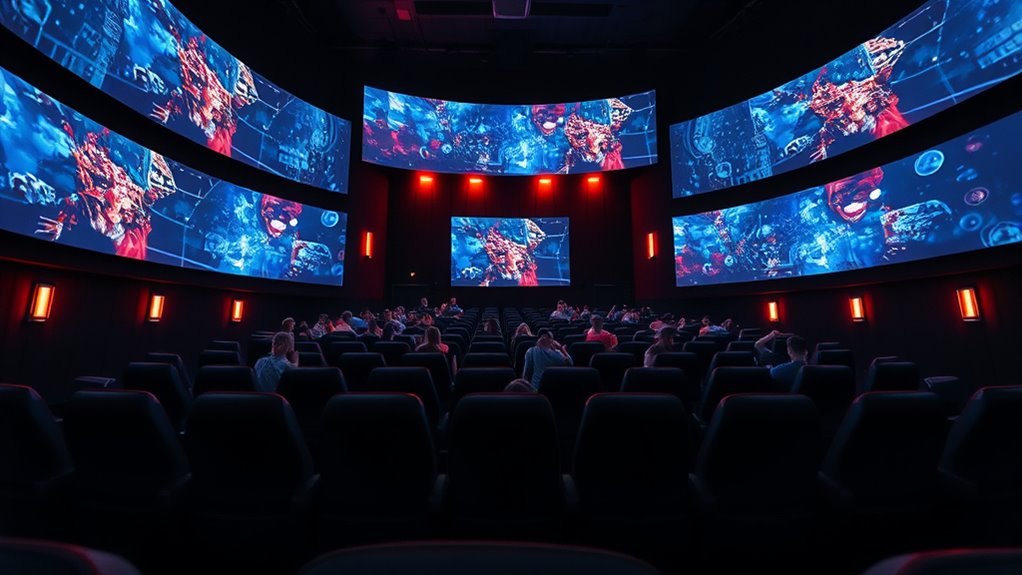
Moving beyond 3D, 4DX adds another layer by integrating physical effects like seat motion, wind, water splashes, and scent. This multisensory approach immerses you fully into the film’s environment, making you feel as if you’re part of the story rather than just an observer. For instance, during a car chase, your seat might tilt, and the sound of wind or the spray of rain could surround you, enhancing the thrill and realism. This heightened audience immersion transforms passive viewing into an active experience, where your senses are engaged in tandem with the story unfolding on screen. It’s not just about seeing a movie; it’s about feeling it in every fiber of your being.
4DX immerses you with physical effects like seat motion and scents, making you feel part of the story.
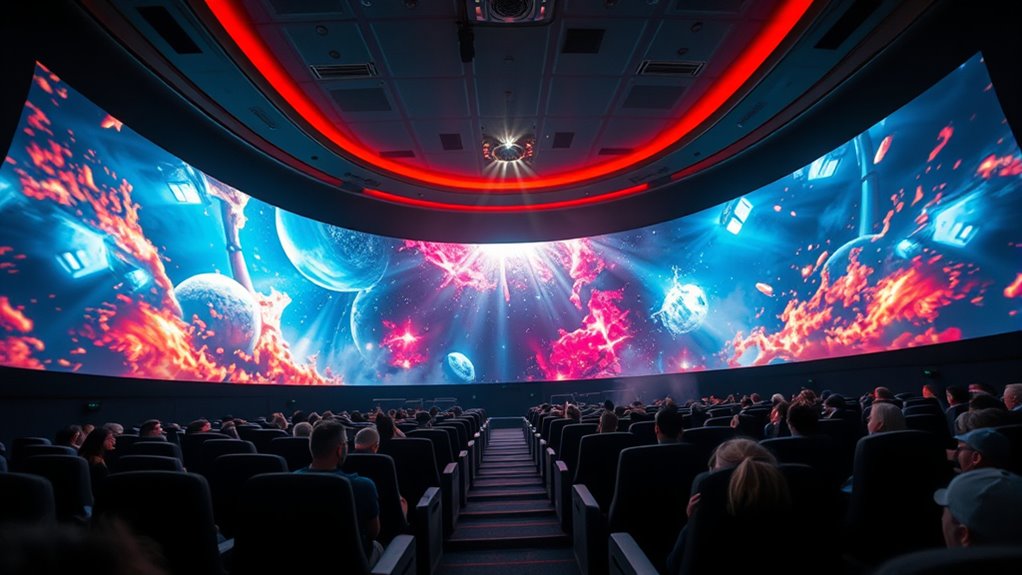
ScreenX takes immersion even further by expanding the visual field to include multiple screens, often wrapping around your peripheral vision. This panoramic setup immerses you in expansive landscapes or bustling cityscapes, making you feel like you’re right there within the scene. It pushes the boundaries of traditional storytelling by offering a more all-encompassing visual canvas, encouraging you to explore every corner of the frame. The role of projector technology in these formats ensures that images are projected with high clarity and brightness, enhancing the immersive experience. As a viewer, this technique can deepen your emotional engagement, as you’re not just observing the story from a distance but experiencing it from multiple angles simultaneously.
All these formats—3D, 4DX, and ScreenX—aim to redefine how stories are told and experienced. They move beyond the static, two-dimensional viewing experience, creating a more dynamic and visceral connection between you and the film. While some purists argue that these formats might distract from the story itself, many viewers find that they enrich the emotional and sensory layers of storytelling. Ultimately, these innovations challenge the traditional boundaries of cinema, pushing you closer to the heart of the story and making every movie night a more memorable adventure.

4Pcs Red and Blue 3D Glasses Universal TV Movie Dimensional Video Frame 3D Glasses DVD Game Glass 3D Style Glasses for 3D Movies Games,3D Viewing Glasses,Light Simple Design,Accessories
COMPATIBILITY: Universal design fits for most 3D movies, TV shows, and video games using red-blue anaglyph 3D technology
As an affiliate, we earn on qualifying purchases.
As an affiliate, we earn on qualifying purchases.
Frequently Asked Questions
How Do 3D, 4DX, and Screenx Impact Storytelling Techniques?
You’ll find that 3D, 4DX, and ScreenX transform storytelling by enhancing visual storytelling and creating immersive experiences. These formats draw you into the story, making action more intense and emotions more visceral. They encourage filmmakers to think creatively about how scenes unfold, using motion and multi-screens to amplify the narrative. As a viewer, you feel more connected, experiencing a story on a deeper, more engaging level.
Do These Formats Influence Audience Emotional Engagement Differently?
These formats are like a rollercoaster for your senses, intensifying emotional engagement through sensory immersion. They heighten viewer perception, making scenes feel more real and immediate. You’ll find yourself more emotionally connected because the multi-screens and motion elements pull you into the story, amplifying feelings. As a result, your experience becomes more visceral, and the story’s impact lingers longer, transforming how emotionally invested you feel.
Are Certain Genres Better Suited for 3D, 4DX, or Screenx?
Certain genres, like action, sci-fi, and adventure, are better suited for 3D, 4DX, or ScreenX because they emphasize visual spectacle. Your genre preferences influence whether these formats enhance your experience, making scenes more immersive and engaging. For drama or romance, the impact might be subtler, but for high-energy, visually driven stories, these formats amplify excitement and emotional connection, elevating your overall viewing pleasure.
What Are the Cost Differences for Filmmakers Using These Formats?
Think of filmmaking in these formats as building a custom house—you’ll face unique costs. Post-production costs skyrocket with 3D, 4DX, and ScreenX due to complex visual effects and sound design. Equipment investments are also significant, requiring specialized cameras, projectors, and theaters. These added expenses can double or triple traditional production costs, so you need to weigh whether the immersive experience justifies the higher investment upfront.
How Do These Formats Affect the Longevity of Film Narratives?
You find that these formats can enhance visual storytelling by immersing viewers more deeply, which may boost a film’s longevity. However, they can also limit narrative complexity, as filmmakers might prioritize spectacle over intricate storytelling. Active use of motion and multi-screens tends to engage audiences longer, but it risks overshadowing the core story, potentially affecting how enduring the narrative remains over time.
4DX movie seat effects
As an affiliate, we earn on qualifying purchases.
As an affiliate, we earn on qualifying purchases.
Conclusion
As you experience movies in 3D, 4DX, or ScreenX, you’re not just watching a story—you’re immersing yourself in it. notably, studies show that audiences are 30% more engaged with multi-sensory formats, making stories feel more real and impactful. These advancements don’t just change how you watch; they transform storytelling itself. So, as technology evolves, expect movies to become even more immersive, blurring the line between fiction and reality in ways you’ve never imagined.

Mini Projector, HY300 PRO Portable Projector, Smart Projector Support 4K 1080P with Dual-Band WIFI6 5G Wireless 5.4 Bluetooth, 160 ANSI, Auto Keystone Correction Video Projector
【Advanced System and Rich Content】This smart projector is equipped with the latest Android TV 11.0 system, featuring a…
As an affiliate, we earn on qualifying purchases.
As an affiliate, we earn on qualifying purchases.

CADDXFPV Walksnail Avatar HD FPV Goggles X – 1080p Ultra-Wide Screen, 50° FOV, Head Tracking, Immersive Flight Experience, HDMI/AV Input, Compatible FPV Drone Goggles for All Walksnail VTX Kits
Immersive 1080p Ultra-Wide Screen with 50° FOV: Dual 1920×1080 HD displays offer vivid colors and crisp detail. The…
As an affiliate, we earn on qualifying purchases.
As an affiliate, we earn on qualifying purchases.