
To keep your skin healthy, focus on three basics: cleanse, moisturize, and protect with SPF. Use a gentle cleanser suited to your skin type to remove dirt and oil, then follow with a moisturizer that matches your skin’s needs—light for oily skin, richer for dry. Don’t forget daily SPF to shield your skin from UV damage, which helps maintain your youthful glow. Keep these steps consistent, and you’ll discover simple ways to achieve radiant skin.
Key Takeaways
- Choose cleansers suited to your skin type and cleanse twice daily to remove dirt and impurities effectively.
- Use moisturizers that match your skin needs, applying on slightly damp skin to lock in hydration.
- Incorporate natural ingredients like aloe vera, shea butter, and honey for gentle, effective skincare.
- Apply broad-spectrum SPF daily, reapplying every two hours outdoors to protect against UV damage.
- Maintain a consistent routine of cleansing, moisturizing, and sun protection for healthier, radiant skin.
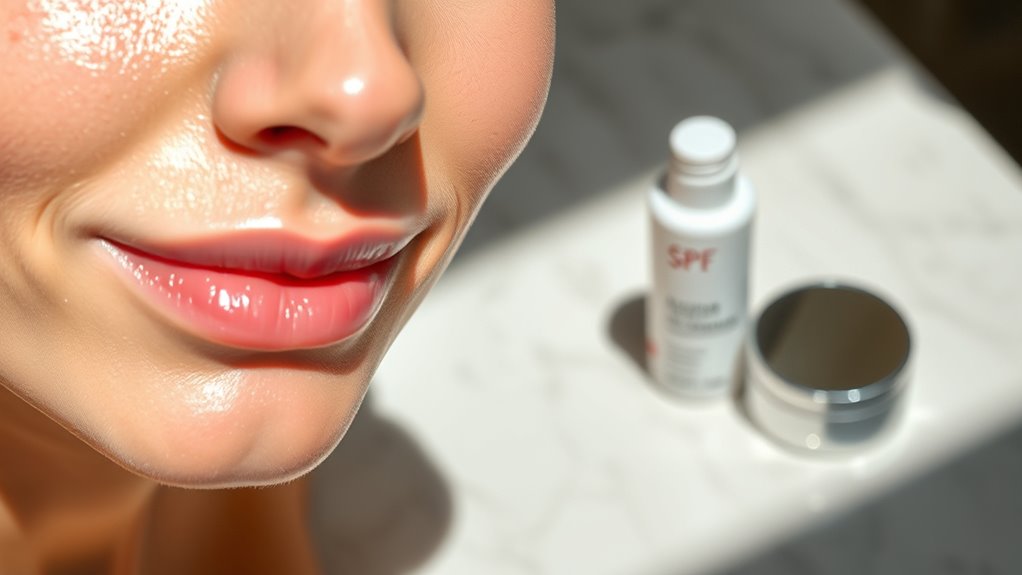
Have you ever wondered what basic steps can keep your skin healthy and glowing? The foundation of any good skincare routine starts with understanding how to properly cleanse, moisturize, and protect your skin. Every skin type requires different care, but using natural ingredients whenever possible can make a significant difference. Natural ingredients are gentle, effective, and suited to various skin types, whether you have oily, dry, sensitive, or combination skin. When it comes to cleansing, choosing the right product is essential. For oily or acne-prone skin, look for gentle foaming cleansers with natural tea tree oil or salicylic acid that can help control excess oil without stripping your skin. If your skin is dry or sensitive, opt for cream-based cleansers infused with soothing ingredients like chamomile or aloe vera. These natural ingredients help maintain your skin’s moisture barrier, preventing irritation and dryness. It’s best to avoid harsh soaps or cleansers with artificial fragrances that can upset sensitive skin or cause breakouts. Cleansing should be done twice a day—morning and night—to remove dirt, oil, and impurities accumulated throughout the day and overnight. Using the appropriate cleansing method can also influence your skin’s overall health, especially considering the role of color accuracy in producing vibrant, true-to-life images on your home projector.
Moisturizing is the next indispensable step to keep your skin plump and resilient. No matter your skin type, applying a moisturizer helps to lock in hydration and creates a barrier against environmental stressors. For oily or acne-prone skin, choose lightweight, oil-free moisturizers with natural ingredients like witch hazel or tea tree oil, which can help balance oil production and reduce inflammation. Dry skin benefits from richer creams containing nourishing oils like jojoba or shea butter, along with natural humectants such as honey or glycerin that draw moisture into the skin. Sensitive skin types should look for fragrance-free, hypoallergenic formulations with calming ingredients like calendula or oat extract. Applying moisturizer while your skin is still slightly damp enhances hydration, so don’t forget to pat your face gently after cleansing. Regular moisturizing not only keeps your skin soft but also helps improve its overall texture and tone over time.
Protection from the sun is equally essential, and using SPF daily is a non-negotiable step. No matter the weather or your skin type, exposure to UV rays can cause premature aging, dark spots, and damage. Look for broad-spectrum sunscreens with mineral-based ingredients like zinc oxide or titanium dioxide, which are gentle and effective for all skin types, especially sensitive skin. Applying SPF 15 to 30 daily, even on cloudy days, creates a protective shield that prevents harmful rays from penetrating your skin. Reapplying every two hours if you’re outdoors is indispensable, particularly if you’re sweating or swimming. Your daily routine isn’t complete without this step—it’s the best way to keep your skin looking youthful, healthy, and radiant over time.
Incorporating these fundamental steps into your daily routine, using natural ingredients suited to your skin type, ensures your skin remains vibrant and resilient. Consistency is key; with patience and proper care, you’ll notice a visible improvement in your skin’s health and glow.

Cetaphil Daily Facial Cleanser Sensitive & Oily Skin, 20 oz
- Brand and Type: Cetaphil Daily Facial Cleanser
- Skin Benefits: Reinforces skin barrier and minimizes pores
- Suitable For: Sensitive, combination, and oily skin
As an affiliate, we earn on qualifying purchases.
As an affiliate, we earn on qualifying purchases.
Frequently Asked Questions
How Often Should I Change My Skincare Products?
You should change your skincare products every 6 to 12 months. Be mindful of product expiration dates and ingredient stability, as expired products can cause irritation or reduced effectiveness. If you notice changes in texture, smell, or color, it’s time to replace them, regardless of the date. Regularly updating your skincare guarantees you’re using safe, effective products that support your skin’s health.
Can I Skip Moisturizer if I Have Oily Skin?
Skipping moisturizer with oily skin is like leaving a plant unwatered; it may seem fine at first, but your skin needs hydration to stay balanced. Moisturizer necessity isn’t just for dry skin; it helps regulate oil production and keeps your skin healthy. Even if your skin’s oily, proper hydration ensures your skin stays fresh and prevents overproduction of oil. So, yes, you should still moisturize for oily skin hydration.
What Ingredients Should I Avoid in Skincare?
You should avoid harmful ingredients like parabens, sulfates, and artificial fragrances, especially if you have ingredient sensitivities. These can cause irritation, breakouts, or allergic reactions. Always check labels carefully and opt for products with soothing, non-comedogenic ingredients. If you’re uncertain, patch-test new products first. Staying aware of harmful ingredients helps protect your skin and keeps it healthy, clear, and balanced.
How Does Diet Affect My Skin Health?
Ironically, what you eat can be the secret to glowing skin or breakouts. A balanced diet boosts nutrient absorption and supports hormonal balance, both essential for healthy skin. When you indulge in nutrient-rich foods, you give your skin the building blocks it needs to repair and rejuvenate. Conversely, poor diet choices can hinder nutrient absorption, disrupting hormonal balance and leading to dullness or irritation. So, eat smart for radiant skin.
When Should I Start Using Anti-Aging Products?
You should start using anti-aging products in your late twenties or early thirties, as part of preventive therapy. At this age, you can adopt age-specific routines that target early signs of aging. By incorporating products with antioxidants and sun protection, you help maintain your skin’s youthful look. Preventive therapy now sets the foundation for healthier skin later, so don’t wait until wrinkles or fine lines appear to begin caring proactively.
Conclusion
Now that you know the basics—cleanse, moisturize, and protect with SPF—you’re well on your way to glowing skin. Stick to these simple steps daily, and you’ll see how consistency pays off. Remember, taking care of your skin is a marathon, not a sprint. Keep at it, and your skin will thank you with a radiant shine that turns heads. When it comes to skincare, don’t put all your eggs in one basket—balance is key.