

Discovering your sleep chronotype helps you align your daily activities with your natural energy patterns. Whether you’re an early bird or a night owl, understanding when your body feels most alert can improve your sleep quality and overall well-being. By knowing your circadian tendencies, you can adjust your routines, light exposure, and habits for better rest and daytime performance. Keep exploring to learn how syncing with your biological rhythm can transform your health and productivity.
Key Takeaways
- Identifying your chronotype helps align your sleep schedule with your natural melatonin cycle.
- Morning larks tend to wake early and feel alert in the first half of the day, while night owls prefer later sleep times.
- Exposure to natural light and managing screen time influence melatonin production and reinforce your sleep rhythm.
- Recognizing individual sleep patterns allows for personalized routines that improve sleep quality and daytime alertness.
- Tools like sleep questionnaires or tracking devices can help determine your biological predisposition for optimal scheduling.
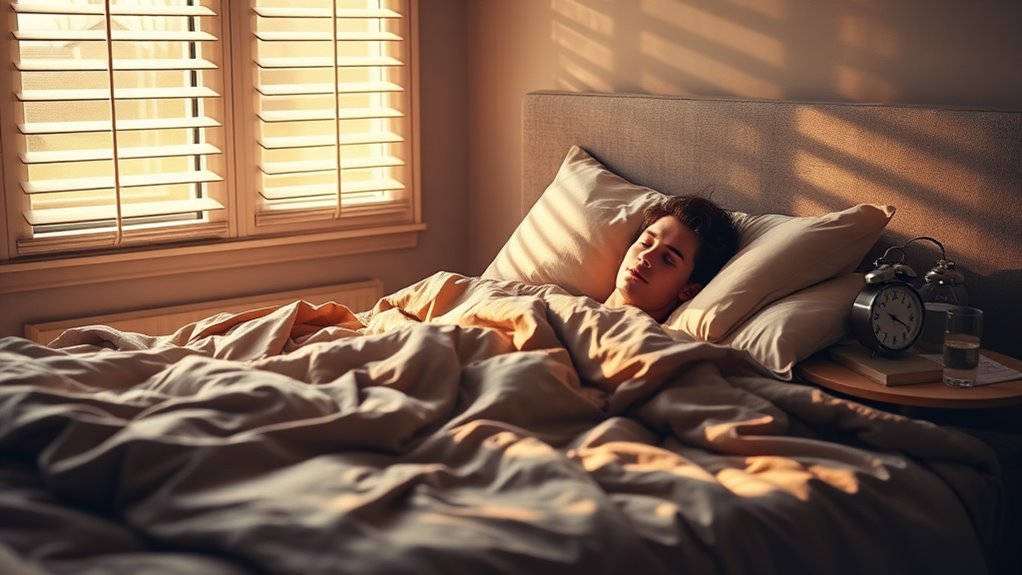
Your sleep patterns are more unique than you might think, and understanding your natural chronotype can help you optimize your daily routine. One key aspect of your internal clock is how your body regulates melatonin levels, which influences when you feel sleepy and alert. Melatonin, often called the sleep hormone, rises in the evening and falls in the morning, signaling your body to prepare for sleep. However, your body’s production of melatonin isn’t the same as everyone else’s; it varies depending on your chronotype. For some, melatonin levels increase earlier in the evening, making them naturally inclined to go to bed sooner. Others experience a delayed rise, which means they’re more alert late into the night. Recognizing these patterns can help you align your activities with your body’s natural rhythms, reducing the chances of circadian misalignment—when your internal clock is out of sync with your environment or schedule. Circadian misalignment often leads to poor sleep quality, fatigue, and even health issues over time. Additionally, technological advancements in understanding AI in Education have the potential to customize sleep management tools based on individual chronotypes.
When you understand your chronotype, you can tailor your daily schedule to fit your biological predispositions. For instance, if you’re a night owl, forcing yourself to wake early or stay active during hours when your melatonin levels are high can make you feel sluggish and unproductive. Conversely, morning larks tend to feel energized and alert early in the day, but might struggle to stay awake later in the evening if they ignore their natural tendencies. By respecting these innate patterns, you minimize circadian misalignment, which can otherwise cause disruptions like insomnia, daytime sleepiness, or a weakened immune system.
Many factors influence your chronotype, including genetics, lifestyle, and exposure to light. Light exposure, in particular, plays a significant role because it suppresses melatonin production, helping you stay awake during the day. If you’re exposed to bright screens late at night, your melatonin levels may be delayed, pushing your sleep time later and increasing misalignment. Conversely, getting sunlight in the morning can help reset your internal clock, promoting more regular melatonin cycles. Learning to synchronize your activities with your natural rhythm reduces the likelihood of circadian misalignment and enhances overall sleep quality.
Ultimately, understanding your sleep chronotype empowers you to make smarter choices about when you sleep, work, and relax. By paying attention to your body’s signals and adjusting your schedule accordingly, you can improve your sleep health, feel more energized during the day, and maintain a better balance with your natural biological rhythms.
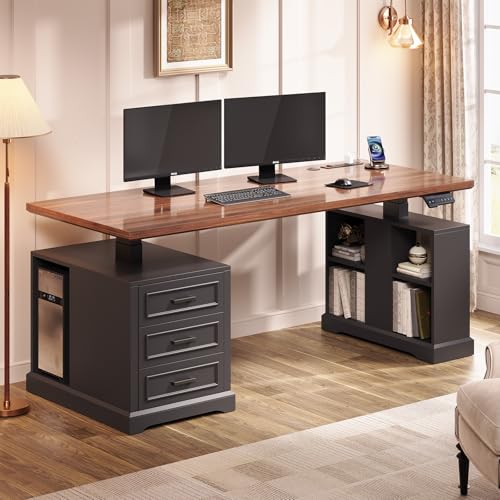
SEDETA Farmhouse Electric Standing Desk, 63" Height Adjustable Computer Desk with 3 Drawers, Storage Shelves, Power Outlets, Wood Home Office Stand up Desk for Work, Study, Writing, Black
【Multifunctional Workstation】Create a multifunctional workstation with this standing desk, equipped with 3 storage drawer, power outlets, storage cabinet,...
As an affiliate, we earn on qualifying purchases.
Frequently Asked Questions
Can Chronotypes Change Over a Lifetime?
Yes, your chronotype can change over your lifetime due to genetic factors and lifestyle influences. As you age, shifts in genetics and daily habits, like work schedules or sleep routines, can alter your natural sleep-wake patterns. You might find yourself becoming more of a morning or evening person over time. Being aware of these factors helps you adjust your habits to align better with your evolving internal clock.
How Do I Determine My Sleep Chronotype Accurately?
To determine your sleep chronotype accurately, observe your natural sleep habits over a week, noting when you feel most alert and sleepy. Track your circadian patterns by paying attention to your energy levels, peak alertness times, and preferred sleep and wake times. Use sleep diaries or apps to record this data, helping you identify whether you’re a morning, evening, or intermediate type, so you can optimize your schedule accordingly.
Are There Health Risks Associated With Mismatched Chronotypes?
Yes, mismatched chronotypes can pose health risks like increased stress, sleep disturbances, and metabolic issues. These health implications often result from forcing your body into a schedule that doesn’t align with your natural rhythm. To reduce risks, you should make lifestyle adjustments, such as shifting your sleep times gradually and prioritizing consistent routines. Embracing your natural chronotype helps improve overall well-being and supports better physical and mental health.
Can Shift Work Permanently Alter My Natural Sleep Rhythm?
Yes, shift work can permanently alter your natural sleep rhythm by causing circadian disruption. When you regularly work against your internal clock, it leads to sleep deprivation and a misalignment of your biological rhythms. Over time, this disruption can make it harder to sleep properly, increasing health risks. To minimize effects, try to keep a consistent schedule and prioritize sleep hygiene even on days off.
What Are Effective Strategies for Adjusting to a New Chronotype?
To adjust to a new chronotype, you should optimize your sleep environment by creating a dark, quiet space and controlling light exposure. Get bright light in the morning to shift your internal clock and limit evening light to help you sleep earlier. Consistency is key—go to bed and wake up at the same times. These strategies gradually realign your sleep rhythm with your new schedule.
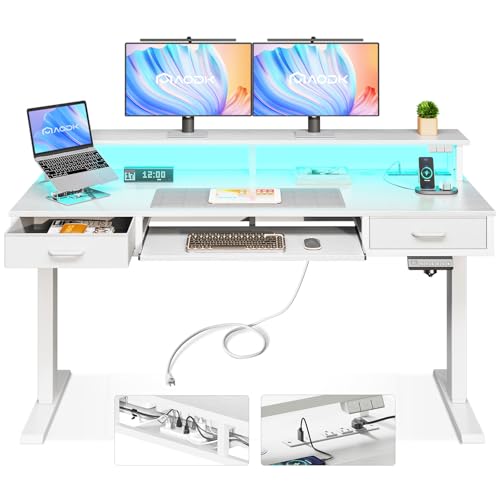
AODK Electric Standing Desk with Drawers & Keyboard Tray, 55 Inch Height Adjustable Gaming Desk with Power Outlets & LED Lights, Sit Stand Table with Monitor Stand for Home, Office, White
Easy Assembly: Our desk comes with detailed instructions, all parts are clearly labeled, and you only need to...
As an affiliate, we earn on qualifying purchases.
Conclusion
Once you discover your sleep chronotype, you hold the secret to unleashing your fullest potential. Ignoring your natural rhythm is like fighting a tidal wave—you’ll drown in exhaustion and frustration. Embrace your unique sleep pattern, and suddenly, mornings become your power hours, energy surges through you, and productivity skyrockets. Don’t settle for a life of constant fatigue—align with your rhythm and transform every day into a masterpiece of vitality and achievement!

FLEXISPOT EN2 Whole-Piece Standing Desk with Clamp Power Strip, 55 x 28” Electric Stand Up Height Adjustable Desk with Cable Management (Black Frame + 55" Black Top, 2 Packages)
REMOVABLE DESKTOP POWER OUTLET: To ensure you can conveniently charge your electronic devices, the desktop is equipped with...
As an affiliate, we earn on qualifying purchases.

Electric Standing Desk Adjustable-60 x 30 Inch Sit Stand Desk with Lift-Top Cable Management, Dual-Beam Frame,Clamp Power Strip, 3 Memory Preset Height Adjustable for Home Office
【Flip-Top Rear Panel for Hidden Cable Management】Easily access power strips and cords while keeping them out of sight....
As an affiliate, we earn on qualifying purchases.