
I recommend a 7.5-inch E‑Ink display tablet designed for writers and creatives, offering a clear, glare-free screen that’s perfect for focused work. It supports easy connectivity with popular platforms like Arduino and Raspberry Pi, ensuring smooth integration. The device’s flexible power options and compatibility with multiple software tools make it highly adaptable. If you want to find out which model balances features and affordability, keep exploring—you’re about to discover more.
Key Takeaways
- Look for a 6-7 inch monochrome E-Ink display for comfortable, paper-like writing and reading experiences.
- Ensure compatibility with popular platforms like Kindle, Kobo, or specialized writing devices for seamless use.
- Prioritize devices with long battery life and flexible power options for extended creative sessions.
- Choose models with good software support, note-taking features, and stylus compatibility for writing and editing.
- Consider affordability, durability, and additional features like built-in lighting or connectivity for long-term value.

STEMDIY 7.5inch 3-Color Epaper Eink E-Ink Display Screen Module Board HAT Starter Kit for Arduino RPI Raspberry Pi Zero 2 W WH 3 Model B Plus 4 4B 2GB 4GB 8GB RAM
- Display Size: 7.5-inch e-paper screen
- Resolution: 800x480 pixels
- Color Support: Red, black, white
As an affiliate, we earn on qualifying purchases.
7.5-inch E-Ink Display Module for Arduino and Raspberry Pi
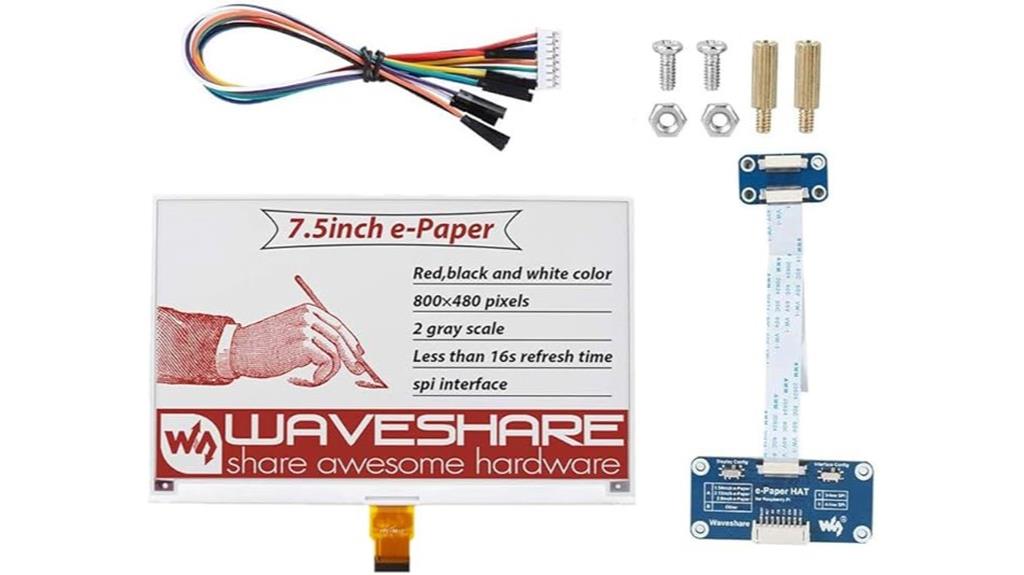
If you’re looking for a versatile display module for your Arduino or Raspberry Pi projects, the 7.5-inch E-Ink Display Module is an excellent choice. It features a 800×480 resolution and supports three colors—red, black, and white—which makes it perfect for creative displays. The built-in controller communicates via SPI interface, compatible with both 3-wire and 4-wire configurations. It operates on 3.3V or 5V power, making it flexible for various setups. Although the Raspberry Pi isn’t included, this module works seamlessly with multiple platforms like Jetson Nano and STM32, backed by detailed documentation and support.
Best For: hobbyists and developers seeking a versatile, high-resolution color e-paper display compatible with Arduino, Raspberry Pi, Jetson Nano, and STM32 for creative and informational projects.
Pros:
- Supports three colors (red, black, white) for vibrant displays
- Compatible with multiple platforms including Arduino, Raspberry Pi, Jetson Nano, and STM32
- Operates on flexible voltage options (3.3V or 5V) with both 3-wire and 4-wire SPI interfaces
Cons:
- Raspberry Pi board is not included, requiring separate purchase
- E-Ink displays generally have slower refresh rates compared to LCDs or OLEDs
- May require some technical knowledge for setup and integration
Factors to Consider When Choosing E‑Ink Screenplay Tablets
When choosing an E-Ink screenplay tablet, I consider factors like display size to match my writing needs and whether color support enhances readability. Power requirements and connectivity options also matter to guarantee the device fits into my workflow seamlessly. Ultimately, ease of integration with other tools and compatibility with various interfaces help me get the most out of my investment.
Display Size Compatibility
Choosing the right display size for an e-ink screenplay tablet is essential to guaranteeing your content looks its best and fits your needs. First, match the screen size to your intended application to avoid compatibility issues. For example, a 7.5-inch display might suit portable writing, while larger screens offer more space for detailed editing. Confirm that your device’s hardware supports the display dimensions to maximize usability. Pay attention to resolution relative to size; higher resolutions provide clearer, sharper text, improving readability. Also, consider physical mounting options and connector compatibility, especially if integrating the screen into a custom project. Finally, ensure the device’s scaling and aspect ratio maintain content integrity without distortion, giving you a seamless writing experience.
Color Support Options
Color support is a key factor to contemplate when selecting an E-Ink screenplay tablet because it directly affects the visual clarity and vibrancy of your text and visuals. Some models offer three-color displays, including red, black, and white, which can enhance highlighting and visual variety. However, most E-Ink screens are monochrome or tri-color, limiting vibrancy compared to traditional screens. The added color capabilities often involve complex controllers, which can slow refresh rates and affect usability. When choosing, it’s crucial to verify the specific color support features to ensure they align with your needs. If vivid color reproduction is essential for your work, options with multi-color support may be worth considering, but for focused writing and note-taking, monochrome screens may suffice.
Power Requirements Flexibility
Flexibility in power requirements is a crucial factor because it determines how easily your E-Ink screenplay tablet can integrate with various power sources. Many devices support multiple input options, like 3.3V and 5V, making them compatible with batteries, USB chargers, or wall adapters. This adaptability allows for seamless use in portable, low-power, or always-on scenarios without sacrificing performance. Some E-Ink displays feature advanced power management, reducing energy consumption during standby or inactivity. Operating at different voltage levels also minimizes the need for extra power regulation circuitry, simplifying design and maintenance. Overall, adaptable power options ensure your tablet can meet diverse usage needs, whether you’re working on the go or setting up a dedicated writing station.
Connectivity Interfaces Compatibility
When selecting an E-Ink screenplay tablet, understanding its connectivity interfaces is essential for smooth integration with your hardware. Compatibility with options like SPI and I2C guarantees you can connect seamlessly to various microcontrollers and single-board computers. Support for multiple interface types, including 3-wire and 4-wire SPI, provides flexibility based on your device’s requirements. It’s important to know the specific protocols and voltages, such as 3.3V or 5V, to avoid connection issues. Many tablets are designed to support platforms like Arduino, Raspberry Pi, Jetson Nano, and STM32, broadening your options. Confirming interface support before buying helps prevent compatibility problems, ensuring your e-ink screen performs at its best within your setup. Proper compatibility makes your project more reliable and easier to manage.
Device Integration Ease
Choosing an E-Ink screenplay tablet that integrates smoothly with your setup depends heavily on how easily it functions with your existing hardware and software. Compatibility with your current operating system and hardware ensures a hassle-free experience. Look for devices that support common communication interfaces like SPI or I2C, which simplify connecting the screen to microcontrollers or single-board computers. Clear, detailed documentation and sample code are invaluable—they can drastically cut down setup time and reduce frustration. Additionally, standardized form factors and mounting options make physical integration much easier, fitting neatly into your project enclosure. Compatibility with popular development platforms such as Arduino, Raspberry Pi, or STM32 also ensures smoother software integration and easier development, saving you time and effort in the long run.
Software Development Support
Robust software development support is essential for ensuring that your e-ink screenplay tablet integrates smoothly with your projects. It guarantees compatibility with various programming languages, SDKs, and APIs, making customization straightforward. Extensive documentation and sample code speed up development and troubleshooting, saving you time. An active community forum and responsive technical support are invaluable for resolving issues quickly and sharing best practices. Regular firmware and software updates improve device stability, performance, and add new features, ensuring your tablet stays current. Compatibility with popular development environments like Arduino IDE and Raspberry Pi OS simplifies coding and deployment efforts. Overall, strong software support empowers you to tailor your device precisely to your workflow, whether you’re developing custom scripts or integrating it into larger creative projects.
Cost and Budget
The cost of E-Ink screenplay tablets can vary widely based on size, color options, and extra features, making budget planning essential. Basic models with monochrome displays are more affordable, but they may lack advanced features and durability. Higher-priced tablets with larger screens and multi-color capabilities tend to last longer and offer better display quality, providing better long-term value. Buying refurbished or in bulk can lower upfront costs but might affect warranty and support. It’s important to contemplate the total cost of ownership, including accessories, software, or subscription fees, to avoid surprises. Balancing your budget with your needs will help you select a device that offers the best mix of affordability, functionality, and durability for your writing journey.
Frequently Asked Questions
Can E-Ink Tablets Be Used for Digital Art Creation?
Yes, e-ink tablets can be used for digital art creation, but they have limitations. I’ve found they’re great for sketching and simple drawings thanks to their paper-like feel, but they lack the color, speed, and detail of traditional tablets. If you mainly want to do detailed, colorful artwork, a tablet with an LCD or OLED screen might suit you better. However, for minimalist sketches and note-taking, e-ink tablets work surprisingly well.
How Long Does the Battery Last on Typical E-Ink Screenplay Tablets?
Think of an e-ink tablet’s battery like a steady marathon runner—enduring and efficient. Most last around two weeks on a single charge, even with daily use. I’ve found that their power efficiency means I can write, read, and brainstorm without constantly hunting for an outlet. It’s like having a reliable companion that keeps pace with my creative flow, ready to go whenever inspiration strikes.
Are E-Ink Tablets Suitable for Heavy or Lengthy Writing Sessions?
E-ink tablets are generally suitable for light to moderate writing, but they may not be ideal for heavy or lengthy sessions. I find that their slow refresh rates and limited multitasking capabilities can become frustrating during extended writing. However, for focused note-taking or short drafts, I enjoy their distraction-free environment. If you need intensive, all-day writing power, a traditional tablet or laptop might serve you better.
Do E-Ink Tablets Support Multi-Language or Special Character Input?
E-ink tablets are surprisingly versatile, supporting multiple languages and special characters without breaking a sweat. I’ve personally typed in various languages, from Chinese to Arabic, and the input was smooth and accurate. Many models include customizable keyboards and language packs, making multilingual writing seamless. So, if you’re worried about language barriers, rest assured — these tablets can handle complex scripts and special characters just like a pro.
Can E-Ink Screens Be Easily Repaired or Replaced if Damaged?
E-ink screens are generally not easy to repair or replace yourself because they’re integrated into the device’s design. If the screen gets damaged, I usually recommend professional repair services or checking if the manufacturer offers warranty options. Some models have removable screens, but most require specialized tools and skills. It’s best to handle them carefully and consider insurance or warranty plans to avoid costly replacements.
Conclusion
Choosing the right e-ink screenplay tablet is like finding the perfect compass for a journey—you want precision, reliability, and ease of use. With the right device, you’ll navigate your creative landscape smoothly, avoiding distractions and fatigue. Remember, it’s not just about the size or features; it’s about how seamlessly it integrates into your writing adventure. Trust your instincts, pick what feels right, and let your stories unfold effortlessly on your digital canvas.