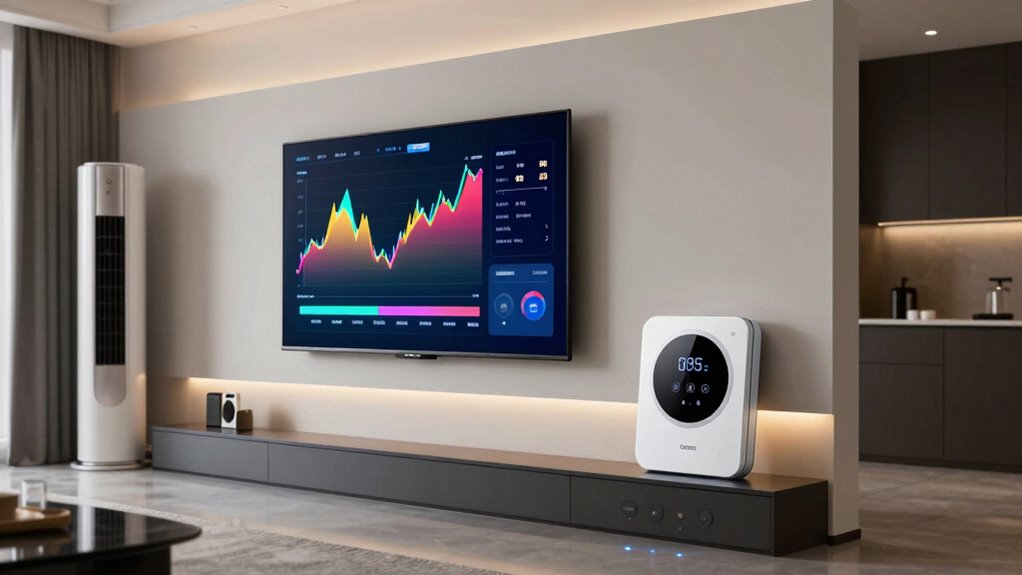

Whole home energy monitoring systems provide vital insights into your household’s electricity usage, helping you save money and optimize efficiency. The best options balance detailed data, ease of installation, and integration with smart home setups. The Emporia Vue 3 stands out as the overall best because of its comprehensive features and affordability. For those seeking advanced solar tracking, the Emporia Vue 3 with Solar/Net Metering offers excellent value. However, many systems come with tradeoffs such as complexity, cost, or limited compatibility. Continue reading for a detailed breakdown of the top choices and how to pick the right system for your needs.

Get the latest gadgets delivered free with Prime
- Fast, free delivery on millions of items
- Prime Video, Amazon Music and more included
- Member-only deals all year
Complete the kit



Key Takeaways
- The best systems offer real-time data and solar integration for maximum savings.
- Ease of installation varies; plug-and-play models suit beginners, while professional setups suit advanced users.
- Price ranges significantly based on circuit capacity and smart home features—balance your needs with your budget.
- Compatibility with smart home platforms like Home Assistant or Alexa can enhance usability but may add complexity.
- Higher-priced models tend to provide more detailed analytics and better build quality, but some budget options still deliver solid value.
| eMonHub Home Energy Monitor for Home Assistant – Real-Time Electricity Usage Monitor with Solar Self-Consumption Tracking |  | Best Overall for Deep Integration and Scalability | Manufacturer: Shenzhen ShengXingWei Dianzikeji Co., Ltd. | Model: eMonHub-HNA0A HA | Weight: 2.8 pounds | VIEW ON AMAZON | See Our Full Breakdown |
| Refoss Smart Home Energy Monitor with 16x 60A Circuit Sensors, Local Control |  | Best Value for Accurate, Local Control | Manufacturer: Refoss | Model: EM16P | Weight: 4.27 pounds | VIEW ON AMAZON | See Our Full Breakdown |
| WiFi Home Energy Monitor with 3x 80A CT Clamps |  | Best Compact Monitor for Major Circuits | Manufacturer: Nestool | Model: PW03 | CT Clamps: 3 x 80A | VIEW ON AMAZON | See Our Full Breakdown |
| Emporia Vue 3 Home Energy Monitor |  | Best for Appliance-Level Monitoring and Automation | ASIN: B0C7B1LKDW | Color: White | Item Dimensions: 10 x 5 x 5 inches | VIEW ON AMAZON | See Our Full Breakdown |
| Emporia Vue 3 Home Energy Monitor with Real-Time Electricity Usage Monitoring and Solar/Net Metering |  | Best for Multi-Circuit, Real-Time Monitoring with Solar Support | ASIN: B0C79PNK84 | Certification: UL Listed, CE Listed | Included Sensors: 16 branch (50A) sensors | VIEW ON AMAZON | See Our Full Breakdown |
| Smart Energy Consumption Monitor with 18-Circuit Monitoring (EPMC341) |  | Best Overall Whole-Home Energy Monitoring System | Manufacturer: Zhangzhou Lilliput Electronic Technology Co., Ltd. | Part Number: EPMC341 | Sensors: 2x200A + 16x50A clamp-on sensors | VIEW ON AMAZON | See Our Full Breakdown |
| Siemens Inhab Smart Home Energy Monitor with 16-50Amp Circuit Level Sensors and 2-200Amp Main Sensors |  | Best for Advanced Home Energy Management | Brand: Siemens | Circuit Level Sensors: 16 x 50Amp | Main Sensors: 2 x 200Amp | VIEW ON AMAZON | See Our Full Breakdown |
| Eyedro 3-Phase Energy Monitor 200A/600V (Model EB6-EW-E3) – WiFi/Ethernet, Real-Time kWh/W/A/V/PF/$ Data, Solar & Net Metering Ready | 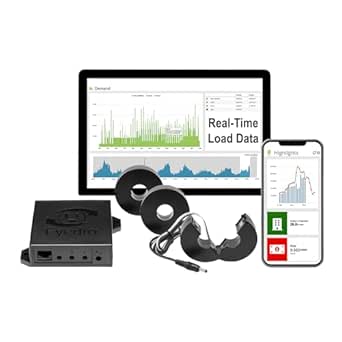 | Best for Multi-Phase Systems and Solar Tracking | Model: EB6-EW-E3 | Current Rating: 200A (included CTs) | Voltage Support: 600V Delta, 480V/277V Wye, 208V/120V | VIEW ON AMAZON | See Our Full Breakdown |
| SEM-Meter Smart Home Energy Monitor with 16 50A Circuit-Level Sensors |  | Best for Local, Privacy-Focused Monitoring and Rental Homes | ASIN: B0D6VZQBPF | Sensors: 16 x 50A clamp-on sensors | Supported Systems: Single, split, three-phase (no Delta) | VIEW ON AMAZON | See Our Full Breakdown |
| Emporia Energy Monitor Super Bundle with 16 Sensors and 4 Smart Plugs |  | Best for All-in-One Whole-Home Monitoring and Automation | Sensors Included: 16 | Smart Plugs Included: 4 | Connectivity: Wi-Fi | VIEW ON AMAZON | See Our Full Breakdown |
| IoT Group Home Energy Monitor – Real-Time Electricity Usage Monitor with AI Analysis, 10-Circuit Monitoring, Home Assistant Support |  | Best Overall for Customizable, Scalable Home Energy Monitoring | Circuit Monitoring Channels: 10 (scalable up to 30 with multiple units) | Connectivity: WiFi and Ethernet | Power Systems Supported: North American split-phase, single-phase, three-phase | VIEW ON AMAZON | See Our Full Breakdown |
| Meross Smart Home Energy Monitor (EM16), Real-Time Power & Cost Tracking |  | Best Value for Precise Circuit-Level Monitoring with No Subscription Fees | Circuit Support: 2 main circuits (200A) + 16 branch circuits (60A) | Measurement Accuracy: ±1% | Data Storage: Up to 5 years | VIEW ON AMAZON | See Our Full Breakdown |
| Refoss EM16P Smart Home Energy Monitor with Open API, Home Assistant Support, No Cloud |  | Best for Privacy-Conscious Users Wanting Local Control & No Cloud Dependency | Main Circuit Sensors: 2 (2–200A) | Branch Circuit Sensors: 16 (1–60A) | Accuracy: ±2% (at low current) | VIEW ON AMAZON | See Our Full Breakdown |
| Smart WiFi Energy Monitor with 3 x 80A Clamps, Real-Time Home Power Monitoring, Solar/Net Metering |  | Best for Appliance-Level Monitoring and Simple Setup | Sensors: 3 x 80A CT clamps | Accuracy: ±2% | Connectivity: 2.4 GHz Wi-Fi | VIEW ON AMAZON | See Our Full Breakdown |
| Emporia Vue 3 Home Energy Monitor |  | Best for Reliable, Certified Monitoring with Automation Support | Certification: UL, CE | Sensor Accuracy: ±2% | Connectivity: Wi-Fi, App, Web | VIEW ON AMAZON | See Our Full Breakdown |
| whole home energy monitoring system | Connectivity |
|---|---|
| eMonHub Home Energy Monitor fo | Wi-Fi and Ethernet |
| Refoss Smart Home Energy Monit | Wi-Fi (external high-gain antenna) |
| WiFi Home Energy Monitor with | 2.4GHz WiFi |
| Emporia Vue 3 Home Energy Moni | — |
| Emporia Vue 3 Home Energy Moni | 2.4 GHz WiFi with internet |
| Smart Energy Consumption Monit | 2.4 GHz WiFi |
| Siemens Inhab Smart Home Energ | Mobile app |
| Eyedro 3-Phase Energy Monitor | WiFi or Ethernet |
| SEM-Meter Smart Home Energy Mo | WiFi, MQTT, Home Assistant |
| Emporia Energy Monitor Super B | Wi-Fi |
| IoT Group Home Energy Monitor | WiFi and Ethernet |
| Meross Smart Home Energy Monit | — |
| Refoss EM16P Smart Home Energy | Web UI, Open API, MQTT |
| Smart WiFi Energy Monitor with | 2.4 GHz Wi-Fi |
| Emporia Vue 3 Home Energy Moni | Wi-Fi, App, Web |
More Details on Our Top Picks
eMonHub Home Energy Monitor for Home Assistant – Real-Time Electricity Usage Monitor with Solar Self-Consumption Tracking
The eMonHub stands out for its seamless integration with Home Assistant, offering local data storage and detailed real-time voltage, current, and power insights. Unlike the Emporia Vue 3, which focuses on appliance-level monitoring via add-on sensors, eMonHub provides a broader view of entire circuits with support for solar, V2G, and BESS systems—making it ideal for those with renewable energy setups. Its ability to scale up to 30 circuits by combining multiple units offers flexibility that many competitors lack, but it requires installation within the circuit panel, often necessitating an electrician. The deep integration and privacy benefits come with a tradeoff of less plug-and-play convenience and limited long-term reliability data. This pick makes the most sense for tech-savvy homeowners with renewable energy interests and the technical skills to install complex systems.
Pros:- Deep native Home Assistant integration with local data storage for privacy
- Bidirectional metering supports solar, V2G, and BESS self-consumption tracking
- Scalable up to 30 circuits with multiple units for comprehensive coverage
- Plug-and-play setup with automatic device discovery
Cons:- Requires installation in the circuit panel, which may need an electrician
- Limited long-term reliability data as only a few customer reviews are available
Best for: Homeowners with solar or energy storage systems who want deep, customizable monitoring and have the technical skills or professional help for installation.
Not ideal for: Renters or homeowners seeking a simple, plug-and-play solution without circuit panel access or technical setup experience.
- Manufacturer:Shenzhen ShengXingWei Dianzikeji Co., Ltd.
- Model:eMonHub-HNA0A HA
- Weight:2.8 pounds
- Dimensions:4.73 x 3.15 x 1.22 inches
- Circuits Monitored:10 per unit (up to 30 with multiple units)
- Connectivity:Wi-Fi and Ethernet
- Power Systems Supported:North American split-phase, single-phase, three-phase
- Certifications:FCC, CE (UL/IEC tested)
Our verdict“Best suited for energy enthusiasts and solar owners who prioritize privacy, customization, and scalability over quick setup.”
Refoss Smart Home Energy Monitor with 16x 60A Circuit Sensors, Local Control
The Refoss EM16P offers precise monitoring of up to 18 circuits with ±1% accuracy, making it a compelling choice for those who want detailed local control without cloud dependency. Compared with the Emporia Vue 3, which emphasizes appliance-level monitoring and automation, Refoss prioritizes privacy with its local web UI, open API, and MQTT support—ideal for tech-savvy users who prefer staying off the cloud. Its 5-year data retention and CSV export capabilities provide long-term insights, but installation inside the breaker panel can be complex and may require professional help. While it supports various system types, setup complexity and the need for wiring expertise distinguish it from more plug-and-play options. This system makes the most sense for homeowners who value data privacy and accuracy above all.
Pros:- Accurate ±1% monitoring of up to 18 circuits
- No cloud dependency with local web UI and open API
- Long 5-year data storage with free CSV export
- Supports various system types including split-phase and 3-phase systems
Cons:- Installation inside breaker panel may require an electrician
- Setup can be complex for non-technical users
Best for: DIY homeowners or electricians seeking high-precision, local control with long-term data storage and integration options.
Not ideal for: Casual users or renters who prefer simple, wireless, plug-and-play solutions without wiring work or technical setup.
- Manufacturer:Refoss
- Model:EM16P
- Weight:4.27 pounds
- Dimensions:4.5 x 3.5 x 1.1 inches
- Main Sensors:2 (up to 200A)
- Branch Sensors:16 (up to 60A)
- Monitoring Precision:±1%
- Connectivity:Wi-Fi (external high-gain antenna)
Our verdict“Best for those seeking precise, privacy-focused energy monitoring with long-term data access and local control.”
WiFi Home Energy Monitor with 3x 80A CT Clamps
The Nestool WiFi Energy Monitor is designed for quick, circuit-level insights on major loads like HVAC or water heaters, with its 3x80A CT clamps providing a straightforward view of high-power circuits. Compared to the Emporia Vue 3, which supports many circuits and appliance-level monitoring, this device is more limited but is easier to install for single circuits or few high-current loads. It features real-time voltage, current, and power data, plus remote relay control on one circuit, making it suitable for users who want simple monitoring of key loads. Its reliance on 2.4GHz WiFi and the need for professional wiring mean it’s less suited for DIY casual setups. The limited relay control and single-circuit focus make it less flexible for whole-home management, but it excels in targeted monitoring of major energy consumers.
Pros:- Monitors up to 3 high-power circuits simultaneously
- Remote ON/OFF relay control for one circuit
- Real-time voltage, current, and power data
- High-temperature alert feature
Cons:- Requires wiring and professional installation
- Limited to three circuits and 15A relay control
Best for: Homeowners who want quick insights into their largest energy loads with minimal setup complexity.
Not ideal for: Users seeking comprehensive, whole-home monitoring or appliance-by-appliance data, or those without electrical wiring access.
- Manufacturer:Nestool
- Model:PW03
- CT Clamps:3 x 80A
- Input Voltage:AC 100-240V
- Connectivity:2.4GHz WiFi
- Relay Control:Up to 15A (one circuit)
- High Temp Alert Threshold:50°C
- Weight:13.4 ounces
Our verdict“Best for users who need focused, real-time data on their major home loads with simple installation.”
Emporia Vue 3 Home Energy Monitor
The Emporia Vue 3 offers a flexible, circuit-level approach to whole-home energy tracking, with clamp-on sensors that can be added up to 16 for detailed appliance monitoring. Compared to the simpler Nestool monitor, Vue 3 emphasizes automation and energy management, supporting solar, net metering, and integration with smart devices via its app. Its ±2% accuracy strikes a balance between detailed insight and ease of use, but it requires installation inside the circuit panel, which might be a barrier for DIYers. Its support for multiple add-on sensors makes it suitable for homeowners who want to identify specific energy hogs or automate their systems, but the need for professional wiring and the limited real-time data while the app is inactive could be drawbacks. It’s a good choice for those who want detailed, customizable energy insights and automation options.
Pros:- Supports up to 16 add-on sensors for detailed appliance tracking
- Real-time monitoring with solar/ net metering support
- App-based automation and alerts to lower electric bills
- Certified safe with UL and CE standards
Cons:- Installation inside the circuit panel may require professional help
- Data refresh rate limited to 1 second only when app is active
Best for: Homeowners interested in appliance-level monitoring and automation with the flexibility to expand sensor coverage.
Not ideal for: People seeking a plug-and-play, all-in-one monitoring solution without wiring or installation effort.
- ASIN:B0C7B1LKDW
- Color:White
- Item Dimensions:10 x 5 x 5 inches
- Certifications:UL Listed, CE
- WiFi Requirement:2.4 GHz with internet
- Sensor Accuracy:±2%
Our verdict“Ideal for users who want detailed, expandable appliance monitoring with automation capabilities.”
Emporia Vue 3 Home Energy Monitor with Real-Time Electricity Usage Monitoring and Solar/Net Metering
The Emporia Vue 3 with its comprehensive sensor array and real-time data capabilities makes it a versatile choice for detailed home energy management. Its ability to handle up to 16 individual circuits, combined with solar and net metering support, surpasses many single-circuit monitors like the Nestool device. The UL and CE certifications underline its safety and reliability, but setup involves wiring inside the circuit panel, which can be a hurdle for DIYers. Its app provides real-time updates and automation features that can help homeowners identify inefficiencies and lower bills. However, the need for an additional 200A sensor for three-phase systems and the internet dependency may limit some users. This model makes the most sense for those wanting a robust, appliance-specific view of energy usage with automation options.
Pros:- Supports up to 16 individual circuits and appliances
- Real-time energy data with solar/net metering support
- UL and CE certified for safety and reliability
- Automation and alerts via app to reduce electricity costs
Cons:- Requires wiring inside the circuit panel, often needing professional installation
- Additional sensors needed for 3-phase systems
Best for: Homeowners with multiple circuits and solar systems seeking detailed, real-time data and automation features.
Not ideal for: Casual users or renters who prefer wireless, portable solutions without circuit panel wiring.
- ASIN:B0C79PNK84
- Certification:UL Listed, CE Listed
- Included Sensors:16 branch (50A) sensors
- Supported Systems:Single phase, split-phase, 3-phase
- Accuracy:±2%
- Connectivity:2.4 GHz WiFi with internet
Our verdict“Best for homeowners with multiple circuits and solar setups aiming for detailed, real-time control and automation.”
Smart Energy Consumption Monitor with 18-Circuit Monitoring (EPMC341)
This option stands out for its comprehensive monitoring capabilities across up to 18 circuits, making it ideal for those seeking detailed insight into their entire home’s energy use. Compared with the Emporia Energy Monitor Super Bundle, the EPMC341 supports bidirectional measurement, including solar, and offers real-time data via WiFi, which is perfect for solar owners who want to track generation and consumption precisely. However, installation requires qualified personnel, and incorrect setup can lead to negative readings—something less likely with simpler systems. Its ±2% accuracy and extensive circuit coverage make it a versatile choice for detailed energy management. Still, reliance on WiFi and the need for professional installation are potential hurdles for DIYers. If you want a robust, all-in-one system with solar support, this monitor fits well.Pros:- Monitors up to 18 circuits for comprehensive home energy tracking
- Real-time remote monitoring of power, voltage, current, and power factor via app
- Supports bidirectional measurement, including solar energy systems
- ±2% measurement accuracy with actionable savings notifications
Cons:- Requires 2.4 GHz WiFi with internet access for operation
- Installation and servicing must be handled by qualified personnel
- Incorrect sensor installation can cause negative readings
Best for: Homeowners with solar panels or complex electrical setups needing detailed, real-time data across multiple circuits.
Not ideal for: Renters or DIYers with minimal electrical experience, since installation can be complex and requires qualified help.
- Manufacturer:Zhangzhou Lilliput Electronic Technology Co., Ltd.
- Part Number:EPMC341
- Sensors:2x200A + 16x50A clamp-on sensors
- Accuracy:±2%
- Connectivity:2.4 GHz WiFi
- Compatibility:Tuya devices, SmartLife app
Our verdict“This system is best suited for energy-savvy homeowners who want detailed, real-time insight, including solar integration, and are comfortable with professional installation.”
Siemens Inhab Smart Home Energy Monitor with 16-50Amp Circuit Level Sensors and 2-200Amp Main Sensors
The Siemens Inhab monitor excels for homeowners who want a professional-grade system capable of detailed circuit-level insight with advanced features like Time of Use and Peak Demand Management. Compared to the Eyedro 3-Phase monitor, Inhab supports up to 16 circuits directly from the panel, making it ideal for users who want integrated automation and load management without extra hardware. Its direct measurement at the panel allows for precise data, but installation is invasive and typically needs a licensed electrician, which could be a barrier for DIYers. The system’s ability to support smart load shedding and net metering makes it a strong choice for energy managers seeking automation. If you value advanced control features and detailed circuit data, this system is well-suited.Pros:- Direct circuit-level measurement for accurate data
- Supports advanced features like Time of Use and load shedding
- Suitable for new or existing electrical panels with professional install
- CE and UL listed for safety and compliance
Cons:- Installation requires access to the electrical panel, likely needing a professional
- Limited to USA and Canada, restricting regional use
- Installation complexity may be prohibitive for DIY users
Best for: Homeowners interested in automation, demand management, and energy optimization with professional installation support.
Not ideal for: Renters or those who prefer a plug-and-play system, as installation is complex and requires electrical panel access.
- Brand:Siemens
- Circuit Level Sensors:16 x 50Amp
- Main Sensors:2 x 200Amp
- Max Branch Circuits:16
- Connectivity:Mobile app
- Certifications:CE, UL
Our verdict“This system fits energy-conscious homeowners wanting automation and detailed circuit data, provided they can manage professional installation.”
Eyedro 3-Phase Energy Monitor 200A/600V (Model EB6-EW-E3) – WiFi/Ethernet, Real-Time kWh/W/A/V/PF/$ Data, Solar & Net Metering Ready
The Eyedro EB6-EW-E3 targets users with three-phase systems who need precise, real-time data on energy flow, including solar production and consumption. Its non-invasive split-core CT sensors allow quick setup without wiring changes, making it appealing for those who want detailed analytics without invasive installation. Compared to single-phase monitors like SEM-Meter, this model covers larger, more complex systems, especially in commercial or multi-tenant setups. The cloud platform offers comprehensive reports, alerts, and bill projections free of charge, which is a significant advantage. However, for full net metering with solar breakout, a second unit is necessary, adding cost and complexity. It’s best suited for users with three-phase power who want detailed, ongoing insights with minimal installation fuss.Pros:- Non-invasive installation with split-core CT sensors
- Free cloud platform provides continuous data, alerts, and reports
- Supports solar and net metering with direction detection
- Dual connectivity via WiFi or Ethernet
Cons:- Full net metering requires a second unit for comprehensive solar breakout
- European power adapter sold separately
- Setup involves cloud platform configuration
Best for: Homeowners or small businesses with three-phase power needing detailed solar and grid analysis, especially with a preference for non-invasive setup.
Not ideal for: Single-phase residential users or those seeking a simple plug-and-play device, as it’s designed for more complex systems.
- Model:EB6-EW-E3
- Current Rating:200A (included CTs)
- Voltage Support:600V Delta, 480V/277V Wye, 208V/120V
- Connectivity:WiFi or Ethernet
- Power Adapter:6VAC North American
- Origin:North America
Our verdict“Ideal for multi-phase or solar-equipped homes that want detailed, real-time analytics without invasive wiring, though it may require additional units for full solar monitoring.”
SEM-Meter Smart Home Energy Monitor with 16 50A Circuit-Level Sensors
The SEM-Meter offers a detailed look at individual circuits with 16 clamp-on sensors, making it a strong choice for renters, landlords, or shared apartments wanting flexible, local control. Its support for MQTT and Home Assistant enables fully offline operation, a rare feature among whole-home systems. Compared with the Emporia Vue, SEM-Meter emphasizes privacy and local control, ideal for users concerned about data security or those with complex billing needs in rental scenarios. Its support for solar/net metering and customizable rate templates adds to its flexibility. However, installation inside the panel can be tricky for non-electricians, and local-only operation limits remote accessibility. If privacy and local control are priorities, this system excels.Pros:- Monitors up to 16 circuits for detailed per-appliance tracking
- Supports local operation via MQTT and Home Assistant
- Allows customizable time-of-use rate templates for fair billing
- Supports solar and net metering monitoring
Cons:- Installation inside the panel may require an electrician
- Local/offline mode needs Home Assistant setup
- Hourly data retention limited to 90 days
Best for: Renters, landlords, or tech-savvy users who prioritize privacy, local control, and flexible billing for shared or rental properties.
Not ideal for: Homeowners seeking simple, cloud-based monitoring without the need for local setup or custom billing features.
- ASIN:B0D6VZQBPF
- Sensors:16 x 50A clamp-on sensors
- Supported Systems:Single, split, three-phase (no Delta)
- Connectivity:WiFi, MQTT, Home Assistant
- Accuracy:±1%
- Dimensions:3.1 x 1.2 x 4.18 inches
Our verdict“Perfect for privacy-conscious users who want detailed, local, and customizable energy monitoring, especially in rental or shared settings.”
Emporia Energy Monitor Super Bundle with 16 Sensors and 4 Smart Plugs
This bundle offers an easy way to monitor the entire home alongside individual circuits, with the added benefit of four smart plugs for remote control and automation. Compared with the more technical SEM-Meter, the Emporia system emphasizes user-friendliness, cloud-based data, and integration with smart home platforms like Alexa. The included smart plugs enable per-outlet energy tracking and automation, which is a plus for those wanting simple control over specific devices. Its reliance on Wi-Fi and cloud service might be a concern for those seeking privacy or minimal dependence on internet connectivity. Still, for homeowners wanting comprehensive data with easy app access and automation options, this system makes a compelling choice.Pros:- Monitors whole-home and individual circuits in real time
- Includes 4 smart plugs for remote control and automation
- Free app with cloud storage, scheduling, and energy insights
- Supports solar net metering and time-of-use optimization
Cons:- Requires professional installation in the electrical panel
- Dependent on Wi-Fi and cloud services for full features
- Additional hardware needed for expanded solar monitoring
Best for: Homeowners seeking an easy-to-use, all-in-one solution with automation and remote control features integrated into their energy monitoring system.
Not ideal for: Users who prefer local-only operation or have limited Wi-Fi coverage, as full functionality depends on cloud connectivity.
- Sensors Included:16
- Smart Plugs Included:4
- Connectivity:Wi-Fi
- Solar Net Metering:Supported
- Compatibility:iOS, Android, Alexa
Our verdict“This all-in-one bundle suits homeowners who want easy setup, automation, and comprehensive energy insights through a user-friendly app.”
IoT Group Home Energy Monitor – Real-Time Electricity Usage Monitor with AI Analysis, 10-Circuit Monitoring, Home Assistant Support
This system stands out for its ability to monitor up to 10 circuits in real time with a 1-second data resolution, surpassing the simpler data refresh rates of the Emporia Vue 3. Compared with the Meross EM16—which offers excellent accuracy—its scalability and integration flexibility with Home Assistant, MQTT, and ModBus TCP make it ideal for more complex setups. However, its installation inside the electrical panel can be a barrier for DIYers and may require professional help. The system’s scalable architecture supports up to 30 circuits, making it a fit for larger homes or detailed sub-panel monitoring. Its bidirectional metering capability is also well-suited for solar and energy storage applications, providing a broader range of energy management options. Tradeoffs include the need for professional installation and a moderate customer rating, which suggests some users experience setup or support issues.
Pros:- High-resolution 1-second real-time data for precise energy insights
- Supports integration with Home Assistant, MQTT, and ModBus TCP for custom automation
- Scalable system supporting up to 30 circuits by combining multiple units
- Bidirectional metering ideal for solar, V2G, and storage solutions
Cons:- Requires installation inside the electrical panel, likely needing professional help
Best for: Homeowners with advanced automation needs and larger circuits who want high-resolution data and custom integration
Not ideal for: DIYers seeking an easy plug-and-play monitor or those with small, simple homes, due to installation complexity
- Circuit Monitoring Channels:10 (scalable up to 30 with multiple units)
- Connectivity:WiFi and Ethernet
- Power Systems Supported:North American split-phase, single-phase, three-phase
- Data Retention:1-second real-time; 45 days of minute data; 36 months of monthly/yearly summaries
- Certifications:FCC, CE (UL/IEC tested)
- Included Components:Energy monitor, Current Transformers, Wires, Antenna
Our verdict“Best suited for tech-savvy homeowners who need detailed, scalable, and customizable energy monitoring with solar integration.”
Meross Smart Home Energy Monitor (EM16), Real-Time Power & Cost Tracking
This pick makes the most sense for users who want accurate, real-time energy tracking across multiple circuits without ongoing costs, thanks to its local data storage and no subscription model. Compared with the Emporia Vue 3, which supports a wider range of automation and data retention, the Meross EM16 offers a slightly simpler, more focused approach with 18 total channels and ±1% measurement accuracy. Its clamp-on installation is straightforward, but it does not support Delta electrical systems, limiting its application in some regions. While it provides detailed insights for solar surplus automation via Home Assistant, automations require user setup, and its fewer reviews suggest a newer or less widely tested product. The system’s high accuracy makes it reliable for energy management, but it is less flexible for complex three-phase or Delta systems.
Pros:- Circuit-level monitoring with 18 total channels for detailed energy insights
- Local data storage eliminates cloud dependency and subscription costs
- High ±1% measurement accuracy for reliable data
- Supports solar surplus automation via Home Assistant
Cons:- Does not support Delta electrical systems, limiting compatibility
- Advanced automations require Home Assistant setup, which can be complex
Best for: Homeowners who need precise, multi-circuit energy monitoring with local data storage and no ongoing fees
Not ideal for: Users with Delta systems or those seeking extensive automation features out of the box
- Circuit Support:2 main circuits (200A) + 16 branch circuits (60A)
- Measurement Accuracy:±1%
- Data Storage:Up to 5 years
- Compatibility:Home Assistant, Open API, Web Control
- Electrical Systems:Single-phase 2/3-wire, no Delta
- Certification:ETL, UL 61010
Our verdict“Ideal for tech-conscious homeowners wanting detailed, accurate, and private energy data with automation support.”
Refoss EM16P Smart Home Energy Monitor with Open API, Home Assistant Support, No Cloud
This system excels for those prioritizing data privacy and local control, as it offers full access via Web UI, Open API, and MQTT, with no reliance on cloud services. Unlike the Meross EM16, which requires cloud connectivity, the Refoss EM16P keeps all data within your network, appealing to privacy-focused homeowners. Its native integration with Home Assistant makes setup straightforward for experienced users, and its non-invasive clamp-on sensors simplify installation. However, its ±2% accuracy at low currents may be less ideal for very precise measurements, and installation access might require an electrician. The 5-year data retention and absence of subscriptions make it a compelling choice for sustainable, long-term energy management on a private network.
Pros:- Fully local control with no reliance on cloud services
- Native Home Assistant integration without firmware modifications
- Supports solar surplus automation for energy efficiency
- Non-invasive clamp-on sensors with safety certification
Cons:- ±2% accuracy at low current levels may affect precision
- Installation may require an electrician for circuit panel access
Best for: Homeowners seeking maximum privacy and local data control with seamless Home Assistant integration
Not ideal for: Inexperienced users or those seeking a plug-and-play solution with minimal setup
- Main Circuit Sensors:2 (2–200A)
- Branch Circuit Sensors:16 (1–60A)
- Accuracy:±2% (at low current)
- Data Retention:Up to 5 years
- Connectivity:Web UI, Open API, MQTT
- Certification:ETL, UL 61010
Our verdict“Best suited for privacy-minded homeowners who want reliable, local energy monitoring with automation integration.”
Smart WiFi Energy Monitor with 3 x 80A Clamps, Real-Time Home Power Monitoring, Solar/Net Metering
This monitor provides a straightforward way to track overall home power and individual appliance consumption in real time through three 80A clamps, making it accessible for homeowners wanting immediate insights. Compared with the more advanced systems like the Emporia Vue 3 or Refoss EM16P, its setup is simpler, but it supports fewer circuits and offers ±2% accuracy, which may be sufficient for general monitoring but less precise for detailed analysis. Its bidirectional measurement supports solar and net metering, and it integrates with Tuya-compatible smart home systems, enhancing automation options. However, Wi-Fi reliance and safety considerations for clamp installation mean qualified personnel are recommended, especially in complex panels. It appeals to users wanting quick, real-time feedback on their energy use without extensive configuration.
Pros:- Real-time monitoring of home power and individual appliances
- Includes three 80A clamps with ±2% accuracy
- Supports bidirectional measurement for solar and net metering
- Works with Tuya devices for automation
Cons:- Requires 2.4 GHz Wi-Fi and internet access for operation
- Installation near electrical panels should be done by qualified personnel
Best for: Homeowners looking for an easy-to-install, appliance-level energy monitor with solar support
Not ideal for: Those needing detailed circuit-by-circuit data or advanced automation features
- Sensors:3 x 80A CT clamps
- Accuracy:±2%
- Connectivity:2.4 GHz Wi-Fi
- Measured Parameters:Power, voltage, current, power factor
- System Compatibility:Single-phase, 2/3-wire, 3-phase (excluding Delta)
- Installation:Clamp-on sensors, qualified personnel recommended
Our verdict“Ideal for homeowners seeking quick, real-time appliance-level insights with basic solar support and easy setup.”
Emporia Vue 3 Home Energy Monitor
The Emporia Vue 3 is a trusted choice for safety-conscious homeowners, being UL-listed and offering reliable real-time energy tracking. While it supports solar and net metering, its data resolution is limited to 1-second only while the app remains open, unlike the continuous high-resolution data of the IoT Group monitor. Compared with the Refoss EM16P, which provides local control and Open API access, the Vue 3 integrates seamlessly with a wide range of smart home setups, although it requires an additional 200A sensor for three-phase systems. Its automation features and web app support make it suitable for those seeking a dependable, certified solution, but the need for constant internet connectivity and additional sensors for larger systems could be drawbacks for some users.
Pros:- UL and CE certified for safety and reliability
- Supports solar and net metering for energy savings
- Works with iPhone, Android, and web apps for flexible access
- Automation features to help reduce bills
Cons:- Requires 2.4 GHz Wi-Fi and internet connection for full features
- Additional 200A sensor needed for three-phase systems
Best for: Homeowners wanting UL-certified safety, reliable solar monitoring, and robust app support
Not ideal for: Users seeking continuous 1-second data without app open or advanced local control features
- Certification:UL, CE
- Sensor Accuracy:±2%
- Connectivity:Wi-Fi, App, Web
- Data Resolution:1-second (while app open)
- Compatible Systems:Single phase, 2/3-wire; 3-phase (additional sensor required)
- Installation:Clamp-on sensors in circuit panel
Our verdict“Best suited for safety-minded homeowners seeking reliable, certified energy monitoring with automation features.”
How We Picked
These products were evaluated based on a combination of performance, usability, build quality, and value. I prioritized systems that provide accurate real-time data, especially those with solar and net metering capabilities, as these features directly impact energy savings. Ease of installation and integration with existing smart home platforms also weighed heavily, since a monitoring system is only as good as its user experience. Cost was a factor, but I favored options that offer a good balance of features for their price. Finally, versatility and expandability—such as the number of circuits supported—were considered to ensure the models fit a range of household sizes and needs.Factors to Consider When Choosing Whole Home Energy Monitoring Systems
When selecting a whole home energy monitoring system, understanding key factors beyond basic features can help you make a smarter choice. Consider your household’s size, energy goals, and existing smart home setup to find a system that truly fits your needs. Not all systems are created equal, and some tradeoffs—like complexity versus ease of use—can impact your satisfaction and long-term value. Here are the main factors to consider:Installation Complexity and Compatibility
Some systems are designed for DIY installation, featuring plug-and-play sensors or easy wiring options, making them ideal for homeowners with basic electrical knowledge. Others require professional installation, especially if they involve high-current circuits or integration with your electrical panel. Compatibility with your smart home ecosystem—such as Alexa, Google, or Home Assistant—can significantly enhance functionality but may require additional setup. Assess your comfort level and existing technology to choose a system that aligns with your technical skills and smart home goals.
Measurement Accuracy and Data Depth
Look for systems that offer detailed, real-time data on energy consumption, including separate circuit monitoring if possible. Accurate data helps identify energy hogs and optimize usage. Solar and net metering capabilities are essential if you have or plan to install solar panels, as they provide insights into self-consumption and feed-in. Keep in mind that higher accuracy often comes at a higher price, but it can lead to more meaningful savings over time.
Cost and Value
Prices vary widely based on circuit capacity, features, and brand reputation. Budget models may suffice for basic monitoring but often lack advanced features like solar tracking or smart home integration. Premium options tend to include more circuits, better build quality, and sophisticated analytics. Consider your budget against your energy goals—sometimes investing more upfront results in greater savings and insights, but there are also very capable budget-friendly options that meet most household needs.
Expandability and Future-Proofing
Some systems support additional sensors or integrations down the line, which is valuable if you plan to expand your smart home or add solar panels later. Check whether the system supports multiple circuits or offers API access for custom integrations. Future-proofing can save you from replacing your monitoring setup prematurely, especially if you anticipate changes in your home’s energy system.
User Interface and Data Accessibility
An intuitive app or web platform makes it easier to interpret energy data daily. Look for systems that provide clear dashboards, notifications, and historical trends. Some models also support AI analysis or alerts for unusual consumption patterns. A straightforward interface can significantly improve your experience, especially if you plan to check data frequently or share insights with family members.
Frequently Asked Questions
Can I install a whole home energy monitor myself?
Many systems are designed for DIY installation and come with step-by-step instructions, especially plug-and-play models with clamp sensors. However, systems that require wiring into your electrical panel may necessitate professional installation to ensure safety and compliance with local codes. If you’re comfortable with basic electrical work and follow safety precautions, some models are suitable for self-installation, but when in doubt, hiring a licensed electrician is the safest choice.
Will a whole home energy monitor really save me money?
Yes, a well-chosen energy monitoring system can help you identify inefficient appliances, peak usage times, and solar production patterns, leading to smarter energy use. While the system itself involves an upfront investment, the insights gained can result in reduced bills over time. Keep in mind that savings depend on your household’s habits and existing energy costs; the more actively you use the data to optimize, the greater the potential savings.
Are smart home integrations necessary for a good energy monitor?
Smart home integrations are not essential but can significantly enhance your experience by allowing remote access, alerts, and automation. If you already have a smart home setup, choosing a compatible system makes it easier to centralize control and get real-time updates. However, many reliable monitors offer robust mobile apps and web dashboards without requiring smart home integration, making them suitable for more straightforward setups.
How many circuits should my energy monitor support?
The number of circuits you need depends on your household size and whether you want detailed monitoring of specific areas or appliances. Smaller homes may be satisfied with 8-12 circuits, while larger households or those with solar systems might need 16 or more. Keep in mind that more circuits typically mean a higher price, but they also provide finer control and insights. Consider your current and future needs when choosing a model with sufficient circuit capacity.
What features make a monitoring system worth the extra cost?
Key features that justify higher prices include solar and net metering support, real-time data, multiple circuit monitoring, advanced analytics, and seamless smart home integration. These elements enable more precise management of energy consumption and potential savings. Additionally, durable build quality, good customer support, and software updates are worth considering, especially if you plan to rely on the system long-term.
Conclusion
For most households seeking a balanced mix of affordability and features, the Emporia Vue 3 remains the best overall pick, offering comprehensive monitoring at a reasonable price. Budget-conscious buyers can find solid options with simpler features, while those with solar installations or smart home setups should prioritize models like the Emporia Vue 3 with Solar/Net Metering or the Eyedro 3-Phase Energy Monitor. Beginners will benefit from plug-and-play solutions, while advanced users should consider systems with expandability and API access. Ultimately, choose based on your energy goals, technical comfort, and budget to get the most value from your investment.
Black Friday Picks

Kindle Paperwhite (12th Generation, 2024), 16 GB, 7-inch Display, Black
As an affiliate, we earn on qualifying purchases.