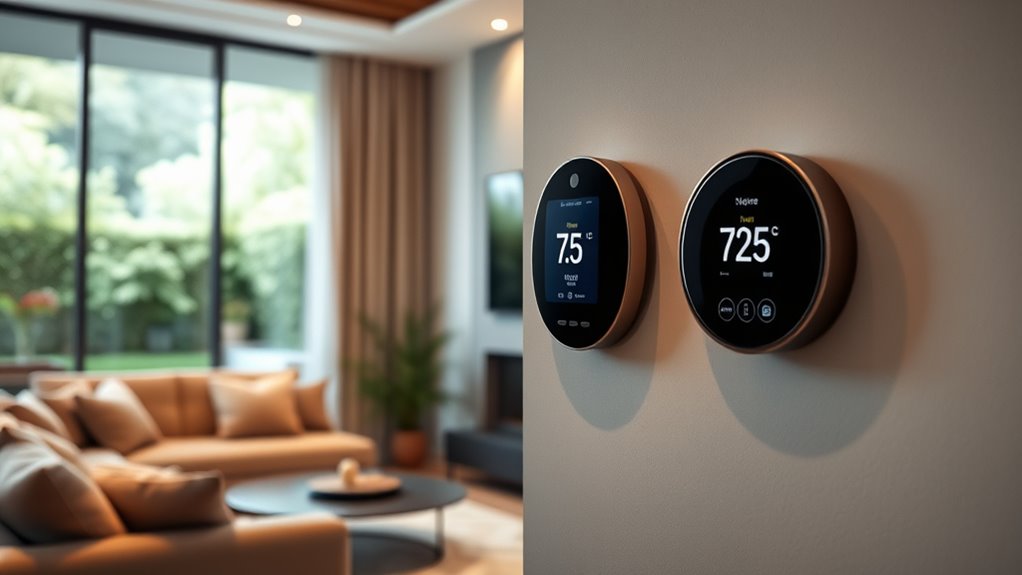

If you’re looking to optimize your home climate, I recommend exploring the top smart thermostats with learning features. These devices adapt to your routines, improve comfort, and save energy, often compatible with major smart home platforms. Options like the ecobee SmartThermostat and Nest Learning Thermostat offer easy setup, touchscreen controls, and sensor integration. Keep in mind, the best choice depends on your system and preferences—stay with me to discover more about the top models.
Key Takeaways
- Top smart thermostats like Nest Learning and ecobee adapt to user routines for personalized climate control.
- They utilize advanced machine learning algorithms to optimize energy savings and comfort over time.
- Many models support multi-room sensors and occupancy detection for precise temperature management.
- Compatibility with major smart home platforms ensures seamless integration and voice control.
- Features like auto-learning, adaptive scheduling, and system health monitoring enhance user experience and efficiency.
ecobee Smart Thermostat Essential – Wi-Fi Programmable Thermostat


If you’re looking to reduce your energy bills and enjoy a more convenient heating and cooling experience, the ecobee Smart Thermostat Essential is an excellent choice. It helps save up to 23% annually by customizing schedules that adjust temperatures when you’re home or away. You can track your energy use remotely through the ecobee app, and automatic software updates keep it running efficiently. Compatible with most HVAC systems—no C-wire needed—installation is straightforward. Its color touchscreen makes adjustments easy, and you can control it remotely. Plus, it integrates seamlessly with Apple HomeKit, Google Assistant, and Alexa for a truly smart home experience.
Best For: homeowners seeking an easy-to-install, energy-efficient thermostat that integrates seamlessly with smart home ecosystems and offers remote control capabilities.
Pros:
- Saves up to 23% annually on heating and cooling costs through customizable schedules.
- Compatible with 85% of HVAC systems, no C-wire needed with optional Power Extender Kit.
- Features a user-friendly color touchscreen and supports remote control via the ecobee app, plus integration with Apple HomeKit, Google Assistant, and Alexa.
Cons:
- Compatibility check required prior to installation to ensure system support.
- Limited to Wi-Fi-enabled HVAC systems; may not suit non-connected setups.
- Some users may prefer more advanced features found in higher-tier ecobee models.
Google Nest Learning Thermostat, 3rd Gen (2015)
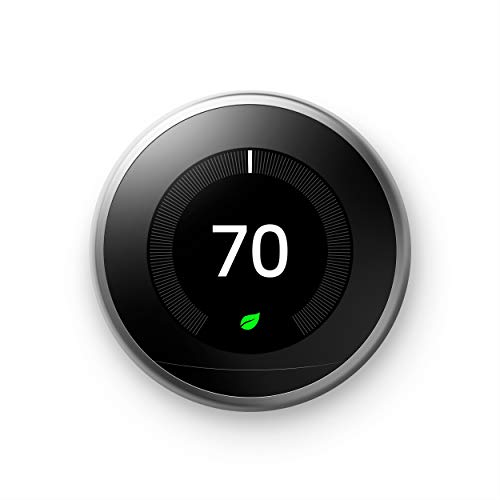
The Google Nest Learning Thermostat, 3rd Gen (2015), is an excellent choice for homeowners seeking a smart thermostat that automatically adapts to their routines. It learns from your behavior and programs itself, removing the need for manual programming. With Home/Away Assist, it adjusts the temperature when you’re not home, saving energy. You can control it remotely using the Nest app from anywhere. Its sleek stainless steel finish adds a modern touch. Before purchasing, it’s wise to verify system compatibility via Google’s support page. Overall, this thermostat offers convenience, energy savings, and seamless integration, making it a top pick for smart home enthusiasts.
Best For: homeowners seeking an easy-to-use, energy-efficient smart thermostat that learns their routines and can be controlled remotely.
Pros:
- Learns from user behavior and programs itself, eliminating manual setup
- Features Home/Away Assist to optimize energy savings when you’re not home
- Compatible with Alexa and controlled remotely via the Nest app for convenience
Cons:
- Requires verification of system compatibility before purchase
- May have a higher upfront cost compared to traditional thermostats
- Limited to 3rd generation features; newer models may offer additional functionalities
Google Nest Learning Thermostat (4th Gen, 2024) with Nest Temperature Sensor

For homeowners seeking a sleek, highly intelligent thermostat that adapts to their routines, the Google Nest Learning Thermostat (4th Gen, 2024) with Nest Temperature Sensor stands out. It’s compatible with most 24V systems, including gas, electric, and heat pump setups, often without needing a C-wire. Its larger display with Dynamic Farsight offers easy visibility from across the room, and the touchscreen makes control simple. The thermostat learns your habits, auto-adjusts temperatures, and supports voice commands. The included Nest Temperature Sensor helps manage hot and cold spots precisely. With Wi-Fi connectivity, it integrates seamlessly with Google Assistant, Alexa, and Apple HomeKit, making home climate management effortless.
Best For: homeowners seeking a sleek, intelligent thermostat that learns routines, adapts to their habits, and integrates seamlessly into a modern smart home setup.
Pros:
- Learns user preferences and auto-adjusts temperatures for energy savings and convenience
- Large, bright display with Dynamic Farsight for easy visibility from across the room
- Compatible with most 24V systems and supports multiple smart home platforms including Google Assistant, Alexa, and Apple HomeKit
Cons:
- Higher price point compared to basic thermostats, which may be a consideration for budget-conscious buyers
- Limited compatibility outside certain global markets, such as the UK, for some users
- Requires Wi-Fi connection for full functionality, which may be a concern in areas with unstable internet
Google Nest Learning Thermostat, 3rd Gen

The Google Nest Learning Thermostat (3rd Gen) stands out for those who want a smart thermostat that adapts to their schedule automatically. It learns your routines and preferences, adjusting temperatures to maximize comfort and energy savings without manual programming. Features like Home/Away Assist detect when you’re gone and set Eco Temperatures to cut heating or cooling waste. You can control it remotely from your phone or tablet, and it integrates smoothly with Alexa and other smart devices. Plus, it monitors your HVAC system, alerting you to issues and providing maintenance reminders. This thermostat truly combines convenience, efficiency, and smart technology in one sleek package.
Best For: homeowners seeking a smart thermostat that learns their schedule and maximizes energy efficiency automatically.
Pros:
- Learns user routines to automatically optimize comfort and energy savings
- Remote control via smartphone, tablet, or laptop for convenience
- Compatible with Alexa and other smart home devices for seamless integration
Cons:
- Requires Wi-Fi connection for full functionality and updates
- May need additional purchase of Nest Temperature Sensor for room-specific control
- Higher upfront cost compared to basic thermostats
ecobee Smart Thermostat Premium with Sensors and Air Quality Monitor

If you’re seeking a smart thermostat that maximizes energy savings and enhances home comfort, the ecobee Smart Thermostat Premium with Sensors and Air Quality Monitor is a top choice. It can cut heating and cooling costs by up to 26% annually and is ENERGY STAR certified. The included SmartSensor prevents hot and cold spots by adjusting based on occupancy and importance. Its built-in air quality monitor alerts you to poor air conditions and reminds you to change filters. With features like smoke detection, geofencing, and integration with home security, it offers extensive control and safety. The device also pauses HVAC operation if windows or doors stay open, saving energy effortlessly.
Best For: homeowners seeking advanced energy savings, comprehensive home comfort, and smart safety features in a thermostat system.
Pros:
- Up to 26% annual savings on heating and cooling costs with ENERGY STAR certification.
- Includes SmartSensor to eliminate hot/cold spots and improve comfort based on occupancy.
- Built-in air quality monitor with alerts and filter change reminders, plus safety features like smoke detection and security integration.
Cons:
- Installation can be complex and may require professional help, especially for older HVAC systems.
- Setup instructions for sensors and wiring may be confusing or unclear, leading to potential frustration.
- Some features, like voice control with Siri, may require additional equipment or hubs, adding to the overall cost.
Google Nest Learning Thermostat (4th Gen, 2024) with Nest Temperature Sensor

The Google Nest Learning Thermostat (4th Gen, 2024) with Nest Temperature Sensor is an excellent choice for homeowners seeking an intelligent, energy-efficient way to manage their home climate. It features a larger 60% display with Dynamic Farsight, making it easy to see from across the room, and adjusts brightness automatically for readability. Compatible with most 24V systems and easy to install, it works seamlessly with Google Home, Alexa, and Siri. The thermostat allows remote control via the app and supports multiple sensors for room-specific comfort. With energy savings of up to 15%, it helps reduce bills while maintaining ideal comfort in your home.
Best For: homeowners seeking an advanced, energy-efficient smart thermostat that offers easy installation, remote control, and room-specific comfort management.
Pros:
- Large 60% display with Dynamic Farsight for easy visibility from across the room
- Compatible with most 24V systems and supports multiple smart home integrations (Google Assistant, Alexa, Siri)
- Supports Nest Temperature Sensors for customized room comfort and improved energy savings
Cons:
- May require a compatible wiring setup; some homes might need a C wire for optimal operation
- Advanced features and app controls could have a learning curve for some users
- Slightly higher cost compared to basic thermostats, which might be a consideration for budget-conscious buyers
Google Nest Learning Thermostat (4th Gen, 2024) with Nest Temperature Sensor

Designed for homeowners who want a sleek, intuitive thermostat that learns their routines, the Google Nest Learning Thermostat (4th Gen, 2024) with Nest Temperature Sensor automatically adjusts temperatures to maximize comfort and energy savings. Its modern round design features a larger touchscreen with Dynamic Farsight, making information visible from across the room. It’s compatible with most 24V systems and easy to install, often within 10 minutes. The thermostat offers remote control via the Google Home app, supports voice commands, and integrates with popular smart home platforms. Using adaptive learning and the Nest Temperature Sensor, it optimizes comfort while helping you save on energy bills.
Best For: homeowners seeking a stylish, easy-to-install smart thermostat that learns routines and maximizes energy savings.
Pros:
- Sleek, modern design with a larger touchscreen and Dynamic Farsight for easy visibility.
- Compatible with most 24V heating and cooling systems, often without a C-wire.
- Advanced learning algorithms and remote control features help optimize comfort and reduce energy bills.
Cons:
- Higher price point compared to basic thermostats.
- Requires Wi-Fi connection for full functionality, which may be a concern in unstable networks.
- Some users report a learning curve with initial setup and configuration.
Google Nest Thermostat, Programmable Wi-Fi Smart Thermostat
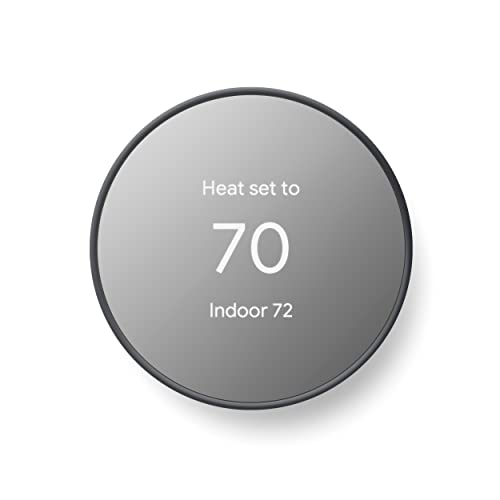
Looking to cut energy costs without sacrificing comfort? The Google Nest Thermostat is a smart, ENERGY STAR-certified device that helps you do just that. It’s compatible with most systems and works without a C wire in many homes, making installation easy. You can control it remotely via Wi-Fi or Bluetooth using your smartphone, tablet, or laptop. The thermostat automatically adjusts when you’re away and offers a customizable schedule through the Google Home app. Plus, it monitors your HVAC system’s health, sends maintenance alerts, and suggests savings opportunities. All of this combines to optimize your home climate while reducing energy waste effortlessly.
Best For: homeowners seeking an easy-to-install, energy-efficient smart thermostat that offers remote control and system health monitoring.
Pros:
- Compatible with most heating and cooling systems, including many without a C wire
- Enables remote control and scheduling via the Google Home app for convenience
- Monitors HVAC system health and provides maintenance alerts to extend system lifespan
Cons:
- Does not include a lock feature to prevent unauthorized adjustments
- Some systems like heating-only or zone-controlled setups may require additional accessories
- Requires dual-band Wi-Fi and Bluetooth for full functionality, which may not be available in all homes
ecobee Smart Thermostat Enhanced, Programmable Wi-Fi Thermostat
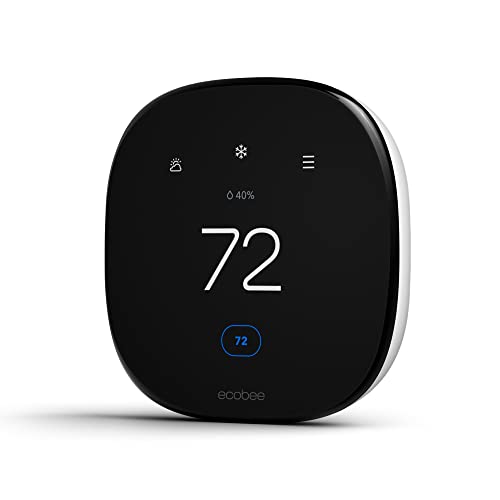
If you want a smart thermostat that automatically adjusts to your schedule and preferences, the ecobee Smart Thermostat Enhanced is an excellent choice. It can save you up to 26% annually on heating and cooling costs by adjusting temperatures when you’re away and preheating or precooling your home before you arrive. It adapts to your occupancy and sleep patterns, maintaining consistent comfort, while incorporating humidity control to improve home feel. Compatible with Siri, Alexa, Google Assistant, and most smart home platforms, it offers remote control via the ecobee app. Easy to install and compatible with most HVAC systems, it’s a reliable, energy-efficient upgrade for your home.
Best For: homeowners seeking an energy-efficient, smart thermostat that easily integrates with their existing smart home systems and offers customizable comfort scheduling.
Pros:
- Saves up to 26% annually on heating and cooling costs through automatic adjustments and occupancy detection
- Compatible with major smart home platforms like Siri, Alexa, and Google Assistant for seamless voice control
- Easy to install, even without a C-wire, and works with most HVAC systems including heat pumps and boilers
Cons:
- May require additional hardware (Power Extender Kit) for homes without a C-wire during installation
- Premium features and remote control rely on a stable Wi-Fi connection and smartphone app
- Some users may find setup and configuration complex if unfamiliar with smart thermostats
Amazon Smart Thermostat

The Amazon Smart Thermostat is an excellent choice for homeowners who want an affordable yet intelligent way to manage their home’s climate. Compatible with most 24V HVAC systems, it includes features like auto-adjustment based on presence detection, scheduling, and voice control via Alexa. Installation is straightforward but may require a C-wire or power adapter for homes without one. While it lacks support for 5 GHz Wi-Fi and doesn’t have a microphone, it integrates seamlessly with Alexa and Ring apps. Praised for sleek design and energy savings, it’s ideal for those comfortable with wiring. However, it may face compatibility issues with heat pumps and older wiring setups.
Best For: homeowners seeking an affordable, smart thermostat with seamless Alexa integration and straightforward installation, comfortable with basic wiring setups.
Pros:
- Easy to install and set up via the Alexa app with guided instructions
- Compatible with most 24V HVAC systems, including heat pumps and conventional units
- Energy-saving features and scheduling options that can reduce costs and enhance comfort
Cons:
- Limited network support, only works on 2.4 GHz Wi-Fi and no 5 GHz or ad-hoc networks
- May experience compatibility issues with heat pump systems and older wiring configurations
- Some users report app crashes on older Android devices and occasional connectivity or response delays
Google Nest Thermostat, Smart Wi-Fi Thermostat for Home

For those seeking effortless energy savings and convenient control, the Google Nest Thermostat stands out as an ideal choice. It’s ENERGY STAR certified and compatible with most heating, cooling, and heat pump systems, even without a C wire in many homes. With Wi-Fi connectivity, I can easily adjust the temperature remotely using my phone, tablet, or laptop. It integrates seamlessly with Google Assistant and other voice assistants, making voice control simple. The thermostat automatically lowers settings when I leave home to save energy and offers programmable schedules through the Google Home app. Plus, it monitors HVAC health, alerting me to issues before costly repairs, ensuring my system runs smoothly.
Best For: homeowners seeking an easy-to-use, energy-efficient smart thermostat that integrates seamlessly with voice assistants and smart home systems.
Pros:
- ENERGY STAR certified for energy savings and environmental benefits
- Compatible with most heating, cooling, zone controlled, and heat pump systems, often without a C wire
- Remote control via Wi-Fi allows adjustment from anywhere using a phone, tablet, or laptop
Cons:
- No lock feature to prevent unauthorized changes
- Some systems may still require a C wire or power accessory for optimal operation
- Limited customization options for advanced scheduling compared to more complex thermostats
Sensi Smart Thermostat with Wi-Fi and Alexa Compatibility
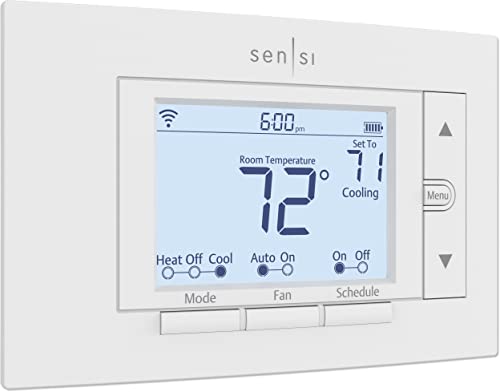
The Sensi Smart Thermostat with Wi-Fi and Alexa Compatibility is an excellent choice for tech-savvy homeowners seeking easy DIY installation and seamless smart home integration. It fits standard thermostat spaces, often without needing a c-wire, making setup straightforward. Certified by ENERGY STAR, it helps save around 23% on energy costs through flexible scheduling and remote access. Plus, it monitors HVAC performance, provides usage reports, and alerts you to maintenance needs. With a familiar design and mobile app control, Sensi offers a user-friendly experience while prioritizing privacy by not selling personal data. It’s an efficient, secure, and versatile option for modern smart homes.
Best For: homeowners seeking an easy-to-install, energy-efficient smart thermostat with seamless smart home integration and strong privacy protections.
Pros:
- Simple DIY installation that often requires no c-wire, fitting standard thermostat spaces
- ENERGY STAR certified, helping save approximately 23% on HVAC energy costs through flexible scheduling and remote access
- Monitors HVAC performance, provides detailed usage reports, and alerts for maintenance needs, enhancing system longevity
Cons:
- May have limited compatibility with some specialized or older HVAC systems
- Lacks a touch screen, relying on a mobile app and physical buttons for control
- Some users might find the initial setup or app interface less intuitive compared to more advanced smart thermostats
RTH9600WF Smart Color Thermostat
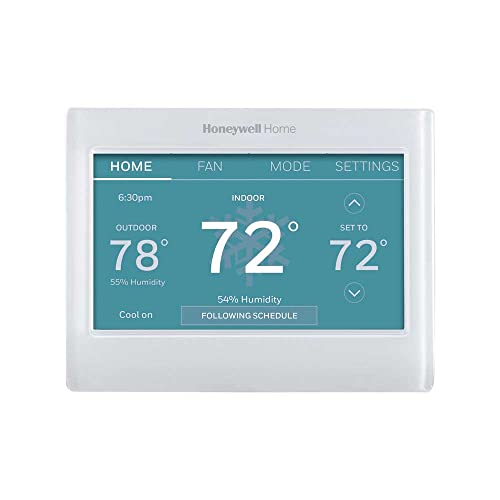
If you’re looking to maximize energy savings while enjoying a customizable and user-friendly interface, the RTH9600WF Smart Color Thermostat is an excellent choice. It’s ENERGY STAR certified, helping you reduce energy use with personalized tips and monitoring features. The high-definition color display is fully customizable, allowing you to set any preferred color, and it shows indoor/outdoor temperature, humidity, and weather forecasts right on the screen. Control it remotely via app or voice assistants like Alexa and Google Assistant. With support for various heating systems and clear installation instructions, it’s a smart, efficient upgrade that seamlessly integrates into your home.
Best For: homeowners seeking to optimize energy savings with a customizable, easy-to-use smart thermostat compatible with multiple smart home platforms.
Pros:
- ENERGY STAR certified promotes energy efficiency and potential rebates.
- Fully customizable high-definition color display enhances user experience.
- Compatible with various heating systems and controllable remotely via app or voice assistants.
Cons:
- Requires a C-wire for proper installation; may need additional hardware if not available.
- Not compatible with electric baseboard heating (120-240V).
- Installation and setup may be complex for some users unfamiliar with smart thermostats.
Emerson Sensi Touch Wi-Fi Smart Thermostat

The Emerson Sensi Touch Wi-Fi Smart Thermostat stands out for homeowners seeking precise control combined with smart features. Its sleek touchscreen color display makes it easy to navigate and customize settings. Compatible with Alexa, Google Assistant, Apple HomeKit, and Samsung SmartThings, it seamlessly integrates into your smart home ecosystem. With energy-saving capabilities that cut HVAC costs by around 23%, you can control and monitor your system remotely via the Sensi app. The thermostat also offers smart maintenance alerts, usage reports, and supports humidity levels up to 90%. Its straightforward installation, typically completed in 30 minutes, makes it a practical choice for modern homeowners.
Best For: homeowners seeking a sleek, easy-to-install smart thermostat with precise control and comprehensive smart home integration.
Pros:
- User-friendly touchscreen color display for easy navigation and customization
- Compatible with major smart home platforms including Alexa, Google Assistant, Apple HomeKit, and Samsung SmartThings
- Energy-saving features that reduce HVAC costs by approximately 23% and offer smart maintenance alerts
Cons:
- Requires a C-wire for installation, which may not be available in all homes
- Installation time is typically around 30 minutes, which might be challenging for DIY beginners
- Supports humidity levels up to 90% non-condensing, potentially limiting use in very high humidity environments
Sensi Touch 2 Smart Thermostat with Touchscreen

Designed for homeowners seeking effortless energy management, the Sensi Touch 2 Smart Thermostat with Touchscreen offers intuitive control and learning capabilities. Its vibrant color touchscreen makes programming simple, while Wi-Fi connectivity enables remote adjustments. Compatible with most HVAC systems and Sensi Room Sensors, it helps balance temperatures across rooms. The thermostat can reduce energy use by about 23%, providing detailed usage reports, alerts, and maintenance reminders. Easy to install with a user-friendly app, it prioritizes privacy and works seamlessly with Alexa. Backed by a century of expertise, the Sensi Touch 2 combines smart features with reliable performance for efficient home climate control.
Best For: homeowners seeking an easy-to-use, energy-efficient smart thermostat with remote access and seamless integration with voice control.
Pros:
- Intuitive color touchscreen display simplifies programming and adjustments
- Energy-saving features can reduce HVAC energy consumption by approximately 23%
- Easy DIY installation with a user-friendly app and universal Bluetooth technology
Cons:
- Requires a common wire (c-wire) for installation, which may not be available in all homes
- Compatibility depends on the HVAC system; some systems may require additional accessories
- Sensi Room Sensors are sold separately, adding to overall cost for multi-room temperature management
Factors to Consider When Choosing Smart Thermostats With Learning Features
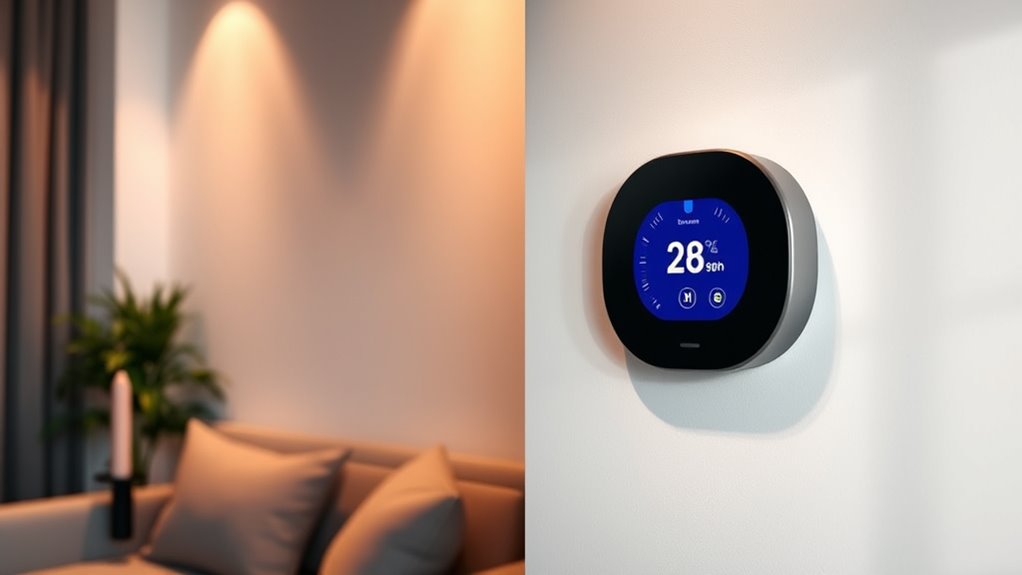
When selecting a smart thermostat with learning features, I always consider if it’s compatible with my HVAC system to avoid installation issues. I also look at how effective its learning algorithm is and whether it can help save energy over time. Additionally, I check if it’s easy to install and how well it integrates with my existing smart home devices.
Compatibility With HVAC Systems
Choosing a smart thermostat with learning features requires making sure it’s compatible with your HVAC system. First, verify that the thermostat supports your system type—gas, electric, oil, heat pump, or boiler—to guarantee proper function. Most learning thermostats work with 24VAC systems, but check if your setup needs a C-wire or a Power Extender Kit, especially for systems like electric baseboard heaters or zone controls. Use online tools or manufacturer checkers to confirm compatibility before buying. Also, consider if the thermostat can connect with your existing smart home devices, like Alexa, Google Assistant, or Apple HomeKit, for smooth integration. Being aware of your system’s specific wiring and configuration helps prevent installation issues and ensures your smart thermostat works seamlessly.
Learning Algorithm Effectiveness
A smart thermostat’s learning algorithm plays a vital role in how effectively it adapts to your habits and preferences. An effective algorithm accurately models your routines, occupancy, and temperature preferences to optimize schedules without manual input. The speed at which it learns and adjusts to changing habits impacts both comfort and energy savings. Advanced machine learning techniques, like neural networks, enable these thermostats to refine their programming over time based on historical data. Robust algorithms also prevent overfitting, maintaining flexibility for both routine and sporadic behavior changes. Regular software updates and user feedback further enhance their accuracy and personalization. When choosing a thermostat, consider how well its learning algorithm can adapt quickly and reliably, ensuring it remains responsive to your evolving lifestyle.
Energy Saving Capabilities
Smart thermostats equipped with learning features can markedly cut energy costs by automatically adjusting heating and cooling schedules based on your habits. They analyze occupancy patterns and temperature preferences to optimize comfort while preventing unnecessary energy use when you’re away or asleep. Many models include eco or energy-saving modes that help maintain consistent comfort with minimal energy consumption through smart adjustments. Integration with sensors allows these devices to monitor specific rooms, reducing waste by only conditioning occupied areas. Real-time energy usage tracking and reporting give me insights into my consumption habits, helping me identify savings opportunities. Overall, these features ensure I don’t conserve energy, lowering my utility bills and reducing my environmental impact without sacrificing comfort.
Ease of Installation
Since many smart thermostats with learning features are designed for DIY installation, they often require minimal tools and straightforward wiring, making setup accessible even for those without technical experience. Most models support common 24VAC systems, which simplifies compatibility and reduces wiring concerns. Some thermostats include Power Extender Kits (PEK), allowing installation without a C-wire, eliminating the need for professional wiring modifications. User-friendly interfaces, like color touchscreens and step-by-step guides, further ease setup and initial programming. Before installation, it’s wise to use online tools or apps to verify compatibility with your HVAC system. Overall, these features make choosing a thermostat with easy installation straightforward, saving time and effort while ensuring a smooth setup process.
Smart Home Integration
When choosing a smart thermostat with learning features, verifying that it supports popular smart home platforms like Apple HomeKit, Google Assistant, and Amazon Alexa is essential. This guarantees seamless integration, allowing you to control your thermostat with voice commands or automation routines. Compatibility with your existing ecosystem makes remote management easier and enhances automation possibilities. Additionally, look for thermostats that support the Matter protocol, which broadens device interoperability across brands and ecosystems. Connecting your thermostat with other smart devices, such as sensors or security systems, can improve automation and energy management. Finally, consider models offering app-based control, so you can manage your home’s climate conveniently from a centralized app, ensuring a smooth, integrated smart home experience.
User Interface Intuitiveness
Choosing a smart thermostat with learning features becomes much easier when the user interface is intuitive. A clear menu structure, simple navigation, and straightforward controls allow me to operate the device effortlessly. Touchscreen displays with responsive feedback and customizable layouts improve the user experience and make setup less confusing. Visual indicators, like icons and color codes, help me quickly interpret system status and temperature settings without guesswork. Simplified scheduling tools, such as drag-and-drop or step-by-step wizards, make programming accessible even for beginners. Additionally, seamless integration of voice command capabilities and remote app controls ensures I can adjust my thermostat from anywhere with ease. An intuitive interface reduces frustration and speeds up daily adjustments, making smart climate control genuinely convenient.
Sensor Placement Flexibility
Flexible sensor placement is essential for optimizing comfort and energy efficiency in a smart home. It allows me to better control temperatures across multiple rooms, reducing hot and cold spots. Many smart thermostats support additional or remote sensors that I can place in key areas, helping me customize comfort. I verify sensors are positioned away from direct sunlight, drafts, or heat sources to get accurate readings. The ability to add multiple sensors gives me greater control in multi-zone homes or rooms with different usage patterns. Plus, flexible placement helps the thermostat make more precise adjustments based on real-time conditions, saving energy and improving comfort. This feature is especially valuable for homes with diverse climate needs or complex layouts.
Frequently Asked Questions
How Do Smart Thermostats Improve Energy Efficiency and Reduce Bills?
Smart thermostats improve energy efficiency and lower bills by learning my schedule and adjusting the temperature automatically. They optimize heating and cooling based on when I’m home or away, preventing unnecessary energy use. I love how they provide real-time insights and allow remote control via my phone. This smart management reduces waste, keeps my home comfortable, and saves me money without sacrificing convenience.
Can Smart Thermostats Be Integrated With Existing Home Automation Systems?
Absolutely, smart thermostats can seamlessly integrate with most existing home automation systems. I was initially worried about compatibility, but many brands now support popular platforms like Alexa, Google Home, and Apple HomeKit. This makes it easy to control your climate alongside other smart devices. Just verify you check compatibility beforehand, and you’ll enjoy a more connected, convenient home environment without needing a complete overhaul.
What Is the Typical Installation Process for These Thermostats?
The installation process for these thermostats usually starts with turning off power to your HVAC system, then removing your old thermostat. I carefully connect the new thermostat’s wires to the corresponding terminals, ensuring proper contact. After mounting it on the wall, I turn the power back on and follow the setup instructions, which often include connecting to Wi-Fi and downloading an app. It’s straightforward but may require basic electrical knowledge for best results.
Do Smart Thermostats Require Professional Setup or Can I Install Myself?
You can definitely install a smart thermostat yourself if you’re comfortable with basic wiring and follow the instructions carefully. I’ve done it myself, and the process is straightforward, especially with models that include step-by-step guides and clear app instructions. However, if you’re unsure about handling electrical wiring or have a complex system, I recommend hiring a professional to guarantee everything is set up safely and correctly.
How Secure Are Smart Thermostats Against Hacking and Data Breaches?
Ever wondered if your smart thermostat could be hacked? I can tell you, they’re quite secure if you take precautions. Manufacturers use encryption and regular updates to protect your data. But I always recommend strong, unique passwords and avoiding public Wi-Fi for setup. Staying vigilant helps prevent breaches. While no device is completely invulnerable, smart thermostats are generally safe when you follow best security practices.
Conclusion
Choosing the right smart thermostat with learning features can truly transform your home comfort. With options like the Google Nest and ecobee models, you’re equipped to save energy and customize your climate effortlessly. So, why settle for a basic thermostat when smarter, more intuitive options are available? Investing in the right device means you’ll enjoy a cozy home while reducing energy costs—what’s stopping you from upgrading today?