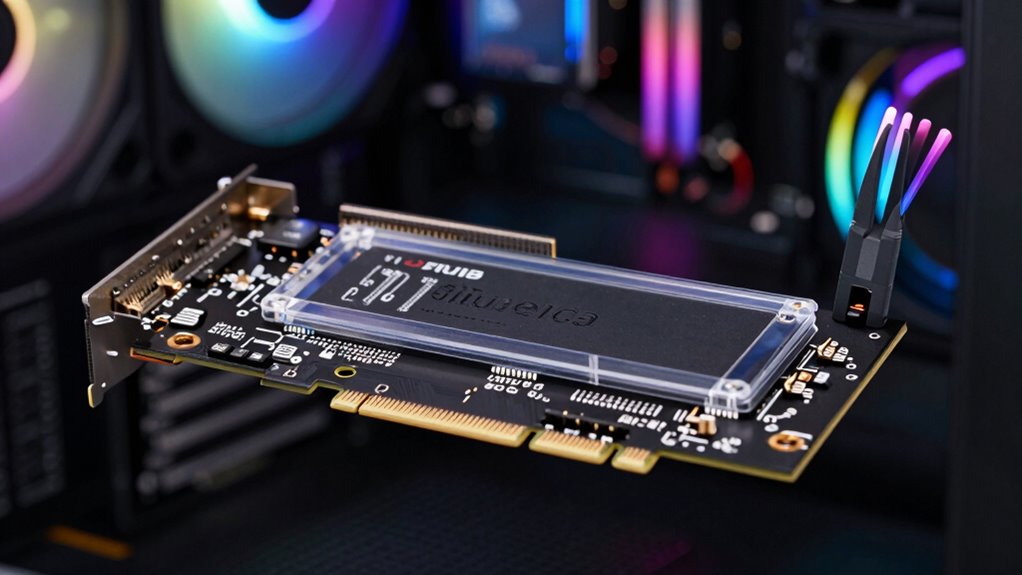

If you’re looking for the best PCIe Wi-Fi 6E cards for VR in 2026, I recommend checking out options like TP-Link’s WiFi 6E PCIe cards with Bluetooth 5.3, OKN’s AX5400 model, and AX210NGW with external antennas. These cards deliver ultra-fast speeds, extended coverage, and reliable security features essential for smooth VR experiences. Keep exploring, and you’ll find more details on each to help you choose the perfect upgrade.
Key Takeaways
- Top PCIe Wi-Fi 6E cards offer speeds up to 2400 Mbps on 6 GHz for seamless VR streaming.
- Features like Bluetooth 5.3 and external antennas enhance VR peripheral connectivity and signal stability.
- Compatibility with Windows 10/11 and various desktop systems ensures broad usability for VR setups.
- Advanced security protocols like WPA3 protect high-bandwidth VR data during online activities.
- External antenna options and flexible placement optimize coverage and reduce lag during immersive VR experiences.
TP-Link WiFi 6E PCIe Card with Bluetooth 5.3
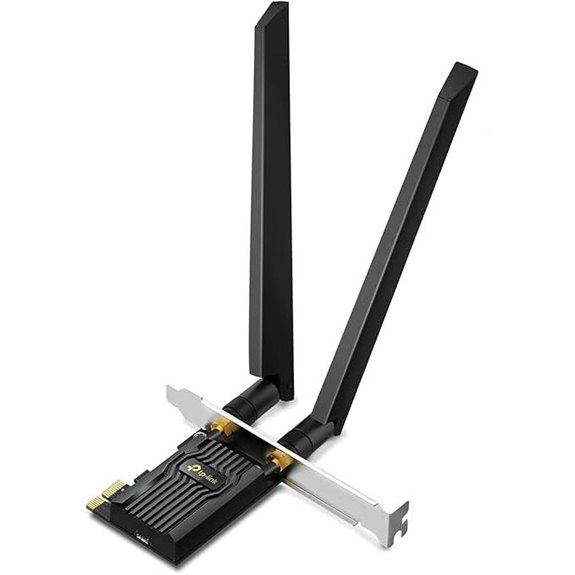
If you’re looking for a high-performance PCIe Wi-Fi 6E card that delivers ultra-low latency and reliable connections, the TP-Link WiFi 6E PCIe Card with Bluetooth 5.3 is an excellent choice, especially for serious gamers and VR enthusiasts. It supports Wi-Fi 6E with speeds up to 2.4 Gbps across 6GHz, 5GHz, and 2.4GHz bands, reducing lag and ensuring seamless online experiences. Equipped with two high-gain antennas, it offers extended coverage and stronger signals. The inclusion of Bluetooth 5.3 doubles speed and quadruples range compared to previous versions. Plus, it features WPA3 security, making your connection both fast and secure.
TP-Link WiFi 6E PCIe Card with Bluetooth 5.3

The TP-Link WiFi 6E PCIe Card with Bluetooth 5.3 stands out as an excellent choice for gamers and VR enthusiasts who demand lightning-fast, stable wireless connections. Its Wi-Fi 6E technology taps into the 6 GHz band, offering speeds up to 2402 Mbps on 6 GHz and 2402 Mbps on 5 GHz, with 574 Mbps on 2.4 GHz. The dual antennas and magnetic base ensure strong signal reception and coverage. Bluetooth 5.3 provides faster pairing and broader range, while WPA3 security keeps your network safe. Designed for desktops, it’s compatible with PCIe slots and works best with Windows 11. This card guarantees low latency for seamless VR experiences.
WiFi 6E AX210 PCIe Network Card with Bluetooth

For gamers and VR enthusiasts seeking ultra-fast, reliable wireless connections, the WiFi 6E AX210 PCIe Network Card with Bluetooth stands out as an ideal choice. It features the latest Intel WiFi 6E AX210 chipset, supporting tri-band connectivity—6GHz, 5GHz, and 2.4GHz—with speeds up to 2400Mbps on 6GHz. It also supports OFDMA and MU-MIMO for better performance in crowded environments. The card is compatible with Windows 10/11 and includes a low-profile bracket. With Bluetooth 5.3, it offers faster, broader device connections, making it perfect for seamless VR gaming, streaming, and high-bandwidth tasks.
OKN WiFi 6E AX5400 PCIe Card for Desktop
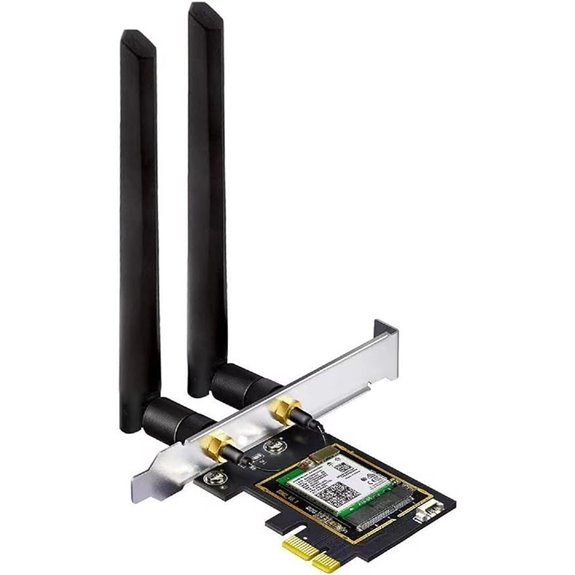
Equipped with the latest WiFi 6E technology and the powerful AX210 chipset, the OKN WiFi 6E AX5400 PCIe Card is an excellent choice for gamers and VR enthusiasts who demand ultra-fast, low-latency connections. It supports the 6GHz band, delivering peak data rates up to 5400 Mbps across 2.4GHz, 5GHz, and 6GHz. With features like wider channels, Target Wake Time, and MU-MIMO, it reduces congestion and latency, ideal for streaming 8K videos, large file transfers, and high-bandwidth VR. External antennas extend coverage, while Bluetooth 5.3 ensures seamless device pairing. Compatibility with Windows 10/11 makes installation straightforward, making this PCIe card a versatile upgrade.
WiFi 6 PCIe Card with Bluetooth 5.2
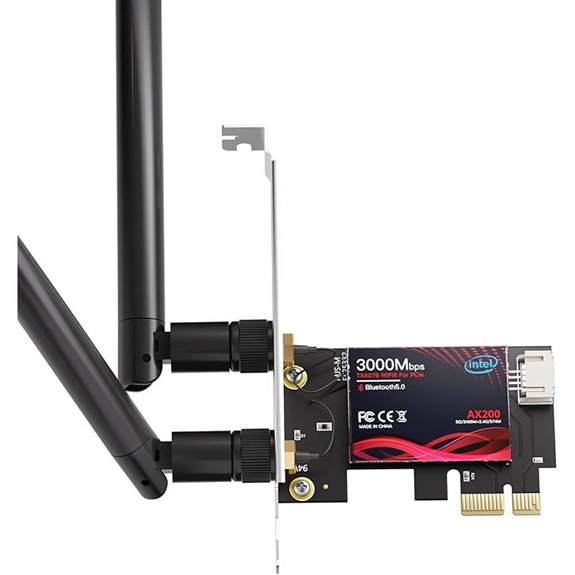
If you’re looking to upgrade your PC for seamless VR experiences and fast device connections, a WiFi 6 PCIe card with Bluetooth 5.2 is an excellent choice. It delivers speeds up to 3000Mbps using Wi-Fi 6 technology, with OFDMA and MU-MIMO for low latency and smooth performance during gaming and streaming. The dual high-gain antennas extend coverage, ensuring a stable connection across larger areas. Bluetooth 5.2 offers faster pairing and broader device range, making peripheral connections effortless. Plus, WPA3 security keeps your network safe. Easy to install, it’s a all-encompassing upgrade to meet the demands of modern VR and multitasking.
WAVLINK AXE5400 WiFi 6E PCIe Network Card
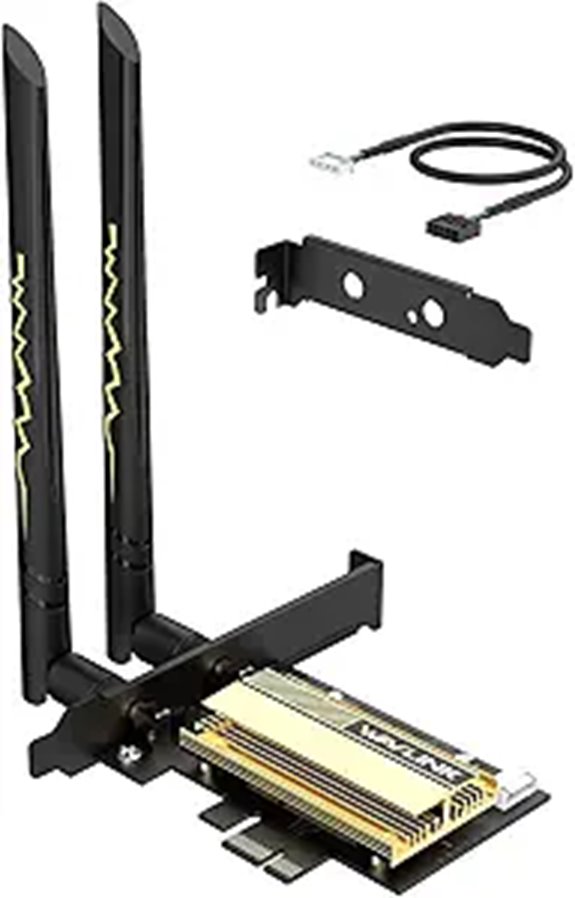
The WAVLINK AXE5400 WiFi 6E PCIe Network Card stands out as an excellent choice for gamers and VR enthusiasts seeking ultra-low latency and high-speed connectivity. Powered by Intel AX210, it supports tri-band speeds: up to 574Mbps on 2.4GHz, and 2400Mbps on both 5GHz and 6GHz bands. Its advanced features like OFDMA, MU-MIMO, and 160MHz bandwidth deliver 3x faster speeds with 75% less lag compared to WiFi 5. The 6GHz band ensures smooth, real-time performance for VR, while Bluetooth 5.3 adds faster, longer-range connections. Dual antennas, heat sink, and flexible installation make it a reliable, high-performance upgrade for demanding setups.
Cudy AX5400 WiFi 6E PCIe Card with Bluetooth 5.2
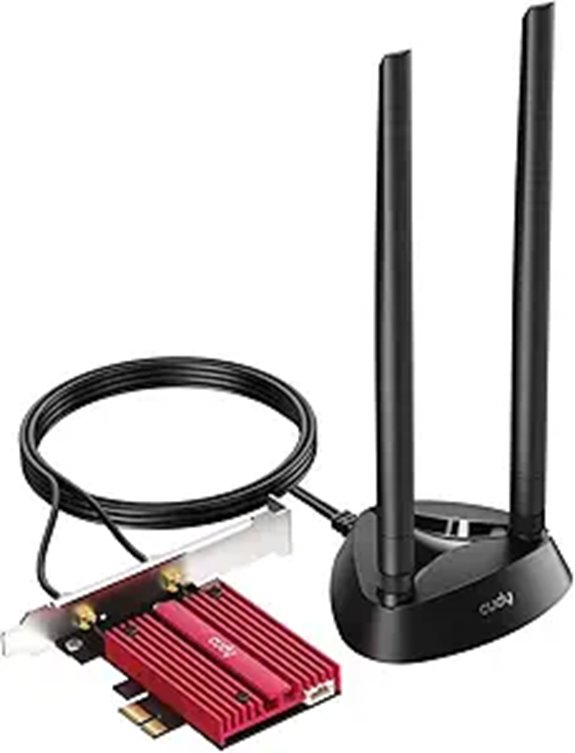
Looking for a Wi-Fi 6E card that can handle demanding VR applications and gaming sessions? The Cudy AX5400 WiFi 6E PCIe Card with Bluetooth 5.2 is a top choice. It offers blazing-fast Wi-Fi 6E speeds, ultra-low latency, and stable connections thanks to MU-MIMO and OFDMA tech. Its tri-band setup improves coverage and efficiency. Plus, with Bluetooth 5.3 support, device compatibility is excellent. The card features a robust AX210 chipset, a heat sink for thermal management, and a low-profile bracket for versatile builds. Compatible with Windows 10 and 11, it’s perfect for high-performance VR and bandwidth-intensive tasks.
GIGABYTE WiFi 6E PCIe Expansion Card
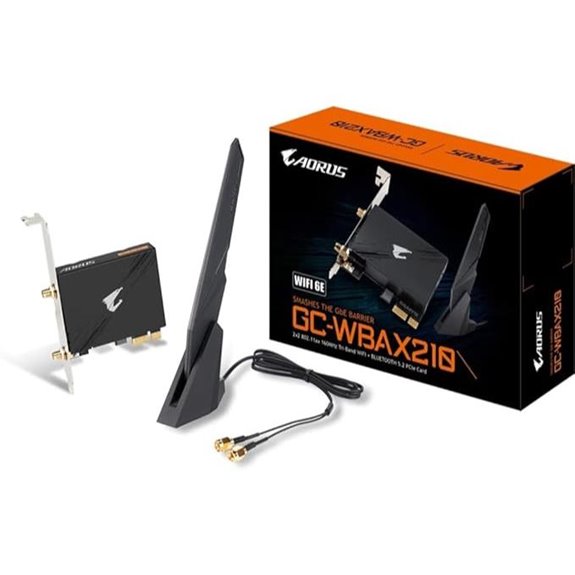
For gamers and VR enthusiasts seeking seamless, high-speed wireless connectivity, the GIGABYTE WiFi 6E PCIe Expansion Card stands out with its support for the latest Intel Wi-Fi 6E AX210 module. It supports tri-band WiFi and Bluetooth 5.2, providing reliable connections across 2.4GHz, 5GHz, and 6GHz bands. With speeds up to 2400 Mbps and dedicated spectrum in the 6GHz band, it offers ultra-low latency and maximum performance. The card guarantees smooth VR experiences and fast data transfers, making it an excellent choice for demanding setups. Its advanced features and compatibility keep your wireless connectivity future-proof and ready for the latest standards.
WiFi 6E PCIe Card with Bluetooth 5.3
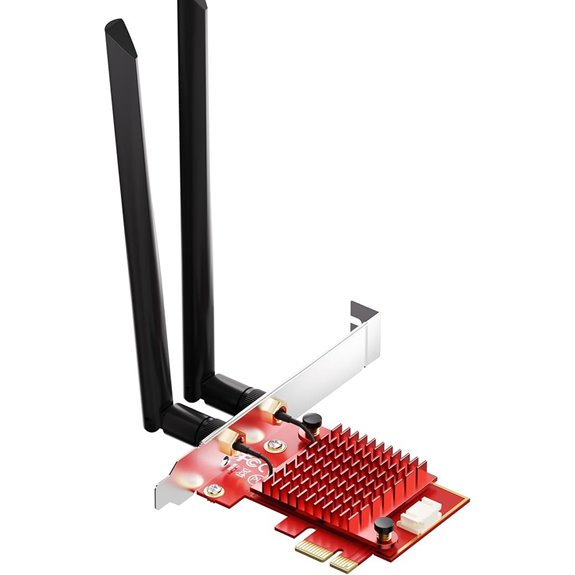
A WiFi 6E PCIe card with Bluetooth 5.3 is an excellent choice for gamers and power users who demand fast, stable wireless connections along with seamless peripheral connectivity. Powered by the reliable Intel AX210 chipset, it delivers tri-band speeds up to 5400Mbps, supporting online gaming, streaming, and large file transfers with minimal latency. The inclusion of Bluetooth 5.3 ensures faster data transfer and broader range for peripherals like controllers and headsets. Easy to install with a PCIe interface and equipped with high-gain antennas, it provides strong signals and security via WPA3 encryption. This card perfectly combines high-performance WiFi 6E with advanced Bluetooth features for a superior experience.
WiFi 6E AX210 PCIe Network Card with BT5.3
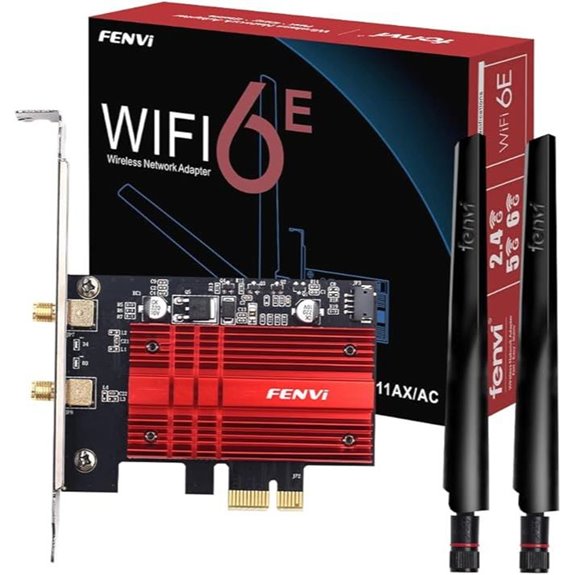
The WiFi 6E AX210 PCIe Network Card with BT5.3 stands out as an ideal choice for gamers and power users who demand fast, stable wireless connections. Supporting Windows 10/11 and compatible with most desktops via PCIe X1, it offers seamless integration with brands like Dell, Sony, and MSI. It leverages Wi-Fi 6E’s 6GHz, 5GHz, and 2.4GHz bands, delivering speeds up to 5400Mbps on 6GHz and enhanced stability. Its two detachable 6dBi antennas extend range and reduce lag, while Bluetooth 5.3 ensures faster, broader device connectivity. This card combines high performance with reliable connectivity, perfect for demanding VR and gaming setups.
AX210NGW WiFi 6E Card with Antennas and Brackets
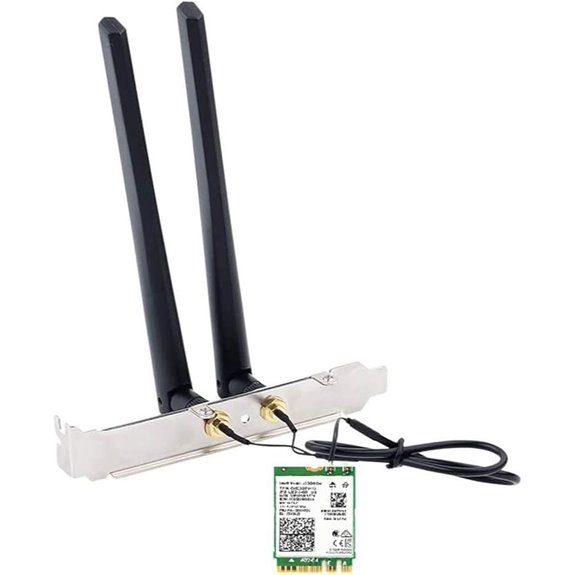
If you’re seeking a high-performance Wi-Fi 6E card that delivers ultra-fast, stable connections ideal for VR, the AX210NGW with antennas and brackets stands out. This card features the Intel AX210 chipset, supporting tri-band Wi-Fi 6E with speeds up to 2400Mbps on 5GHz and 6GHz bands, plus 574Mbps on 2.4GHz. It includes antennas, RF cables, and low-profile brackets, making installation flexible. With Bluetooth 5.3, OFDMA, MU-MIMO, and TWT technology, it offers low latency, efficient power use, and robust connectivity. Compatible with existing WiFi 6 and WiFi 6E routers, it’s perfect for demanding VR, gaming, and streaming applications.
TP-Link AXE5400 WiFi 6E PCIe Card
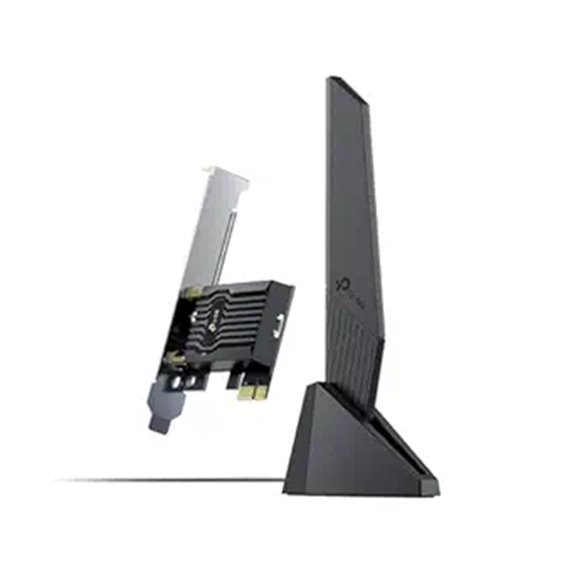
For gamers and streamers seeking ultra-fast, interference-free Wi-Fi connectivity, the TP-Link AXE5400 WiFi 6E PCIe Card stands out with its impressive tri-band speeds of up to 5.4 Gbps. It offers seamless 6 GHz, 5 GHz, and 2.4 GHz connections, ensuring smooth 4K streaming, quick downloads, and responsive gaming. With features like OFDMA, MU-MIMO, and 160 MHz channels, it reduces lag and handles multiple devices effortlessly. Easy to install on Windows 10 and 11, it includes a magnetized antenna for flexible positioning and strong signal strength. Compact and secure, this card is a solid choice for high-performance Wi-Fi in any setup.
WiFi 6E PCIe Card with Bluetooth 5.3 for PC
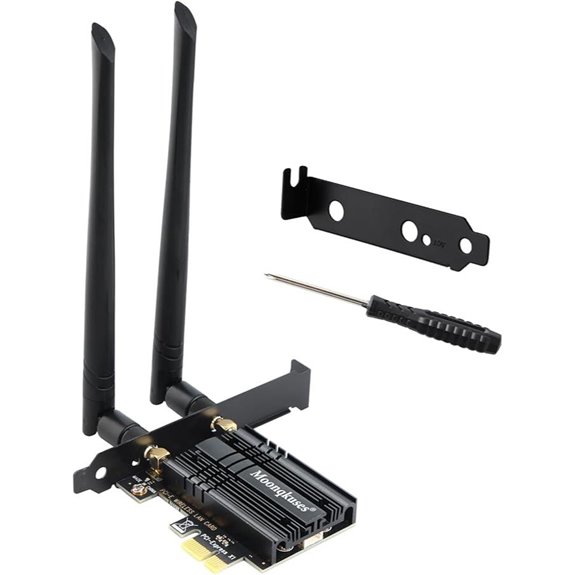
A WiFi 6E PCIe card with Bluetooth 5.3 is an excellent choice for PC users seeking seamless, high-speed connectivity combined with reliable Bluetooth support. Equipped with the Intel AX210 chipset and a PCIe interface, it delivers fast data transfer, low power use, and top-tier performance. Supporting Wi-Fi 6E (up to 5400 Mbps), MU-MIMO, OFDMA, and tri-band frequencies, it guarantees stable connections across multiple devices. The two 6dBi antennas boost signal strength and coverage. Plus, Bluetooth 5.3 provides extended range and dependable connections to peripherals like headphones, keyboards, and mice. It’s perfect for gaming, VR, and demanding tasks.
Factors to Consider When Choosing a PCIE Wi-Fi 6E Card for VR
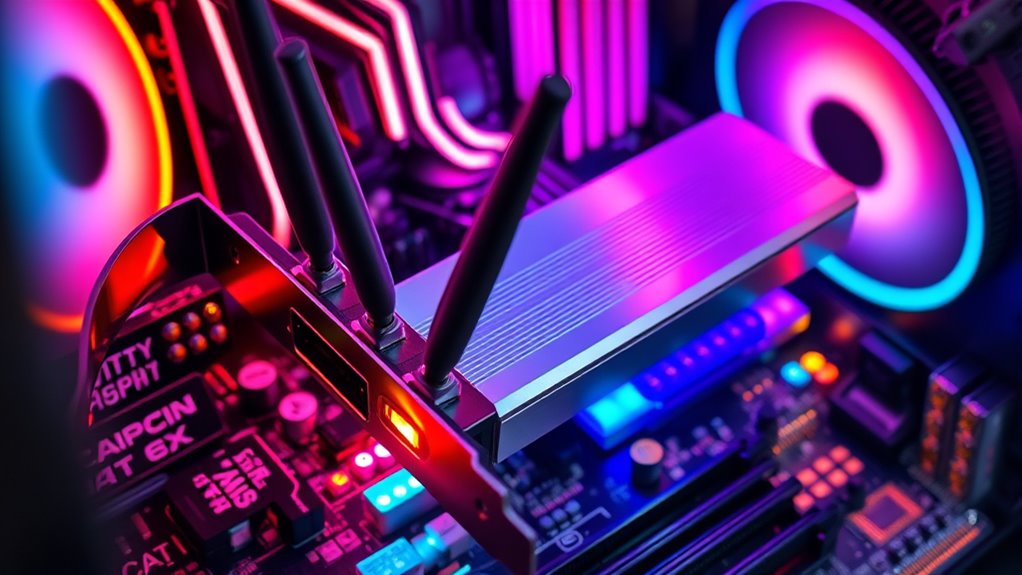
When choosing a PCIe Wi-Fi 6E card for VR, I consider factors like compatibility with my devices and the maximum speeds it offers. I also look at antenna placement options for better signal stability and Bluetooth range for seamless device connections. Security protocols are equally important to keep my network safe during intense VR sessions.
Compatibility With VR Devices
Choosing the right PCIe Wi-Fi 6E card for VR depends heavily on its compatibility with your devices and network setup. First, verify the card supports Bluetooth 5.3 for seamless connection with VR controllers and peripherals. Confirm that it matches your VR headset’s required network standards and operates on compatible frequency bands to avoid connectivity issues. Antenna strength matters—make sure it offers enough coverage and signal quality for high-bandwidth VR streaming without lag or interruption. Security is also vital; confirm the card supports WPA3 to protect your data during online multiplayer or cloud-based VR activities. Finally, check that the card fits your motherboard’s PCIe slots and aligns with your VR device’s system requirements, ensuring smooth performance and compatibility.
Maximum Wi-Fi Speed
The maximum Wi-Fi speed of a PCIe Wi-Fi 6E card directly influences how smoothly your VR experience runs by determining how fast data can be transmitted. Higher speeds, like 5400 Mbps, provide the bandwidth needed for demanding VR content and multiple devices, reducing lag and latency. Cards supporting tri-band frequencies—2.4 GHz, 5 GHz, and 6 GHz—offer faster transfer rates and lessen congestion during high-bandwidth streaming. Additionally, wider channels, such as 160 MHz, boost throughput, which is essential for consistent VR performance. Keep in mind that achieving these maximum speeds depends on both the PCIe card’s capabilities and your Wi-Fi router’s support for high-speed standards. Selecting a card with the highest possible Wi-Fi speed ensures a smoother, more immersive VR experience.
Antenna Placement Flexibility
Flexible antenna placement plays a essential role in optimizing Wi-Fi performance for VR setups, as it allows you to adjust signal direction and strength precisely where needed. Detachable antennas with adjustable angles enable you to fine-tune coverage for high-bandwidth, low-latency VR streaming. Proper positioning away from metal components or sources of electronic interference can markedly reduce signal degradation. Mounting antennas higher or in different directions improves coverage range, which is critical for maintaining a stable connection during intense VR sessions. Multi-directional antennas with magnetic bases make repositioning easy, helping you focus the signal and eliminate dead zones in your gaming area. Overall, antenna flexibility ensures a reliable, strong connection, enhancing your VR experience by minimizing lag and disconnections.
Bluetooth Connectivity Range
Since Bluetooth connectivity is essential for seamless VR experiences, understanding the factors that influence its range is important when selecting a PCIe Wi-Fi 6E card. Bluetooth 5.3 offers up to four times the range of Bluetooth 4.2, allowing connections over longer distances—up to 240 meters in open spaces, compared to roughly 10 meters for Bluetooth 4.2. External antennas on Wi-Fi 6E cards can notably boost Bluetooth signal strength and coverage, especially in larger or obstructed areas. Proper placement and orientation of these antennas are critical; higher, unobstructed positions optimize range. Additionally, Bluetooth 5.3’s increased range enables connecting multiple devices simultaneously without signal loss, ensuring smoother VR experiences with fewer interruptions.
Security Protocol Support
When selecting a PCIe Wi-Fi 6E card for VR, security protocol support should be a top priority. I look for cards that support WPA3, the latest security standard, because it offers better protection through individualized data encryption, making it harder for hackers to intercept data. It’s also wise to check if the card supports enterprise-grade encryption standards for added safety, especially when handling sensitive or high-bandwidth VR data streams. Compatibility with current security protocols ensures your connection remains secure against cyber threats. Additionally, I consider whether the manufacturer provides regular driver updates, which can patch vulnerabilities and enhance security features over time. Prioritizing these aspects helps safeguard my VR experience from potential cyber risks while maintaining ideal performance.
Ease of Installation
Choosing a PCIe Wi-Fi 6E card that’s easy to install can save you a lot of time and frustration, especially when setting up a VR system. First, check if the card includes a low-profile bracket if your PC case is compact or slim—it makes installation smoother. Ensure compatibility with your motherboard’s PCIe slot type (X1, X4, X8, or X16) for a proper fit. Look for cards that come with mounting accessories, antennas, and brackets, which help with physical setup and positioning. Additionally, select a card that offers driver support and detailed installation instructions to simplify the process. Finally, detachable or adjustable external antennas can make installation and antenna positioning more flexible and accessible, saving you time and hassle.
Network Congestion Management
To effectively support VR experiences, a PCIe Wi-Fi 6E card must handle network congestion efficiently. Wi-Fi 6E uses OFDMA and MU-MIMO technologies to let multiple devices communicate simultaneously without interference, reducing lag. The expanded 6 GHz band adds more channels, which helps prevent congestion in busy environments. High channel bandwidths, like 160 MHz, enable more data to flow at once, easing bottlenecks during peak use. Advanced network management features prioritize latency-sensitive tasks such as VR streaming, minimizing lag caused by network delays. Additionally, dual or tri-band support allows devices to connect on less congested frequency bands, distributing the network load more evenly. These factors are vital for ensuring smooth, lag-free VR experiences even in crowded settings.
Frequently Asked Questions
How Does Wi-Fi 6E Improve VR Latency and Stability?
Wi-Fi 6E improves VR latency and stability by offering faster speeds, lower latency, and a broader spectrum with additional 6 GHz channels. This means less lag and smoother data transfer, which are essential for immersive VR experiences. I notice these benefits firsthand when I use Wi-Fi 6E; my VR sessions feel more responsive, with fewer interruptions, making the experience more seamless and enjoyable.
Are All PCIE Wi-Fi 6E Cards Compatible With VR Headsets?
Not all PCIe Wi-Fi 6E cards are created equal when it comes to VR compatibility. I’ve found that many cards work seamlessly, but some might lack the necessary drivers or features for ideal VR performance. You’ll want to check for low latency, stable connections, and compatibility with your headset’s requirements. Think of it like finding the perfect dance partner — not every card can keep up with the rhythm of VR.
What Is the Typical Range of Wi-Fi 6E in a VR Setup?
The typical range of Wi-Fi 6E in a VR setup is around 30 to 50 feet indoors, but it can extend up to 100 feet outdoors with clear line of sight. I’ve found that obstacles like walls and furniture can markedly reduce this range. To get the best experience, I recommend placing your router strategically and minimizing barriers between your VR headset and the Wi-Fi source.
Do Wi-Fi 6E Cards Support Mesh Network Integration for VR?
Think of Wi-Fi 6E cards as the bridge builders of your network. Yes, they support mesh network integration for VR, allowing your setup to expand seamlessly like a well-connected web. This means you can add nodes effortlessly, ensuring stable, high-speed connections across your entire VR space. With mesh compatibility, your VR experience stays smooth and immersive, no matter how sprawling your virtual environment becomes.
How Does Bluetooth Version Affect VR Peripheral Connectivity?
Bluetooth version directly impacts VR peripheral connectivity by determining speed, range, and compatibility. I’ve found that newer versions, like Bluetooth 5.0 or 5.2, offer faster data transfer, lower latency, and improved stability, which are vital for VR headsets and controllers. Upgrading to the latest Bluetooth version guarantees smoother interactions and reduces lag, making your VR experience more immersive and responsive.
Conclusion
Ultimately, choosing the right PCIe Wi-Fi 6E card for VR isn’t just about speed—it’s about ensuring seamless, low-latency connectivity that enhances the experience. While some might believe higher specs always mean better, I’ve found that compatibility and proper antenna placement are equally vital. It turns out, the theory that cutting-edge tech guarantees top performance isn’t always true; thoughtful setup and real-world testing often matter more. Happy VR gaming!