If you’re looking for the best OLED TVs for gaming in 2026, I recommend models with high refresh rates, VRR support, and low input lag, like the Sony OLED 4K Smart TV or the LG OLED C3. The Samsung S84F Series and Panasonic Z85 also deliver excellent picture quality for fast-paced gaming. These TVs combine stunning visuals with smooth performance. Stick around, and you’ll discover detailed insights to help you choose the perfect gaming OLED.
Key Takeaways
- Look for OLED TVs with 120Hz refresh rate, VRR support (G-Sync/FreeSync), and HDMI 2.1 ports for smooth, tear-free gaming.
- Prioritize models with low input lag (under 15ms at 120Hz) and dedicated gaming modes like Game Mode Extreme.
- Ensure the TV supports HDR formats such as Dolby Vision and HDR10+ for immersive visuals during gameplay.
- Consider screen size and design that match your gaming space, with ultra-slim bezels for better immersion.
- Choose models equipped with advanced motion processing and AI-driven picture enhancement for optimal clarity and responsiveness.
| Sony 55″ OLED 4K Smart TV with PlayStation Features |  | Premium Cinema Experience | Screen Size: 55 inches | Display Technology: OLED | HDR Support: Dolby Vision, HDR, IMAX Enhanced | VIEW LATEST PRICE | See Our Full Breakdown |
| Samsung 77-Inch OLED S84F Series Smart TV | 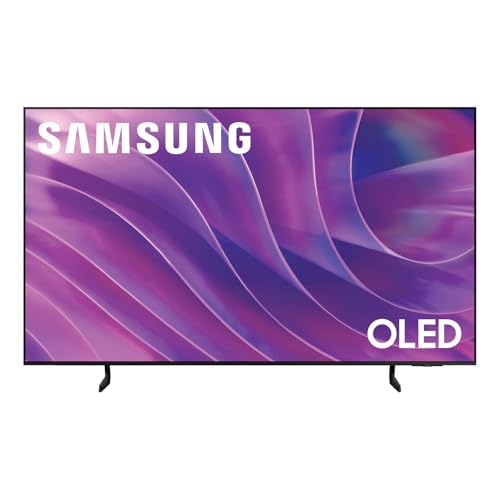 | Large Screen Masterpiece | Screen Size: 77 inches | Display Technology: OLED | HDR Support: OLED HDR, HDR+ | VIEW LATEST PRICE | See Our Full Breakdown |
| Panasonic Z85 Series 65-inch OLED 4K Smart TV |  | Cinematic Clarity & Sound | Screen Size: 65 inches | Display Technology: OLED | HDR Support: HDR10, Dolby Vision IQ, HDR10+ | VIEW LATEST PRICE | See Our Full Breakdown |
| Samsung 55-Inch OLED 4K S90D Smart TV |  | Gaming & Visual Powerhouse | Screen Size: 55 inches | Display Technology: OLED | HDR Support: HDR+ (Scene analysis) | VIEW LATEST PRICE | See Our Full Breakdown |
| LG 55-Inch OLED C3 HDR 4K Smart TV Bundle |  | Gaming & Smart Features | Screen Size: 55 inches | Display Technology: OLED | HDR Support: Dolby Vision, HDR | VIEW LATEST PRICE | See Our Full Breakdown |
| LG 42-Inch OLED evo C4 Smart TV with Remote |  | Compact Gaming Excellence | Screen Size: 42 inches | Display Technology: OLED | HDR Support: Dolby Vision, HDR | VIEW LATEST PRICE | See Our Full Breakdown |
More Details on Our Top Picks
Sony 55″ OLED 4K Smart TV with PlayStation Features
If you’re a serious gamer looking for a TV that elevates your PlayStation 5 experience, the Sony 55″ OLED 4K Smart TV is an excellent choice. It offers a stunning 55-inch OLED display with over 8 million self-lit pixels, delivering perfect blacks and vibrant colors. Its processing tech, including XR Processor and XR OLED Motion, ensures sharp, blur-free action and enhanced detail. Special PlayStation features like Auto HDR Tone Mapping and Auto Genre Picture Mode optimize visuals automatically. Plus, with smart features like Google TV, voice control, and seamless streaming, this TV combines cinematic quality with gaming performance for an immersive experience.
- Screen Size:55 inches
- Display Technology:OLED
- HDR Support:Dolby Vision, HDR, IMAX Enhanced
- Gaming Features:PlayStation optimized modes, Auto HDR Tone Mapping
- Smart Platform:Google TV
- Voice Control:Google Assistant
- Additional Feature:Google TV interface
- Additional Feature:PlayStation 5 optimization
- Additional Feature:XR OLED Motion technology
Samsung 77-Inch OLED S84F Series Smart TV
The Samsung 77-Inch OLED S84F Series Smart TV stands out as an excellent choice for gamers who demand smooth, vivid visuals, thanks to its support for ultra-smooth 4K 120Hz gameplay and motion-enhancing technologies like Motion Xcelerator. Its self-illuminating OLED pixels deliver incredible contrast, deep blacks, and vibrant colors validated by Pantone. AI-powered 4K upscaling sharpens content, while dynamic brightness and contrast optimize picture quality. With the NQ4 AI Gen2 processor and AI-driven audio, it provides seamless processing and immersive sound. The sleek design, smart platform, and wide connectivity options make it a versatile addition to any gaming setup.
- Screen Size:77 inches
- Display Technology:OLED
- HDR Support:OLED HDR, HDR+
- Gaming Features:4K 120Hz, VRR, G-Sync, FreeSync
- Smart Platform:Tizen OS
- Voice Control:Built-in Alexa
- Additional Feature:AI-powered 4K upscaling
- Additional Feature:Multi-channel virtual sound
- Additional Feature:Wave-inspired sleek design
Panasonic Z85 Series 65-inch OLED 4K Smart TV
Looking for an OLED TV that elevates your gaming experience? The Panasonic Z85 Series 65-inch OLED 4K Smart TV is a fantastic choice. Its 3840 x 2160 OLED panel offers stunning picture quality, enhanced by the HCX Pro AI Processor MKII for accurate colors and contrast. It supports HDMI 2.1, 120Hz refresh rate, VRR, AMD FreeSync Premium, and G-SYNC, ensuring smooth gameplay. Features like Game Mode Extreme and a dedicated Game Control Board make tweaking settings effortless. Plus, built-in Fire TV gives you seamless access to streaming apps and voice control. At 47.4 pounds, it’s a sleek, powerful option for gamers seeking top-tier visuals and immersive sound.
- Screen Size:65 inches
- Display Technology:OLED
- HDR Support:HDR10, Dolby Vision IQ, HDR10+
- Gaming Features:HDMI 2.1, 120Hz, VRR, G-Sync, FreeSync
- Smart Platform:Fire TV
- Voice Control:Alexa, Voice Remote
- Additional Feature:Dolby Atmos surround
- Additional Feature:Fire TV built-in
- Additional Feature:Ambient adaptive visuals
Samsung 55-Inch OLED 4K S90D Smart TV
For gamers seeking stunning visuals and smooth performance, the Samsung 55-Inch OLED 4K S90D Smart TV stands out with its Motion Xcelerator 144Hz technology. This feature guarantees ultra-smooth motion for fast-paced games and content, reducing blur and lag. Its OLED panel delivers perfect blacks, vibrant colors, and enhanced contrast thanks to Pantone validation and HDR+ optimization. The TV also upscales content to 4K with AI, maintaining sharpness across all sources. Plus, with Samsung’s Gaming Hub, you can stream games directly without a console. The immersive sound, powered by Dolby Atmos and Object Tracking Sound Lite, completes the experience, making it an excellent choice for gaming enthusiasts.
- Screen Size:55 inches
- Display Technology:OLED
- HDR Support:HDR+ (Scene analysis)
- Gaming Features:144Hz, Motion Xcelerator, Gaming Hub
- Smart Platform:Tizen OS
- Voice Control:Built-in Alexa
- Additional Feature:Real Depth Enhancer
- Additional Feature:Samsung Gaming Hub
- Additional Feature:Pantone color validation
LG 55-Inch OLED C3 HDR 4K Smart TV Bundle
Gamers seeking ultra-smooth, tear-free gameplay will find the LG 55-Inch OLED C3 HDR 4K Smart TV Bundle a perfect match, thanks to its 120Hz refresh rate, response time under 0.1ms, and support for NVIDIA G-Sync and AMD FreeSync Premium. Its OLED evo panel delivers perfect blacks and vibrant colors, while the α9 AI Processor Gen6 enhances picture clarity and detail. The TV offers immersive Dolby Atmos sound with AI Sound Pro, creating a virtual 9.1.2 channel environment. Running on webOS 23, it provides easy access to streaming services and smart home integration, making it a versatile choice for gamers and entertainment enthusiasts alike.
- Screen Size:55 inches
- Display Technology:OLED
- HDR Support:Dolby Vision, HDR
- Gaming Features:120Hz, G-Sync, FreeSync, VRR
- Smart Platform:webOS 23
- Voice Control:Alexa, Google Assistant, Apple HomeKit
- Additional Feature:α9 Gen6 AI Processor
- Additional Feature:Dolby Atmos sound
- Additional Feature:WebOS 23 platform
LG 42-Inch OLED evo C4 Smart TV with Remote
If you’re seeking a compact yet powerful gaming TV, the LG 42-Inch OLED evo C4 Smart TV is an excellent choice, thanks to its lightning-fast 0.1ms response time and 144Hz refresh rate. It features self-lit OLED pixels that deliver stunning picture quality with vibrant colors, thanks to 100% Color Volume and Fidelity. Support for Dolby Vision and Dolby Atmos enhances both visuals and sound, while technologies like NVIDIA G-Sync and AMD FreeSync Premium ensure smooth gameplay. With four HDMI 2.1 ports, a user-friendly webOS 24 interface, and smart features like AI-powered remote control, it’s perfect for gaming and entertainment in a compact form factor.
- Screen Size:42 inches
- Display Technology:OLED
- HDR Support:Dolby Vision, HDR
- Gaming Features:144Hz, 0.1ms response, G-Sync, FreeSync
- Smart Platform:webOS 24
- Voice Control:Built-in Alexa
- Additional Feature:webOS 24 interface
- Additional Feature:Multi View split-screen
- Additional Feature:Built-in Alexa support
Factors to Consider When Choosing OLED TVS for Gaming (Vrr + 120HZ)
When selecting an OLED TV for gaming, I focus on key factors like refresh rate capabilities and Vrr support to guarantee smooth gameplay. I also consider gaming-specific features, HDR quality, and input lag to get the best experience. Compatibility with consoles is vital, so I make sure the TV meets all the necessary connection requirements.
Refresh Rate Capabilities
A higher refresh rate, like 120Hz, plays a crucial role in delivering smooth motion during fast-paced gaming moments, reducing motion blur and judder. OLED TVs supporting 120Hz can display more frames per second, making gameplay feel more responsive and immersive. This higher refresh rate minimizes lag and guarantees quick, fluid visuals during intense action scenes. However, not all OLED models support both 120Hz and VRR simultaneously, so it’s necessary to verify compatibility before purchasing. These capabilities are especially important for competitive gaming, where every millisecond counts. A TV with robust refresh rate support helps you react faster and enjoy crisper, more seamless visuals, giving you a significant edge in fast-moving titles. Confirming your OLED TV has these features enhances your overall gaming experience.
Gaming-Specific Features
To get the most out of your gaming experience, choosing an OLED TV with the right gaming-specific features is vital. A 120Hz refresh rate ensures smooth motion during fast-paced games, reducing motion blur. VRR technology is essential, as it syncs the TV’s refresh rate with your GPU’s frame output, minimizing screen tearing and stuttering. Support for HDMI 2.1 allows for high-bandwidth connections, enabling 4K at 120Hz for ultra-responsive gameplay. Features like NVIDIA G-Sync and AMD FreeSync Premium further improve performance by reducing input lag and visual artifacts. Additionally, Game Mode Extreme optimizes picture and input response settings, guaranteeing minimal latency and fluid visuals. Together, these features create a seamless, immersive gaming experience on your OLED TV.
HDR Performance Quality
HDR performance quality on OLED TVs hinges on how well they can deliver vivid, lifelike visuals through advanced scene analysis and processing. These TVs use algorithms that dynamically optimize brightness and contrast, making highlights pop and shadows reveal more detail. Support for multiple HDR formats like Dolby Vision, HDR10+, and HLG guarantees compatibility with a wide range of content, boosting realism. Thanks to OLED’s perfect black levels and high contrast ratios, HDR visuals appear more striking, with bright elements standing out against deep dark backgrounds. Features like scene-aware tone mapping further enhance the experience by delivering brighter highlights and detailed shadows. Although peak brightness levels are generally lower than LCDs, OLED’s self-emissive pixels and local dimming make HDR content look stunning and immersive.
Input Lag Levels
When choosing an OLED TV for gaming, paying attention to input lag levels is vital because it directly affects how responsive your gameplay feels. Lower input lag, ideally below 20ms, ensures minimal delay between your controller input and on-screen action, which is essential for fast-paced games. Many gaming-specific modes like VRR and Game Mode help reduce input lag by optimizing display settings. Some OLEDs can achieve input lag as low as 10-15ms at 120Hz, providing a smooth, responsive experience. Keep in mind that enabling features like motion interpolation or higher resolutions can increase input lag, so testing different modes is wise. Ultimately, a combination of high refresh rate and low input lag makes for a more responsive, competitive gaming experience.
Compatibility With Consoles
Choosing an OLED TV that works seamlessly with modern gaming consoles means checking for key features like HDMI 2.1 ports, which are necessary for high-bandwidth connections. These ports support 4K at 120Hz, essential for smooth gameplay. You also want the TV to support VRR technology, such as AMD FreeSync or NVIDIA G-SYNC, to minimize screen tearing and stuttering during fast action. A high refresh rate of at least 120Hz is critical for fluid motion and responsiveness. Additionally, low input lag—preferably under 10 milliseconds—is essential to ensure your controller inputs translate instantly on-screen. Finally, make sure the TV’s gaming mode is optimized for VRR and 120Hz, so you don’t have to compromise image quality for performance. These features guarantee your console gaming experience is smooth, responsive, and immersive.
Picture Processing Technology
Advanced picture processing technology plays a essential role in maximizing your gaming experience on OLED TVs. AI-driven upscaling enhances lower-resolution content to near-4K quality, ensuring sharp visuals even from older games or streaming sources. HDR processing algorithms analyze each scene to optimize contrast, brightness, and color accuracy, delivering more realistic and immersive visuals. Motion interpolation and blur reduction techniques, like XR OLED Motion or Motion Xcelerator, improve clarity during fast-paced action, reducing motion blur and tearing. Intelligent scene analysis allows the TV to make real-time adjustments based on content type and ambient lighting, maintaining ideal picture quality. High-end OLEDs use dedicated processors such as the HCX Pro AI or α9 AI Processor, which deliver precise color, contrast control, and noise reduction—key for a seamless gaming experience.
Screen Size and Design
The size and design of an OLED TV can considerably influence your gaming experience, especially when considering features like Variable Refresh Rate (VRR) and 120Hz refresh rates. Larger screens, such as 77 inches, offer a more immersive feel but need ample space and come with a higher price tag. Conversely, a 55-inch model fits better in smaller rooms and still delivers excellent visuals. The sleek, ultra-thin bezels and slim profiles typical of OLEDs enhance aesthetics and reduce distractions, helping you stay focused during gameplay. Placement and mounting options should match the TV’s size to ensure stability and the best viewing angles. A well-designed OLED with minimal bezels and a slim profile not only looks great but also boosts immersion and minimizes visual clutter during intense gaming sessions.
Frequently Asked Questions
How Do OLED TVS Handle Input Lag During Fast-Paced Gaming?
OLED TVs handle input lag remarkably well during fast-paced gaming, often offering very low response times that make gameplay smooth and responsive. I’ve noticed that many models feature game modes that optimize settings to reduce lag even further. With VRR and 120Hz support, I find that fast movements and rapid actions are displayed seamlessly, giving me a competitive edge and enhancing the overall gaming experience.
What Is the Typical Lifespan of an OLED TV Used for Gaming?
Honestly, I’d say an OLED TV used for gaming lasts around 7 to 10 years, but don’t quote me—tech ages faster than a gamer levels up. The burn-in risk can be a concern if you leave static images on too long, but with modern panels, that’s much less of an issue. Just treat it well, avoid static images when possible, and enjoy your gaming marathons without worry!
Are There Specific Settings Recommended for Optimal Gaming Performance?
For ideal gaming performance, I recommend enabling Game Mode to reduce input lag and activating VRR for smooth gameplay. I also tweak the contrast and brightness settings to prevent burn-in, and turn off any unnecessary picture enhancements that can introduce lag. Using a fast HDMI cable ensures quick response times. Adjusting these settings helps me enjoy crisp visuals and responsive gameplay, making my gaming experience much more immersive and enjoyable.
How Do OLED TVS Compare to QLEDS for Competitive Gaming?
They say, “A picture is worth a thousand words,” and I find OLEDs really shine here. OLED TVs beat QLEDs in competitive gaming with perfect blacks, faster response times, and wider viewing angles, giving me a competitive edge. QLEDs are brighter and handle HDR better, but for fast-paced games, OLEDs’ deep contrast and smoother motion make a noticeable difference that can help me stay ahead.
Can OLED TVS Support Multiple Gaming Consoles Simultaneously?
Yes, most OLED TVs can support multiple gaming consoles simultaneously. I’ve found that they usually have several HDMI ports, allowing me to connect and switch between consoles easily. Features like HDMI 2.1 support and eARC make it simple to manage multiple devices without hassle. Just make certain your TV has enough ports and supports the latest standards, and you’re good to go for seamless multi-console gaming.
Conclusion
Choosing the right OLED TV for gaming can truly elevate your experience—especially with features like VRR and 120Hz support. Did you know that OLED screens decrease input lag by up to 30% compared to traditional LED TVs? That’s a game-changer for fast-paced titles. So, whether you prefer a compact 42-inch model or a massive 77-inch screen, investing in the right OLED TV guarantees smoother gameplay and stunning visuals that keep you ahead of the competition.