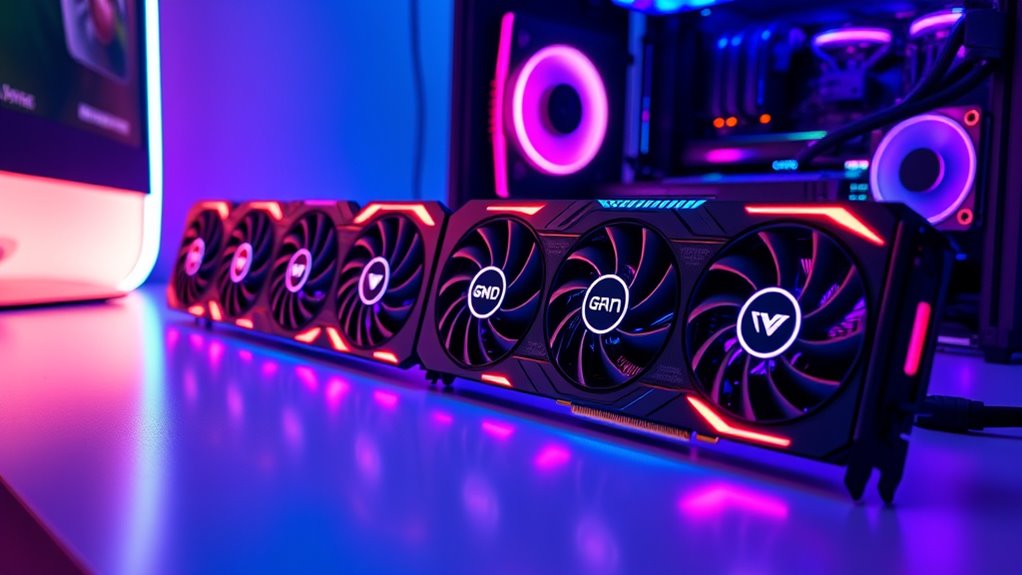

If you’re looking to elevate your VR experience in 2026 without breaking the bank, I recommend considering midrange GPUs like the XFX Radeon RX 580 GTS XXX Edition, RX 590 with dual fans, Zotac GTX 1660 Super, ASUS RTX 2060 EVO, and MSI GTX 1660 Super VENTUS XS OC. These models offer solid performance, good VR compatibility, and future-proof features like HDMI 2.0b and DisplayPort 1.4. Keep exploring, and you’ll find the perfect fit for your immersive adventures.
Key Takeaways
- Look for GPUs with at least 6GB GDDR6/5 VRAM and boost clocks around 1700-1800 MHz for smooth VR performance.
- Choose models with HDMI 2.0b or DisplayPort 1.4 outputs to ensure compatibility with current VR headsets.
- Prioritize cooling features like dual fans or advanced dissipation for stable operation during extended VR sessions.
- Opt for GPUs supporting the latest standards (PCIe 4.0, HDR, 4K) to future-proof your VR setup.
- Balance cost and performance within $200-$400, ensuring compatibility with your VR hardware and system power requirements.
| XFX Radeon RX 580 GTS XXX Edition 8GB Graphics Card | 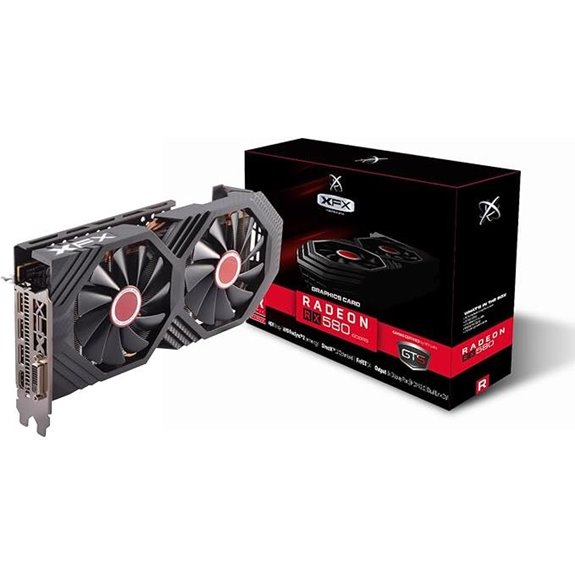 | VR-Ready Powerhouse | VR Ready: Yes (AMD VR Ready premium) | Memory Size: 8GB GDDR5 | Display Outputs: 3xDP, HDMI, DVI | VIEW LATEST PRICE | See Our Full Breakdown |
| RX 590 8GB Gaming Graphics Card with Dual Fan | 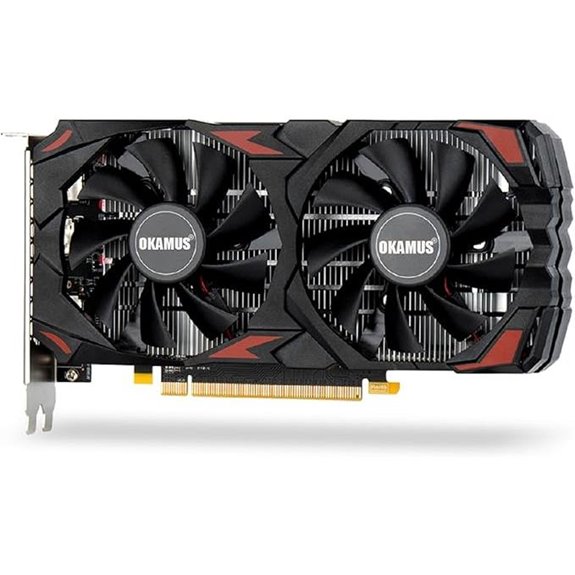 | Quiet Performance | VR Ready: Yes (Supports VR, content creation) | Memory Size: 8GB GDDR5 | Display Outputs: HDMI, 2xDP | VIEW LATEST PRICE | See Our Full Breakdown |
| ZOTAC GeForce GTX 1660 Super 6GB Gaming Graphics Card | 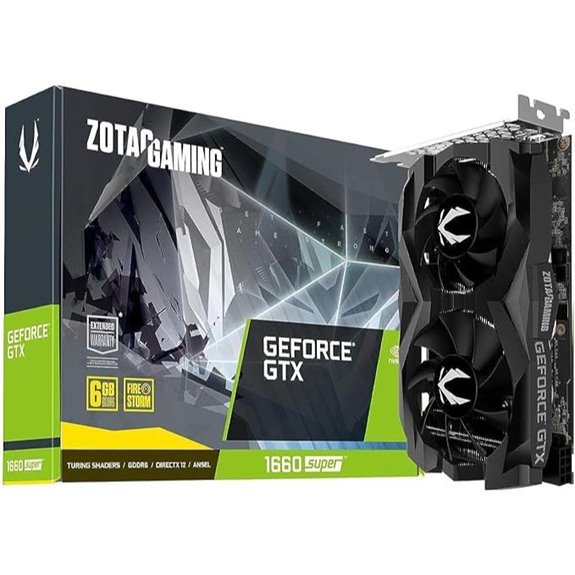 | Compact High-Res | VR Ready: Yes (VR readiness supported) | Memory Size: 6GB GDDR6 | Display Outputs: 3xDP, HDMI | VIEW LATEST PRICE | See Our Full Breakdown |
| ASUS GeForce RTX 2060 EVO 6G Graphics Card | 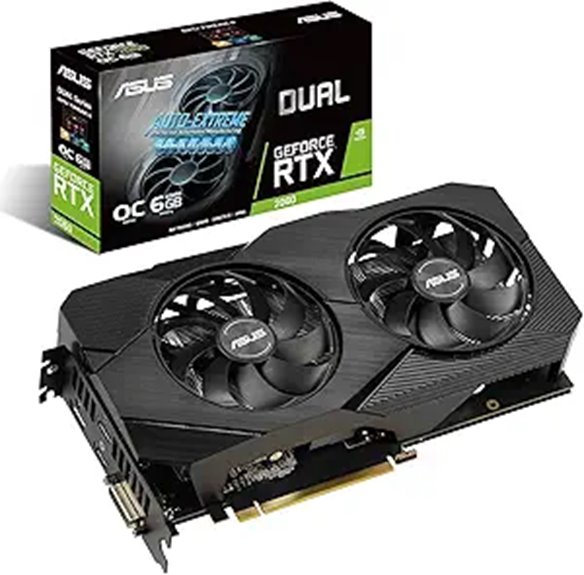 | Premium Turing | VR Ready: Yes (VR Ready) | Memory Size: 6GB GDDR6 | Display Outputs: 3xDP, HDMI, DVI | VIEW LATEST PRICE | See Our Full Breakdown |
| MSI GTX 1660 Super VENTUS XS OC Graphics Card | 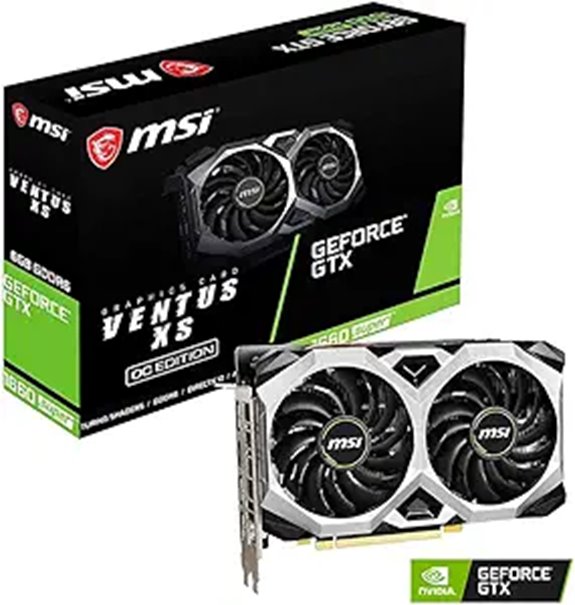 | Overclocked Efficiency | VR Ready: Yes (VR Ready) | Memory Size: 6GB GDDR6 | Display Outputs: 3xDP, HDMI | VIEW LATEST PRICE | See Our Full Breakdown |
More Details on Our Top Picks
XFX Radeon RX 580 GTS XXX Edition 8GB Graphics Card
If you’re looking for a solid midrange GPU that can handle VR gaming without breaking the bank, the XFX Radeon RX 580 GTS XXX Edition is an excellent choice. It features 8GB of GDDR5 memory and multiple factory overclocked settings, boosting its true clock to 1366 MHz and up to 1386 MHz with OC. Built on Polaris architecture with 4th gen GCN cores, it offers efficient performance. Its dual BIOS and multiple display outputs—3 DisplayPort, HDMI, DVI—cater to various setups. Plus, with XFX double dissipation cooling technology and AMD VR readiness, it guarantees smooth, immersive VR experiences without overheating or stuttering.
- VR Ready:Yes (AMD VR Ready premium)
- Memory Size:8GB GDDR5
- Display Outputs:3xDP, HDMI, DVI
- Cooling System:Double dissipation cooling
- Power Requirement:500W minimum
- Support for Multi-Monitor:Yes
- Additional Feature:Multiple factory overclocked modes
- Additional Feature:AMD LiquidVR technology
- Additional Feature:Dual BIOS feature
RX 590 8GB Gaming Graphics Card with Dual Fan
The RX 590 8GB Gaming Graphics Card with Dual Fan stands out as an excellent choice for gamers and content creators seeking reliable 1080p performance without breaking the bank. It features 2304 stream processors and 8GB GDDR5 memory, delivering smooth gameplay at high settings and stable frame rates. The dual low-noise fans and aluminum heatsink keep temperatures in check while maintaining quiet operation. With HDMI and two DisplayPorts, it supports multi-monitor setups perfect for multitasking, streaming, or video editing. Its PCIe 3.0 x16 interface makes it compatible with most ATX desktops, offering a solid balance of performance and affordability for everyday gaming needs.
- VR Ready:Yes (Supports VR, content creation)
- Memory Size:8GB GDDR5
- Display Outputs:HDMI, 2xDP
- Cooling System:Dual fans, heatsink
- Power Requirement:500W minimum
- Support for Multi-Monitor:Yes
- Additional Feature:Dual low-noise fans
- Additional Feature:Supports DirectX 12
- Additional Feature:Backed by one-year warranty
ZOTAC GeForce GTX 1660 Super 6GB Gaming Graphics Card
The ZOTAC GeForce GTX 1660 Super 6GB stands out as an excellent choice for gamers seeking midrange VR performance thanks to its powerful Turing architecture and 6GB of GDDR6 memory. Its boost clock speed reaches up to 1785 MHz, ensuring smooth gameplay. The card’s compact design, just 6.83 inches long, fits most systems easily. It supports 4K resolution, HDR, and VR out of the box, with three DisplayPort 1.4 ports and one HDMI 2.0b port for multi-display setups. Keep in mind to avoid unofficial software to guarantee stability. Overall, it’s a reliable option for immersive VR experiences at a reasonable price.
- VR Ready:Yes (VR readiness supported)
- Memory Size:6GB GDDR6
- Display Outputs:3xDP, HDMI
- Cooling System:Dual slot, compact cooling
- Power Requirement:Not specified explicitly, compatible
- Support for Multi-Monitor:Yes
- Additional Feature:Compact 6.83-inch design
- Additional Feature:192-bit memory interface
- Additional Feature:Supports HDR content
ASUS GeForce RTX 2060 EVO 6G Graphics Card
Designed for gamers and VR enthusiasts seeking a reliable midrange option, the ASUS GeForce RTX 2060 EVO 6G delivers solid performance with its overclocked GPU and 6GB of fast GDDR6 memory. Powered by NVIDIA’s Turing architecture, it features a 1785 MHz boost clock and 1920 CUDA cores, ensuring smooth gameplay and immersive VR experiences. Its dual-wing blade fans with IP5X dust resistance keep temperatures in check while maintaining near-silent operation below 55°C. The card supports up to four monitors via DisplayPort 1.4, HDMI 2.0, and DVI, making it versatile for gaming, content creation, and professional tasks.
- VR Ready:Yes (VR Ready)
- Memory Size:6GB GDDR6
- Display Outputs:3xDP, HDMI, DVI
- Cooling System:Wing-Blade fans, dust-resistant
- Power Requirement:Not specified explicitly, compatible
- Support for Multi-Monitor:Yes
- Additional Feature:IP5X dust-resistant fans
- Additional Feature:Real-time performance monitoring
- Additional Feature:Protective aluminum backplate
MSI GTX 1660 Super VENTUS XS OC Graphics Card
If you’re seeking a reliable midrange GPU for VR gaming, the MSI GTX 1660 Super VENTUS XS OC stands out with its solid performance and features. It boasts a 6GB GDDR6 memory at 14 Gbps, providing smooth visuals and quick load times. The boost clock hits 1815 MHz, ensuring responsive gameplay. Its dual fan cooling system keeps temperatures in check during intense sessions. With support for DirectX 12, HDCP, and VR readiness, it’s well-equipped for immersive experiences. Connectivity options include three DisplayPorts and an HDMI port, supporting up to 8K resolution. Overall, it’s a dependable choice for gamers seeking quality at a midrange price point.
- VR Ready:Yes (VR Ready)
- Memory Size:6GB GDDR6
- Display Outputs:3xDP, HDMI
- Cooling System:Dual fans, OC design
- Power Requirement:Not specified explicitly, compatible
- Support for Multi-Monitor:Yes
- Additional Feature:OC (Overclocked) design
- Additional Feature:Supports HDCP
- Additional Feature:Dual Fan cooling system
Factors to Consider When Choosing a Midrange GPU for VR
When selecting a midrange GPU for VR, I look at its performance capabilities to guarantee smooth experiences. Compatibility with my headset and available video outputs also matter, so I can set everything up without issues. Additionally, I consider power requirements, cooling, and noise levels to keep my setup efficient and comfortable during extended use.
VR Performance Capabilities
Choosing a midrange GPU for VR hinges on several key performance factors that directly impact the quality of the experience. First, it must support VR Ready technology and have low latency to ensure smooth, stutter-free gameplay. Adequate memory is essential; I recommend at least 6GB of GDDR6 or GDDR5 to handle complex virtual environments without bottlenecks. Multiple display outputs like HDMI 2.0b and DisplayPort 1.4 are necessary for seamless connection to VR headsets and extra monitors. A boost clock speed around 1700-1800 MHz helps maintain stable frame rates during intense VR sessions. Additionally, compatibility with advanced VR features such as LiquidVR can markedly enhance immersion and reduce motion sickness, making your virtual experiences more comfortable and realistic.
Compatibility With VR Headsets
Ever wonder if your midrange GPU will play nicely with your VR headset? The key is checking its outputs—look for HDMI 2.0b or DisplayPort 1.4, vital for most VR headsets. Also, confirm it has at least 8GB of VRAM to handle demanding VR applications smoothly. Compatibility with your specific headset’s system requirements and connection types is essential. Don’t forget to verify if the GPU supports technologies like AMD LiquidVR or NVIDIA VR Works, which enhance the VR experience. In the end, keep driver software up to date, as updates improve compatibility with new headset models and firmware. Taking these factors into account guarantees your GPU will work seamlessly with your VR setup, providing a smooth and immersive experience without technical hiccups.
Video Output Options
Are your GPU’s video output options compatible with your VR headset and other displays? Ensuring this is vital for a seamless experience. Look for multiple ports like HDMI, DisplayPort, and DVI, which support various VR headsets and multi-monitor setups. High resolutions and refresh rates are essential—aim for 4K or higher at 60Hz or more—to keep VR smooth and immersive. Check that the GPU’s outputs match your headset’s connection type to avoid adapters or converters that could introduce latency or compatibility issues. Newer standards like HDMI 2.0/2.1 and DisplayPort 1.4/2.0 offer better bandwidth, future-proofing your setup. If you plan to use multiple screens alongside VR, confirm your GPU supports multi-monitor configurations for an expanded, flexible workspace.
Power Supply Requirements
Ensuring your power supply can handle a midrange GPU for VR is crucial for a stable and safe setup. Most midrange GPUs require at least 500 watts, so check the manufacturer’s recommended power consumption to choose the right wattage. Confirm that your power supply has the necessary 6-pin or 8-pin PCIe power connectors your GPU needs. Don’t forget to contemplate the total power draw of your entire system, including the CPU, peripherals, and any additional components. Investing in a high-quality power supply with an 80 Plus certification ensures reliable power delivery and efficiency, reducing the risk of system instability. Proper power planning helps your VR experience stay smooth and safe, avoiding crashes or hardware damage.
Cooling and Noise Levels
Choosing a midrange GPU for VR requires careful attention to cooling and noise levels, as these factors directly affect performance and comfort. Effective cooling systems, like dual fans or double dissipation technology, keep temperatures in check during intense VR sessions, preventing thermal throttling. Low noise levels are equally important; fanless designs or low-noise fans create a quieter environment, enhancing immersion. Thermal management features such as dust resistance and fan control software help maintain ideal cooling while reducing noise. Overheating can cause performance drops, so a GPU with robust cooling ensures stable operation. Additionally, silent operation during light loads, enabled by zero dB fan modes, boosts comfort during extended use. Prioritizing these aspects ensures a smoother, more enjoyable VR experience.
Budget and Cost Effectiveness
When selecting a midrange GPU for VR, balancing cost and performance is crucial to get the best value for your money. Generally, these GPUs range from $200 to $400, offering a good mix of affordability and capable VR performance. I recommend looking for models with at least 8GB of GDDR5 or GDDR6 memory to handle VR content smoothly without overspending on unnecessary specs. Compatibility is also key—aim for HDMI 2.0b or DisplayPort 1.4 to ensure your headset connects easily. Features like dual-fan cooling and factory overclocking can boost performance without a big price jump, making them cost-effective choices. By evaluating the price-to-performance ratio, you’ll find a GPU that delivers an excellent VR experience without draining your budget.
Future-Proofing Features
To future-proof a midrange GPU for VR, it’s essential to prioritize support for the latest standards and high-resolution capabilities. Look for models that support 4K and HDR, ensuring compatibility with high-quality VR content. Features like PCIe 4.0 or higher bandwidth interfaces improve hardware compatibility and speed, preparing your setup for upcoming upgrades. Ample VRAM, ideally 6GB or more, allows your GPU to handle evolving textures and detailed environments without bottlenecks. Modern GPUs with advanced cooling solutions and efficient power consumption can maintain peak performance over time, reducing maintenance and upgrade needs. Additionally, confirm the GPU supports current and future VR APIs like DirectX 12 and Vulkan, which help deliver the latest features and smoother experiences as VR software continues to evolve.
Size and Compatibility
Ensuring your midrange GPU fits well in your PC case is crucial for a smooth VR experience. You need to check the GPU’s physical size—length, height, and width—to verify it fits comfortably. Also, confirm that the output ports match your VR headset and monitor setup, especially supported resolutions. Compatibility with your motherboard’s PCIe slot and available power connectors is essential to avoid connection issues. It’s important to consider how the GPU’s size might impact airflow and whether it interferes with other components. A larger cooling solution can help prevent overheating during intensive VR sessions. Being mindful of these factors guarantees your GPU fits properly and functions efficiently, providing a seamless and immersive VR experience without hardware conflicts or thermal problems.
Frequently Asked Questions
How Do Midrange GPUS Compare to High-End Models for VR Performance?
Midrange GPUs generally offer solid VR performance, but high-end models deliver smoother, more detailed experiences. I find that midrange cards handle most VR titles well, providing good frame rates and visuals, but high-end GPUs excel in demanding games and advanced VR features. If you’re aiming for top-tier quality and future-proofing, investing in a high-end GPU is worth it. Otherwise, midrange options still give you a fantastic VR experience at a better price point.
What Are the Recommended VR Headsets Compatible With Midrange GPUS?
For midrange GPUs, I recommend VR headsets like the Oculus Quest 2, Valve Index, and HP Reverb G2. These headsets offer great performance without needing top-tier specs, making them perfect for midrange GPU setups. I’ve found they deliver immersive experiences, clear visuals, and smooth gameplay. Just make certain your system has the right ports and enough processing power to get the most out of these headsets.
How Does GPU VR Latency Affect Gaming Experience in Midrange Cards?
GPU VR latency directly impacts how smooth and immersive your experience feels. When latency is high, I notice lag, stuttering, and a disconnect between my movements and what’s displayed, making me feel disoriented. On midrange cards, lower latency means quicker responses, sharper images, and a more realistic feel. It’s about reducing delays, enhancing immersion, and keeping me engaged without frustration or motion sickness.
Can Midrange GPUS Handle Upcoming VR Software Updates Effectively?
Yes, midrange GPUs in 2026 should handle upcoming VR software updates effectively. I believe they’ll be equipped with enough processing power and optimized drivers to support new features, enhanced graphics, and smoother experiences. While high-end cards may offer extra performance, midrange options will likely strike a good balance between cost and capability, ensuring you can enjoy the latest VR advancements without breaking the bank.
What Is the Ideal VR Setup to Maximize Midrange GPU Capabilities?
Think of your VR setup as a well-tuned orchestra. To maximize my midrange GPU’s capabilities, I focus on a high-quality headset with a high refresh rate, a powerful CPU, and ample RAM. I also optimize settings—reducing unnecessary effects and resolution—to guarantee smooth performance. Using a good VR tracking system and a reliable power supply completes the symphony, making my experience immersive without overloading my midrange GPU.
Conclusion
Choosing the right midrange GPU for VR is like finding a trusted companion for an adventure—reliable, capable, and ready to elevate your experience. Whether you opt for the XFX Radeon RX 580 or the ASUS GeForce RTX 2060, you’ll access immersive worlds without breaking the bank. Remember, the perfect GPU is like a bridge—connecting you seamlessly to the virtual domains you crave. So, pick wisely and enjoy the ride!