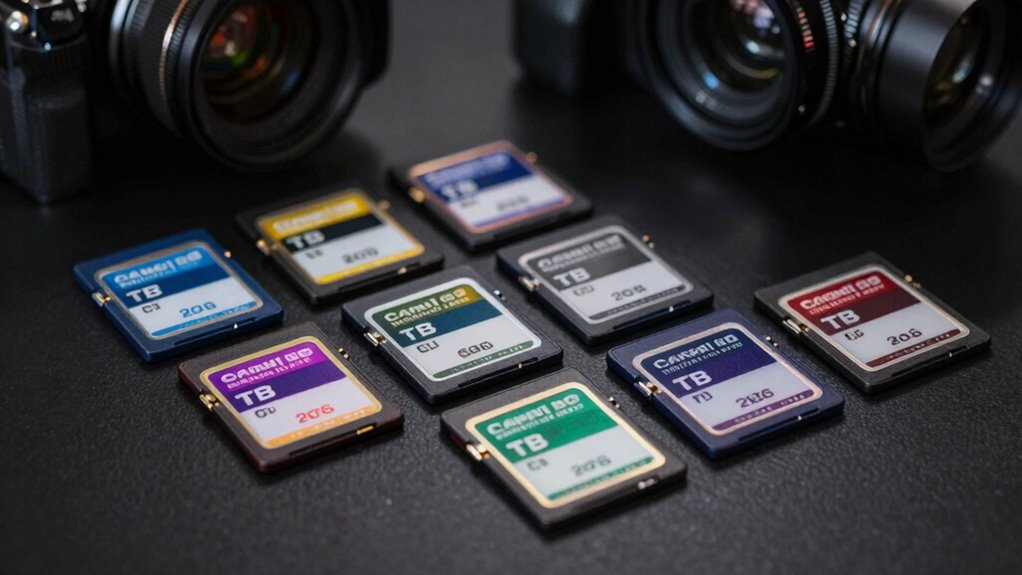

Shooting 4K or 8K video fills storage fast, which is why 1TB SD cards have become the practical baseline for serious video work. My top pick overall is the SanDisk 1TB Extreme PRO SDXC UHS-I, because its sustained write performance and V30 rating handle most 4K workflows reliably at a mid-tier price. If you shoot 6K or 8K, the SanDisk 1TB Extreme PRO UHS-II is the step up worth paying for, while the PNY 1TB PRO Elite stands out as the value play for 4K on a budget. The main tradeoffs in this category are price versus sustained write speed, UHS-I versus UHS-II bus compatibility with your camera, and whether a V30 rating is enough for your bitrate. Keep reading for the full ranked breakdown.

Get the latest gadgets delivered free with Prime
- Fast, free delivery on millions of items
- Prime Video, Amazon Music and more included
- Member-only deals all year
Complete the kit



Key Takeaways
- Sustained write speed, not peak read speed, separated the top picks — cards like the SanDisk Extreme PRO UHS-II held minimum write rates that keep 8K recording from dropping frames, while budget V30 cards marketed with fast read numbers did not.
- UHS-II is only worth paying for if your camera has UHS-II slots; in a UHS-I body, the SUNEAST V60 and SanDisk UHS-II cards performed no better than much cheaper UHS-I options.
- MicroSD options like the SanDisk Extreme 1TB and Lexar 1TB microSDXC make sense mainly for drones and action cameras, since thermal throttling limits long 4K recording compared with full-size SD cards.
- The value tier — PNY PRO Elite, GIGASTONE 4K Pro, and Lexar Professional Silver — covered 4K 100Mbps workflows well, but all three carry higher risk of write slowdowns at 6K and above bitrates.
- The Lexar Gold 1800x delivered near UHS-II speeds at a UHS-I-friendly price for read-heavy offload workflows, but its write performance landed mid-pack for heavy 8K use.
| SanDisk 1TB Extreme PRO SDXC UHS-II Memory Card |  | Best Overall for 8K Video | Capacity: 1TB | Read Speed: Up to 310 MB/s | Write Speed: Up to 305 MB/s | VIEW ON AMAZON | See Our Full Breakdown |
| SanDisk 1TB Extreme PRO SDXC UHS-II Memory Card (V60) |  | Best for 6K Cinema Work | Capacity: 1TB | Card Type: SDXC UHS-II | Video Speed Class: V60 | VIEW ON AMAZON | See Our Full Breakdown |
| SanDisk 1TB Extreme PRO SDXC UHS-I Memory Card |  | Best Value for Serious 4K | Capacity: 1TB | Read Speed: Up to 200 MB/s | Write Speed: Up to 140 MB/s | VIEW ON AMAZON | See Our Full Breakdown |
| SanDisk Extreme 1TB microSDXC UHS-I Card |  | Best for Action Cams and Drones | Storage Capacity: 1 TB | Flash Memory Type: Micro SDXC | Read Speed: Up to 245 MB/s | VIEW ON AMAZON | See Our Full Breakdown |
| PNY 1TB PRO Elite Class 10 U3 V30 SDXC Flash Memory Card |  | Best Budget Workhorse | Capacity: 1TB | Read Speed: 100 MB/s | Write Speed: 90 MB/s | VIEW ON AMAZON | See Our Full Breakdown |
| GIGASTONE 1TB SDXC Memory Card 4K Pro Series |  | Best Budget Workhorse | Capacity: 1TB | Format: SDXC full-size | Transfer Speed: Up to 150MB/s | VIEW ON AMAZON | See Our Full Breakdown |
| Lexar Professional Silver 1TB SDXC UHS-I Memory Card |  | Best UHS-I All-Rounder | Capacity: 1TB | Interface: SDXC UHS-I | Read Speed: Up to 205MB/s | VIEW ON AMAZON | See Our Full Breakdown |
| SUNEAST 1TB SDXC UHS-II V60 Memory Card |  | Best Value UHS-II | Capacity: 1TB | Interface: UHS-II | Speed Class: V60, Class 10, U3 | VIEW ON AMAZON | See Our Full Breakdown |
| Lexar 1TB microSDXC UHS-I Memory Card (Blue) |  | Best for Drones and Action Cams | Capacity: 1TB | Card Type: microSDXC UHS-I | Read Speed: Up to 160MB/s | VIEW ON AMAZON | See Our Full Breakdown |
| Lexar Gold Series 1800x 1TB SDXC Memory Card |  | Best Premium Pick | Capacity: 1TB | Interface: UHS-II | Card Type: SDXC | VIEW ON AMAZON | See Our Full Breakdown |
| high capacity sd cards 1tb for 4k8k video | Capacity | Read Speed | Speed Class | Write Speed |
|---|---|---|---|---|
| SanDisk 1TB Extreme PRO SDXC U | 1TB | Up to 310 MB/s | — | Up to 305 MB/s |
| SanDisk 1TB Extreme PRO SDXC U | 1TB | — | — | — |
| SanDisk 1TB Extreme PRO SDXC U | 1TB | Up to 200 MB/s | C10, U3, V30 | Up to 140 MB/s |
| SanDisk Extreme 1TB microSDXC | — | Up to 245 MB/s | Class 10, U3, V30 | Up to 170 MB/s |
| PNY 1TB PRO Elite Class 10 U3 | 1TB | 100 MB/s | Class 10, U3, V30 | 90 MB/s |
| GIGASTONE 1TB SDXC Memory Card | 1TB | — | UHS-I, A1, V30, Class 10 | — |
| Lexar Professional Silver 1TB | 1TB | Up to 205MB/s | Class 10, U3, V30 | Up to 140MB/s |
| SUNEAST 1TB SDXC UHS-II V60 Me | 1TB | Up to 280MB/s | V60, Class 10, U3 | Up to 150MB/s |
| Lexar 1TB microSDXC UHS-I Memo | 1TB | Up to 160MB/s | V30 | — |
| Lexar Gold Series 1800x 1TB SD | 1TB | Up to 280MB/s | — | — |
More Details on Our Top Picks
SanDisk 1TB Extreme PRO SDXC UHS-II Memory Card
When the mission is 8K capture without compromise, this card sits at the top of the lineup. Write speeds up to 305 MB/s clear a cinema camera’s buffer almost instantly, which is the difference between catching the next shot and watching a “buffer full” warning. Compared with the V60-rated SanDisk Extreme PRO UHS-II, the step up in sustained write performance is what makes true 8K workflows realistic rather than theoretical. Offloads at up to 310 MB/s also mean less time waiting on ingest before an edit session.
The tradeoffs are real, though. This is the most expensive tier of the roundup, and if your camera body or card reader is UHS-I only, you will pay for speed you cannot access — the PNY PRO Elite or the Extreme PRO UHS-I would deliver identical in-camera results for less.
Pros:- Write speeds up to 305 MB/s keep high-bitrate 8K recording buffer-free
- 310 MB/s read speeds dramatically speed up offload and ingest
- IP68-rated, drop-tested build survives demanding location work
- Includes RescuePRO Deluxe file recovery software
Cons:- Premium pricing over capable UHS-I alternatives
- Requires a UHS-II camera and reader to realize the rated speeds
Best for: Cinema and mirrorless shooters recording 8K or high-bitrate 6K RAW who need maximum sustained write speed
Not ideal for: Owners of UHS-I-only cameras and casual 4K shooters — the premium buys headroom their gear can’t use
- Capacity:1TB
- Read Speed:Up to 310 MB/s
- Write Speed:Up to 305 MB/s
- Bus Interface:UHS-II
- Durability:IP68-rated, drop-tested
- Included Software:RescuePRO Deluxe
Our verdict“If your camera can feed it, this is the card that future-proofs an 8K workflow; otherwise it’s wasted speed.”
SanDisk 1TB Extreme PRO SDXC UHS-II Memory Card (V60)
This card occupies a smart middle ground: it brings UHS-II architecture to videographers working in 4K and 6K without paying for the 8K-tier write speeds of the 305 MB/s Extreme PRO. The V60 rating guarantees a sustained 60 MB/s capture rate, which is what actually matters for video — a card that bursts fast but sputters mid-take will ruin a clip in ways a spec sheet never shows. Reads up to 280 MB/s make short work of offloading large footage folders.
Against UHS-I options like the SanDisk Extreme PRO UHS-I, the advantage shows up in sustained throughput and faster ingest, though cameras limited to UHS-I won’t see any of it. Buyers chasing 8K should step up to the faster sibling instead.
Pros:- V60 sustained 60 MB/s capture rate for dependable long-take recording
- Supports Full HD, 4K UHD, and 6K video
- 280 MB/s read speeds speed up post-shoot offloads
- Full 1TB capacity for high-resolution files
Cons:- Sustained rate falls short of 8K requirements
- Actual performance depends heavily on host camera and file attributes
Best for: Prosumers and professionals shooting sustained 4K or 6K on UHS-II mirrorless or cinema bodies
Not ideal for: 8K shooters who need more than 60 MB/s sustained, and UHS-I camera owners who can’t tap its speed
- Capacity:1TB
- Card Type:SDXC UHS-II
- Video Speed Class:V60
- Speed Classes:C10, U3
- Sustained Video Capture Rate:60 MB/s
- Max Write Speed:Up to 150 MB/s
- Max Read Speed:Up to 280 MB/s
- Supported Resolutions:Full HD, 4K UHD, 6K
Our verdict“The sweet spot for 6K-capable cameras — UHS-II muscle where it counts, without paying for 8K headroom.”
SanDisk 1TB Extreme PRO SDXC UHS-I Memory Card
For most 4K shooters, this is where price and performance meet sensibly. With reads up to 200 MB/s and writes to 140 MB/s via QuickFlow Technology, it handles 4K UHD and burst photography comfortably while costing well under the UHS-II tier. Compared with the PNY PRO Elite, the higher read speed is the differentiator — offloading a full terabyte of footage is noticeably less painful, provided you pair it with a fast reader.
That caveat cuts both ways: SanDisk notes that maximum offload speeds need a compatible PRO-READER (sold separately), so budget for one if ingest time matters to your workflow. Real-world speeds also vary by host device, and anyone moving into 6K or 8K territory should look at the V60 UHS-II card instead.
Pros:- 200 MB/s read speeds with QuickFlow Technology for fast offloads
- 140 MB/s write speed handles burst photography well
- V30/U3 rated for reliable 4K UHD recording
- 1TB capacity supports long, multi-day shoots
Cons:- Top offload speeds require an optional SanDisk PRO-READER
- UHS-I bus limits headroom for higher-bitrate formats
Best for: DSLR and mirrorless photographers doing 4K video and burst shooting who want fast offloads at a reasonable price
Not ideal for: High-bitrate 6K/8K videographers — the UHS-I bus caps sustained performance below what those formats demand
- Capacity:1TB
- Read Speed:Up to 200 MB/s
- Write Speed:Up to 140 MB/s
- Speed Class:C10, U3, V30
- Form Factor:SDXC UHS-I
- 4K UHD Support:Yes
Our verdict“The best balance of speed, capacity, and cost for dedicated 4K shooters who don’t need UHS-II.”
SanDisk Extreme 1TB microSDXC UHS-I Card
Full-size SD cards are useless in a GoPro, a drone, or a phone — and that’s exactly the gap this card fills. At 245 MB/s read and 170 MB/s write, it actually outpaces the larger PNY PRO Elite and matches the write speed of SanDisk’s own Extreme PRO UHS-I, remarkable for the microSD format. V30 rating means it keeps up with 4K and even 5K action-cam recording, and the A2 rating makes it a strong choice for expanding a handheld console or tablet where app load times matter.
The compromises come with the format itself: microSD cards are easier to misplace, slower to handle in a card reader without an adapter, and performance still depends on the host device. For a cinema camera, the full-size V60 UHS-II card is the better tool.
Pros:- 245 MB/s read and 170 MB/s write outperform most full-size UHS-I cards
- V30-rated for 4K and 5K action-cam recording
- A2 app performance class for fast phone and console storage
- Resists water, dust, shock, temperature, magnets, and X-rays
Cons:- Tiny form factor is easy to lose and fiddly to handle
- Performance depends entirely on host device compatibility
Best for: Action cam, drone, smartphone, and handheld console owners who need serious 4K/5K capacity in the smallest format
Not ideal for: Cinema and pro mirrorless shooters — the microSD form factor and adapter dependency add friction to professional workflows
- Storage Capacity:1 TB
- Flash Memory Type:Micro SDXC
- Read Speed:Up to 245 MB/s
- Write Speed:Up to 170 MB/s
- Speed Class:Class 10, U3, V30
- App Performance Class:A2
- Warranty:Lifetime limited
Our verdict“The obvious pick when your device only takes microSD and you refuse to sacrifice 4K speed.”
PNY 1TB PRO Elite Class 10 U3 V30 SDXC Flash Memory Card
Not every 4K project justifies flagship pricing, and this card makes that case. Its 90 MB/s write speed comfortably covers the sustained demands of 4K Ultra HD (4096×3072) recording and burst-mode photography, and its rugged waterproof, shockproof, magnet-proof, and temperature-proof build means it won’t quit on location shoots. It slots below the SanDisk Extreme PRO UHS-I in raw read speed — 100 MB/s versus 200 MB/s — which mostly shows up as slower offloads rather than compromised recording.
That’s the honest trade: if your evenings involve dumping hundreds of gigabytes to a workstation, the gap adds up, and the SanDisk (plus a good reader) earns its premium. If your priority is reliable, affordable capacity that just records, this is the value play in the lineup.
Pros:- Sustained 4K Ultra HD recording with U3/V30 certification
- 1TB capacity for extended shooting sessions
- Full rugged durability suite for field use
- Broad compatibility across DSLRs and video cameras
Cons:- 100 MB/s read speed makes offloading large volumes slow
- UHS-I interface lacks headroom for future high-bitrate formats
Best for: Budget-conscious photographers and videographers who need dependable 4K recording capacity at the lowest sensible price
Not ideal for: High-volume professionals whose workflow depends on fast offloads — the 100 MB/s read ceiling slows ingest noticeably
- Capacity:1TB
- Read Speed:100 MB/s
- Write Speed:90 MB/s
- Speed Class:Class 10, U3, V30
- Format:SDXC UHS-I
- Video Support:4K Ultra HD (4096×3072)
Our verdict“A dependable terabyte of 4K-capable storage for shooters who care more about capacity per dollar than offload speed.”
GIGASTONE 1TB SDXC Memory Card 4K Pro Series
Not everyone shooting 4K needs flagship pricing, and GIGASTONE’s 1TB Pro Series is the value play in this lineup. The 150MB/s transfer speed and V30 rating put it in the same recording class as the Lexar Silver 1TB, meaning it will handle 4K UHD capture reliably — you just wait a bit longer when offloading footage. Where this card punches above its price is the bundle of extras: a mini case and five years of free data recovery, a safety net most budget brands skip entirely. Compared with the SUNEAST V60, the UHS-I interface is the real limitation: sustained write speeds fall short of what heavy burst shooting or high-bitrate 8K workflows demand. But for DSLR and camcorder users filling cards with hours of 4K footage, that tradeoff is easy to accept.
Pros:- Full 1TB capacity for hours of 4K UHD recording
- Five years of free data recovery included
- Rugged build rated against water, temperature, shock, X-rays, and magnets
- Mini storage case included
Cons:- UHS-I interface transfers and writes slower than UHS-II cards like the SUNEAST V60
- 150MB/s ceiling makes large-file offloads noticeably slower than premium alternatives
Best for: Hobbyist videographers and point-and-shoot users who want 1TB of dependable 4K storage without paying premium-brand prices
Not ideal for: Professionals with high-bitrate 4K/8K workflows who need sustained V60-plus write speeds for extended takes
- Capacity:1TB
- Format:SDXC full-size
- Transfer Speed:Up to 150MB/s
- Speed Class:UHS-I, A1, V30, Class 10
- Durability:Waterproof, temperature-proof, x-ray-proof, shock-proof, magnetic-proof
- Warranty:5-year limited
- Included:Mini case
Our verdict“A sensible pick for casual 4K shooters who prioritize capacity, durability, and data recovery coverage over raw speed.”
Lexar Professional Silver 1TB SDXC UHS-I Memory Card
The Lexar Professional Silver sits at the sweet spot between price and performance among UHS-I cards. Its 205MB/s read and 140MB/s write speeds outpace the GIGASTONE 4K Pro Series on both counts, which translates to faster card-to-computer offloads after a long shoot, while the V30 rating keeps 4K recording at 60FPS steady across Canon, Sony, and Nikon bodies. The lifetime limited warranty plus the Lexar Recovery Tool gives it long-term staying power that the 5-year GIGASTONE coverage can’t match. The honest tradeoff: it’s still UHS-I, so compared with the SUNEAST V60 or Lexar Gold 1800x, sustained write performance trails once you push into high-bitrate or burst-heavy territory. For most hybrid shooters, that’s a compromise worth making for the price difference.
Pros:- 205MB/s read speeds for quick offloads
- V30 rating handles 4K recording at 60FPS
- Lifetime limited warranty with Recovery Tool
- Durability rated against drops, shock, vibration, temperature, X-rays, and magnets
Cons:- UHS-I bus caps performance below UHS-II cards like the Lexar Gold 1800x
- 140MB/s write speed may struggle with sustained high-bitrate video
Best for: Hybrid photo/video shooters using mainstream Canon, Sony, or Nikon cameras who want fast UHS-I performance and lifetime warranty coverage
Not ideal for: Videographers recording high-bitrate 6K or 8K footage where V30 sustained writes can drop frames
- Capacity:1TB
- Interface:SDXC UHS-I
- Read Speed:Up to 205MB/s
- Write Speed:Up to 140MB/s
- Speed Class:Class 10, U3, V30
- Video Support:4K at 60FPS
- Warranty:Lifetime limited
Our verdict“The balanced UHS-I choice for shooters who want dependable 4K speed, strong warranty backing, and reasonable cost.”
SUNEAST 1TB SDXC UHS-II V60 Memory Card
This is where the roundup gets interesting: SUNEAST delivers a true UHS-II V60 card at 1TB for noticeably less than the big-name alternatives. With 280MB/s reads and 150MB/s writes, it matches the Lexar Gold 1800x on paper while adding a crush-proof build and a -25°C to 85°C operating range — colder-rated than the Lexar Gold’s 0°C floor, which matters for winter shoots and high-altitude work. The V60 class means sustained writes comfortably handle 4K 60fps and much of the 6K territory where V30 cards like the Lexar Silver start to strain. The tradeoff is brand track record: SUNEAST lacks the long recovery-tool and warranty ecosystem Lexar and SanDisk have built, and host-device compatibility with UHS-II can vary. If you want UHS-II speed on a budget, this is the pick.
Pros:- UHS-II speeds of 280MB/s read and 150MB/s write
- V60 rating sustains 4K UHD 60fps and high-bitrate recording
- Crush-proof with a -25°C to 85°C operating range
- Multiple capacity options from 64GB to 1TB
Cons:- Full-size SD only — useless for microSD-only devices like drones and action cams
- UHS-II compatibility varies by host device
- Shorter warranty and weaker recovery support than Lexar or SanDisk equivalents
Best for: Budget-conscious filmmakers and outdoor shooters who need V60 sustained write speeds and extreme-temperature durability at 1TB
Not ideal for: Buyers who prioritize established brand support and bundled recovery software over raw value
- Capacity:1TB
- Interface:UHS-II
- Speed Class:V60, Class 10, U3
- Read Speed:Up to 280MB/s
- Write Speed:Up to 150MB/s
- Operating Temperature:-25°C to 85°C
- Durability:Crush proof
- Warranty:Limited warranty
Our verdict“The smart way into UHS-II V60 performance at 1TB if you can live with a less-established brand behind it.”
Lexar 1TB microSDXC UHS-I Memory Card (Blue)
Most cards in this roundup are full-size SD, but plenty of 4K cameras — drones, action cams, and smartphones — only take microSD, and this is the pick built for them. The A2 app rating is the differentiator here: none of the full-size cards offer it, and it means fast app loading if the card also lives in your phone between shoots. Its 160MB/s read speed beats the GIGASTONE’s 150MB/s, and the IPX7 water rating with 1.5m drop protection suits gear that takes abuse. The catch: Lexar lists no advertised write speed, and hitting the full 160MB/s requires a specific Lexar 2-in-1 reader. For high-bitrate 4K on a drone, V30 gives reasonable confidence, but pros pushing 8K action footage should look at full-size V60 options instead.
Pros:- microSDXC format fits drones, action cams, and phones
- A2 rating for fast smartphone app performance
- IPX7 water resistance and 1.5m drop protection
- 10-year limited warranty with lifetime Recovery Tool access
Cons:- No advertised write speed — risky for demanding high-bitrate recording
- Peak 160MB/s read speeds require a select Lexar 2-in-1 reader
- UHS-I bus limits it versus V60 full-size cards
Best for: Drone pilots, action-camera users, and smartphone shooters who need 1TB of microSD storage for 4K capture
Not ideal for: Users whose cameras take full-size SD — you’d pay for microSD form factor you don’t need, or fuss with adapters
- Capacity:1TB
- Card Type:microSDXC UHS-I
- Read Speed:Up to 160MB/s
- Speed Class:V30
- App Performance:A2
- Water Resistance:IPX7
- Drop Protection:Up to 1.5m
- Warranty:10-year limited
Our verdict“The clear 1TB choice when your 4K camera only accepts microSD — just verify your write-speed needs before committing.”
Lexar Gold Series 1800x 1TB SDXC Memory Card
The Lexar Gold 1800x is the trusted-name UHS-II option at 1TB, pairing 280MB/s reads with V60 video class for smooth 4K UHD capture. Compared with the SUNEAST V60, it matches the speed numbers while carrying Lexar’s brand reliability and established retail support — a meaningful consideration when a card holds a terabyte of irreplaceable footage. Against the SanDisk Extreme PRO UHS-II, it holds its own as a premium alternative with the same core V60 capability. The limitations are real though: it demands a camera and reader that both support SDXC and UHS-II, or you’ll never see those speeds, and its 32°F to 158°F operating range is narrower than the SUNEAST’s, ruling out sub-freezing shoots. For paid work in controlled conditions, that tradeoff rarely matters.
Pros:- UHS-II read speeds up to 280MB/s
- V60 class for dependable high-bitrate 4K UHD recording
- Established Lexar brand with professional retail support
- Full 1TB capacity for long-form projects
Cons:- Requires UHS-II-compatible camera and reader to realize its speed
- Operating range of 32°F to 158°F excludes extreme-cold use
- Premium pricing versus the equally fast SUNEAST V60
Best for: Professional videographers and photographers who want a name-brand UHS-II V60 card for paid 4K work in moderate climates
Not ideal for: Winter and high-altitude shooters — the 0°C minimum operating temperature is stricter than the SUNEAST’s -25°C rating
- Capacity:1TB
- Interface:UHS-II
- Card Type:SDXC
- Read Speed:Up to 280MB/s
- Video Speed Class:V60
- Operating Temperature:32°F to 158°F
Our verdict“The dependable brand-name route to UHS-II V60 performance at 1TB, provided your gear and climate cooperate.”

How We Picked
I ranked these cards on the factors that actually decide whether a 4K or 8K shoot succeeds: sustained write speed, video speed class (V30 versus V60), durability, host-device compatibility, and price-to-performance. Peak read speeds look great on packaging, but recording video depends on how fast the card can absorb data continuously, so I weighted minimum sustained write guarantees far more heavily than headline benchmarks. I also factored in which bus type each card uses, because a UHS-II card in a UHS-I slot wastes money, and in 8K and high-bitrate 6K workflows, V30 cards can hit their ceiling.
The ranking order reflects a simple logic: cards that reliably sustain the write speeds modern cinema and hybrid cameras demand sit at the top, cards that balance capability and price fill the middle, and budget options appear lower not because they are bad, but because their safety margin narrows as resolution climbs. Durability features like water, temperature, and shock resistance acted as tiebreakers between cards with similar speed profiles, since field shooters gain more from them than studio users.
| high capacity sd cards 1tb for 4k8k video | Speed Class |
|---|---|
| SanDisk 1TB Extreme PRO SDXC U | — |
| SanDisk 1TB Extreme PRO SDXC U | — |
| SanDisk 1TB Extreme PRO SDXC U | C10, U3, V30 |
| SanDisk Extreme 1TB microSDXC | Class 10, U3, V30 |
| PNY 1TB PRO Elite Class 10 U3 | Class 10, U3, V30 |
| GIGASTONE 1TB SDXC Memory Card | UHS-I, A1, V30, Class 10 |
| Lexar Professional Silver 1TB | Class 10, U3, V30 |
| SUNEAST 1TB SDXC UHS-II V60 Me | V60, Class 10, U3 |
| Lexar 1TB microSDXC UHS-I Memo | V30 |
| Lexar Gold Series 1800x 1TB SD | — |
Factors to Consider When Choosing High Capacity Sd Cards 1tb For 4k8k Video
Choosing a 1TB card for 4K and 8K video involves more than picking the fastest-sounding option on the shelf. These are the factors that most often make or break the purchase.Match the Bus Type to Your Camera, Not the Card
The single most common expensive mistake is buying a UHS-II card for a camera with only UHS-I slots. A UHS-II card like the SanDisk Extreme PRO UHS-II will physically fit and work, but it drops to UHS-I speeds, meaning you paid a premium for performance you cannot access. Check your camera’s spec sheet for the slot type before buying, and if your body is UHS-I only, put that money toward a better UHS-I card or a second card instead. The reverse also matters: UHS-I cards in UHS-II slots cap your recording speed, which matters for 8K bodies that expect faster buffer clearing. Matching bus types to your gear is free performance; mismatching it is wasted budget.
Sustained Write Speed Is the Number That Matters
Manufacturers advertise read speeds because they are larger, but recording video is a write task. A card rated 170MB/s read might sustain only 60–90MB/s write, and some cards drop further once their internal cache fills after a minute or two of continuous recording. For 4K at 100–200Mbps, nearly any V30 card survives, but 6K and 8K at 400Mbps and above push V30 cards to their floor. V60 cards provide breathing room, and for raw video or high-frame-rate 8K, V90 is the safer class even though no 1TB card in this roundup reaches it. When a card’s write speed dips below the camera’s bitrate, the recording stops abruptly — usually mid-take.
Understand Video Speed Classes Before You Buy
The V-rating on a card is a guaranteed minimum sustained write speed: V30 means at least 30MB/s, V60 means at least 60MB/s. These are promises, not peak figures, which is why a V60 card like the SUNEAST 1TB UHS-II is a safer bet for demanding codecs than a faster-marketed V30 card. Cameras from Sony, Canon, and Nikon often specify a minimum V class for each recording mode, and ignoring that spec is the fastest route to dropped frames. Also watch for A1 and A2 ratings — those relate to app performance in phones and drones and say nothing about video suitability. Buying on the V class rather than marketing speeds keeps the decision grounded.
One 1TB Card Versus Two 512GB Cards
Bigger is not automatically better for video work. A single 1TB card concentrates risk: if it fails, is lost, or is damaged, an entire day or week of footage goes with it. Many working shooters prefer two smaller cards for redundancy, keeping one in the camera and one backed up. Where 1TB genuinely wins is in fixed rigs — drones, gimbal setups, hidden cameras, and long event shoots — where swapping cards is impractical or impossible. Match the capacity strategy to your shooting style rather than defaulting to the largest card available.
Thermal Behavior and Long Recording Sessions
Long 4K and 8K recordings generate heat, and cards respond differently. MicroSD cards like the SanDisk Extreme 1TB and Lexar 1TB microSDXC are compact and drone-friendly, but their smaller form factor sheds heat less effectively, and sustained thermal load can throttle write speeds deep into a recording. Full-size SD cards generally handle hour-long continuous takes more predictably. If your work involves extended interview setups, live events, or timelapse sequences, this difference matters more than any benchmark. Check whether your camera body also heats the card bay, since enclosed cinema rigs compound the problem.
Beware of Counterfeits and Too-Good Pricing
1TB cards are among the most counterfeited storage products sold online. Fake cards report 1TB capacity to your device but contain far less real flash memory, then silently corrupt footage once that limit is crossed — often after the shoot, when recovery is impossible. Buy from reputable retailers rather than third-party marketplace sellers with unclear sourcing, and run a full-capacity verification tool on any new card before trusting it with paid work. Cards from established brands like SanDisk, Lexar, and PNY with serialized packaging and warranty registration are far safer. The ten minutes spent verifying a card is cheap insurance against losing irreplaceable footage.
Frequently Asked Questions
Is a V30 1TB card enough for 8K video, or do I need V60?
For most consumer 8K recording at 200–400Mbps, a V30 card is technically at or near its limit, and the margin for error is thin. Bitrate spikes during fast motion or high-detail scenes can momentarily exceed what a V30 card sustains, causing the camera to stop recording without warning. A V60 card like the SanDisk Extreme PRO UHS-II doubles the guaranteed minimum write speed and gives you headroom for those spikes plus long recording sessions. If you shoot 8K professionally or capture high-frame-rate 4K above 200Mbps, V60 is the sensible floor. Casual 4K shooters at 100Mbps, however, gain little from paying extra for V60.
Will a UHS-II card work in my UHS-I camera?
Yes, every UHS-II card in this roundup is backward compatible with UHS-I slots because the extra pins are physically separate from the first row. The catch is that the card runs at UHS-I speeds, typically capped around 90–100MB/s in practice. That means buying the SanDisk 1TB Extreme PRO UHS-II for a UHS-I-only camera wastes the price difference, and a well-built UHS-I card would perform identically. Before paying the UHS-II premium, confirm your camera body actually supports UHS-II — this information appears in the specifications section of the manual or manufacturer site. If your next camera upgrade will include UHS-II slots, buying ahead is defensible, but not otherwise.
Are 1TB microSD cards as reliable as full-size SD cards for video?
They can be, but with caveats specific to video work. Modern 1TB microSD cards from SanDisk and Lexar use quality NAND and carry the same V30 ratings as their full-size siblings, so the recorded data itself is equally safe. The difference shows up in sustained recording: microSD cards dissipate heat less effectively, and during long continuous 4K takes, thermal throttling can reduce write speeds. For drones, action cameras, and short-clip shooting, this rarely matters. For hour-long interviews or event coverage, a full-size SD card is the more predictable choice. If you do use microSD for long takes, pair it with a full-size adapter in a camera with good card-bay ventilation.
How much 4K or 8K footage actually fits on a 1TB card?
At typical 4K 100Mbps settings, you get roughly 22 hours of footage, which is why 1TB has become the standard for multi-day shoots. 4K at 400Mbps, common in high-bitrate codecs, cuts that to around 5.5 hours. 8K at 400Mbps lands near the same figure, and professional raw formats can consume 1TB in under two hours. These numbers explain why the value-tier cards make sense for 4K shooters — capacity is rarely the constraint — while 8K shooters need to think about both capacity and sustained write speed together. Plan for roughly 20 percent headroom beyond your expected footage, since cards perform less predictably when nearly full.
Which card should I buy if I also shoot photos on the same card?
Photo and video workflows stress different things: burst photography depends on buffer-clearing write speed, while video depends on sustained minimum writes. The SanDisk Extreme PRO line handles both well because its write speeds are high and stable, letting your camera clear its buffer faster during wildlife or sports bursts. Budget cards like the GIGASTONE 4K Pro handle video fine but slow noticeably during extended raw bursts, which can freeze your camera’s shooting rate. A1-rated cards, including the microSD options, prioritize app responsiveness and are less suited to serious stills work. If you shoot hybrid stills-plus-video professionally, allocate more of your budget to write performance than capacity.
Conclusion
For most video shooters, the SanDisk 1TB Extreme PRO SDXC UHS-I is the best overall pick — it balances sustained write performance, durability, and price better than anything else in this lineup. If your budget is tight and you shoot 4K at standard bitrates, the PNY 1TB PRO Elite is the best value, with the GIGASTONE 4K Pro and Lexar Professional Silver as solid alternates. The SanDisk 1TB Extreme PRO UHS-II is the premium choice for 8K and high-bitrate 6K work, provided your camera has UHS-II slots; the SUNEAST V60 is a cheaper UHS-II route with a smaller speed guarantee. Beginners who just want a card that works without spec-hunting should start with the Lexar 1TB microSDXC or SanDisk Extreme 1TB microSD for action cameras and drones. And for shooters who offload large volumes regularly, the Lexar Gold 1800x justifies itself through fast card-to-computer transfers. Match the card to your camera’s slots and your recording bitrate, and every option here will serve you well.
Halloween Picks
halloween
As an affiliate, we earn on qualifying purchases.