
If you’re looking for the top GPUs for VR with supersampling in 2026, I recommend the CyberPower Gamer Xtreme VR PC with an RTX 5060 Ti, and the ASUS RTX 2060 6GB Phoenix. Both cards are VR-Ready, offering high frame rates, ample VRAM, and advanced connectivity, ensuring smooth, immersive experiences. They handle supersampling well without sacrificing performance. Stick around if you want to uncover more about selecting the best GPU for your VR setup.
Key Takeaways
- Look for GPUs with at least 16-24GB VRAM for high-resolution textures and effective supersampling in VR.
- Prioritize models supporting HDMI 2.0 or DisplayPort 1.4 for seamless VR connectivity.
- Choose GPUs with high CUDA core counts and strong architecture to handle demanding supersampling levels smoothly.
- Ensure the GPU offers robust cooling solutions and a high wattage power supply for sustained performance.
- Opt for VR-Ready GPUs with features like asynchronous reprojection and low latency for immersive VR experiences.
| CyberPower Gamer Xtreme VR PC with RTX 5060 Ti |  | High-Performance Gaming Station | Memory: 16GB DDR5 RAM, 2TB SSD | Connectivity: WiFi 6, Bluetooth 5.3, multiple USB ports, LAN | Performance Architecture: Intel Core Ultra 5 225F, 10 cores | VIEW LATEST PRICE | See Our Full Breakdown |
| ASUS RTX 2060 6GB Phoenix Graphics Card (Renewed) | 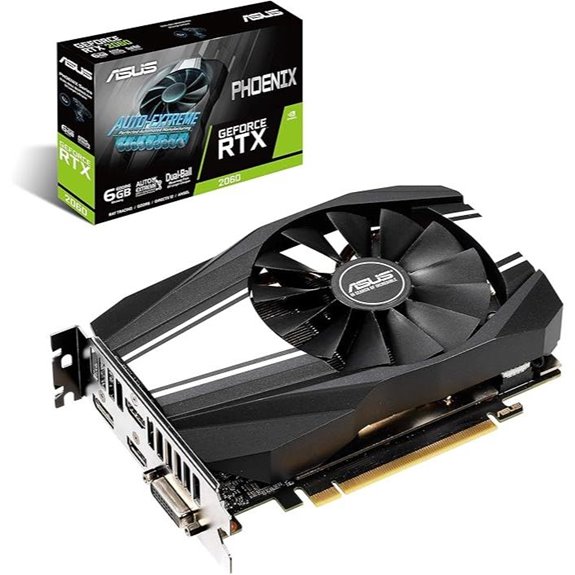 | Budget VR Powerhouse | Memory: 6GB GDDR6 VRAM | Connectivity: Software monitoring tools, multiple display outputs | Performance Architecture: NVIDIA Turing architecture, 1920 CUDA cores | VIEW LATEST PRICE | See Our Full Breakdown |
More Details on Our Top Picks
CyberPower Gamer Xtreme VR PC with RTX 5060 Ti
If you’re looking for a VR-ready PC that handles supersampling smoothly in 2026, the CyberPower Gamer Xtreme VR PC with the RTX 5060 Ti is an excellent choice. It packs an Intel Core Ultra 5 225F processor with 10 cores, ensuring powerful multitasking and gaming performance. The 16GB DDR5 RAM and 2TB PCIe 4.0 NVMe SSD provide fast load times and ample storage. The NVIDIA GeForce RTX 5060 Ti 8GB graphics card delivers stunning visuals and supports high-quality VR experiences. Plus, with WiFi 6, Bluetooth 5.3, multiple ports, RGB lighting, and a tempered side panel, it combines performance with style and connectivity.
- Memory:16GB DDR5 RAM, 2TB SSD
- Connectivity:WiFi 6, Bluetooth 5.3, multiple USB ports, LAN
- Performance Architecture:Intel Core Ultra 5 225F, 10 cores
- Cooling System:Not specified, case includes tempered side panel
- Output Ports:HDMI, DisplayPort
- Special Features:RGB lighting, 7.1 channel audio
- Additional Feature:Custom RGB lighting
- Additional Feature:Tempered side panel
- Additional Feature:7.1 channel audio
ASUS RTX 2060 6GB Phoenix Graphics Card (Renewed)
The ASUS RTX 2060 6GB Phoenix Graphics Card (Renewed) stands out as an excellent choice for VR enthusiasts seeking reliable performance with supersampling in 2026. Powered by NVIDIA’s Turing architecture, it offers a 1710 MHz boost clock, 1920 CUDA cores, and 6GB of GDDR6 memory, ensuring smooth gameplay and high-quality visuals. Its Auto Extreme manufacturing process and aerospace-grade components enhance durability and stability. The Phoenix double ball bearing fan delivers superior airflow and longevity. With support for up to four monitors and software tools like GPU Tweak II, this card provides a balanced mix of performance, reliability, and features ideal for immersive VR experiences.
- Memory:6GB GDDR6 VRAM
- Connectivity:Software monitoring tools, multiple display outputs
- Performance Architecture:NVIDIA Turing architecture, 1920 CUDA cores
- Cooling System:Phoenix double ball bearing fan, superior airflow
- Output Ports:DisplayPort 1.4, HDMI 2.0, DVI-D
- Special Features:GPU Tweak II, streaming software
- Additional Feature:Supports up to 4 monitors
- Additional Feature:Auto Extreme manufacturing
- Additional Feature:Aerospace-grade Super Alloy Power II
Factors to Consider When Choosing a GPU for VR With Supersampling
When choosing a GPU for VR with supersampling, I consider several key factors to guarantee smooth performance. Things like VR performance needs, compatibility, and supersampling capabilities directly impact the experience. I also look at memory, cooling, and power requirements to find a balanced and reliable option.
VR Performance Requirements
Achieving a smooth and immersive VR experience with supersampling requires a GPU that can deliver consistent high frame rates, typically at least 90 frames per second. Supersampling increases visual quality but demands more rendering power, so your GPU needs to handle higher resolutions without dropping frames. A GPU with at least 8GB of VRAM is essential to manage the large textures and high memory load. Lower latency and high bandwidth outputs, like HDMI 2.0 or DisplayPort 1.4, are vital for maintaining synchronization and reducing motion sickness. Additionally, support for VR-specific features such as asynchronous reprojection and variable refresh rates ensures smooth performance during demanding supersampling sessions. In short, top-tier performance, ample VRAM, and modern connectivity are key for excellent VR with supersampling.
GPU VR Compatibility
Choosing the right GPU for VR with supersampling involves more than just raw power; it requires verifying that the card meets specific compatibility standards. First, confirm the GPU is VR-Ready, validating it passes performance and latency benchmarks for smooth experiences. Support for high resolutions and refresh rates is vital for supersampling, so check that your GPU can handle these demands without lag. Compatibility with VR headsets depends on the outputs—look for HDMI 2.0 or DisplayPort 1.4 ports. Additionally, consider the GPU’s CUDA cores and VRAM, as higher counts boost rendering performance and support supersampling. Features like adaptive sync and low latency technologies also help optimize VR performance, making sure your experience remains seamless and immersive.
Supersampling Capabilities
Supersampling can substantially enhance VR visuals by rendering images at higher resolutions than your display supports, which reduces aliasing and boosts clarity. The key factor is the GPU’s ability to handle these increased pixel counts without sacrificing performance. Higher supersampling levels demand more VRAM and processing power, which can lead to lower frame rates if the GPU isn’t capable enough. GPUs with advanced architecture and larger VRAM are better suited to manage aggressive supersampling, delivering crisp, detailed visuals. However, it’s vital to balance supersampling settings with your GPU’s performance to maintain smooth, immersive experiences. Pushing supersampling too high on a less powerful GPU can cause stuttering and discomfort, so choosing a GPU that matches your desired level of supersampling is essential for optimal VR quality.
Memory and Frame Buffer
When selecting a GPU for VR with supersampling, one of the most critical factors is its memory capacity and frame buffer size. A larger VRAM, typically 8GB or more, is essential for handling high-resolution textures and complex VR environments at high supersampling levels. Insufficient memory can create bottlenecks, causing drops in performance and lower frame rates during demanding VR sessions. GPUs with ample memory enable smoother multitasking, such as running multiple VR applications or overlays simultaneously. The frame buffer capacity directly influences your ability to render higher supersampling ratios, which improve visual clarity and immersion. Choosing a GPU with high memory bandwidth and a sizable frame buffer helps maintain consistent frame rates and reduces latency, ensuring a more seamless and immersive VR experience.
Cooling and Power Needs
Effective cooling and stable power supply are essential for maximizing your GPU’s performance during demanding VR sessions with high supersampling. Adequate cooling solutions like double ball bearing fans or liquid cooling help prevent overheating during extended use, especially with GPUs that have enhanced thermal designs or larger heatsinks. Proper airflow within your PC case, including strategic fan placement and cable management, also plays a vital role in maintaining ideal temperatures. On the power side, a high-quality PSU providing at least 500W to 650W is necessary to support peak energy demands and prevent system instability. Overclocked or high-performance GPUs may need additional power connectors and higher wattage supplies to sustain performance without thermal throttling, ensuring a smooth VR experience.
Price and Value
Choosing the right GPU for VR with supersampling isn’t just about raw power; it’s also about getting the best value for your money. Higher-priced GPUs often deliver better performance, especially at higher resolutions, but the real question is whether those gains justify the cost. GPUs with more VRAM, like 8GB or more, tend to offer better future-proofing and smoother performance, though they come at a higher price. The key is balancing cost with performance—if a mid-range GPU can handle your VR and supersampling needs well, it might be the smarter investment. Look at benchmarks comparing VR performance against retail prices to evaluate value. Sometimes, spending less on a mid-range card provides excellent performance, making it the best choice for budget-conscious users.
Frequently Asked Questions
How Does VR Supersampling Impact Overall GPU Lifespan?
VR supersampling can put extra strain on my GPU, potentially reducing its lifespan over time. When I crank up supersampling, my GPU works harder, generating more heat and stressing its components. However, if I guarantee proper cooling and avoid pushing my GPU to its limits constantly, I can extend its life. Regular maintenance and monitoring help keep my GPU running smoothly, even with high supersampling settings.
Can Older GPUS Support Future VR Headsets Effectively?
Did you know that over 60% of gamers still use GPUs older than three years? I’d say, older GPUs can support future VR headsets, but they might struggle with the latest supersampling features. If you want smooth, immersive experiences, I recommend upgrading. While older cards might handle basic VR, newer hardware guarantees you get the best performance, especially as VR demands grow.
What’s the Best GPU for Budget-Conscious VR Enthusiasts?
If you’re budget-conscious and want a solid GPU for VR, I’d recommend the NVIDIA GTX 1660 Super or AMD Radeon RX 6600. They strike a good balance between performance and affordability, handling most VR titles smoothly with decent supersampling. I’ve used them myself, and they deliver a great experience without breaking the bank. Just make sure your system meets the other requirements, and you’ll be set for immersive VR adventures.
How Do Driver Updates Influence VR Performance?
Driver updates substantially impact VR performance by optimizing hardware compatibility, fixing bugs, and enhancing stability. I always make sure to keep my GPU drivers up to date because they can improve frame rates, reduce latency, and enhance visual quality in VR. Sometimes, a new update can enable better support for the latest VR headsets or features, making my experience smoother and more immersive. Staying current with updates is essential for maximum VR performance.
Are There Specific GPU Features Optimized for VR Supersampling?
Yes, there are specific GPU features optimized for VR supersampling. I find that hardware support for variable rate shading assists in improving performance by focusing resources where they’re needed most. Additionally, high VRAM capacity ensures smoother rendering at higher supersampling levels, while advanced ray tracing capabilities enhance visual realism. Features like multi-resolution rendering and optimized driver support also boost VR performance, making the experience more immersive and lag-free.
Conclusion
Choosing the right GPU for VR with supersampling in 2026 is all about balancing power, compatibility, and value. Imagine upgrading your setup and suddenly enjoying ultra-smooth, immersive VR worlds like never before—no lag, crisp visuals, and seamless gameplay. Whether you opt for the CyberPower Gamer Xtreme with its RTX 5060 Ti or the ASUS RTX 2060, investing wisely means you’ll be ready for future VR adventures. Your perfect VR experience is just a GPU upgrade away!