
If you’re looking for the best GPU for VR with 24GB VRAM in 2026, I recommend considering models like the NVIDIA Titan RTX, EVGA GeForce RTX 3090 FTW3 Ultra, ASUS TUF Radeon RX 7900 XTX OC, ZOTAC GeForce RTX 3090 Trinity OC, and GIGABYTE GeForce RTX 4090. These cards offer exceptional performance, high bandwidth, and future-proof features. Keep in mind, choosing the right one depends on your setup and needs—details you’ll find if you continue exploring.
Key Takeaways
- The top GPUs in 2026 include NVIDIA Titan RTX, EVGA RTX 3090 FTW3 Ultra, ASUS RX 7900 XTX OC, ZOTAC RTX 3090 Trinity OC, and GIGABYTE RTX 4090.
- Key factors for VR GPUs include compatibility, high resolution support, performance standards, future-proofing, and HDCP compliance.
- Memory bandwidth of at least 672 GB/s and advanced ray tracing cores are essential for smooth, realistic VR experiences.
- Effective cooling, noise management, power supply capacity, and physical size are critical for optimal GPU performance in VR setups.
- Software support, driver updates, and anticipation of 8K and higher VR content ensure long-term VR readiness in 2026.
| NVIDIA Titan RTX 24GB gddr6 Graphics Card | 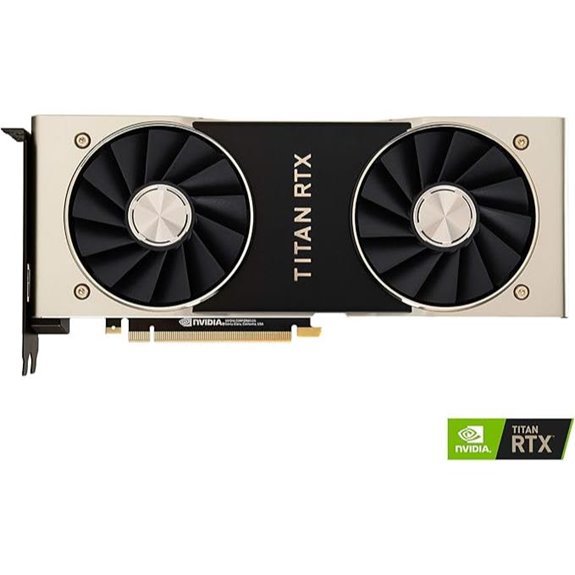 | High-End Powerhouse | Memory Type: GDDR6 | Memory Size: 24GB | Core Count: 4608 CUDA cores | VIEW LATEST PRICE | See Our Full Breakdown |
| EVGA GeForce RTX 3090 FTW3 Ultra Graphics Card | 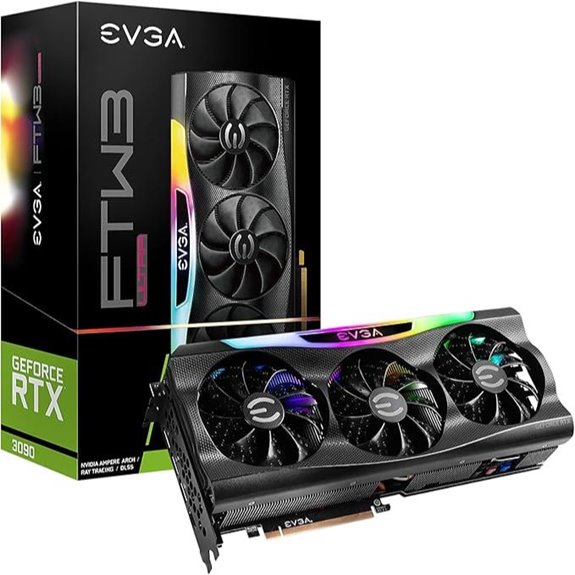 | Gaming Titan | Memory Type: GDDR6X | Memory Size: 24GB | Core Count: 16,384 CUDA cores | VIEW LATEST PRICE | See Our Full Breakdown |
| ASUS TUF Radeon RX 7900 XTX OC Graphics Card | 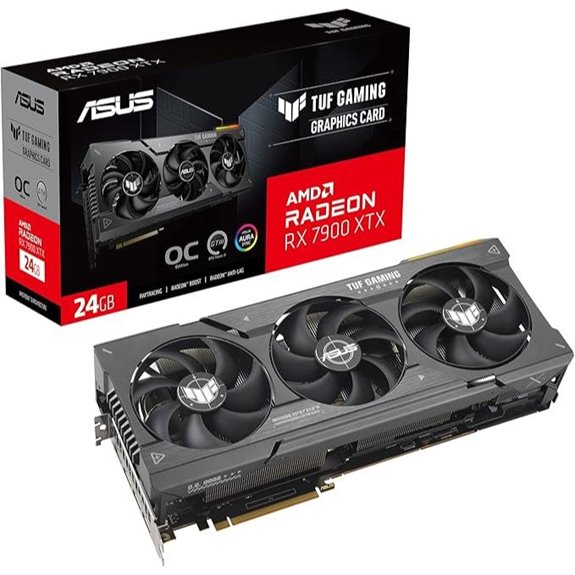 | Durable Performance | Memory Type: GDDR6 | Memory Size: 24GB | Core Count: Not specified (generally high CUDA cores for AMD) | VIEW LATEST PRICE | See Our Full Breakdown |
| ZOTAC GeForce RTX 3090 Trinity OC Graphics Card |  | Premium Cooling | Memory Type: GDDR6X | Memory Size: 24GB | Core Count: Not specified (optimized for gaming) | VIEW LATEST PRICE | See Our Full Breakdown |
| GIGABYTE GeForce RTX 4090 24GB Graphics Card | 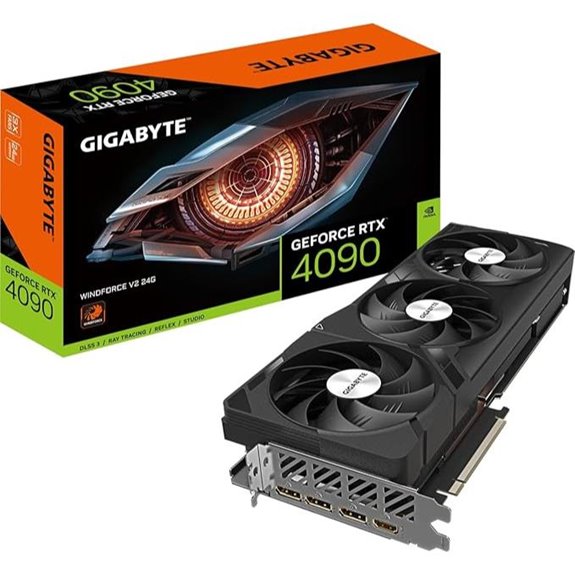 | Next-Gen Leader | Memory Type: GDDR6X | Memory Size: 24GB | Core Count: 16,384 CUDA cores | VIEW LATEST PRICE | See Our Full Breakdown |
| GIGABYTE AORUS RTX 3090Ti Xtreme Waterforce Card | 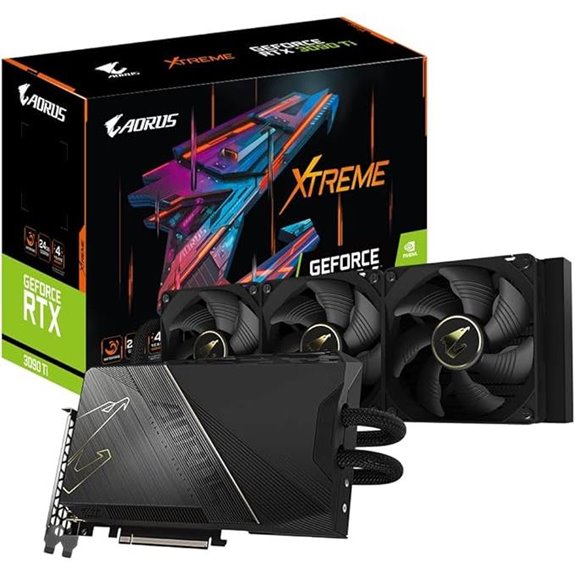 | Ultimate Cooling | Memory Type: GDDR6X | Memory Size: 24GB | Core Count: Not specified (high-end GPU architecture) | VIEW LATEST PRICE | See Our Full Breakdown |
More Details on Our Top Picks
NVIDIA Titan RTX 24GB gddr6 Graphics Card
Are you looking for the ultimate GPU to power demanding VR experiences and professional workloads in 2026? The NVIDIA Titan RTX 24GB GDDR6 is built on Turing architecture, making it a top-tier choice. It packs 4,608 CUDA cores running at a boost clock of 1770 MHz, along with 576 Tensor Cores for AI tasks and 72 RT cores for ray tracing. With 24 GB of ultra-fast GDDR6 memory and a bandwidth of 672 GB/s, it handles high-resolution VR and intensive workloads seamlessly. Its performance reaches 130 Tensor TFLOPs, ensuring smooth, realistic visuals. This card is ideal for serious gamers and professionals demanding the best.
- Memory Type:GDDR6
- Memory Size:24GB
- Core Count:4608 CUDA cores
- Ray Tracing Support:Yes
- Cooling System:Not specified (likely standard air cooling)
- Power Supply Recommendation:650W
- Additional Feature:Supports 3840×2160 resolution
- Additional Feature:Turing architecture-based design
- Additional Feature:130 Tensor TFLOPs performance
EVGA GeForce RTX 3090 FTW3 Ultra Graphics Card
The EVGA GeForce RTX 3090 FTW3 Ultra stands out as an ideal choice for serious gamers and professionals demanding top-tier VR performance with 24GB of VRAM. It features a powerful 24GB GDDR6X memory and supports a maximum digital resolution of 7680 x 4320, perfect for immersive VR experiences. Its real-time ray tracing delivers hyper-realistic visuals, while the 1800 MHz boost clock ensures smooth gameplay. Enhanced cooling with triple HDB fans and nine thermal sensors keeps temperatures in check, reducing noise. The all-metal backplate and adjustable ARGB lighting add to its premium design. It’s built for high-performance gaming and demanding professional tasks.
- Memory Type:GDDR6X
- Memory Size:24GB
- Core Count:16,384 CUDA cores
- Ray Tracing Support:Yes
- Cooling System:Triple HDB fans with thermal sensors
- Power Supply Recommendation:750W
- Additional Feature:Real-time ray tracing enabled
- Additional Feature:Adjustable ARGB LED lighting
- Additional Feature:Triple HDB fans cooling
ASUS TUF Radeon RX 7900 XTX OC Graphics Card
Looking for a powerful graphics card that offers exceptional performance but isn’t designed specifically for VR? The ASUS TUF Radeon RX 7900 XTX OC is a solid choice with 24GB of GDDR6 memory and PCIe 4.0 support. It boasts an OC mode boost clock of up to 2615 MHz and features axial-tech fans that increase airflow by 14%, ensuring efficient cooling. Built with military-grade capacitors and a metal exoskeleton, it’s durable and reliable. While it isn’t VR-compatible, its high-performance specs make it ideal for demanding gaming and productivity tasks. Plus, the GPU Tweak III software lets you fine-tune performance and thermal management easily.
- Memory Type:GDDR6
- Memory Size:24GB
- Core Count:Not specified (generally high CUDA cores for AMD)
- Ray Tracing Support:Yes (supports DirectX 12 Ultimate)
- Cooling System:Axial-tech fans and heat dissipation features
- Power Supply Recommendation:Not specified (high-performance)
- Additional Feature:OC Mode up to 2615 MHz
- Additional Feature:Dual ball fan bearings
- Additional Feature:Military-grade capacitors
ZOTAC GeForce RTX 3090 Trinity OC Graphics Card
The ZOTAC GeForce RTX 3090 Trinity OC stands out as a top choice for serious gamers and professionals demanding maximum VR performance, thanks to its massive 24GB GDDR6X memory and advanced cooling system. Its sleek design features RGB lighting, a metal frontplate, and a lighted backplate, combining style with durability. Powered by NVIDIA’s Ampere architecture, it boasts a boost clock of 1710 MHz and supports high-speed data transfer via PCIe 4.0. With multi-display support, including 8K output, VR readiness, and efficient cooling features like ACTIVE Fan Control, this GPU guarantees smooth, immersive VR experiences at the highest levels.
- Memory Type:GDDR6X
- Memory Size:24GB
- Core Count:Not specified (optimized for gaming)
- Ray Tracing Support:Yes
- Cooling System:IceStorm 2.0 cooling with metal frontplate
- Power Supply Recommendation:750W
- Additional Feature:IceStorm 2.0 cooling
- Additional Feature:RGB lighting accents
- Additional Feature:4 display support
GIGABYTE GeForce RTX 4090 24GB Graphics Card
If you’re seeking a top-tier GPU capable of handling immersive VR experiences in 2026, the GIGABYTE GeForce RTX 4090 24GB stands out with its massive 24GB of DDR6X VRAM and powerful core specifications. It features 16,384 CUDA cores, a 2520MHz boost clock, and a 384-bit memory bus, delivering exceptional gaming and rendering performance. The card supports NVIDIA DLSS 3, Ray Tracing, and DirectX 12 Ultimate, ensuring realistic visuals. Its WINDFORCE cooling system keeps temperatures in check during intense use, while multiple display outputs allow for extensive multi-monitor setups. Overall, it’s a future-proof choice for demanding VR applications.
- Memory Type:GDDR6X
- Memory Size:24GB
- Core Count:16,384 CUDA cores
- Ray Tracing Support:Yes
- Cooling System:WINDFORCE three 100mm fans and heat pipes
- Power Supply Recommendation:850W
- Additional Feature:NVIDIA DLSS 3 support
- Additional Feature:WINDFORCE triple fans
- Additional Feature:384-bit memory bus
GIGABYTE AORUS RTX 3090Ti Xtreme Waterforce Card
The GIGABYTE AORUS RTX 3090Ti Xtreme Waterforce Card stands out for those demanding top-tier cooling and high performance in demanding VR scenarios. Its all-in-one WATERFORCE cooling system, featuring a 360mm radiator and three 120mm fans, ensures efficient heat dissipation for sustained performance. Powered by NVIDIA’s Ampere architecture with advanced RT and Tensor Cores, it delivers exceptional graphics processing. With 24GB of GDDR6X memory and a 384-bit interface, it handles high-resolution rendering effortlessly. Designed for high-end gaming and professional workloads, this card combines cutting-edge architecture with robust cooling, making it an excellent choice for immersive VR experiences in 2026.
- Memory Type:GDDR6X
- Memory Size:24GB
- Core Count:Not specified (high-end GPU architecture)
- Ray Tracing Support:Yes
- Cooling System:WATERFORCE 360mm radiator with three fans
- Power Supply Recommendation:Not specified (high-end, likely 850W+)
- Additional Feature:Watercooler radiator system
- Additional Feature:360mm radiator included
- Additional Feature:Metal backplate protection
Factors to Consider When Choosing a GPU for VR With 24GB VRAM
When choosing a GPU for VR with 24GB VRAM, I focus on key factors like compatibility standards, memory bandwidth, and ray tracing capabilities. It’s also important to take into account cooling, noise levels, and power supply needs to ensure smooth performance. Let’s explore what to look for to make the best choice.
VR Compatibility Standards
Have you ever wondered what makes a GPU truly VR-ready? It’s not just about raw power but also compatibility with key standards. For high-quality VR experiences, your GPU needs support for HDMI 2.1 or DisplayPort 1.4a, ensuring high-bandwidth video transfer. Compatibility with VR standards like DirectX 12 Ultimate and Vulkan RT API guarantees peak rendering performance, making visuals smooth and immersive. Additionally, supporting high resolutions such as 3840×2160 or higher is essential to prevent lag and provide sharp visuals. Hardware acceleration features like real-time ray tracing and advanced shaders enhance realism and responsiveness. Finally, content protection standards like HDCP 2.3 ensure seamless media playback. Paying attention to these compatibility standards is vital to future-proof your VR setup.
Memory Bandwidth Needs
Choosing a GPU with sufficient memory bandwidth is essential for delivering smooth, high-quality VR experiences, especially with 24GB of VRAM. Higher memory bandwidth allows for faster data transfer between the GPU and VRAM, which is critical for rendering high-resolution VR content smoothly. VR applications with large textures and complex scenes benefit from increased bandwidth to prevent bottlenecks during real-time rendering. For demanding VR experiences at 24GB VRAM, I recommend a GPU with at least 672 GB/s of memory bandwidth to guarantee minimal latency and stuttering. Memory bandwidth directly impacts the ability to maintain high frame rates and detailed graphics, which are indispensable for immersive VR environments. When selecting a GPU, always compare the bandwidth to meet or exceed your VR application’s specific demands and headset resolution requirements.
Ray Tracing Performance
Ray tracing performance heavily depends on the GPU’s RT core count and their efficiency, especially for VR with 24GB of VRAM. Higher RT core counts and advanced architectures allow for more realistic lighting, shadows, and reflections, creating a more immersive VR experience. The boost clock speed of RT cores also plays a crucial role in maintaining smooth frame rates and reducing latency. A GPU with dedicated RT cores and high memory bandwidth can handle complex ray-traced scenes without performance drops, ensuring visuals stay sharp and lifelike. Optimized ray tracing performance not only enhances visual fidelity but also minimizes lag, which is vital for VR immersion. When choosing a GPU, prioritize those with robust RT core performance to get the best balance between realism and smoothness in your VR setup.
Cooling and Noise Levels
Effective cooling is crucial when selecting a GPU for VR with 24GB VRAM, as overheating can cause thermal throttling and reduce performance during long gaming or development sessions. High-quality cooling solutions like triple or quad fan designs help maintain ideal temperatures, preventing performance drops. Fan size, speed, and design influence noise levels; larger, slower fans typically produce less noise, creating a quieter experience. Advanced cooling methods such as vapor chambers or liquid cooling can further diminish heat and noise, enhancing VR performance. Keeping temperatures in check ensures the GPU runs efficiently and maintains its peak capabilities. Lower noise levels also contribute to a more immersive VR experience, minimizing distractions caused by fan whine or coil noise. Prioritizing cooling and noise management is essential for a seamless VR session.
Power Supply Requirements
A high-capacity power supply is indispensable for supporting a GPU with 24GB VRAM, especially during demanding VR sessions. Typically, you’ll need at least a 650W to 850W power supply, depending on the GPU’s wattage. GPUs like the RTX 4090 or RTX 3090 often draw between 350W and 450W, so ample headroom is critical for stability. Choosing a power supply with an 80 Plus Gold or Platinum certification can boost efficiency and minimize heat, which is essential for VR setups. Additionally, verify it has multiple 8-pin or 12-pin connectors to meet the GPU’s power input needs. Overclocked or high-performance GPUs demand even more wattage, so selecting a reliable power supply with extra capacity helps prevent crashes and hardware damage during intense VR gaming.
Physical Size Constraints
Choosing the right GPU for VR with 24GB VRAM means more than just considering performance; you also need to guarantee it fits physically inside your PC case. Measure your case’s maximum supported dimensions—length, width, and height—and compare them to the GPU’s specs. Larger cards, especially those with triple-fan or water-cooling setups, can be considerably bigger and may require extra clearance for airflow. Keep in mind that bigger GPUs might block other components or obstruct airflow, leading to higher temperatures. Also, check that power connectors and PCIe slots are accessible without forcing the card into tight spaces. Ensuring compatibility in size helps prevent installation issues and maintains good airflow, ultimately protecting your investment and ensuring ideal VR performance.
Software and Driver Support
Ensuring your GPU has robust software and driver support is essential for smooth VR experiences. I look for GPUs that receive regular driver updates from the manufacturer, as these fix bugs and improve stability, which is critical during intensive VR sessions. Compatibility with popular VR platforms like SteamVR and Oculus is indispensable, so I verify that the GPU supports these applications without issues. Advanced APIs like DirectX 12 Ultimate and Vulkan are also significant, as they optimize rendering and enhance visual quality. Additionally, I consider whether the manufacturer offers performance tuning tools and troubleshooting software, which can help maximize the GPU’s performance and resolve potential problems quickly. Solid driver support ensures a seamless, reliable VR experience, making it a key factor in my decision.
Future VR Developments
As VR technology continues to evolve rapidly, future developments will demand GPUs with larger VRAM capacities like 24GB to handle the increasing complexity of virtual environments. Higher resolutions, such as 8K VR, and more detailed graphics will push the limits of current hardware. Advancements like full-body tracking and AI-driven features will require massive datasets and real-time data processing capabilities. As virtual worlds become more intricate and multi-user experiences grow, maintaining smooth performance without latency becomes more challenging, making ample VRAM essential. Additionally, innovations like ray tracing and advanced shading techniques will rely heavily on substantial GPU memory to deliver photorealistic visuals seamlessly. Preparing for these trends means selecting GPUs capable of supporting the next generation of immersive, high-fidelity VR experiences.
Frequently Asked Questions
How Does VRAM Size Impact VR Performance in 2026?
VR performance in 2026 is heavily impacted by VRAM size because more VRAM lets me run higher-resolution textures and complex scenes smoothly. With 24GB VRAM, I can enjoy immersive worlds without worrying about lag or stuttering, even as games and applications become more demanding. It also future-proofs my setup, ensuring I get the best experience for upcoming VR titles and innovations.
Are There Upcoming GPUS With More Than 24GB VRAM?
Yes, I expect upcoming GPUs will feature more than 24GB VRAM by 2026. Manufacturers are pushing boundaries to meet high-performance demands, especially for VR and AI workloads. I keep an eye on tech announcements, and I believe we’ll see new models with 32GB or even 48GB VRAM, ensuring smoother experiences and better future-proofing for demanding applications. This growth in VRAM will substantially enhance VR performance.
How Do GPU Cooling Solutions Affect VR Gaming Stability?
Cooling solutions are the heartbeat of VR gaming stability, acting like a vigilant guardian keeping my GPU’s temperature in check. When temperatures stay cool, my system runs smoothly, preventing crashes and lag. Efficient cooling, whether through liquid or advanced air setups, ensures my GPU doesn’t overheat like a blazing sun. This stability keeps me immersed, letting me immerse myself in virtual worlds without worry, making every VR session a seamless adventure.
Which GPUS Optimize Power Efficiency for VR Setups?
If you’re looking to optimize power efficiency for your VR setup, I recommend GPUs like the NVIDIA RTX 4060 Ti or AMD Radeon RX 7600. These cards are designed with energy-saving features, balancing performance with lower power consumption. I’ve found that choosing a GPU with efficient architecture helps reduce heat and noise, while still delivering smooth, immersive VR experiences. It’s all about finding that sweet spot between performance and energy use.
Are There Specific VR Headsets That Benefit Most From 24GB VRAM?
Did you know that high-end VR headsets like the Valve Index and HTC Vive Pro 2 can push demanding textures and simulations? They benefit most from 24GB VRAM because it allows for ultra-high-resolution rendering and complex environments without hiccups. I’ve found that these headsets really shine with a GPU that offers ample VRAM, ensuring smoother experiences and future-proofing as VR content continues to evolve rapidly.
Conclusion
In the world of VR, these GPUs are my trusted steed, ready to carry me through immersive worlds with 24GB of VRAM as my armor. Whether I choose the Titan RTX or the GIGABYTE AORUS, each card is a portal to new adventures. Remember, selecting the right GPU is like picking the perfect key—unlocking seamless, breathtaking experiences that make me feel truly immersed. The future of VR is just a click away!