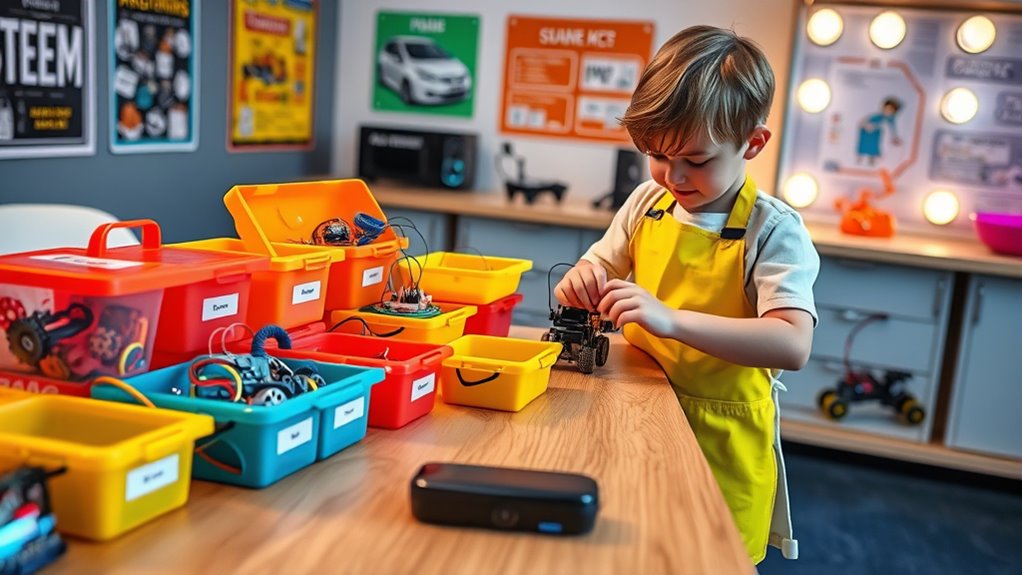

Searching for the best educational STEM kits for kids in 2026? The Learning Resources Pixel Art Challenge stands out as the top overall pick thanks to its creative approach to digital art and problem-solving. The National Geographic Circuit Kit is ideal for budding engineers eager to explore electrical projects, while the Thames & KOSMOS Mega Cyborg Hand offers a hands-on robotics experience. Buyers often face tradeoffs between complexity, price, and age-appropriateness, making it vital to match the kit with a child’s interest and skill level. Keep reading for a detailed comparison to find the best fit for your young learner.

Get the latest gadgets delivered free with Prime
- Fast, free delivery on millions of items
- Prime Video, Amazon Music and more included
- Member-only deals all year
Complete the kit



Key Takeaways
- The most versatile kits combine electronics and engineering projects to keep engagement high across ages.
- Price often correlates with complexity and the number of included projects, but the most expensive isn’t always the best for beginners.
- Age-specific kits help ensure safety and appropriate challenge levels, especially for younger children.
- Some kits prioritize creativity and open-ended exploration, while others focus on structured experiments with clear outcomes.
- Durability and quality of components vary, impacting the long-term value of the kit.
| Learning Resources Pixel Art Challenge – The Original STEM Pixel Art |  | Best for Screen-Free Creative Coding and Math Skills | Brand: Learning Resources | Product Type: STEM pixel art building toy | Recommended Age: 5+ | VIEW ON AMAZON | See Our Full Breakdown |
| National Geographic Circuit Kit for Kids with 120 Electrical Projects |  | Best for Extended Electrical Exploration with Visual Guidance | Brand: National Geographic | Product Type: Electrical circuit kit | Project Count: 120+ | VIEW ON AMAZON | See Our Full Breakdown |
| Thames & Kosmos Mega Cyborg Hand STEM Experiment Kit |  | Best for Mechanical Engineering with Pneumatics and Hydraulics | Brand: Thames & Kosmos | ASIN: B085LRW4VR | Age Range: Big Kid | VIEW ON AMAZON | See Our Full Breakdown |
| National Geographic Earth Science Kit with 100+ Activities for Kids 8-12 |  | Best for Comprehensive Earth Science Exploration | Brand: Blue Marble | Sub Brand: National Geographic | Model Number: NGMEGAEARTH | VIEW ON AMAZON | See Our Full Breakdown |
| Snap Circuits Jr. SC-100 STEM Electronics Kit, 100+ Projects, Ages 8+ |  | Best for Introductory Electrical Engineering Projects | Number of Projects: 100+ | Age Range: 8+ | Parts Included: 29 Snap Circuits parts | VIEW ON AMAZON | See Our Full Breakdown |
| Sillbird 12-in-1 Solar Robot Building Kit – STEM Educational Toy for Kids Ages 8+ |  | Best Overall for Versatile Solar Robotics Education | Brand: Sillbird | Model Number: US-SB-SolarRobot | Pieces: 190 | VIEW ON AMAZON | See Our Full Breakdown |
| National Geographic Amazing Chemistry Set – 100+ Experiments for Kids Ages 8-12 |  | Best for Extensive Chemistry Exploration | Brand: Blue Marble | Sub Brand: National Geographic | Age Range: 8 years and up | VIEW ON AMAZON | See Our Full Breakdown |
| Veecafiodi 50-in-1 STEM Science Kit for Kids Age 6-12, Motorized Building Toy Set |  | Best for Interactive Motorized STEM Building | Brand: Veecafiodi | Model Number: BC-233 | Pieces: 107 | VIEW ON AMAZON | See Our Full Breakdown |
| 5 Individual STEM Science Kits for Kids, Wooden Arts and Crafts (Ages 8-12) |  | Best for Hands-On Wooden Construction and Engineering | Number of Kits: 5 | Theme: Amusement park | Materials: Non-toxic plywood | VIEW ON AMAZON | See Our Full Breakdown |
| Doctor Jupiter My First Science Experiments Kit for Kids Ages 4+ |  | Best for Early STEM Engagement and Simple Experiments | Number of Items: 1 | Included Components: Food Essence, Cups, Stirring Sticks, Spatula, Beaker, Test Tube, Mini Volcano, Tray, Spray Bottle, Funnel, Dinosaur Mould, Dropper, Food Colours, Ingredients | Recommended Age: 4-8 years | VIEW ON AMAZON | See Our Full Breakdown |
| Klutz LEGO Gear Bots Science/STEM Activity Kit |  | Best Hands-On Engineering Experience | Brand: Klutz | Sub Brand: LEGO | Model Number: 9781338603453 | VIEW ON AMAZON | See Our Full Breakdown |
| Doctor Jupiter My First Science Experiments Kit for Kids Ages 4+ |  | Best Early Science Starter Kit | Ages: 4+ | Number of Experiments: 100+ | Safety Standards: ASTM F963-17 | VIEW ON AMAZON | See Our Full Breakdown |
| educational stem kits for kid | Brand | Model Number |
|---|---|---|
| Learning Resources Pixel Art C | Learning Resources | — |
| National Geographic Circuit Ki | National Geographic | — |
| Thames & Kosmos Mega Cyborg Ha | Thames & Kosmos | — |
| National Geographic Earth Scie | Blue Marble | NGMEGAEARTH |
| Snap Circuits Jr. SC-100 STEM | — | — |
| Sillbird 12-in-1 Solar Robot B | Sillbird | US-SB-SolarRobot |
| National Geographic Amazing Ch | Blue Marble | NGMEGACHEMAR |
| Veecafiodi 50-in-1 STEM Scienc | Veecafiodi | BC-233 |
| 5 Individual STEM Science Kits | — | — |
| Doctor Jupiter My First Scienc | Doctor Jupiter | DJ MFSK Starter |
| Klutz LEGO Gear Bots Science/S | Klutz | 9781338603453 |
| Doctor Jupiter My First Scienc | — | — |
More Details on Our Top Picks
Learning Resources Pixel Art Challenge – The Original STEM Pixel Art
This pixel art challenge stands out for offering a hands-on, screen-free way to introduce young kids to fundamental coding and math concepts. Unlike digital coding toys, this foam-based kit encourages spatial reasoning and problem-solving through tactile play. Its 40 challenges progressively increase in difficulty, making it ideal for classroom settings or independent learning. However, the small foam pieces may pose a choking hazard for very young children, and play is confined to the tray size, limiting expansion. Compared to digital options like the Snap Circuits, this is more focused on creative design and fine motor skills. The simplicity for older children might limit engagement, but for kids aged 5 and above, it offers a rich, low-tech STEM experience.
Pros:- Encourages screen-free STEM learning through hands-on play
- Helps develop coding concepts, math skills, and spatial reasoning
- Includes 40 challenges that increase in difficulty
Cons:- Small foam pieces may require supervision for younger children
- Play area is limited by the included tray size
Best for: Families or educators seeking a screen-free, creative STEM activity for early elementary children.
Not ideal for: Parents looking for more complex or digital coding projects for older children beyond age 7.
- Brand:Learning Resources
- Product Type:STEM pixel art building toy
- Recommended Age:5+
- Number of Challenges:40
- Piece Count:400
- Material:Foam
- Tray Size:5.5 x 5.5 inches
- Includes:400 foam pixel pieces, challenge booklet
Our verdict“This pick makes the most sense for young kids who benefit from tactile, screen-free coding and math activities.”
National Geographic Circuit Kit for Kids with 120 Electrical Projects
This National Geographic circuit kit excels in offering over 120 electrical projects, making it ideal for kids eager to explore electricity hands-on. Compared with the Thames & Kosmos Mega Cyborg Hand, which emphasizes pneumatics and hydraulics, this kit provides a broader variety of experiments, from light shows to sound systems. Its snap-together wires make setup straightforward, but the reliance on QR code video instructions means it requires a compatible device, and project scope is limited to included components. While the extensive project list provides great value, some activities might need adult help, especially for younger or less experienced kids. Overall, this kit is best suited for children 8 and up with a curiosity about circuits and a little patience for some supervision.
Pros:- Offers more than 120 electrical projects for extended learning
- Features fun experiments like lights, sounds, and motion
- No tools needed thanks to snap-together wires
- Includes illustrated instructions and QR code video guidance
Cons:- Video instructions depend on device compatibility and scanning capability
- Limited to the included components, restricting project complexity
Best for: Parents and teachers seeking a versatile, visually guided introduction to electrical projects for children aged 8-12.
Not ideal for: Families without access to a device capable of scanning QR codes or those seeking more advanced, kit-expansion options.
- Brand:National Geographic
- Product Type:Electrical circuit kit
- Project Count:120+
- Connection Type:Snap-together wires
- Tools Required:No
- Instructions:Illustrated + QR code video
Our verdict“This kit suits curious kids who enjoy visual guidance and want a wide range of electrical experiments with minimal setup.”
Thames & Kosmos Mega Cyborg Hand STEM Experiment Kit
This kit provides a captivating, mechanical engineering experience by allowing kids to build a hydraulic robotic hand that operates without batteries or motors. Its over 200 plastic pieces and three configurations—left hand, right hand, or claw—offer versatility, while the detailed 40-page manual explains pneumatic and hydraulic systems used in real robotics. Compared with Snap Circuits, which focus on electronics, this kit emphasizes pneumatic principles, making it more suitable for kids interested in mechanical systems. However, the assembly can be challenging for younger children, and water-based hydraulics might leak or create messes during operation. Overall, this kit is best for those wanting a hands-on exploration of pneumatics and robotics with clear real-world applications.
Pros:- Operates on hydraulics and air pressure, no batteries needed
- Multiple configurations and adjustable fit
- Award-winning STEM educational value
- Includes detailed, science-explanatory manual
Cons:- Assembly involves over 200 pieces, which may be overwhelming for younger kids
- Water hydraulics could leak or require careful handling
Best for: Older children or eager learners interested in mechanical systems, hydraulics, and robotics, especially those comfortable with assembly complexity.
Not ideal for: Younger children or families seeking a low-mess, simple STEM activity, as the assembly and water hydraulics may be frustrating or messy.
- Brand:Thames & Kosmos
- ASIN:B085LRW4VR
- Age Range:Big Kid
- Educational Objective:Exploratory Skills, STEM
- Set Name:Mega Cyborg Hand STEM Experiment Kit
- Number of Items:1
- Piece Count:200+
- Configurations:Left hand, right hand, claw
- Power Source:Hydraulic/pneumatic
Our verdict“This pick is perfect for mechanically inclined kids ready for a challenging, real-world engineering project involving pneumatics.”
National Geographic Earth Science Kit with 100+ Activities for Kids 8-12
This expansive kit from National Geographic provides a broad introduction to earth science with over 100 experiments, from erupting volcanoes to crystal growing, making it ideal for young geologists. The inclusion of a full-color Learning Guide helps kids understand the science behind each activity, fostering confidence alongside curiosity. Compared with the Blue Marble Earth Science Kit, which emphasizes a variety of experiments, this kit offers a more structured and detailed educational experience suitable for children 8-12. Some activities may require household supplies or adult assistance, but overall, its extensive range offers excellent value for serious budding scientists. It’s best for kids eager to engage deeply with earth science in a structured, fun way.
Pros:- Over 100 experiments and activities provide variety and value
- Full-color Learning Guide explains science clearly
- Easy-to-follow instructions for ages 8-12
- Trusted national brand with U.S.-based support
Cons:- Some experiments may need extra household supplies
- Certain activities might require adult help or supervision
Best for: Parents and educators wanting a comprehensive, guided earth science kit for children with a strong educational focus.
Not ideal for: Families seeking quick, low-maintenance activities or younger children who might need more supervision.
- Brand:Blue Marble
- Sub Brand:National Geographic
- Model Number:NGMEGAEARTH
- Recommended Age:8+
- Included Components:100+ experiments
- Highlights:Volcanoes, crystal growing, geologic dig
- UPC:816448027611
- Manufacturer:JMW Sales, Inc.
- Best Sellers Rank:#16 in Educational Science Kits
Our verdict“This kit is best suited for young science enthusiasts ready for a wide-ranging, educational earth science experience with guidance.”
Snap Circuits Jr. SC-100 STEM Electronics Kit, 100+ Projects, Ages 8+
This kit stands out for providing over 100 electronic projects that introduce basic electrical engineering concepts in a safe, engaging manner. Unlike the Blue Marble Earth Kit or Thames & Kosmos hydraulic hand, which focus on earth and mechanical sciences, this set emphasizes circuitry and electronics, making it ideal for kids interested in building and experimenting with circuits. Its 29 colorful parts are easy to snap together, and the instructions are straightforward, but it requires batteries (not included), which adds a small extra step. The limited number of parts may restrict project complexity over time, but for beginners, this kit offers a solid foundation in STEM electronics. It’s best suited for kids 8 and up just starting out in electrical engineering.
Pros:- Encourages STEM learning through hands-on circuit projects
- No tools or soldering required, safe for children
- Includes a variety of colorful, easy-to-assemble parts
- Over 100 projects for varied learning experiences
Cons:- Requires batteries not included, adding extra cost
- Limited parts may restrict project complexity over time
Best for: Parents and teachers seeking a beginner-friendly electronics kit with a wide variety of projects for early middle-grade children.
Not ideal for: Families looking for more advanced or expandable electronics sets, as project complexity is somewhat limited by parts count.
- Number of Projects:100+
- Age Range:8+
- Parts Included:29 Snap Circuits parts
- Batteries Required:Yes
Our verdict“This kit makes the most sense for beginners seeking a straightforward, engaging introduction to electronics for children 8 and up.”
Sillbird 12-in-1 Solar Robot Building Kit – STEM Educational Toy for Kids Ages 8+
This kit stands out for offering a wide range of buildable models—12 in total—each with increasing difficulty, making it ideal for kids who enjoy both simple and more complex projects. Its solar panels teach renewable energy concepts effectively, and clear instructions support independent learning, surpassing many basic kits. However, it requires strong sunlight or bright artificial light to operate reliably, which can be limiting indoors or on cloudy days. Compared to the Veecafiodi motorized set, it emphasizes renewable energy learning but offers fewer models and less motorized interaction. This kit is perfect for curious children eager to explore engineering and sustainability with a variety of models, but less suitable for indoor-only use without sufficient light.
Pros:- 12 different buildable models with varying difficulty levels
- Solar-powered, teaching renewable energy concepts
- Clear step-by-step instructions for easy assembly
- Screen-free, educational family activity
Cons:- Requires strong sunlight or artificial light to operate effectively
- May be challenging for younger children without adult help
Best for: Children ages 8-13 interested in renewable energy, engineering, and variety in building challenges.
Not ideal for: Younger kids under 8 or those seeking a purely motorized experience without solar dependency.
- Brand:Sillbird
- Model Number:US-SB-SolarRobot
- Pieces:190
- Buildable Models:12
- Power Source:Solar panel / artificial light
- Recommended Age:10 years and up (manufacturer), 8-13 (listed)
Our verdict“This kit makes the most sense for older children who want a broad, solar-powered robotics experience with educational depth.”
National Geographic Amazing Chemistry Set – 100+ Experiments for Kids Ages 8-12
Compared with the Veecafiodi motorized set, this kit offers a broader range of experiments—over 100—fostering deeper engagement in chemistry concepts. Its inclusion of real scientific tools like test tubes and beakers enhances hands-on learning, and bonus experiments using household items extend replay value. Nonetheless, the core kit only supports 15 experiments without additional supplies, and many of the bonus experiments require extra household items, which could frustrate impatient young learners. It’s well-suited for kids who want a comprehensive, experiment-rich experience and are ready for more detailed scientific exploration, but less ideal for those seeking quick, simple projects or a focus on mechanical building.
Pros:- Over 100 experiments for extended learning and replay
- Includes real scientific tools like test tubes and beakers
- Bonus experiments use common household items
- Award-winning brand with strong support
Cons:- Core kit supports only 15 experiments without additional supplies
- Bonus experiments require extra household items
Best for: Children aged 8-12 eager to explore a wide variety of chemistry experiments with real lab tools.
Not ideal for: Younger children or those primarily interested in mechanical or electrical STEM activities.
- Brand:Blue Marble
- Sub Brand:National Geographic
- Age Range:8 years and up
- Number of Experiments:100+ (15 core + 85 bonus)
- Included Components:Chemistry kit with test tubes, beakers, pipettes, and experiment materials
- Model Number:NGMEGACHEMAR
Our verdict“This kit is ideal for curious kids who want an in-depth chemistry experience with authentic tools and extensive experiments.”
Veecafiodi 50-in-1 STEM Science Kit for Kids Age 6-12, Motorized Building Toy Set
This set excels in offering 50 models, making it ideal for children who enjoy building multiple projects repeatedly. Its integrated motor unit and step-by-step instructions promote active, hands-on learning about mechanics and engineering, surpassing basic non-motorized kits like the Wooden Arts and Crafts set. The motorized feature adds a fun, interactive element, but the limitation of building one model at a time and the need for batteries can be drawbacks. Plus, the plastic construction may feel less durable than wooden kits. It’s best suited for kids who love motorized builds and want high replay value, but less ideal for those seeking long-term display or more durable materials.
Pros:- 50 different models offer high replay value
- Motorized builds add interactive excitement
- Develops STEM skills, logic, and fine motor skills
- Clear, beginner-friendly instructions
Cons:- Can only build one model at a time
- Batteries not included
Best for: Kids aged 6-12 who enjoy motorized models and high variety in building options.
Not ideal for: Children who prefer wooden, non-mechanized projects or need a more durable set for long-term display.
- Brand:Veecafiodi
- Model Number:BC-233
- Pieces:107
- Age Range:6-12 years
- Material:Plastic
- Batteries Required:3 AAA 1.5V (not included)
Our verdict“This set makes the most sense for kids who love motorized projects and want a variety of models to assemble repeatedly.”
5 Individual STEM Science Kits for Kids, Wooden Arts and Crafts (Ages 8-12)
Compared with the more electronic-oriented kits like the National Geographic Chemistry Set, this collection emphasizes wooden construction, appealing to children interested in mechanical assembly and basic engineering. Each of the five amusement park models—Ferris wheel, merry-go-round, windmill, fiber optic lamp, and star nightlight—are designed for easy assembly with clear instructions, promoting curiosity about electric toys and mechanical principles. The non-toxic plywood material provides safety and a tactile experience, but the limited scope to wooden models and the need for adult supervision during assembly might restrict engagement for some children. It’s best suited for young builders who enjoy manual construction and design, though not as engaging for those preferring electronic or chemical activities.
Pros:- Encourages STEM learning and curiosity
- Includes multiple amusement park-themed models
- Made of safe, non-toxic materials
- Easy to assemble with clear instructions
Cons:- Batteries not included for lights
- Assembly may require adult supervision for younger children
- Limited to wooden construction, less appeal for electronic or chemical interests
Best for: Children aged 8-12 interested in mechanical, wooden construction with a focus on amusement park themes.
Not ideal for: Kids seeking electronic, glowing, or chemical experiments rather than wooden models.
- Number of Kits:5
- Theme:Amusement park
- Materials:Non-toxic plywood
- Recommended Age:8-12 years
- Lights:Fiber optic lamp and star nightlight (batteries not included)
Our verdict“This set makes the most sense for young builders who enjoy manual, mechanical construction with a creative theme.”
Doctor Jupiter My First Science Experiments Kit for Kids Ages 4+
This kit makes the list for introducing very young children to STEM through over 50 safe, easy experiments like volcanoes and slime, providing a gentle entry point into science. Its comprehensive set of components and clear instructions help adults guide children through engaging activities, making it ideal for parent-child bonding. Unlike more complex kits like the National Geographic Chemistry Set, this is designed specifically for early learners with simplified, safe experiments that foster curiosity. However, its limited scope and small parts mean it’s best suited for children within the age range of 4-8, and some activities may require adult supervision. It’s a perfect starter kit for kids just beginning to explore science in a safe, fun manner, but not suitable for older children seeking advanced experiments.
Pros:- Over 50 engaging, safe experiments
- Easy-to-follow instructions suitable for children and parents
- Meets high safety standards ensuring safe play
- Perfect for screen-free, educational fun
Cons:- Some experiments require adult supervision
- Small parts pose choking hazards for very young children
- Limited complexity for older kids
Best for: Parents seeking a safe, simple, and engaging STEM experience for children aged 4-8.
Not ideal for: Older children or those looking for more complex or chemical-based experiments for advanced learning.
- Number of Items:1
- Included Components:Food Essence, Cups, Stirring Sticks, Spatula, Beaker, Test Tube, Mini Volcano, Tray, Spray Bottle, Funnel, Dinosaur Mould, Dropper, Food Colours, Ingredients
- Recommended Age:4-8 years
- Safety Standards:ASTM F963-17
- Brand:Doctor Jupiter
- Model Number:DJ MFSK Starter
Our verdict“This kit makes the most sense for preschool and early elementary children beginning their STEM journey with safe, simple activities.”
Klutz LEGO Gear Bots Science/STEM Activity Kit
This kit stands out for combining the familiar appeal of LEGO with genuine mechanical engineering concepts, such as axles, cams, and cranks. Compared to simpler kits like Doctor Jupiter’s, it offers a more complex, reusable building experience, making it ideal for kids who enjoy tangible construction and want to learn about how everyday machines work. The included 64-page instruction book guides children step-by-step, ensuring clarity even for beginners. However, the limited number of models—only eight—means once those are built, replay value drops unless you modify or rebuild. Additionally, the papercraft parts may wear out over time, reducing long-term durability. This pick makes the most sense for children aged 8-12 who love hands-on building and engineering but may find the model variety somewhat restrictive after initial completion.
Pros:- Teaches real engineering principles through hands-on building with axles, cams, and cranks
- Includes all necessary LEGO elements and papercraft components, no extra parts needed
- Clear, detailed instructions suitable for independent or guided learning
Cons:- Limited to only 8 models, which may reduce long-term engagement
- Papercraft parts can tear or wear out with repeated use
Best for: Kids aged 8-12 who enjoy mechanical building and want to learn engineering fundamentals with LEGO bricks.
Not ideal for: Parents seeking a large variety of projects or a kit suitable for younger children under 8, as complexity may be high and model count limited.
- Brand:Klutz
- Sub Brand:LEGO
- Model Number:9781338603453
- Age Range:8-12 years
- Included Components:64-page book, 62 LEGO elements, 10 sheets of papercraft
- Item Type:Kids Arts & Crafts Kit
- Manufacturer:KLUTZ
- Model Year:2021
- UPC:730767603458
Our verdict“This kit is perfect for 8-12-year-olds eager to explore engineering concepts through creative, reusable LEGO builds, though model variety is limited.”
Doctor Jupiter My First Science Experiments Kit for Kids Ages 4+
This kit excels at introducing young children to the excitement of science through over 100 simple, safe experiments like Water Fireworks and Walking Water, making it ideal for early STEM exploration. Unlike the LEGO Gear Bots, which focus on engineering mechanics, this kit emphasizes critical thinking and discovery, nurturing curiosity from a young age. The clear, illustrated instructions are tailored for children as young as 4, with adult supervision recommended for some activities. While the multitude of experiments offers great variety, the age-specific design means it might not challenge older or more advanced kids, and some experiments require adult help. This kit is best suited for parents or educators seeking a comprehensive, safe, and engaging way to foster early interest in science for preschoolers and early elementary students.
Pros:- Encourages early interest in science and STEM concepts with over 100 experiments
- Safe, easy-to-follow instructions suitable for young children with adult supervision
- Meets high safety standards (ASTM F963-17)
Cons:- Requires adult supervision for many experiments, which may limit independent play
- Limited to children aged 4+, so older kids might find it too simple
Best for: Parents or educators wishing to cultivate a love for science in children aged 4 and up, especially beginners with no prior STEM experience.
Not ideal for: Children older than 6 or those with advanced science knowledge, as the activities are designed for early learners and may lack complexity for older kids.
- Ages:4+
- Number of Experiments:100+
- Safety Standards:ASTM F963-17
Our verdict“This kit is ideal for parents and teachers looking to spark a young child’s curiosity with a large variety of safe, hands-on science activities suitable for early learners.”
How We Picked
We evaluated these STEM kits based on a combination of factors including educational value, age appropriateness, ease of use, build quality, and variety of projects. Kits that foster creativity and critical thinking scored higher, especially if they offered hands-on experimentation rather than passive activities. Cost was also considered to identify options that provide good value without sacrificing quality. Our rankings reflect a balanced approach, favoring products that appeal to a broad range of interests while maintaining safety and durability standards.Factors to Consider When Choosing Educational Stem Kits For Kids
Choosing the right STEM kit depends on several key factors. First, consider the child’s age and skill level; a kit that’s too simple or too complex can lead to frustration or boredom. Next, think about the child’s interests—whether they prefer electronics, chemistry, robotics, or creative building—as this will keep them engaged. Durability and safety features matter, especially for younger kids, so look for sturdy components and non-toxic materials. Price is another factor; higher-cost kits often offer more projects and higher-quality parts, but there are excellent budget options that deliver good value. Lastly, consider whether the kit encourages open-ended exploration or guided experiments, depending on whether you want to foster creativity or teach specific concepts.Age and Skill Level
Matching a kit to a child’s age and skill ensures they stay motivated and safe. Kits designed for younger kids (ages 4-6) tend to focus on simple experiments with large, easy-to-handle parts, while older children (ages 8-12) can handle more complex electronics and robotics projects. Oversized or overly simplistic kits may bore advanced kids, whereas overly complicated options can frustrate beginners. Choose a kit that provides a gradual learning curve to keep the child challenged without feeling overwhelmed.
Interest Area
Identifying what excites your child—whether it’s electronics, chemistry, engineering, or creative arts—can make a huge difference in maintaining their enthusiasm. Kits that focus on specific areas offer in-depth learning, like circuit building or chemical reactions. Alternatively, open-ended kits stimulate creativity through free-form projects, fostering problem-solving skills. Considering your child’s current interests and future curiosity can guide you toward a kit that sustains engagement over time.
Durability and Safety
High-quality materials and safety features are essential, especially for younger children. Cheaper kits may include fragile components that break easily or use non-toxic materials that are safer for small hands. Durable parts extend the lifespan of the kit, allowing repeated use and exploration. Always check for certifications or safety standards to ensure the kit meets safety guidelines, giving you peace of mind during active play and learning.
Price and Value
While expensive kits often provide more projects and higher-quality components, budget-friendly options can still deliver substantial educational value. Consider how many projects are included and whether the kit offers expandable features or future upgrades. Sometimes, spending a bit more upfront yields a more durable and engaging experience, but it’s worth weighing whether the additional features align with your child’s interests and your budget.
Open-Ended vs. Guided Projects
Deciding between open-ended kits and guided experiments impacts how your child learns. Open-ended kits encourage creativity, allowing children to design and build their own projects without strict instructions. Guided kits, on the other hand, provide step-by-step instructions for specific outcomes, which can help beginners grasp fundamental concepts. Think about your child’s learning style—some thrive on creative freedom, while others benefit from structured activities that build confidence gradually.
Frequently Asked Questions
Are STEM kits suitable for very young children?
Yes, but it’s important to select kits specifically designed for their age group, usually ages 4-6. These kits focus on simple, safe experiments with large, easy-to-handle parts and minimal small components. They introduce basic scientific concepts through play and can foster a love of learning early on. Always check the manufacturer’s recommended age to ensure safety and appropriate challenge levels for young children.
How do I choose a STEM kit that grows with my child?
Look for kits that offer expandable projects or multiple levels of difficulty, allowing your child to continue learning as they grow. Kits with modular components or additional expansion sets provide ongoing challenges. Also, consider open-ended kits that encourage creative problem-solving, which can adapt to increasing skills over time. This way, the initial investment remains valuable as your child’s interests and abilities develop.
Are electronics kits safe for kids?
Most reputable electronics kits are designed with safety in mind, using low-voltage components and non-toxic materials. Always supervise younger children during use and ensure the kit complies with safety standards. Reading reviews and manufacturer details can help identify kits with safety certifications. Proper guidance helps prevent misuse and maximizes the educational benefits of electronics projects.
Should I prioritize price or quality?
While budget is a factor, investing in a higher-quality kit often provides a more durable and engaging learning experience. Cheaper kits might have fragile parts or limited project options, which can lead to frustration or quick wear and tear. Consider the long-term value—sometimes spending a bit more results in a kit that lasts longer and offers richer educational content, making it a better investment overall.
What is the best way to encourage STEM learning at home?
Creating a dedicated space for STEM activities, providing a variety of kits suited to your child’s interests, and participating in projects together can foster a love of science and engineering. Regularly rotating different kits and introducing new challenges keeps the experience fresh. Encouraging questions, celebrating successes, and allowing free exploration help develop curiosity and critical thinking skills essential for STEM learning.
Conclusion
For parents seeking a comprehensive, versatile experience, the Learning Resources Pixel Art Challenge offers an excellent blend of creativity and technical skill. Those prioritizing the best value should consider kits like the Veecafiodi 50-in-1 Science Kit, which packs multiple experiments into an affordable package. Beginners or younger children will benefit from simple, guided kits like Doctor Jupiter’s First Science Experiments, while advanced learners interested in robotics and electronics should explore options such as the Snap Circuits Jr. or Thames & KOSMOS Mega Cyborg Hand. Ultimately, choosing the right kit depends on your child’s age, interests, and your educational goals—use this guide to find the perfect match for inspiring the next generation of scientists and engineers.
Black Friday Picks

Kindle Paperwhite (16 GB) – 7 Glare-Free Display, Black
As an affiliate, we earn on qualifying purchases.