Based on current reviews, the top cooled CMOS astro cameras for deep sky imaging in 2025 are the SVBONY SV605CC and Astromania SGCMOS. The SV605CC stands out with its high-resolution 9MP sensor and efficient cooling, which reduces thermal noise for sharp, detailed images. The Astromania model offers great sensitivity and affordability for longer exposures. If you’re curious about how these cameras perform in real astrophotography setups, there’s more to discover below.
Key Takeaways
- Top cooled CMOS cameras like SVBONY SV605CC and Astromania SGCMOS offer high-resolution sensors with efficient TEC cooling for deep sky imaging.
- Effective cooling reduces thermal noise by lowering sensor temperature 20-30°C below ambient, enabling longer exposures and clearer images.
- High sensitivity (around 80% quantum efficiency) and large sensors provide better light collection and detailed celestial captures.
- Compatibility with popular astrophotography software and multiple operating systems ensures seamless workflow and user convenience.
- Recent reviews highlight these models’ superior cooling performance, image quality, and value, making them the best choices for 2025 deep sky astrophotography.
SVBONY SV605CC Cooled Camera, 9MP CMOS Telescope Camera
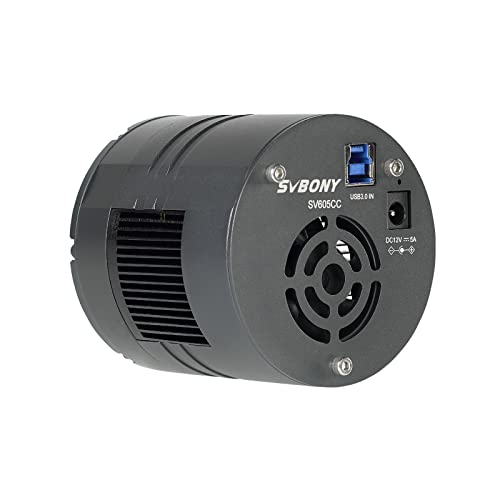

If you’re serious about deep sky astrophotography and need a camera that can handle long exposures without overheating, the SVBONY SV605CC cooled CMOS camera is an excellent choice. It features a 9MP CMOS sensor with a 1-inch square IMX533 chip, offering high resolution and 80% quantum efficiency. The camera’s cooling system can lower temperatures by 30°C below ambient, reducing noise during extended captures. Its compact design, Wi-Fi connectivity, and broad compatibility with Windows, Linux, Mac, and Raspberry Pi make it versatile for indoor and outdoor use. Plus, it includes useful accessories like a wall mount and carrying bag, making setup and transport easier.
Best For: amateur and semi-professional astrophotographers seeking a versatile, budget-friendly cooled camera for deep sky imaging and long exposures.
Pros:
- High-resolution 9MP CMOS sensor with 80% quantum efficiency for detailed imaging
- Effective cooling system that reduces temperature by 30°C below ambient, minimizing noise during long exposures
- Broad compatibility with Windows, Linux, Mac OS, Chrome OS, and Raspberry Pi, enabling flexible use in various setups
Cons:
- Inconsistent cooling performance and potential noise issues reported by users
- Loud fan noise and occasional cooling stability problems requiring resets
- Frame dropping and residual glow can affect image quality, necessitating calibration and post-processing
Astromania SGCMOS Series Telescope CMOS Camera

The Astromania SGCMOS Series Telescope CMOS Camera stands out as a budget-friendly option for amateur astrophotographers seeking reliable guiding and imaging capabilities. It features a high-sensitivity sensor with a fast frame rate and long exposure support, making it suitable for auto-guiding and multicolour astrophotography. Its aluminum CNC housing includes a 1.25-inch nosepiece for filters and focusing, along with a built-in ST4 guide port for easy connections. While it supports Windows, Linux, and limited Mac functions, driver issues can pose challenges, especially with Windows 10/11. Overall, it’s a solid choice for beginners on a budget, despite some sensitivity and compatibility limitations.
Best For: beginner and budget-conscious amateur astrophotographers seeking reliable guiding and imaging capabilities without high-end investment.
Pros:
- Affordable price point suitable for beginners
- Supports auto-guiding with built-in ST4 port and long exposure capabilities
- Compatible with Windows, Linux, and limited Mac functions for versatile use
Cons:
- Driver signing issues and compatibility problems with Windows 10/11 and Mac
- Limited sensitivity compared to higher-end astrophotography cameras
- C-mount nose limits lens options; CS-mount preferred for flexibility
Factors to Consider When Choosing Cooled CMOS Astro Cameras for Deep Sky Imaging

When selecting a cooled CMOS astro camera, I focus on cooling efficiency and stability to guarantee clear images, especially during long exposures. I also consider sensor resolution and sensitivity to capture fine details in deep sky objects, along with compatibility with my imaging software. Finally, I look for noise reduction features and ease of setup to make my imaging sessions smoother and more productive.
Cooling Efficiency and Stability
Have you ever noticed how thermal noise can ruin long-exposure astrophotography? Effective cooling, mainly through TEC, can lower sensor temperatures by 20-30°C below ambient, considerably reducing noise. But cooling efficiency isn’t just about how cold the camera gets—it’s also about stability. A well-designed thermal system with double-layer semiconductors and good heat dissipation keeps temperatures consistent, preventing fluctuations that cause noise variations during imaging. Some cameras struggle with maintaining stable temperatures, requiring frequent resets or manual tweaks, which can be frustrating. Proper thermal management, including good airflow and heat sinking, is essential to keep temperatures steady during extended sessions. Reliable cooling stability ensures your images stay clean and consistent, making a big difference in deep sky astrophotography.
Sensor Resolution and Sensitivity
Ever wondered how sensor resolution and sensitivity influence deep sky imaging? Higher sensor resolution, like 9MP or more, captures finer details of celestial objects but demands more processing power and storage. Sensitivity, measured by quantum efficiency (around 80%), determines how well the camera detects faint signals, essential for low-light conditions. Larger sensors, such as 1-inch or bigger, offer wider fields of view and improved light collection, enhancing image quality. Pixel size, typically around 3.76μm, affects both resolution and noise; smaller pixels provide sharper images but may need longer exposures to gather enough light. Ultimately, a camera’s dynamic range and noise performance at high resolution are critical for capturing subtle brightness variations and ensuring detailed, high-quality deep sky images.
Compatibility With Software
Choosing a cooled CMOS astro camera that seamlessly integrates with your preferred software is essential for smooth deep sky imaging. I always check if the camera supports popular programs like SharpCap, PHD2, or Nebulosity to avoid compatibility headaches. It’s also crucial that it supports standard drivers such as ASCOM, INDI, or WDM, ensuring compatibility across Windows, Linux, and Mac OS. Raw data output options are a plus, as they give me more flexibility in post-processing. I also verify that the camera’s drivers are digitally signed and regularly updated to prevent issues with current operating systems like Windows 10/11 or macOS. Lastly, manufacturer support and ongoing software updates are critical for maintaining compatibility and gaining access to new features or bug fixes over time.
Noise Reduction Capabilities
How effectively a cooled CMOS astro camera reduces noise can make or break your deep sky images. Cooling mechanisms like TEC (thermoelectric cooling) lower sensor temperatures, substantially reducing thermal noise during long exposures. The colder the sensor, typically measured in degrees Celsius below ambient, the better the noise suppression and image clarity. High-quality CMOS sensors with optimized pixel design and advanced readout circuitry further minimize read noise, boosting image quality. Firmware and software algorithms also play a vital role by performing real-time noise filtering and post-processing enhancements. Proper calibration, especially dark frame subtraction, maximizes noise reduction. When choosing a camera, consider how well its cooling system, sensor design, and software work together to deliver cleaner, more detailed astrophotos.
Ease of Setup and Use
When selecting a cooled CMOS astro camera, ease of setup and use are crucial factors that can save you time and frustration during your imaging sessions. Cameras with user-friendly interfaces and straightforward installation procedures make the process quick and manageable, even for beginners. Compatibility with common astrophotography software and driver support ensures smooth integration and operation, reducing technical hurdles. Features like automatic focus, adjustable exposure settings, and remote control capabilities streamline the workflow, letting you focus on capturing images rather than troubleshooting. Clear manuals and online tutorials further simplify setup and troubleshooting, saving valuable time. Additionally, compact designs and included accessories like adapters and mounts enable quick assembly and minimal additional equipment, making the entire process efficient and enjoyable.
Frequently Asked Questions
How Does Cooling Efficiency Impact Image Quality in CMOS Astro Cameras?
Cooling efficiency directly impacts image quality because it reduces thermal noise in CMOS astro cameras. When the sensor stays cooler, there’s less heat-generated interference, leading to cleaner, sharper images with better detail. I’ve noticed that even a slight improvement in cooling can markedly enhance image clarity, especially during long exposures. So, investing in a camera with efficient cooling helps me capture deeper, more accurate astrophotography results.
What Is the Typical Lifespan of Cooled CMOS Sensors in Astrophotography?
The typical lifespan of cooled CMOS sensors in astrophotography is around 5 to 10 years, but it can vary based on usage and operating conditions. I’ve found that proper maintenance, like keeping the sensor clean and avoiding extreme temperatures, helps extend its life. Regular calibration and cautious handling are key to ensuring your camera performs well for as long as possible, giving you many years of excellent deep-sky imaging.
Are There Specific Software Requirements for Operating Cooled CMOS Astrophotography Cameras?
Think of operating cooled CMOS astrophotography cameras like tuning a musical instrument—you need the right software to hit all the right notes. Most cameras require dedicated control software, often provided by manufacturers, to adjust cooling, exposure, and gain settings. Compatibility with your computer’s operating system is key. I recommend checking for updates and drivers before diving into deep sky shots, ensuring a smooth symphony of celestial captures.
How Do Temperature Variations Affect CMOS Sensor Performance During Long Exposures?
Temperature variations can considerably impact CMOS sensor performance during long exposures. When the sensor heats up, it causes increased noise and reduces image quality. I always monitor and control the temperature carefully, using cooling systems to maintain a stable environment. By keeping the sensor cool and consistent, I minimize noise and ensure clearer, more detailed astrophotography results, especially during extended imaging sessions.
What Maintenance Is Needed to Keep Cooled CMOS Cameras Optimal Over Time?
Think of your cooled CMOS camera as a trusted companion on your celestial journey. To keep it in top shape, I regularly clean the sensor with proper tools, check and replace the cooling system’s filters, and update the firmware. I also store it in a dust-free, dry environment and run calibration frames before imaging sessions. This routine guarantees my camera stays sharp, reliable, and prepared to reveal the universe’s secrets.
Conclusion
Think of choosing a cooled CMOS astro camera like selecting a trusted compass for a night voyage. With the right tool—whether the SVBONY SV605CC or the Astromania SGCMOS—you’ll navigate the depths of the sky with confidence. Remember, the best camera isn’t just about specs; it’s about how well it guides you through the darkness. Pick wisely, and your journey into deep sky imaging will be clear, rewarding, and full of wonder.