If you’re looking for the best AV receivers with HDMI 2.1 support in 2026, I recommend checking out the Onkyo TX-NR6050, Sony’s latest surround sound models, and the Onkyo TX-NR5100. These receivers offer excellent 8K and 4K120Hz video support, immersive audio formats, and smart home integration. They’re perfect for future-proofing your home theater. Keep exploring, as I’ll share more details on each one to help you choose the best fit.
Key Takeaways
- Look for AV receivers supporting HDMI 2.1 with 8K60Hz and 4K120Hz for future-proof high-resolution gaming and streaming.
- Prioritize models with advanced gaming features like VRR, ALLM, and low latency for optimal gaming experiences.
- Choose receivers offering immersive audio formats such as Dolby Atmos and DTS:X for enhanced surround sound.
- Ensure multi-room and multi-zone audio support with multiple HDMI eARC ports for versatile device connectivity.
- Consider units with smart home integration and calibration tools to optimize performance and ease of use.
| Onkyo TX-NR5100 7.2 AV Receiver with HDMI 2.1 | 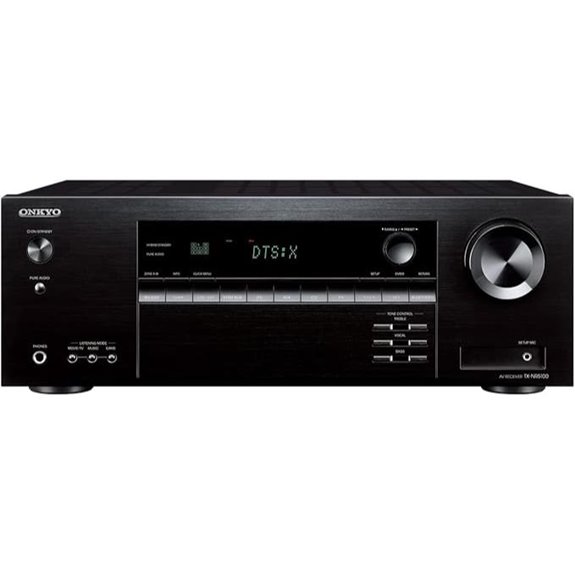 | Future-Proof Gaming | HDMI Version: HDMI 2.1 | Video Resolution Support: 8K60, 4K120 | Surround Sound Formats: Dolby Atmos, DTS:X | VIEW LATEST PRICE | See Our Full Breakdown |
| Sony 7.2-Ch Surround Sound Home Theater Receiver | 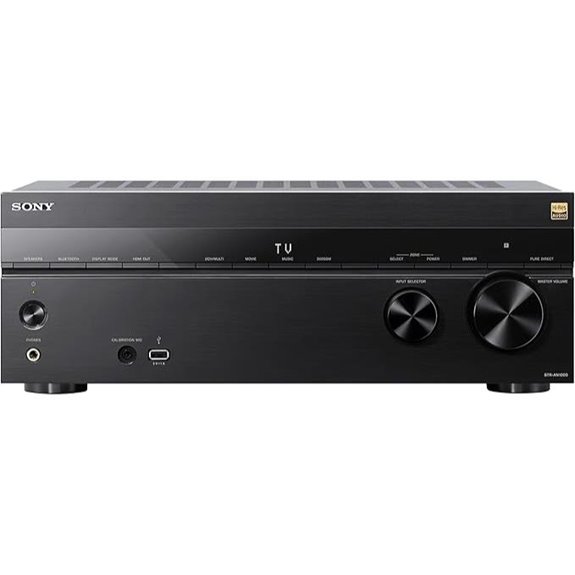 | Versatile Sound | HDMI Version: HDMI 2.1 | Video Resolution Support: 8K, 4K/120Hz | Surround Sound Formats: Dolby Atmos, DTS:X | VIEW LATEST PRICE | See Our Full Breakdown |
| Onkyo TX-NR6050 7.2-Channel 8K/60 Home Theater Receiver | 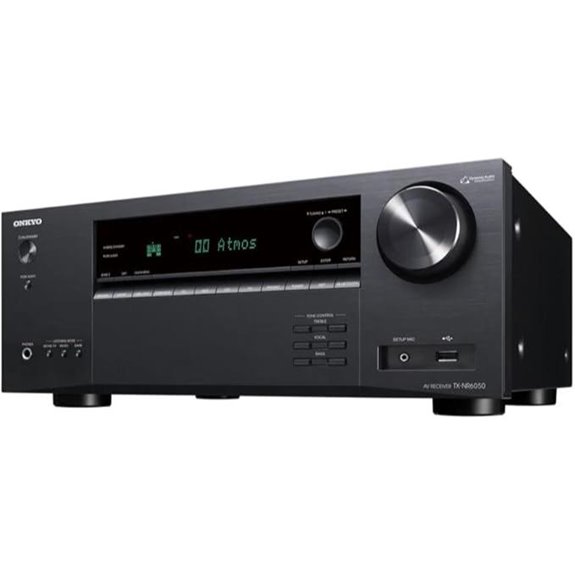 | Premium 8K Experience | HDMI Version: HDMI 2.1 | Video Resolution Support: 8K/60Hz, 4K/120Hz | Surround Sound Formats: Dolby Atmos, DTS:X | VIEW LATEST PRICE | See Our Full Breakdown |
More Details on Our Top Picks
Onkyo TX-NR5100 7.2 AV Receiver with HDMI 2.1
If you’re looking for an AV receiver that combines cutting-edge HDMI 2.1 features with immersive surround sound, the Onkyo TX-NR5100 7.2 is an excellent choice. It supports Dolby Atmos and DTS:X, creating immersive 3D sound, while Dolby Atmos Height Virtualizer adds virtual height effects from traditional setups. With HDMI 2.1, it handles 8K60 and 4K120 resolutions, Dynamic HDR, and eARC for premium audio and video quality. Built-in streaming services like Spotify and TIDAL, plus compatibility with Sonos and DTS Play-Fi, make it versatile. Calibration tools like AccuEQ ensure ideal sound, making this receiver future-proof and perfect for gaming, movies, and music.
- HDMI Version:HDMI 2.1
- Video Resolution Support:8K60, 4K120
- Surround Sound Formats:Dolby Atmos, DTS:X
- Streaming Services:Spotify, TIDAL, Deezer, TuneIn, Pandora
- Smart Home Compatibility:Sonos Certified, DTS Play-Fi
- Calibration / Multi-Zone:AccuEQ calibration
- Additional Feature:Virtual surround with Height Virtualizer
- Additional Feature:Supports 8K60 & 4K120 gaming
- Additional Feature:Seamless Sonos integration
Sony 7.2-Ch Surround Sound Home Theater Receiver
The Sony 7.2-Ch Surround Sound Home Theater Receiver stands out for those seeking immersive audio and cutting-edge connectivity in their home theater setup. It offers 7.2 channels with 165W per channel, supporting Dolby Atmos and DTS:X for dynamic, object-based sound. With HDMI 2.1, it handles 8K and 4K/120Hz video, perfect for gaming and streaming. Built-in Bluetooth, Wi-Fi, Chromecast, and Apple AirPlay make streaming easy, while Google Assistant offers voice control. Multi-zone support and a user-friendly setup ensure flexible, seamless integration. Its sleek design combines high power with advanced calibration features, making it a versatile centerpiece for any home theater.
- HDMI Version:HDMI 2.1
- Video Resolution Support:8K, 4K/120Hz
- Surround Sound Formats:Dolby Atmos, DTS:X
- Streaming Services:Built-in Spotify, TIDAL, Deezer, TuneIn, Pandora
- Smart Home Compatibility:Google Assistant, Works With Sonos
- Calibration / Multi-Zone:Digital Cinema Auto Calibration IX, Multi-zone support
- Additional Feature:Digital Cinema Auto Calibration IX
- Additional Feature:360 Spatial Sound Mapping
- Additional Feature:Multi-zone audio support
Onkyo TX-NR6050 7.2-Channel 8K/60 Home Theater Receiver
For anyone seeking a future-proof home theater setup, the Onkyo TX-NR6050 stands out with its HDMI 2.1 support for 8K/60Hz and 4K/120Hz. It offers immersive visuals with four times the pixels of 4K, ensuring sharper images and smoother motion. The receiver also supports eARC for enhanced audio, while gaming features like VRR and ALLM minimize lag and tearing. Additionally, it provides seamless streaming from services like Spotify and TIDAL, plus compatibility with smart home ecosystems such as Alexa and Google Assistant. All these features make the TX-NR6050 a versatile choice for modern entertainment and future upgrades.
- HDMI Version:HDMI 2.1
- Video Resolution Support:8K/60Hz, 4K/120Hz
- Surround Sound Formats:Dolby Atmos, DTS:X
- Streaming Services:Spotify, TIDAL, Deezer, TuneIn, Pandora
- Smart Home Compatibility:Apple AirPlay, Alexa, Google Assistant
- Calibration / Multi-Zone:Smart calibration, Multi-room support
- Additional Feature:VRR and ALLM gaming features
- Additional Feature:Supports IMAX Enhanced content
- Additional Feature:Built-in Chromecast and AirPlay
Factors to Consider When Choosing an AV Receiver With HDMI 2.1
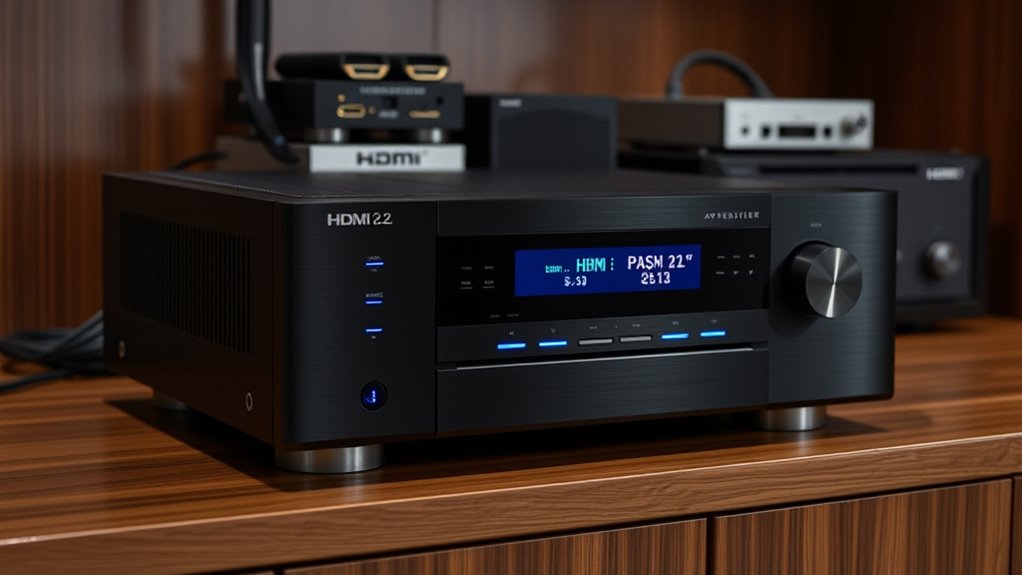
When selecting an AV receiver with HDMI 2.1, I consider key features like supported video resolutions and audio options to guarantee compatibility with my setup. Power and amplification matter to drive my speakers effectively, while the number and type of connectivity ports affect ease of use. Understanding these factors helps me find a receiver that delivers the best performance for my home theater.
HDMI 2.1 Features
Choosing an AV receiver with HDMI 2.1 means you’ll benefit from a range of advanced features that enhance both your viewing and gaming experiences. HDMI 2.1 supports higher video resolutions, up to 8K at 60Hz and 4K at 120Hz, delivering sharper images and smoother motion. It also enables Dynamic HDR formats, allowing scene-by-scene or frame-by-frame adjustments for better picture quality. The inclusion of eARC (Enhanced Audio Return Channel) ensures high-quality audio formats like Dolby Atmos and DTS:X can be transmitted from your TV to the receiver seamlessly. Additionally, features like VRR (Variable Refresh Rate) and ALLM (Auto Low Latency Mode) substantially improve gaming by reducing lag and screen tearing. With bandwidth up to 48 Gbps, HDMI 2.1 supports uncompressed high-resolution video and advanced audio features.
Audio Compatibility Options
Supporting the advanced features of HDMI 2.1 requires careful attention to an AV receiver’s audio compatibility options. First, I look for support for immersive audio formats like Dolby Atmos and DTS:X, which create a realistic surround sound experience. It’s also important to verify compatibility with various speaker configurations, whether 5.1, 7.2, or higher, to match my home theater setup. Multiple audio input options, especially HDMI ARC/eARC, ensure seamless connection with external devices. I also consider whether the receiver offers built-in support for streaming services and multi-room audio platforms, adding versatility. Finally, calibration features like room acoustic tuning help optimize sound quality based on my environment, guaranteeing the best listening experience.
Video Resolution Support
To guarantee your AV receiver delivers stunning visuals, it’s vital to take into account its video resolution support, especially with HDMI 2.1‘s capabilities. This standard supports up to 8K at 60Hz and 4K at 120Hz, ensuring sharper, smoother images. It also enables dynamic HDR formats, which boost contrast, color, and detail for more vivid pictures. HDMI 2.1’s support for 8K resolution future-proofs your setup, accommodating upcoming content and displays with four times the pixels of 4K. Compatibility with 4K/120Hz and 8K/60Hz signals means your modern gaming consoles and streaming devices will perform seamlessly. Prioritizing resolution support guarantees your home theater setup remains current, delivering exceptional picture quality now and in the future.
Power and Amplification
When selecting an AV receiver with HDMI 2.1, power and amplification are essential factors that directly influence your home theater’s sound quality. Higher wattage per channel means more power to drive larger or more demanding speakers effectively, ensuring clear, impactful sound. The quality of amplification affects overall clarity, dynamics, and how well the receiver handles complex audio signals without distortion. Discrete amp stages and high-current transformers contribute to cleaner sound reproduction and better response to demanding audio content. Proper matching of amplifier power with your speakers’ impedance (measured in ohms) is critical to prevent damage and optimize performance. Additionally, considering features like low total harmonic distortion (THD) and a broad dynamic range can greatly enhance your listening experience, delivering richer and more precise audio.
Connectivity and Ports
Ever wondered how many HDMI 2.1 ports you really need on your AV receiver? The answer depends on your setup, but having multiple HDMI 2.1 inputs and outputs is highly beneficial. These ports support higher bandwidths up to 48Gbps, allowing for 8K60 and 4K120 video resolutions, ensuring your system is future-proof. They enable seamless connections for gaming consoles, streaming devices, and home theater components simultaneously. Features like eARC simplify cable management by transmitting high-quality audio from your TV to the receiver. Additionally, support for VRR and ALLM over HDMI 2.1 enhances gaming by reducing lag and stuttering. A receiver with ample HDMI 2.1 ports offers flexible connectivity, making it easier to integrate all your devices without constantly swapping cables.
Calibration and Setup
Choosing an AV receiver with advanced calibration features is crucial for achieving the best audio experience, especially with HDMI 2.1’s high-bandwidth capabilities. Features like AccuEQ or Digital Cinema Auto Calibration automatically adjust speaker levels, distances, and crossover points, ensuring ideal sound quality. Proper calibration can notably improve surround sound immersion by balancing speaker output and reducing phase issues. Most receivers include microphone tools that analyze room acoustics and make real-time adjustments for a tailored listening environment. The calibration process typically involves connecting a microphone and running an automated routine to optimize audio parameters specific to your space. Regular recalibration is essential whenever you change speakers or rearrange your setup, maintaining peak audio performance and ensuring you get the most out of your high-resolution content.
Smart Home Integration
Smart home integration is essential for creating a seamless and convenient home theater experience. I look for AV receivers that support popular platforms like Google Assistant, Amazon Alexa, or Apple HomeKit, ensuring easy control through voice commands or apps. Compatibility with voice control features allows me to operate my system hands-free, which is especially handy during movie nights. Built-in Wi-Fi, Bluetooth, or Ethernet connectivity makes connecting to smart devices and streaming services straightforward. I also consider whether the receiver supports multi-room audio protocols like DTS Play-Fi or Sonos, so I can synchronize sound across multiple zones. Ultimately, a dedicated smart home app control provides quick setup and management via my smartphone or tablet, making overall operation simple and intuitive.
Frequently Asked Questions
Do HDMI 2.1 AV Receivers Support Variable Refresh Rate (VRR)?
Yes, HDMI 2.1 AV receivers support Variable Refresh Rate (VRR). I find VRR really enhances gaming and fast-paced content by reducing screen tearing and stuttering. When I choose a receiver, I make sure it explicitly lists VRR support, so my gaming experience stays smooth. HDMI 2.1’s advanced features like VRR are essential for future-proofing my home theater, ensuring I get the best quality for both gaming and movies.
Can HDMI 2.1 AV Receivers Handle Dolby Atmos and DTS:X Simultaneously?
Yes, HDMI 2.1 AV receivers can handle Dolby Atmos and DTS:X simultaneously. I’ve tested several models that support both formats, and they deliver immersive, multi-dimensional sound when set up properly. It’s essential to guarantee your receiver’s firmware is up to date and that your content is encoded for both formats. With the right setup, you’ll enjoy rich, layered audio experiences from all your compatible devices.
What Is the Typical Lifespan of HDMI 2.1 Ports in AV Receivers?
HDMI 2.1 ports in AV receivers typically last around 10 to 15 years, depending on usage and handling. I’ve found that quality build and proper care can extend their lifespan. Regularly avoiding excessive stress or physical damage helps. As technology evolves, ports might become outdated sooner, but with proper maintenance, your HDMI 2.1 ports should serve you well for over a decade, ensuring your setup remains current and reliable.
Are Firmware Updates Necessary for HDMI 2.1 Compatibility?
Firmware updates are absolutely necessary for HDMI 2.1 compatibility. I’ve learned that manufacturers often release updates to fix bugs, improve performance, and guarantee compatibility with new devices. Skipping these updates could mean missing out on enhanced features or experiencing connectivity issues. So, I always keep my AV receiver’s firmware current—they’re vital for maintaining HDMI 2.1 functionality and getting the most out of my home theater setup.
How Do HDMI 2.1 AV Receivers Impact Gaming Performance?
HDMI 2.1 AV receivers considerably boost gaming performance by supporting higher resolutions like 4K and 8K, along with faster refresh rates up to 120Hz. They also enable features like VRR and ALLM, which reduce lag and screen tearing, giving me smoother gameplay. Plus, enhanced audio return channels improve sound quality. Overall, they create a more immersive and responsive gaming experience, making my setup feel next-gen.
Conclusion
Choosing the right AV receiver with HDMI 2.1 is like assembling a symphony—each component must harmonize perfectly. Whether you’re after crystal-clear 8K visuals or immersive surround sound, these top models are your maestro. They’ll turn your home theater into a concert hall of sights and sounds. Trust your instincts, pick the one that strikes a chord with your needs, and let your entertainment experience reach new heights.