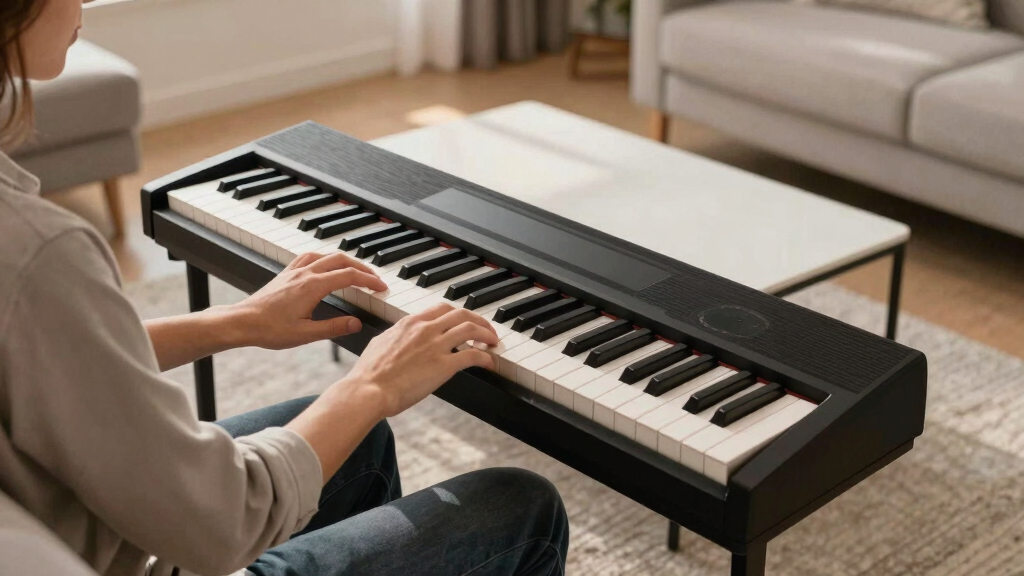

If you’re searching for the best digital pianos for beginners with weighted keys, you’re likely looking for an option that offers realistic feel, ease of use, and good value. The Yamaha P71 stands out as the overall best choice, thanks to its authentic weighted action and reliable build. For those on a budget, the Donner DEP-20 offers solid features at a lower price, while the MOSEN Beginner Digital Piano provides portability without sacrificing key feel. Finding the right balance between realistic touch, affordability, and additional features can be tricky, as many models compromise on one aspect or another. Keep reading for a detailed breakdown to help you choose the best fit for your needs.
Key Takeaways
- The most realistic weighted key action typically comes from semi-weighted or hammer-action mechanisms, which are often found in mid-range models.
- Portability varies widely; some models are designed to be lightweight and portable, while others include furniture-style stands for a more permanent setup.
- Built-in features like lessons, recording, and connectivity options add significant value but often come with a higher price tag.
- Price differences often reflect build quality and key action realism; investing more generally yields a more authentic playing experience.
- Beginners benefit from models that balance simplicity and essential features, avoiding overly complex interfaces or excessive functions.




More Details on Our Top Picks
MOSEN Beginner Digital Piano 88 Keys Weighted, Portable Electric Piano Set with Full Size Keyboard, Triple Sustain Pedal, Stable Dual X Stand, USB-MIDI, Keyboard Stickers, for Beginners Adults
This MOSEN model stands out for its full 88 hammer-action weighted keys that closely mimic the touch of an acoustic piano, making it a top choice for those serious about developing proper finger strength. Compared to the Yamaha P71, it offers adjustable touch sensitivity, which helps tailor the response to different skill levels and styles, though the P71’s simplicity means fewer settings but a more straightforward experience. The inclusion of a triple pedal unit enhances expressive playing, rivaling the functionality of higher-end models like the AODSK B-85, but at a more affordable price point. Its built-in 128 tones and 128-note polyphony provide a richer sound palette than many beginner models, useful for practice and casual performances. However, the impact-resistant ABS construction is heavier than some portable options, and the LCD display, while clear, adds to the overall size. This pick makes the most sense for beginners who want a realistic, durable, and versatile instrument that can grow with their skills, but might be less ideal for those seeking a lightweight, travel-ready piano.
Specs: Number of Keys: 88, Skill Level: Beginner, Special Features: Built-In Speaker, Compact, Duo Mode, Hammer Action, Connector Type: MIDI USB, Connectivity Technology: USB, Power Source: Corded Electric, Headphones Jack: 3.5mm, Weight: 16.78 kgPros:- Full hammer-action weighted keys mimic real piano touch
- Adjustable touch sensitivity for personalized response
- Includes triple sustain pedal for expressive playing
- Rich sound library with 128 tones
Cons:- Heavier and less portable than compact models like the Yamaha P71
- LCD screen adds size and complexity for casual users
Best for: Beginners who want an authentic piano feel with room for creative expression at home or in a studio
Not ideal for: Travelers or those needing ultra-lightweight gear, as this setup is relatively heavy and best suited for stationary use
- Number of Keys:88
- Skill Level:Beginner
- Special Features:Built-In Speaker, Compact, Duo Mode, Hammer Action
- Connector Type:MIDI USB
- Connectivity Technology:USB
- Power Source:Corded Electric
- Headphones Jack:3.5mm
- Item Weight:16.78 kg
Bottom line: Ideal for beginners seeking a realistic, versatile digital piano that can support long-term skill development.
UISCOM 88 Key Weighted Digital Piano – Wooden Desk Electric Piano Transforms Between Desk and Vanity – Progressive Hammer-Action Keyboard, Perfect for Beginners with MIDI Functionality
This UISCOM model makes a statement as a stylish piece of furniture with its elegant wood grain finish, ideal for those who want their digital piano to blend seamlessly into home decor. In contrast to the more utilitarian AODSK B-85, this model offers a unique transformable design that doubles as a desk or vanity, appealing to space-conscious users. Its progressive hammer-action keys deliver a responsive touch that satisfies beginners eager to experience a real piano feel, though the overall weight and size make it less portable than compact models like the Yamaha P71. The 8 tones and 40 demo songs provide a good starting point for musical exploration, and the MIDI functionality unlocks creative possibilities with external devices. However, the absence of a triple pedal set means less nuanced control than the AODSK B-85, and the build might feel less substantial for heavy daily use. This makes the most sense for users prioritizing aesthetic appeal and versatility in a home environment, but less so for traveling musicians or those with limited space.
Specs: Number of Keys: 88, Skill Level: All, Special Features: Transformable Design, Hammer Action, MIDI Functionality, Connectivity: USB, Power Source: Corded Electric, Headphones Jack: Not specified, Weight: Not specifiedPros:- Transformable between desk and vanity for versatile placement
- Progressive hammer-action keys for realistic feel
- Includes MIDI capabilities for expanded creative options
- Elegant wood grain finish complements home decor
Cons:- Heavier and bulkier than portable models, limiting mobility
- Lacks a triple pedal set, reducing expressive control
Best for: Home users who value a stylish, multifunctional desk or vanity setup without sacrificing realistic touch
Not ideal for: Travelers or performers needing a lightweight, portable instrument with multiple pedal controls
- Number of Keys:88
- Skill Level:All
- Special Features:Transformable Design, Hammer Action, MIDI
- Connectivity Technology:USB
- Power Source:Corded Electric
- Headphones Jack:Not specified
- Item Weight:Not specified
Bottom line: Best suited for home environments where aesthetic appeal and versatility are as important as touch realism.
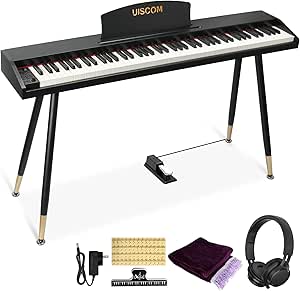
UISCOM Digital Piano Keyboard for Beginners, Full Size 88 Key Semi-Weighted Keyboard Electric Piano with Stand, Power Adapter, Sheet Music Stand, Pedal, Headphone, USB-MIDI Compatibility, Wood Black
This UISCOM model is a comprehensive starter kit, combining a semi-weighted 88-key keyboard with a stand, pedals, and accessories, making it excellent for those just beginning their piano journey. Unlike the Yamaha P71, which offers a more traditional and simple experience, this set provides a wealth of features like 80 demo songs, 600 tones, and 800 rhythms, encouraging experimentation and learning. Its semi-weighted keys respond well for beginners, providing a lighter touch that eases into full piano playing, but they don’t quite match the realism of fully weighted keys like the AODSK B-85. The included stand and pedals make it a versatile option for home practice and small performances, yet its bulk and weight make it less portable than the MOSEN. Its extensive media capabilities and connectivity options make it ideal for learners who want to explore digital features alongside playing. However, the build quality may feel less durable over time compared to more premium models. This model suits beginners who want a feature-rich, all-in-one setup, but less so for those seeking a compact or travel-ready instrument.
Specs: Number of Keys: 88, Skill Level: All, Special Features: Semi-Weighted Keys, Multiple Voices, Rhythms, Connectivity: USB-MIDI, Power Source: Power Adapter, Headphones Jack: 3.5mm, Item Dimensions: 52.25 x 11.5 x 6 inchesPros:- Full 88 semi-weighted keys for responsive playing
- Includes stand, pedal, and accessories for complete setup
- Wide range of tones, demo songs, and rhythms for musical exploration
- USB-MIDI compatibility for connection to software and apps
Cons:- Relatively bulky and heavy for portability
- Keys are semi-weighted, so less authentic feel than fully weighted models like AODSK B-85
Best for: Beginners seeking an all-in-one digital piano with extensive features and accessories for home practice
Not ideal for: Travelers or performers requiring lightweight, portable instruments with minimal setup
- Number of Keys:88
- Skill Level:All
- Special Features:Semi-Weighted Keys, Multiple Tones, Rhythms
- Connectivity Technology:USB-MIDI
- Power Source:Power Adapter
- Headphones Jack:3.5mm
- Item Dimensions:52.25 x 11.5 x 6 inches
Bottom line: Great for beginners who want a feature-packed, ready-to-play digital piano for home use and learning.
AODSK 88-Key Weighted Hammer Action Digital Piano with Speakers, Furniture Stand and Triple Pedals, Beginner’s Course – B-85
The AODSK B-85 makes a compelling case as a home digital piano with its full 88 weighted hammer-action keys that closely replicate a grand piano’s touch. Compared to the Yamaha P71, it offers a more substantial build with a dedicated furniture stand and triple pedal set, giving it a more authentic and expressive performance capability. Its 8 professional tones and 128-note polyphony allow for rich layering and nuanced playing, suitable for serious beginners and intermediate learners. While its weight of nearly 80 pounds limits portability, this is a tradeoff for a more durable, studio-ready experience. The inclusion of a full set of pedals and a sleek design makes it ideal for dedicated practice spaces, but it may be overkill for casual or traveling players. This model is best for those looking for an authentic, full-featured home instrument that emulates a real piano, though less ideal for frequent movers or space-constrained environments.
Specs: Number of Keys: 88, Skill Level: Beginner to Intermediate, Special Features: Hammer Action, Triple Pedals, Built-In Speakers, Connectivity: Not specified, Power Source: Not specified, Headphones Jack: Not specified, Item Dimensions: 52.36 x 29.92 x 12 inches, Weight: 79.19 poundsPros:- Full 88 hammer-action weighted keys for authentic touch
- Includes furniture stand and triple pedal set for expressive playing
- Multiple high-quality tones and 128-note polyphony for versatile sound
- Solid build suited for long-term daily use
Cons:- Very heavy and not easily portable
- Limited connectivity options mentioned, less suited for external device integration
Best for: Home players seeking a realistic, durable piano with full pedal control and a premium feel
Not ideal for: Travelers or students with limited space who need a lightweight, portable solution
- Number of Keys:88
- Skill Level:Beginner to Intermediate
- Special Features:Hammer Action, Triple Pedals, Built-In Speakers
- Operating System:Not specified
- Connectivity Technology:Not specified
- Headphones Jack:Not specified
- Item Dimensions:52.36 x 29.92 x 12 inches
- Weight:79.19 pounds
Bottom line: Perfect for serious students and home players who prioritize authenticity and durability over portability.
YAMAHA P71 88-Key Weighted Action Digital Piano with Sustain Pedal and Power Supply (Amazon-Exclusive)
The Yamaha P71 is a standout choice for beginners seeking a straightforward, reliable digital piano with an authentic acoustic feel. Its weighted keys deliver a true piano touch, suitable for developing proper finger technique, though it does lack the advanced features of models like the MOSEN or UISCOM. Compared to the MOSEN, it offers a simpler interface with one-button operation, making it perfect for beginners who prefer minimal setup and fuss. Its 10 voices, including a highly regarded grand piano sound, provide enough variety for practice and casual playing. The included sustain pedal enhances expressive control, but the absence of MIDI connectivity limits integration with external devices compared to the UISCOM models. Being the lightest in weight among the options, it’s ideal for those who want portability in addition to realism, but less suitable for advanced performers or those needing extensive features.
Specs: Number of Keys: 88, Skill Level: All, Special Features: Weighted Keys, Sustain Pedal, Simple Operation, Connectivity: Not specified, Power Supply: Included, Headphones Jack: 3.5mm, Item Weight: Approximately 25 poundsPros:- Weighted keys for realistic piano feel
- Simple one-button operation for ease of use
- Includes sustain pedal for expressive playing
- Lightweight and portable for easy setup
Cons:- Limited feature set compared to more advanced models
- No MIDI or extensive connectivity options
Best for: Beginners needing an easy-to-use, portable piano with authentic touch for home or practice rooms
Not ideal for: Advanced players or performers requiring extensive features or MIDI connectivity
- Number of Keys:88
- Skill Level:All
- Special Features:Weighted Keys, Sustain Pedal
- Connectivity Technology:Not specified
- Power Source:Included
- Headphones Jack:3.5mm
- Item Weight:Approximately 25 pounds
Bottom line: Best suited for beginners who want a straightforward, authentic-playing digital piano without extra bells and whistles.
Donner DEP-20 Beginner Digital Piano 88 Key Full Size Weighted Keyboard, Portable Electric Piano with Sustain Pedal, Power Supply
The Donner DEP-20 stands out for its impressive range of 238 tones and 128-note polyphony, offering beginners a wealth of sound options to explore beyond just piano. Compared to the Yamaha P45B, which focuses primarily on authentic acoustic piano feel, the DEP-20 adds multimedia features like a backlit LCD, recording capabilities, and a dual-keyboard mode that can inspire more creative experimentation. However, these extras come with a tradeoff: the DEP-20’s interface and feature set might feel overwhelming for absolute beginners who prefer a straightforward piano experience. It’s best suited for learners who want to grow into a multi-faceted instrument without requiring a separate sound module or additional gear. The adjustable touch response on its hammer-action keys enhances dynamic control, making it a flexible choice for practicing expressive techniques. Still, the absence of built-in speakers or portability features compared to more streamlined models means it’s better for home use rather than gigging or frequent transport.
Pros:- Extensive variety of 238 tones for creative exploration
- Adjustable touch response enhances expressive playing
- Includes recording and multimedia options for versatile practice
Cons:- Complex interface may be daunting for some beginners
- Lack of built-in speakers limits portability and immediate playing
Best for: Beginners eager to experiment with diverse sounds and multimedia features in a home setting.
Not ideal for: Pure beginners seeking a simple, straightforward digital piano focused solely on learning piano basics without extra features.
- Number of Keys:88
- Polyphony:128
- Number of Tones:238
- Touch Response:Adjustable
- Built-in Speakers:Yes
- Recording Features:Yes
Bottom line: This model makes the most sense for beginners who want a feature-rich instrument that can support both learning and creative experimentation at home.
Yamaha 88-Key Weighted Portable Digital Piano Keyboard with Music Rest, Sustain Foot Switch, Built-in Speakers, USB Connectivity, Black (P45B)
The Yamaha P45B offers a classic, authentic piano experience with its weighted keys and straightforward operation, making it ideal for beginners focusing on developing proper technique. Compared to the Donner DEP-20, which provides a broader sonic palette and multimedia options, the Yamaha emphasizes simplicity and a natural touch, closely mimicking acoustic pianos. Its 10 built-in voices include a highly regarded grand piano, adding depth to practice sessions without overwhelming new players. The streamlined one-button control keeps learning easy, but this minimalism means fewer customization options or extra features for creative sound design. The inclusion of a sustain pedal and USB connectivity supports growth and recording, making it suitable for learners who want a reliable, no-fuss instrument. However, the lack of onboard sounds beyond piano voices and modest features might be limiting as skills advance or for those seeking more variety.
Pros:- Authentic, piano-like weighted key action
- Simple, one-button operation for ease of use
- Built-in speakers and USB support for straightforward practice and recording
Cons:- Limited to 10 instrument voices, restricting sound variety
- Less feature-rich compared to models like the Donner DEP-20
Best for: Beginners who prioritize a realistic piano feel with simple controls and plan to develop solid technique.
Not ideal for: Players looking for a wide range of sounds and multimedia options, or those interested in extensive recording features.
- Number of Keys:88
- Polyphony:64
- Instrument Voices:10
- Built-in Speakers:Yes
- Connectivity:USB
- Pedal Included:Sustain
Bottom line: This piano makes sense for beginners seeking a reliable, natural-feel instrument that helps build proper technique without distractions.

How We Picked
To determine the best digital pianos for beginners with weighted keys, I evaluated each model based on key action realism, build quality, ease of use, and value. I prioritized models with fully weighted or hammer-action keys that mimic an acoustic piano, ensuring a realistic touch for developing players. Portability and included accessories like stands and pedals also influenced rankings, as these impact setup and convenience. Cost was considered relative to features offered; I aimed to include options across different price ranges to match various budgets. Finally, I looked at user feedback and brand reputation to ensure reliability and ongoing support, positioning products accordingly within the lineup.Factors to Consider When Choosing Best Digital Pianos For Beginners With Weighted Keys
Choosing the right digital piano for a beginner involves understanding several key factors that influence playing experience, longevity, and value. While price is important, features like key action, build quality, and connectivity often have a greater impact on long-term satisfaction. Avoid models with overly plastic feel or flimsy construction, as these can hinder progress and reduce enjoyment. Considering your specific needs—such as portability, space, or future growth—will help narrow your options and make a more informed purchase.Key Action and Feel
For beginners, the authenticity of the key action matters more than many features. Fully weighted or hammer-action keys provide a closer experience to an acoustic piano, helping develop proper technique. Cheaper models with semi-weighted or synth-action keys can feel less realistic and may slow progress. However, more advanced hammer-action models tend to be heavier and more expensive, so balancing feel with portability and budget is key.
Build Quality and Durability
Beginners often underestimate the importance of solid construction. A well-built digital piano withstands frequent use and transport, especially if you plan to move it or practice in different locations. Look for sturdy stands, quality key materials, and reliable pedal mechanisms. Cheaper models might use plastic components that wear out faster, so investing in a slightly higher-priced unit can save money long-term.
Connectivity and Features
Features like USB-MIDI, headphone outputs, and built-in lesson functions can significantly enhance your learning experience. While these add to the cost, they also open doors for app-based learning and recording. Beginners should prioritize models with straightforward interfaces and essential connectivity, avoiding overly complex systems that might become overwhelming.
Size, Portability, and Space
Deciding between a portable keyboard and a furniture-style setup depends on your space and mobility needs. Lightweight, compact models are perfect for small rooms or gigging, while larger, stand-based pianos offer a more traditional feel and stability. Keep in mind that portable models might compromise on some features but provide easier transport.
Price and Value
While higher prices often mean better key action and build quality, many affordable options now deliver excellent value for beginners. Beware of models that cut corners on essential feel or durability to hit a lower price point. Striking a balance between cost and features is crucial, especially if you plan to continue progressing musically over the years.
Frequently Asked Questions
Can I use a digital piano with weighted keys for classical piano practice?
Yes, many digital pianos with weighted keys are designed to closely mimic the feel of an acoustic piano, making them suitable for classical practice. The key action, especially in semi-weighted or hammer-action models, helps develop finger strength and technique. However, for the most authentic experience, consider models with graded hammer action that replicates the heavier bass and lighter treble keys of an acoustic grand.
Is it worth paying extra for a digital piano with more features like recording or app connectivity?
Investing in additional features can be worthwhile if you plan to use them regularly, as they enhance your learning and creative options. Built-in recording allows you to track progress, while app connectivity can provide lessons and practice guides. However, for absolute beginners, these features are less critical than the feel of the keys and overall build quality, so choose based on your specific goals and budget.
How important is the size and weight of the digital piano for a beginner?
The size and weight impact portability and space requirements. If you have limited room or need to move your instrument frequently, a lightweight, compact model offers convenience. Conversely, larger, stand-mounted pianos provide a more stable playing surface and often better key action, but they require more dedicated space. Consider your living situation and practice setup when choosing.
Are portable digital pianos with weighted keys suitable for long-term use?
Absolutely, portable digital pianos with weighted keys are designed to serve as both practice instruments and performance tools. They often feature durable construction and good key action, making them suitable for ongoing use as you advance. However, for serious classical study or professional performance, investing in a higher-end model with graded hammer action and more advanced features might be beneficial.
Should I prioritize brand reputation or specific features when choosing a beginner digital piano?
Both factors matter. Well-established brands tend to offer more reliable products and better customer support, which is valuable for beginners. At the same time, specific features like realistic key action and connectivity can significantly influence your practice experience. Ideally, select a reputable brand that offers the features most aligned with your learning goals and budget.
Conclusion
For those starting out and seeking the best overall experience, the Yamaha P71 offers a realistic feel and dependable build at a reasonable price. Budget-conscious beginners will find the Donner DEP-20 provides excellent value without sacrificing essential features. If you prioritize portability and space-saving design, the MOSEN Beginner Digital Piano is a versatile choice. Advanced beginners or those planning to continue honing their skills might consider investing in premium models like the UISCOM Digital Piano for enhanced key action and features. Ultimately, selecting the right digital piano depends on your priorities—whether it’s feel, features, or budget—so choose based on your current needs and future goals.