USB-C docking stations expand a laptop’s ports for monitors, accessories, networking, and charging, but the right choice depends on your computer and desk setup. My best overall pick is the Anker Nano 13-in-1 with detachable 6-in-1 hub, which combines a broad port selection with a portable hub you can separate when needed. The Plugable Triple Display Dock is a stronger fit for a multi-monitor desk, while the Anker 332 5-in-1 keeps things simpler for basic connections. The main tradeoffs are display compatibility, charging capacity, desk footprint, and how many ports you will actually use. Read on for the full comparison and advice on matching a dock to your laptop.

Get the latest gadgets delivered free with Prime
- Fast, free delivery on millions of items
- Prime Video, Amazon Music and more included
- Member-only deals all year
Complete the kit



Key Takeaways
- The Anker Nano 13-in-1 earns the overall lead through flexibility: its detachable 6-in-1 hub gives it a portable use case that most full-size docks in this group lack.
- Monitor count alone does not determine the best dock: the Plugable Triple Display and Anker 13-in-1 target multi-screen desks, but buyers still need to confirm their laptop supports the required video modes.
- More ports can mean more setup complexity: 13- and 14-in-1 models suit accessory-heavy desks, while the Anker 332 is a cleaner match for users who mainly need HDMI and a few extra connections.
- Power delivery is a compatibility check, not a universal promise: the Plugable Triple Display lists 100W Power Delivery, but the laptop, cable, and connected devices determine the power actually available.
- Legacy display needs narrow the field: the HoDo and Selore include VGA, while USB-C-only docks are a better fit for newer monitors and less mixed-generation equipment.
| Anker Nano 13-in-1 Laptop Docking Station with Detachable 6-in-1 USB-C Hub |  | Best Overall for Desk-to-Travel Flexibility | Total ports: 13 | Display outputs: 2 HDMI and 1 DisplayPort | Maximum display modes: Single 4K at 60Hz, dual 2K at 60Hz, or triple 1080p at 60Hz | VIEW LATEST PRICE | See Our Full Breakdown |
| Anker 13-in-1 USB-C Laptop Docking Station with Triple Display |  | Best for Windows Triple-Display Desks | Total ports: 13 | Display outputs: 2 HDMI and 1 DisplayPort | Maximum display modes: Up to three 1080p displays at 60Hz; single display up to 4K at 60Hz | VIEW LATEST PRICE | See Our Full Breakdown |
| Anker PowerExpand 8-in-1 USB-C Hub with Dual HDMI |  | Best Compact Hub for a Single 4K Display | Total ports: 8 | Display outputs: 2 HDMI | Display modes: One display up to 4K at 60Hz or two displays up to 4K at 30Hz | VIEW LATEST PRICE | See Our Full Breakdown |
| Plugable USB-C Triple Display Docking Station, 100W Power Delivery, 3 HDMI |  | Best for Three HDMI Monitors | Total ports: 9 | Display outputs: 3 HDMI | Display modes: One 4K display at 30Hz and two 1080p displays at 60Hz | VIEW LATEST PRICE | See Our Full Breakdown |
| Anker Nano 8-in-1 USB-C Docking Station with Dual HDMI |  | Best for Dual 4K on Compatible Windows Laptops | Total ports: 8 | Display outputs: 2 HDMI | Maximum display mode: Dual 4K at 60Hz on compatible hosts | VIEW LATEST PRICE | See Our Full Breakdown |
| Anker Prime 14-in-1 Docking Station with Dual HDMI |  | Best for High-Output Charging | Port count: 14 total; 10 USB ports | USB-C ports: 3, up to 100W each | Total power output: Up to 160W; charges up to 4 devices simultaneously | VIEW LATEST PRICE | See Our Full Breakdown |
| LIONWEI 13-in-1 USB-C Docking Station with Dual HDMI and DisplayPort |  | Best for a Compact Multi-Display Setup | Ports: 13 | Video outputs: 2 HDMI and 1 DisplayPort | Maximum display resolution: Up to 4K at 60Hz | VIEW LATEST PRICE | See Our Full Breakdown |
| Acer 13-in-1 USB-C Docking Station with Triple Display Support |  | Best for Triple Displays on Windows | Video outputs: 2 HDMI and 1 DisplayPort 1.4 | Other ports: 4 USB-C, 3 USB-A, Gigabit Ethernet, 3.5 mm AUX, SD and TF card readers | Windows display support: Up to 3 independent displays on compatible laptops | VIEW LATEST PRICE | See Our Full Breakdown |
| Dell Pro WD25 USB-C Docking Station |  | Best for Managed Business Setups | Host connection: USB-C | Power delivery: Up to 100W | Ports: 10 total, including 6 USB ports and 1 HDMI | VIEW LATEST PRICE | See Our Full Breakdown |
| HoDo 8-in-1 USB-C Docking Station with Dual HDMI, DisplayPort, VGA, and 100W Power Delivery |  | Best for Legacy Monitor Connections | Ports: 2 HDMI, 1 DisplayPort, 1 VGA, 3 USB 2.0, and 1 USB-C PD | Display modes: Up to 4K dual or triple display; up to 1080p at 60Hz across four displays | HDMI outputs: One port up to 4K at 60Hz; one port up to 4K at 30Hz | VIEW LATEST PRICE | See Our Full Breakdown |
| Anker 332 5-in-1 USB-C Hub with 4K HDMI | 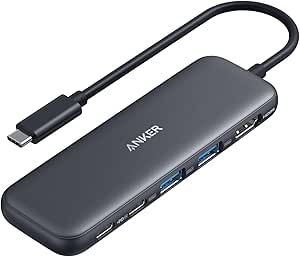 | Best Compact Pick | Ports: 4K HDMI, 1 USB-C data, 2 USB-A data, 1 USB-C PD-IN | Maximum HDMI resolution: Up to 4K at 30 Hz | Data transfer rate: Up to 5 Gbps | VIEW LATEST PRICE | See Our Full Breakdown |
| UGREEN 10-in-1 USB-C Docking Station with Dual HDMI |  | Best for a Feature-Rich Compact Desk | Ports: 2 HDMI, USB-C PD, USB-C data, USB-A 3.0, 2 USB-A 2.0, Gigabit Ethernet, SD and microSD readers | Maximum display support: Dual 4K at 60 Hz or single 8K at 30 Hz | USB data speed: Up to 5 Gbps | VIEW LATEST PRICE | See Our Full Breakdown |
| Selore 14-in-1 USB-C Docking Station with Dual HDMI and VGA |  | Best for Legacy Display Connections | Total ports: 14 | Video outputs: 2 HDMI and 1 VGA | USB ports and speeds: 7 total, including USB 3.1 Type-A and Type-C; USB 3.1 up to 10 Gbps and USB 2.0 up to 480 Mbps | VIEW LATEST PRICE | See Our Full Breakdown |
| 14-in-1 USB-C Laptop Docking Station with Dual Monitor Support |  | Best for a Mixed HDMI and DisplayPort Setup | Total ports: 14 | Video outputs: 2 HDMI and 1 DisplayPort | Single-display resolution: Up to 4K at 60 Hz via HDMI 1 or DisplayPort; up to 4K at 30 Hz via HDMI 2 | VIEW LATEST PRICE | See Our Full Breakdown |
| Plugable USB-C Docking Station with Dual 4K HDMI |  | Best for Dual 4K Windows Workstations | Model and total ports: UD-MSTH2; 10 ports | Video output: 2 HDMI, up to 4K at 60 Hz each on supported systems | USB ports: 1 USB-C at 5 Gbps, 2 USB-A 3.0 at 5 Gbps, 1 USB-A 2.0 at 480 Mbps | VIEW LATEST PRICE | See Our Full Breakdown |
| USB C docking station | Compatibility |
|---|---|
| Anker Nano 13-in-1 Laptop Dock | USB-C and Thunderbolt 3/4/5 laptops; Windows 10 and macOS 13 Ventura or later |
| Anker 13-in-1 USB-C Laptop Doc | Full-featured USB-C, USB4, and Thunderbolt 3/4/5; Windows 10/11 and ChromeOS |
| Anker PowerExpand 8-in-1 USB-C | USB-C, USB4, and Thunderbolt; Windows 10/11 and ChromeOS; compatible laptops need DP Alt Mode and Power Delivery |
| Plugable USB-C Triple Display | — |
| Anker Nano 8-in-1 USB-C Dockin | Windows 10/11, ChromeOS, and macOS; USB-C, USB4, or Thunderbolt with DP Alt Mode and Power Delivery |
| Anker Prime 14-in-1 Docking St | USB-C, USB4, and Thunderbolt; Windows 10/11 and ChromeOS; laptop requires DP Alt Mode and Power Delivery |
| LIONWEI 13-in-1 USB-C Docking | — |
| Acer 13-in-1 USB-C Docking Sta | — |
| Dell Pro WD25 USB-C Docking St | — |
| HoDo 8-in-1 USB-C Docking Stat | USB-C with DisplayPort Alternate Mode; supports listed Windows, macOS, Ubuntu, and Chrome OS devices |
| Anker 332 5-in-1 USB-C Hub wit | USB-C, USB4, and Thunderbolt; requires DisplayPort Alt Mode and Power Delivery |
| UGREEN 10-in-1 USB-C Docking S | — |
| Selore 14-in-1 USB-C Docking S | — |
| 14-in-1 USB-C Laptop Docking S | — |
| Plugable USB-C Docking Station | Windows 10 or newer and ChromeOS 100 or newer; compatible USB-C, USB4, and Thunderbolt 3/4 systems with DisplayPort Alt Mode and MST |
More Details on Our Top Picks
Anker Nano 13-in-1 Laptop Docking Station with Detachable 6-in-1 USB-C Hub
The detachable 6-in-1 hub gives this dock a distinct advantage over the Anker 13-in-1 USB-C Laptop Docking Station: it can serve as a smaller companion when the full desktop setup stays behind. At a desk, it offers 13 connections, up to three external displays, and up to 100W laptop charging from its included 140W adapter. That combination suits people who move between a multi-monitor workspace and lighter travel without carrying two separate adapters. Display flexibility has limits: triple output is capped at 1080p at 60Hz, and macOS mirrors external displays rather than extending them. The dock also needs a connected laptop to operate, so it is not a standalone charging or peripheral hub. I rank it first for its unusual mix of desktop breadth and portable utility, not for macOS multi-screen use.
Pros:- Detachable 6-in-1 hub adds a portable option beyond the main dock
- Connects up to three external displays on supported systems
- Provides up to 100W laptop charging with a 140W adapter included
- USB-C data ports support transfers up to 10Gbps
Cons:- macOS mirrors external displays rather than extending them
- Triple-display output is limited to 1080p at 60Hz
- Requires a laptop connected through the upstream port to operate
Best for: Hybrid workers who want a full multi-display desk dock plus a detachable, lighter hub for travel.
Not ideal for: Mac users who need separate extended images across multiple external monitors, or anyone who wants a dock that works without a connected laptop.
- Total ports:13
- Display outputs:2 HDMI and 1 DisplayPort
- Maximum display modes:Single 4K at 60Hz, dual 2K at 60Hz, or triple 1080p at 60Hz
- Laptop charging:Up to 100W Power Delivery
- Included power adapter:140W
- USB-C data speed:Up to 10Gbps
- Compatibility:USB-C and Thunderbolt 3/4/5 laptops; Windows 10 and macOS 13 Ventura or later
- Dimensions:3.74 × 1.57 × 5.51 inches
Our verdict“Choose this if you want one setup for a well-connected desk and a detachable travel hub, provided its display limits suit your laptop.”
Anker 13-in-1 USB-C Laptop Docking Station with Triple Display
The 13-port layout makes this Anker a practical desktop choice for Windows and ChromeOS users who need three external screens alongside wired networking, card readers, audio, and USB peripherals. It supports triple 1080p at 60Hz, while a single display can reach 4K at 60Hz. Compared with the newer Anker Nano 13-in-1, this model charges a laptop at up to 85W rather than 100W and lacks a detachable travel hub, but its compact vertical form keeps a crowded desk tidier. The included 135W adapter can also supply up to 18W phone charging. The main qualification is platform behavior: macOS mirrors external monitors, and triple-screen use depends on a compatible host connection and operating system. I’d choose it for a fixed, multi-screen Windows workstation, not for Mac users seeking independent displays.
Pros:- Supports up to three 1080p displays on Windows and ChromeOS
- Combines 13 ports in a compact vertical design
- Included 135W adapter supports up to 85W laptop and 18W phone charging
- Offers 10Gbps USB-C data and SD card reading up to 104MB/s
Cons:- macOS mirrors external displays rather than extending them
- Triple-display support depends on a compatible laptop connection and operating system
- Laptop charging tops out at 85W
Best for: Windows or ChromeOS laptop owners building a compact desk setup with three 1080p monitors and a broad set of peripherals.
Not ideal for: Mac users who need extended desktops across external monitors, or buyers who want a detachable travel hub or more than 85W laptop charging.
- Total ports:13
- Display outputs:2 HDMI and 1 DisplayPort
- Maximum display modes:Up to three 1080p displays at 60Hz; single display up to 4K at 60Hz
- Laptop charging:Up to 85W
- Included power adapter:135W
- USB-C ports:3, including 85W host charging, 18W Power Delivery, and 10Gbps data
- Compatibility:Full-featured USB-C, USB4, and Thunderbolt 3/4/5; Windows 10/11 and ChromeOS
- Dimensions and weight:4.9 × 3.5 × 1.6 inches; 13.12 ounces
Our verdict“Pick this for a compact Windows or ChromeOS triple-monitor desk, but choose the detachable Nano model if travel flexibility matters more.”
Anker PowerExpand 8-in-1 USB-C Hub with Dual HDMI
At 3.2 ounces, this 8-in-1 hub is the lightweight option for carrying display, Ethernet, card-reader, and USB connections in one small unit. Its strongest display mode is one 4K screen at 60Hz; two screens can run at up to 4K at 30Hz, which is a less fluid choice for everyday desktop work than the Plugable USB-C Triple Display Dock’s supported 4K-at-30Hz primary output with two 1080p screens. This Anker is better suited to a laptop bag than a permanent, high-port-count workstation. It provides up to 85W pass-through charging, but the wall charger and USB-C cable are not included, adding setup requirements the Anker Nano 8-in-1 also has. macOS mirrors the two external displays, and Linux is unsupported. I’d pick it for portability and a sharp single monitor, not for a Linux system or independent dual-screen Mac setup.
Pros:- Lightweight 3.2-ounce design is easy to carry
- Supports one display at 4K and 60Hz
- Combines dual HDMI, Ethernet, USB-A, and SD and microSD readers
- Pass-through charging supports up to 85W
Cons:- Two-display mode is limited to 4K at 30Hz and mirrors on macOS
- 100W PD wall charger and USB-C cable are not included
- Not compatible with Linux
Best for: Traveling laptop users who want a lightweight hub for one 4K monitor, wired Ethernet, and SD or microSD cards.
Not ideal for: Linux users, Mac users who need independent external displays, or buyers expecting a charger and cable in the box.
- Total ports:8
- Display outputs:2 HDMI
- Display modes:One display up to 4K at 60Hz or two displays up to 4K at 30Hz
- Pass-through charging:Up to 85W
- Ethernet:1Gbps
- Compatibility:USB-C, USB4, and Thunderbolt; Windows 10/11 and ChromeOS; compatible laptops need DP Alt Mode and Power Delivery
- Linux support:Not compatible
- Dimensions and weight:4.65 × 2.01 × 0.69 inches; 3.2 ounces
Our verdict“Choose this compact hub for travel and a single 4K display, but look to a full dock for a permanent multi-monitor setup.”
Plugable USB-C Triple Display Docking Station, 100W Power Delivery, 3 HDMI
For a desk already built around HDMI screens, this Plugable dock keeps the video setup straightforward with three HDMI outputs and up to 100W host charging. Its supported layout pairs one display at 4K at 30Hz with two at 1080p at 60Hz, giving a multi-screen workstation room for documents, communication, and reference windows. Compared with the Anker 13-in-1 USB-C Laptop Docking Station, it has fewer total ports and no listed card readers, but its six USB 3.0 ports provide plenty of peripheral connections. There are notable system and media limits: macOS requires DisplayLink drivers, Linux is unsupported, and HDCP is not supported. That last restriction can rule it out for protected video playback. I’d rank it for HDMI-heavy Windows or supported macOS desks, not as a flexible dock for mixed operating systems or protected content.
Pros:- Connects up to three HDMI displays in supported configurations
- Provides up to 100W USB-C Power Delivery for the host
- Six USB 3.0 ports accommodate several peripherals
- Includes Gigabit Ethernet
Cons:- The 4K output is limited to 30Hz, with the other supported displays at 1080p and 60Hz
- macOS requires DisplayLink drivers
- Does not support Linux or HDCP
Best for: Windows users with three HDMI monitors who also need 100W laptop charging, multiple USB peripherals, and Gigabit Ethernet.
Not ideal for: Linux users, people who need HDCP-protected video playback, or buyers who prefer a dock with card readers and a wider selection of ports.
- Total ports:9
- Display outputs:3 HDMI
- Display modes:One 4K display at 30Hz and two 1080p displays at 60Hz
- Laptop charging:Up to 100W Power Delivery
- USB ports:6 USB 3.0
- Ethernet:Gigabit
- Compatible operating systems:Windows 10/11, macOS 11 or later, and ChromeOS 100 or later
- Limitations:Linux unsupported; HDCP not supported; DisplayLink drivers required for macOS
Our verdict“Choose this for a compatible HDMI-based multi-monitor desk, but skip it if Linux support or protected video playback is part of your setup.”
Anker Nano 8-in-1 USB-C Docking Station with Dual HDMI
This Anker hub’s headline is dual 4K at 60Hz, but that mode depends on a compatible Windows laptop with DP 1.4 and DSC. For the right host, it offers a sharper dual-screen option than the Anker PowerExpand 8-in-1, whose two-display mode tops out at 4K at 30Hz. It also adds USB-A and USB-C data ports up to 10Gbps, SD and TF card slots, and an aluminum enclosure. The tradeoff is a more specific compatibility target: macOS mirrors external screens, Linux is unsupported, and a 100W PD charger and cable must be supplied separately to reach up to 85W laptop pass-through charging. Compared with the larger Anker 13-in-1 docks, it gives up Ethernet and several workstation connections in exchange for a simpler hub format. I’d choose it for compatible dual-4K Windows use, after checking the laptop’s video support.
Pros:- Supports dual 4K at 60Hz with a compatible Windows host
- USB data ports support speeds up to 10Gbps
- Includes SD and TF 3.0 card slots rated up to 104MB/s
- Aluminum enclosure
Cons:- Dual 4K at 60Hz depends on Windows host support for DP 1.4 and DSC
- macOS mirrors the external displays, and Linux is unsupported
- 100W PD charger and cable are not included
Best for: Windows laptop owners with DP 1.4 and DSC who want two 4K 60Hz displays, card readers, and fast USB data in a compact hub.
Not ideal for: Linux users, Mac users seeking extended dual displays, or buyers who need built-in Ethernet or an included charger and cable.
- Total ports:8
- Display outputs:2 HDMI
- Maximum display mode:Dual 4K at 60Hz on compatible hosts
- USB data speed:Up to 10Gbps
- Laptop charging:Up to 85W pass-through with 100W PD input
- Card slots:SD and TF 3.0, up to 104MB/s
- Compatibility:Windows 10/11, ChromeOS, and macOS; USB-C, USB4, or Thunderbolt with DP Alt Mode and Power Delivery
- Dimensions and weight:7.87 × 4.13 × 0.79 inches; 3.84 ounces
Our verdict“Pick this hub if your Windows laptop supports DP 1.4 and DSC and you need dual 4K at 60Hz; otherwise, its display promise may not fit your setup.”
Anker Prime 14-in-1 Docking Station with Dual HDMI
I’d choose the Anker Prime 14-in-1 when a desk needs many connections and one dock to power several devices. Its 160W total output can charge up to four devices, while three USB-C ports can each provide up to 100W and data transfers reach 10Gbps. That makes it a better fit for a busy workstation than the HoDo 8-in-1, whose USB ports are limited to USB 2.0 speeds and whose main advantage is legacy VGA support. The Anker also offers dual HDMI, Ethernet, and audio connections, but its display flexibility has firm limits: macOS mirrors the two external screens, Linux is unsupported, and 5120×1440 monitors are not supported. I’d check the laptop’s DisplayPort version before buying, since it affects the available resolution and refresh rate.
Pros:- 14 ports include dual HDMI, Ethernet, and audio connections.
- Up to 160W total output can charge up to four devices at once.
- Three USB-C ports support up to 100W each.
- Data transfers reach up to 10Gbps.
Cons:- macOS mirrors the two external displays instead of extending them independently.
- Linux and 5120×1440 monitors are unsupported.
- Display resolution and refresh rate depend on the laptop’s DisplayPort version.
Best for: Desk-based users with a compatible Windows or ChromeOS laptop who need several fast connections and want to charge multiple devices from one dock.
Not ideal for: Linux users, Mac users who need two separate extended external desktops, or anyone using a 5120×1440 monitor.
- Port count:14 total; 10 USB ports
- USB-C ports:3, up to 100W each
- Total power output:Up to 160W; charges up to 4 devices simultaneously
- Data transfer:Up to 10Gbps
- Video outputs:2 HDMI
- Display support:Up to 2K at 60Hz with DP 1.4; up to 1080p at 60Hz with DP 1.2
- Compatibility:USB-C, USB4, and Thunderbolt; Windows 10/11 and ChromeOS; laptop requires DP Alt Mode and Power Delivery
- Limitations:Linux and 5120×1440 monitors unsupported; macOS external displays mirror
- Included cable:3.3 ft USB-C upstream cable, 100W, 10Gbps
Our verdict“Choose this Anker for a compatible Windows or ChromeOS workstation that needs extensive connectivity and multi-device charging, not for Linux or independent dual displays on macOS.”
LIONWEI 13-in-1 USB-C Docking Station with Dual HDMI and DisplayPort
The LIONWEI 13-in-1 packs HDMI, DisplayPort, Ethernet, audio, and USB connections into a notably light 140 g dock. I’d rank it for people who move between workspaces but still want a broad selection of ports; the Dell Pro WD25 is better suited to a more substantial desk setup, with enterprise management features and support for up to four displays. LIONWEI’s charging provides up to 87W to the laptop from a 100W Power Delivery input, leaving less headroom than the Anker Prime’s multi-device 160W system. Windows users can choose MST or SST display modes, and compatible displays can reach 4K at 60Hz. On macOS, however, the dock extends to only one external monitor, so its three video outputs should not be mistaken for three independent Mac displays.
Pros:- Light 140 g design is convenient for a portable workstation.
- 13 ports include dual HDMI, DisplayPort, Gigabit Ethernet, and an audio jack.
- Supports data transfer up to 10Gbps.
- Provides up to 87W for laptop charging.
Cons:- macOS extends to only one external monitor.
- The dock uses 13W of the 100W Power Delivery capacity, leaving up to 87W for the laptop.
- Display modes and resolution depend on the laptop and operating system.
Best for: People who carry a dock between workspaces and want a lightweight connection hub with multiple video outputs, Gigabit Ethernet, and laptop charging.
Not ideal for: Mac users who need more than one extended external display, or laptop owners seeking high total charging capacity for several devices.
- Ports:13
- Video outputs:2 HDMI and 1 DisplayPort
- Maximum display resolution:Up to 4K at 60Hz
- Power delivery:Up to 100W input; up to 87W available for laptop charging
- Data transfer:Up to 10Gbps
- Networking and audio:Gigabit Ethernet and 3.5 mm audio/mic jack
- Operating systems:Windows and macOS
- Weight:140 g
- Warranty:18 months
Our verdict“Pick LIONWEI if portability and a wide mix of ports matter more than multi-monitor extension on macOS or high total charging output.”
Acer 13-in-1 USB-C Docking Station with Triple Display Support
The Acer 13-in-1 earns its place for compatible Windows laptops that need up to three independent displays. Its combination of HDMI, DisplayPort, USB connections, card readers, Ethernet, and audio also suits users who move photos or other files from SD and TF cards. Compared with the LIONWEI 13-in-1, Acer makes the stronger case for a triple-screen Windows setup and adds an aluminum housing and security slot; LIONWEI is much lighter and specifies up to 10Gbps data transfer. Acer includes a 110W adapter and supplies up to 100W to the host laptop. The qualification is compatibility: macOS mirrors rather than extends displays, and triple 4K at 30Hz requires a Windows laptop and GPU with DSC. I’d verify the computer’s USB-C and graphics support before relying on its full display setup.
Pros:- Supports up to three independent displays on compatible Windows laptops.
- Includes HDMI, DisplayPort, card readers, Ethernet, audio, and USB connections.
- 110W adapter is included, with up to 100W USB-C Power Delivery to the laptop.
- Aluminum housing and an integrated security slot suit a fixed desk setup.
Cons:- macOS supports mirrored displays only, not an extended desktop.
- Triple 4K at 30Hz requires a compatible Windows laptop and GPU with DSC.
- The extra rear USB-C port supports data only, and display behavior depends on host compatibility.
Best for: Windows laptop users with compatible USB-C and graphics hardware who want three independent displays, card readers, and up to 100W laptop charging.
Not ideal for: Mac users who need extended desktop displays, or buyers who cannot confirm their Windows laptop and GPU support the dock’s desired display modes.
- Video outputs:2 HDMI and 1 DisplayPort 1.4
- Other ports:4 USB-C, 3 USB-A, Gigabit Ethernet, 3.5 mm AUX, SD and TF card readers
- Windows display support:Up to 3 independent displays on compatible laptops
- Triple-display resolution:Triple 4K at 30Hz requires DSC
- macOS display support:Mirroring only; extended desktop mode unsupported
- Laptop charging:Up to 100W USB-C Power Delivery
- Included adapter:110W
- Housing and security:Aluminum housing with integrated security slot
- Included accessories:110W power adapter, USB4 Type-C cable, user manual, and quick guide
Our verdict“Choose Acer for a compatible Windows triple-display desk with card-reader needs, but skip it if you need extended displays on macOS.”
Dell Pro WD25 USB-C Docking Station
I’d put the Dell Pro WD25 on the shortlist for an office that needs a consistent dock across Dell and non-Dell computers, particularly where IT teams value centralized management. It supports up to four high-resolution displays and provides up to 100W over USB-C; its cable can also be routed to either side, a practical detail for desks with different layouts. The Anker Prime 14-in-1 offers a specified 160W total output and dual HDMI, making it more compelling for personal setups that charge several devices. Dell instead emphasizes business deployment, broad operating-system support, recycled materials, and a three-year limited hardware warranty with Advanced Exchange. Its listing specifies 10 total ports, including six USB ports and one HDMI, so buyers should check the exact port layout against their monitor and accessory needs before choosing it for a personal desk.
Pros:- Supports up to four high-resolution displays.
- Delivers up to 100W USB-C Power Delivery.
- Cable can be routed to either side to suit desk layout.
- Supports centralized management and includes a three-year limited hardware warranty with Advanced Exchange.
Cons:- The listed connections include only one HDMI port, so buyers should check the full layout against their monitor needs.
- At 1.2 lb and over 8 inches long, it is less suited to a lightweight travel kit.
- Display and charging compatibility still depend on the computer and its USB-C support.
Best for: IT-managed offices that need a USB-C dock for compatible Dell and non-Dell computers, multiple displays, centralized device management, and a business-oriented warranty.
Not ideal for: Users who need the highest stated total charging output, a specified dual-HDMI layout, or a particularly small and light dock.
- Host connection:USB-C
- Power delivery:Up to 100W
- Ports:10 total, including 6 USB ports and 1 HDMI
- Hardware interfaces:DisplayPort, Ethernet, HDMI, and USB
- Display support:Up to 4 high-resolution displays
- Compatible operating systems:Windows 10/11, Ubuntu 24.04, Red Hat Enterprise Linux 9.6+, and ChromeOS 137
- Dimensions and weight:8.07 × 3.54 × 1.39 in; 1.2 lb
- Materials:At least 65% postconsumer recycled materials; packaging is 100% recycled or renewable
- Warranty:3-year limited hardware warranty with Advanced Exchange
Our verdict“Choose the WD25 for an IT-managed, multi-display office that values cable flexibility and centralized management over high total charging output.”
HoDo 8-in-1 USB-C Docking Station with Dual HDMI, DisplayPort, VGA, and 100W Power Delivery
The HoDo 8-in-1 is the specialist pick here: its unusual mix of dual HDMI, DisplayPort, and VGA helps connect older and newer monitors without adding separate video adapters. That makes it a different proposition from the Acer 13-in-1, which offers a broader set of connections and up to three independent displays on compatible Windows laptops but does not list VGA. HoDo can take up to 100W power input and pass up to 87W to a laptop, while its compact 130 g body is easy to carry. The tradeoffs are substantial for data-heavy work: its three USB ports are USB 2.0, limited to 480Mbps, and connecting VGA caps all displays at 1080p. macOS mirrors external displays, and the laptop’s USB-C port must support DisplayPort Alternate Mode.
Pros:- Offers four video connection types: dual HDMI, DisplayPort, and VGA.
- Passes up to 87W to a laptop from a 100W Power Delivery input.
- Three USB 2.0 ports can connect basic peripherals such as a keyboard and mouse.
- Compact 130 g design is easy to carry.
Cons:- USB data transfer is limited to 480Mbps.
- Connecting VGA limits all displays to 1080p.
- macOS mirrors external displays, and the host USB-C port must support DisplayPort Alternate Mode.
Best for: People connecting a mix of older VGA monitors and newer HDMI or DisplayPort screens who want a compact dock for basic peripherals.
Not ideal for: Users transferring large files over the dock, needing independent extended displays on macOS, or seeking high-resolution output while VGA is connected.
- Ports:2 HDMI, 1 DisplayPort, 1 VGA, 3 USB 2.0, and 1 USB-C PD
- Display modes:Up to 4K dual or triple display; up to 1080p at 60Hz across four displays
- HDMI outputs:One port up to 4K at 60Hz; one port up to 4K at 30Hz
- DisplayPort output:Up to 4K at 60Hz
- VGA output:Up to 1080p; connecting VGA limits all displays to 1080p
- Power delivery:Up to 100W input and 87W output
- USB data transfer:Up to 480Mbps
- Compatibility:USB-C with DisplayPort Alternate Mode; supports listed Windows, macOS, Ubuntu, and Chrome OS devices
- Weight:0.13 kg
Our verdict“Pick HoDo when VGA compatibility and a compact footprint matter more than fast USB data or high-resolution displays across every output.”
Anker 332 5-in-1 USB-C Hub with 4K HDMI
I’d choose the Anker 332 when the goal is to add a few everyday connections without carrying a full dock. Its small, light body combines HDMI, two USB-A data ports, USB-C data, and a charging input, making it a simpler travel companion than the UGREEN 10-in-1, which adds Ethernet and card readers for a more complete desk setup. HDMI supports up to 4K at 30 Hz, a good fit for documents and general use but less suited to high-refresh work or smooth motion. The 85 W pass-through charging helps keep a compatible laptop powered while connected. The tradeoff is a lean port selection: the USB-C PD-IN port handles charging only, and none of the data ports outputs video. I’d skip it for Linux systems or multi-monitor setups.
Pros:- Compact 1.44 oz design with HDMI, USB-A, USB-C data, and charging input.
- HDMI supports up to 4K at 30 Hz for a single external display.
- Pass-through charging supports up to 85 W.
- USB data ports support speeds up to 5 Gbps.
Cons:- Not compatible with Linux.
- USB-C PD-IN port is for charging only, not data.
- HDMI is limited to 4K at 30 Hz, and USB data ports cannot output video.
Best for: Traveling laptop users who need one external display, basic USB accessories, and pass-through charging in a very light hub.
Not ideal for: Linux users, multi-monitor desk setups, or anyone who needs Ethernet, card readers, or 4K at 60 Hz.
- Ports:4K HDMI, 1 USB-C data, 2 USB-A data, 1 USB-C PD-IN
- Maximum HDMI resolution:Up to 4K at 30 Hz
- Data transfer rate:Up to 5 Gbps
- Pass-through charging:Up to 85 W
- Compatibility:USB-C, USB4, and Thunderbolt; requires DisplayPort Alt Mode and Power Delivery
- Operating systems:macOS 12 and newer, Windows 10 and 11, ChromeOS; not compatible with Linux
- Dimensions and weight:4.78 × 1.59 × 0.45 in; 1.44 oz
- Material and color:ABS; black
Our verdict“Choose the Anker 332 for a lightweight single-display setup with basic ports, but pick the UGREEN 10-in-1 if you need Ethernet and card readers.”
UGREEN 10-in-1 USB-C Docking Station with Dual HDMI
The UGREEN 10-in-1 stands out for packing display, network, and media-card connections into a hub that weighs 100 g. Its two HDMI ports support dual 4K at 60 Hz or one display at 8K and 30 Hz, while Ethernet and SD/microSD readers reduce the need for separate adapters. Compared with the smaller Anker 332, it is much better suited to a fixed desk with several devices; the Anker is the simpler choice for basic travel use. The main limitation is important for MacBook buyers: both external displays show the same content on macOS, so this is not a way to extend the desktop across two independent screens there. Its USB data ports also do not charge devices, and the PD port is charging-only.
Pros:- Supports dual 4K at 60 Hz or a single 8K at 30 Hz display.
- Combines Ethernet, SD and microSD readers, USB data, and two HDMI ports.
- Provides up to 85 W pass-through charging from a 100 W PD input.
- Compact 100 g body is easier to place or carry than a full-size dock.
Cons:- On macOS, both external displays show identical content rather than separate desktops.
- USB data ports do not provide device charging or video output.
- The USB-C PD port supports charging only, not data transfer.
Best for: Windows laptop users who want dual high-resolution monitors, wired Ethernet, and SD or microSD access from one compact hub.
Not ideal for: MacBook users who need two independently extended external displays, or buyers who expect USB ports to charge accessories.
- Ports:2 HDMI, USB-C PD, USB-C data, USB-A 3.0, 2 USB-A 2.0, Gigabit Ethernet, SD and microSD readers
- Maximum display support:Dual 4K at 60 Hz or single 8K at 30 Hz
- USB data speed:Up to 5 Gbps
- Power delivery:100 W input; up to 85 W pass-through charging
- Ethernet:Up to 1,000 Mbps
- Mac display behavior:Connected external displays show the same content
- Dimensions and weight:4.49 × 1.75 × 0.63 in; 100 g
- Compatibility and warranty:Full-function USB-C Lenovo, HP, and Dell laptops; MacBook; 24-month warranty
Our verdict“Pick the UGREEN for a compact Windows workstation with dual 4K monitors and useful wired connections, but not for extended dual-display work on macOS.”
Selore 14-in-1 USB-C Docking Station with Dual HDMI and VGA
I’d give the Selore 14-in-1 a distinct place for setups that still need VGA alongside HDMI. Two HDMI outputs, VGA, seven USB ports, card readers, Gigabit Ethernet, and a 3.5 mm audio connection make it more connection-heavy than the Anker 332, which is aimed at a much lighter, simpler kit. Its USB 3.1 ports reach up to 10 Gbps, and charging output reaches 87 W when paired with a 100 W PD input. The extra display options do not guarantee three independent screens on every computer: Windows can extend displays, while Mac support varies by chip and may be limited to mirroring. The plastic enclosure also feels less desk-oriented than the aluminum UGREEN hub. I’d choose this when VGA compatibility matters more than a polished finish or predictable Mac multi-display behavior.
Pros:- Includes two HDMI outputs and VGA for mixed-generation displays.
- Seven USB ports, SD and microSD readers, Gigabit Ethernet, and 3.5 mm audio cover varied peripherals.
- USB 3.1 data ports support speeds up to 10 Gbps.
- Delivers up to 87 W charging output with a 100 W PD input.
Cons:- Three-display modes depend on the host device and operating system; Mac support varies by chip.
- Requires USB-C DisplayPort Alt Mode or Thunderbolt 3 for video output.
- Plastic enclosure is less premium than the aluminum UGREEN 10-in-1.
Best for: Windows laptop owners connecting a mix of HDMI and older VGA displays who also need Ethernet, audio, card readers, and multiple USB ports.
Not ideal for: Mac users counting on three extended displays, or buyers seeking an aluminum enclosure and clearly consistent multi-monitor behavior.
- Total ports:14
- Video outputs:2 HDMI and 1 VGA
- USB ports and speeds:7 total, including USB 3.1 Type-A and Type-C; USB 3.1 up to 10 Gbps and USB 2.0 up to 480 Mbps
- Card readers:SD and microSD; transfer rate up to 200 Mbps
- Power delivery:Up to 100 W input and up to 87 W output
- Network and audio:Gigabit Ethernet up to 1,000 Mbps; 3.5 mm audio
- Display support:Up to three displays; Windows can extend displays, while Mac support varies by chip
- Compatibility and enclosure:USB-C with DisplayPort Alt Mode or Thunderbolt 3; grey plastic
Our verdict“Choose the Selore when a VGA connection and a broad mix of ports matter more than reliable triple-display support across every computer.”
14-in-1 USB-C Laptop Docking Station with Dual Monitor Support
This 14-in-1 aluminum dock is a practical fit for a desk that uses both HDMI and DisplayPort monitors. It has two HDMI outputs plus DisplayPort, and a single display can reach 4K at 60 Hz through HDMI 1 or DisplayPort. For multiple screens, resolution drops: dual output is listed at 4K 30 Hz plus 1080p 60 Hz, while triple output is 1080p. That makes it less suited to high-resolution multi-monitor work than the Plugable UD-MSTH2, which supports two 4K 60 Hz HDMI displays on compatible systems. This dock adds card readers, audio, Ethernet, and USB data up to 10 Gbps, but it does not include the power adapter or cable. MacBook external displays mirror the same image, limiting its appeal for Mac users who need extended desktops.
Pros:- Two HDMI ports and DisplayPort support a range of monitor connections.
- Single-display output reaches 4K at 60 Hz through HDMI 1 or DisplayPort.
- Aluminum enclosure adds a more desk-focused build than the plastic Selore dock.
- Includes Ethernet, SD and microSD readers, audio, and USB data up to 10 Gbps.
Cons:- Multi-display resolutions are lower than single-display output, with triple display limited to 1080p.
- MacBook external displays mirror the same image.
- Charging adapter and cable are not included.
Best for: Windows laptop owners with HDMI and DisplayPort monitors who want a broad set of desk connections in an aluminum dock.
Not ideal for: MacBook users who need separate extended external displays, or buyers who expect the charging adapter and cable to be included.
- Total ports:14
- Video outputs:2 HDMI and 1 DisplayPort
- Single-display resolution:Up to 4K at 60 Hz via HDMI 1 or DisplayPort; up to 4K at 30 Hz via HDMI 2
- Multi-display resolution:Dual: 4K at 30 Hz plus 1080p at 60 Hz; triple: 1080p
- USB data transfer:Up to 10 Gbps
- Power delivery:Up to 100 W input and up to 87 W charging output; adapter and cable not included
- Ethernet and card readers:10/100/1000BASE-T; SD and microSD
- Compatibility and material:USB-C or Thunderbolt 3/4/5 with video output; aluminum
Our verdict“Choose this dock for a mixed HDMI and DisplayPort workstation with varied accessories, but choose the Plugable if dual 4K 60 Hz HDMI is the priority.”
Plugable USB-C Docking Station with Dual 4K HDMI
For a compatible Windows or ChromeOS workstation, the Plugable UD-MSTH2 is the clearest choice here for two high-resolution HDMI monitors: it supports 4K at 60 Hz on each display when the host supports the required display features. Unlike the UGREEN 10-in-1, whose macOS dual displays mirror one another, this dock’s strongest case is a dual-screen Windows setup; macOS is limited to one external display. The included 110 W adapter and 1 m host cable also make it more ready for a fixed desk than the 14-in-1 dock that ships without its charging adapter and cable. Its port mix covers USB, Gigabit Ethernet, and audio, but it offers fewer types of connections than the Selore and needs a USB-C port with DisplayPort Alt Mode and MST for its advertised display setup.
Pros:- Supports two HDMI displays at up to 4K and 60 Hz each on compatible systems.
- Combines USB peripherals, Gigabit Ethernet, and audio connections.
- Driverless setup on supported systems.
- Includes a 110 W power adapter and 1 m USB-C host cable.
Cons:- macOS supports only one external display.
- Dual 4K 60 Hz output depends on host display capabilities and MST support.
- Requires USB-C DisplayPort Alt Mode; not every USB-C port supports video.
Best for: Windows 10-or-newer or ChromeOS 100-or-newer laptop users with compatible USB-C video output who want two 4K 60 Hz HDMI monitors.
Not ideal for: Mac users needing two external monitors, or buyers whose USB-C port lacks DisplayPort Alt Mode and MST.
- Model and total ports:UD-MSTH2; 10 ports
- Video output:2 HDMI, up to 4K at 60 Hz each on supported systems
- USB ports:1 USB-C at 5 Gbps, 2 USB-A 3.0 at 5 Gbps, 1 USB-A 2.0 at 480 Mbps
- Network and audio:Gigabit Ethernet; audio in/out
- Power:65 W dock power; included 110 W power adapter
- Compatibility:Windows 10 or newer and ChromeOS 100 or newer; compatible USB-C, USB4, and Thunderbolt 3/4 systems with DisplayPort Alt Mode and MST
- macOS display support:Limited to one external display
- Included accessories and size:1 m USB-C host cable and Quick Start Guide; 9.25 × 5.71 × 3 in; 8.1 oz
Our verdict“Pick the Plugable for a compatible Windows or ChromeOS desk with two 4K 60 Hz HDMI displays, but skip it if you need dual external monitors on macOS.”

How We Picked
I ranked these USB-C docking stations by how well their stated features solve real desk problems: adding displays, connecting common peripherals, charging a laptop, and reducing cable clutter. I also weighed flexibility and usability, including whether a dock offers a useful portable option, a manageable port selection, or connections for older displays. A higher port count did not automatically mean a higher rank; the value depends on whether those ports match a buyer’s equipment.
The ranking favors products with a clear role and a practical balance of features, led by the detachable Anker Nano for its mix of desk and travel use. Multi-display models rank well for buyers who need several screens, but their usefulness depends on host-laptop video support and operating-system behavior. Compact hubs place lower for full desk expansion, though they can be the better choice for simple setups. Where specifications do not establish compatibility or performance, I treat that as something buyers must verify rather than assume.
Factors to Consider When Choosing USB C Docking Stations
Before choosing a dock, I would start with the laptop and monitors you already own, then work outward to the ports and charging you need. A feature-rich dock cannot fix a host laptop’s display limitations, and unused connections can add bulk without making a setup more useful.
Match the Dock to Your Laptop’s USB-C Capabilities
A USB-C connector describes the plug, not every capability behind it. Check the laptop specification for video output over USB-C, the supported display standard, and whether the port can accept charging. This matters most for multi-display docks: a dock may offer several HDMI or DisplayPort outputs, while the laptop limits how many independent screens can run or at what resolution. Operating-system support can also affect multi-monitor behavior, so check the dock maker’s compatibility details before buying. A common mistake is to count the dock’s video sockets as guaranteed independent displays. If your laptop lacks the needed video capability, a port-rich dock may still leave you with fewer screens than expected.
Choose Displays by Resolution, Refresh Rate, and Connection Type
List each monitor’s resolution, refresh rate, and available inputs before selecting a dock. A setup with two modest office displays can have different requirements from one high-resolution monitor, even if both are described as dual-monitor workstations. HDMI, DisplayPort, and VGA outputs are not interchangeable in every setup, and adapters can add another compatibility point. Docks with VGA, such as the HoDo and Selore, can help connect older projectors or monitors, but that connection may not suit a modern high-resolution display. Verify the dock’s supported screen combinations rather than relying on a headline such as triple display. If your monitors have different inputs, choose based on the exact combination you will connect at once.
Treat Power Delivery as a System Requirement
Look up your laptop’s required charging wattage and compare it with the dock’s stated Power Delivery output. The number on a dock may describe its maximum input or output, and connected peripherals can affect the power available to the laptop. A dock that cannot supply enough power may still pass data and video, but the computer could charge slowly or lose charge under heavy workloads. Check whether the dock includes a power adapter and whether the host cable supports the expected charging level. Avoid assuming that every USB-C cable can carry the same power and data rates. For a lightweight laptop, a compact hub may be enough; a higher-demand workstation calls for a closer match between charger, dock, and computer.
Count the Ports You Will Use, Not the Ports on the Box
Make a short inventory of the devices that stay connected: keyboard, mouse, storage, headset, wired network, card reader, and monitors. That list helps distinguish a genuinely useful 13- or 14-in-1 dock from a smaller hub that covers the same daily needs with less desk space. Port labels matter: USB-A and USB-C ports may support different data rates or charging, and not every USB-C port carries video. Think about placement too, since front-facing ports are handy for temporary accessories while rear ports can keep permanent cables tidy. A large port count is less valuable if key connections are awkward to reach or share bandwidth in ways that affect your use. I would favor a layout that fits your routine over a bigger number on the product name.
Decide Whether You Need a Desk Dock or a Portable Hub
A full-size dock makes sense when a laptop regularly returns to the same desk and you want one cable to connect monitors and peripherals. A smaller hub is easier to carry and can be a better fit for occasional presentations, travel, or a minimal home setup. The Anker Nano with its detachable hub is unusual in this group because it can serve both roles, while the Anker 332 prioritizes basic, compact expansion. Before choosing a larger unit, check its footprint, cable arrangement, and whether it can sit where you have room. A portable hub may lack the connections needed for a permanent multi-monitor desk, while a full dock can be needless baggage for someone who works on the go. Choose around where the laptop spends most of its time.
Pay More for a Specific Need, Not a Bigger Feature Count
A more elaborate dock earns its place when it removes a real limitation, such as insufficient display outputs, missing legacy connections, or the need to connect many devices at once. If your setup needs only one monitor, charging, and a couple of accessories, extra display ports may add little practical benefit. Premium positioning alone does not confirm that a dock will work with a particular laptop, so compatibility checks remain just as important at every tier. Compare included power equipment, the port layout, and the display combinations you will use rather than judging by the total port count. Also leave room for future changes, but do not pay for hypothetical connections at the expense of a setup that is easier to use today. The best upgrade is the one that solves your actual desk bottleneck.
Frequently Asked Questions
Will a USB-C docking station let my laptop run two or three external monitors?
Not automatically. The laptop’s USB-C video capabilities, graphics hardware, and operating system all affect how many independent external displays it can support. A dock with multiple HDMI or DisplayPort outputs provides connection options, but it cannot guarantee the host can drive every screen at once. Check the manufacturer’s supported display combinations for both the laptop and dock, including resolution and refresh rate. If the laptop specification is unclear, confirm compatibility with the computer maker before choosing a multi-display model.
Can I use one dock with both a Windows laptop and a Mac?
Sometimes, but the same dock may behave differently across operating systems and laptop models. Display support is the main point to verify, especially if you expect multiple independent screens; some systems may mirror displays or support fewer screens than the dock’s outputs suggest. Also check whether the dock’s network, audio, and peripheral functions are supported on both computers. If you plan to switch between machines, look for published compatibility information for each exact model rather than relying on the shared USB-C connector. A simpler hub may be easier to share if both laptops only need basic ports.
Is a 100W Power Delivery rating enough to charge any laptop?
No. The laptop must support charging over USB-C, and its power needs must fit within the dock’s actual power output. Some docks use part of their power budget for connected devices, so the amount reaching the laptop may be below the headline figure. Check the dock’s included power supply, the host-port output, and the laptop maker’s recommended charger wattage. If you use a power-hungry laptop, verify that the dock can sustain the required charge during your usual workload.
Should I choose a dock with VGA if my monitors use HDMI?
Usually not unless you also need to connect older equipment, such as a projector or legacy monitor. VGA can be useful in mixed-generation workplaces, but it is an analog connection and does not offer the same image capabilities as modern digital outputs. If all your screens use HDMI or DisplayPort, a dock with those connections may be a more direct fit. Check whether the dock can run your exact display combination at the resolutions you want, rather than choosing based on the total number of video ports.
When is a compact USB-C hub a better choice than a full docking station?
A compact hub is a sensible choice when you travel often, connect only a few accessories, or need an occasional monitor rather than a permanent multi-screen desk. It generally takes less space and is simpler to pack, though it may offer fewer ports and less flexibility for a fixed workstation. A full dock makes more sense when several monitors, wired accessories, and laptop charging all need to connect through one desk setup. Compare your regular connections with the hub’s actual ports and power support. If those cover your routine, the larger dock may not add useful value.
Conclusion
For most buyers who want one device for a desk and occasional travel, I recommend the Anker Nano 13-in-1 with detachable 6-in-1 hub as the best overall. The Anker PowerExpand 8-in-1 is my best value direction for buyers who want dual-HDMI expansion without moving to a larger, more elaborate setup, while the Anker Prime 14-in-1 is the best premium fit for an accessory-heavy desk that can make use of its wider port selection. Beginners who want a straightforward, compact starting point should look at the Anker 332 5-in-1. For specific needs, choose the Plugable Triple Display Dock for a multi-screen workstation, or the HoDo or Selore if VGA is needed for older equipment. Before ordering, confirm the laptop’s display and charging support against the dock’s specifications.