
Students need devices that balance performance, portability, and affordability—without sacrificing durability or ease of use. The best overall pick is the Lenovo IdeaTab Pro, offering a large 12.7” display and robust specs for versatile tasks. For budget-conscious students, the HP Chromebook 11A G8 delivers reliable Chrome OS performance at a lower price. Meanwhile, the QAZIPO 2-in-1 stands out for its combination of Windows 11 and a full-sized keyboard in a compact form. Each of these options has tradeoffs—like battery life, storage, or weight—that influence suitability. Continue reading for a detailed breakdown of these models and more to find the best fit for your student needs.

Get the latest gadgets delivered free — and shop member deals
- Fast, free delivery on millions of items
- Access to Prime Big Deal Days deals on October 6–7
- Prime Video, Amazon Music and more included
Complete the kit



Key Takeaways
- The most versatile devices combine a touchscreen with a detachable or 2-in-1 design, offering flexibility for different tasks.
- Performance needs vary: basic browsing and note-taking demand less power, while multitasking or media editing benefits from better specs.
- Battery life remains a key consideration, especially for longer school days without frequent charging opportunities.
- Storage capacity is important for offline work; models with expandable storage or larger built-in options tend to be more future-proof.
- Price differences often reflect build quality, screen size, and included features, so balancing budget with essential needs is critical.




| student-friendly laptops and tablet | Display | Processor | Storage | RAM |
|---|---|---|---|---|
| IWEGGO Android 15 Tablet | 10.1 inch HD Touch Screen | 2.0GHz Quad-core | — | 18GB |
| HP 14 2-in-1 Chromebook 14-inc | 14-inch FHD IPS touchscreen | Intel N100 quad-core | 64GB | 4GB DDR5 |
| Jeazans Android 16 Tablet 10.1 | 10.1 inches | — | 64GB ROM + 1TB expansion | 24GB |
| Lenovo Chromebook Duet Gen 9 | 11" FHD+ IPS touchscreen | MediaTek Kompanio 838 | 64GB eMMC + 64GB SD Card | 4GB |
| Lenovo IdeaPad D330 10.1" IPS | 10.1-inch HD touchscreen | Intel Celeron N4000 | 64GB SSD | 4GB |
| Lenovo Idea Tab Pro with Googl | 12.7-inch 3K LCD | MediaTek Dimensity 8300 | 128 GB | — |
| HP Chromebook 11A G8 Education | 11.6-inch HD (1366 x 768) | AMD A4-9120C Dual Core 1.6 GHz | 32GB eMMC | 4GB DDR4 |
| TOSHIBA Dynabook K50 2-in-1 To | 10.1-inch HD touchscreen | Intel Celeron N4020 | 64GB SSD | 4GB |
| Lenovo IdeaPad D330 2-in-1 Tab | 10.1 inch IPS Touchscreen | Intel Celeron N4000 | 64GB SSD | 4GB DDR4 |
| QAZIPO 2-in-1 Laptop/Tablet | 10.1-inch FHD IPS | Intel Pentium Gold 6500Y | 256GB SSD | 8GB |
| Lenovo IdeaPad D330-10IGM 2-in | 10.1 inches, 1280×800 touchscreen | Intel Celeron N4000 | 64GB SSD | 4GB |
| Lenovo Idea Tab College Tablet | 11" 2.5K IPS touchscreen | MediaTek Dimensity 6300 | 256 GB | 8 GB |
| HP Chromebook x360 14-inch Tou | 14-inch FHD IPS touchscreen | Intel N100 | 256GB SSD | 8GB DDR5 |
| Lenovo Idea Tab College Tablet | 11" 2.5K IPS touchscreen | MediaTek Dimensity 6300 | 256 GB | — |
| 15.6" 2-in-1 Laptop/Tablet | 15.6-inch FHD Touchscreen | Intel m3-8100Y | 512GB SSD | 16GB |
More Details on Our Top Picks
IWEGGO Android 15 Tablet, 10 Inch, 18GB RAM, 128GB ROM, 2TB Expandable, 2.0GHz Quad-core, HD Touch Screen, 5G WiFi6, Bluetooth 5.0, 2-in-1 with Keyboard, Pink
The IWEGGO Android 15 Tablet stands out for its exceptional 18GB RAM and expandable storage up to 2TB, making it ideal for students who juggle multiple apps or large files. Compared with the Lenovo IdeaPad D330, which offers a Windows environment but less RAM, this tablet provides a smoother multitasking experience. Its support for 5G WiFi6 and Bluetooth 5.0 ensures fast, reliable connections—great for streaming or online coursework. However, the large storage capacity might be overkill for casual users, and the pink color could limit its appeal. Battery life of around 10 hours is decent but can vary with intensive use. Its included accessories—keyboard, mouse, stylus—add productivity, but the device’s size and weight might be less portable than smaller tablets.
Pros:- Massive 18GB RAM enables smooth multitasking
- Expandable storage up to 2TB for large files and apps
- Supports fast 5G WiFi6 and Bluetooth 5.0 for seamless connectivity
- Includes a keyboard, mouse, stylus, and protective case for versatile use
Cons:- Large storage capacity may be unnecessary for light users
- Battery life can fluctuate with heavy use
- Pink color may not suit all preferences
Best for: Students who need a high-performance tablet for multitasking, creative work, and connectivity without switching devices frequently
Not ideal for: Casual users or those who prefer a lightweight, simple device for basic browsing and reading
- Operating System:Android 15.0
- Display:10.1 inch HD Touch Screen
- RAM:18GB
- ROM:128GB
- Expandable Storage:Up to 2TB via Micro SD card
- Processor:2.0GHz Quad-core
- Battery:6000mAh
- WiFi:5G WiFi6
- Bluetooth:5.0
Our verdict“This tablet is perfect for students who need a powerful, flexible device for work and entertainment, willing to accept some portability tradeoffs.”
HP 14 2-in-1 Chromebook 14-inch FHD Touchscreen, Intel N100, 4GB RAM, 64GB Storage
The HP 14 2-in-1 Chromebook offers a flexible, lightweight design with a 14-inch FHD touchscreen and a 360-degree flip, making it ideal for students who need a device for browsing, note-taking, and light multitasking. Compared to the Lenovo IdeaPad D330, which runs Windows, this Chromebook uses Chrome OS for simplicity and longer battery life. Its 4GB RAM and 64GB storage fit basic tasks but limit heavy multitasking or large app use. Its portability and stylish blue finish make it appealing on the go, but the limited internal storage and modest processor mean it struggles with intensive tasks. The inclusion of Wi-Fi 6 and Bluetooth 5 enhances connectivity, but the device’s performance is best suited for casual use rather than demanding applications.
Pros:- Convertible 2-in-1 design enhances versatility
- Long battery life up to 10-12 hours supports all-day use
- Lightweight and stylish, easy to carry
- Fast Wi-Fi 6 and Bluetooth 5 for reliable connectivity
Cons:- Limited internal storage at 64GB restricts downloads and files
- 4GB RAM may slow down multitasking with multiple tabs or apps
- Processor may not handle intensive software
Best for: Students who mainly need a lightweight device for web browsing, streaming, and simple productivity tasks
Not ideal for: Students running multiple demanding applications or requiring extensive local storage
- Display:14-inch FHD IPS touchscreen
- Processor:Intel N100 quad-core
- RAM:4GB DDR5
- Storage:64GB
- Ports:1x USB Type-C, 1x USB Type-A, headphone/mic jack
- Connectivity:Wi-Fi 6, Bluetooth 5
Our verdict“This Chromebook suits students seeking a straightforward, portable device for web-based tasks and light use, with limited storage and power for heavier applications.”
Jeazans Android 16 Tablet 10.1 Inch 2-in-1 Bundle with Keyboard, Mouse, Stylus, Leather Case, Dual Camera, 64GB Storage + 1TB Expansion
The Jeazans Android 16 Tablet stands out with its high-speed WiFi 6, fast charging, and a comprehensive bundle including a keyboard, mouse, stylus, and leather case—perfect for students balancing study and creativity. Compared to the Lenovo IdeaPad D330, which runs Windows, this Android device emphasizes connectivity and expandability, with 64GB storage plus 1TB via SD card, ideal for storing large files or media. Its high RAM (24GB total) supports multitasking and creative apps, but the lack of specified screen resolution leaves some ambiguity about display quality. The leather case adds style and viewing flexibility, but battery life details are limited, and the bundle’s price might be high for budget-conscious students. It’s best suited for those who want a versatile, high-speed device with extensive storage options.
Pros:- High-speed WiFi 6 and fast charging for efficient use
- Expandable storage up to 1TB plus 64GB ROM for large data needs
- Includes a keyboard, stylus, and leather case for productivity and protection
- Dual HD cameras support video calls and photo needs
Cons:- Limited info on battery life, affecting portability plans
- Potentially high price due to bundle components
- Screen resolution not specified, affecting display quality expectations
Best for: Students who need a flexible, high-performance Android device for online learning, content creation, and data storage
Not ideal for: Budget-conscious students who prefer simpler devices or are concerned about battery longevity without detailed info
- Operating System:Android 16
- Display:10.1 inches
- RAM:24GB
- Storage:64GB ROM + 1TB expansion
- Connectivity:WiFi 6
- Included Accessories:Keyboard, Mouse, Stylus, Leather Case
Our verdict“This device suits students seeking a powerful, expandable Android tablet with comprehensive accessories for study and creative tasks, accepting some uncertainty about battery performance.”
Lenovo Chromebook Duet Gen 9, MediaTek Kompanio 838, 11″ Touchscreen, 4GB RAM, 64GB eMMC + 64GB SD Card, 2-in-1 Tablet Laptop
The Lenovo Chromebook Duet Gen 9 is a standout for its impressive 12-hour battery life, aluminum chassis, and MIL-STD-810H durability—making it a prime choice for students on the go. Its 11-inch FHD+ display offers bright visuals, but the 4GB RAM and limited 64GB eMMC storage make multitasking and data storage more constrained compared to the Jeazans Android 16. The detachable keyboard and folio stand add flexibility, ideal for both study and entertainment. While the processor isn’t as powerful as high-end alternatives, it’s more than capable of web browsing, streaming, and basic productivity. The device’s lightweight design and rugged build make it a practical companion for daily use, but users needing high performance or extensive local storage should consider other options.
Pros:- Up to 12 hours of battery life supports all-day use
- Rugged MIL-STD-810H certification enhances durability
- Bright, high-quality display with scratch resistance
- Detachable keyboard and folio stand for versatile use
Cons:- Limited internal storage at 64GB eMMC restricts large file storage
- Processor may lag with demanding multitasking
- Requires external SD card for additional storage
Best for: Students prioritizing battery life, portability, and durability for everyday web-based tasks
Not ideal for: Power users or students with heavy multitasking needs or large local libraries
- Display:11″ FHD+ IPS touchscreen
- Processor:MediaTek Kompanio 838
- RAM:4GB
- Storage:64GB eMMC + 64GB SD Card
- Webcam:5MP front, 8MP rear
- Battery Life:Up to 12 hours
Our verdict“This Chromebook is ideal for students who need a durable, long-lasting device for basic tasks and portability, with some storage limitations to consider.”
Lenovo IdeaPad D330 10.1″ IPS 2-in-1 Detachable Laptop Tablet, Intel Celeron N4000, 4GB RAM, 64GB SSD, Windows 11 Pro, Type-C, Japanese Keyboard (Renewed)
The Lenovo IdeaPad D330 provides a compact, 10.1-inch detachable design with Windows 11 Pro, making it a practical choice for students needing a full OS experience in a portable form. Compared to the Android-based Jeazans tablet, this device offers a familiar Windows environment but with less RAM and storage, which can slow down multitasking. Its Japanese keyboard layout caters to specific users but may be less suitable for others. The device’s lightweight build supports travel and remote learning, but the 64GB SSD limits storage, and the entry-level Celeron N4000 processor may struggle with demanding applications. This model is ideal for basic productivity, note-taking, and light multitasking but not for intensive software use.
Pros:- Detachable design allows versatile use as tablet or laptop
- Pre-installed Windows 11 Pro for familiar productivity tools
- Lightweight and travel-friendly
- USB-C connectivity for modern peripherals
Cons:- Limited 64GB SSD storage constrains file management
- Entry-level processor may hinder multitasking performance
- Japanese keyboard layout may not suit all users
Best for: Students who prefer a Windows environment with a detachable form factor for portability and productivity
Not ideal for: Students requiring high-performance multitasking or extensive local storage
- Display:10.1-inch HD touchscreen
- Processor:Intel Celeron N4000
- RAM:4GB
- Storage:64GB SSD
- Operating System:Windows 11 Pro
- Connectivity:USB Type-C
Our verdict“This device fits students needing a Windows-based portable tablet with detachable functionality for basic tasks and mobility, accepting some performance limitations.”
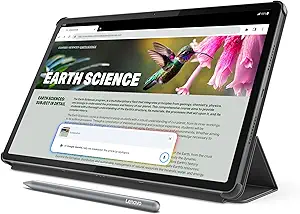
Lenovo Idea Tab Pro with Google Gemini – Student Tablet – 12.7” 3K LCD Display – 8 GB RAM – 128 GB Storage – MediaTek Dimensity 8300 – Includes Pen and Folio Case
This Lenovo Idea Tab Pro stands out for its stunning 12.7-inch 3K LCD display, which offers vivid visuals ideal for both studying and media consumption. Compared with the smaller, lower-resolution tablets like the Lenovo IdeaPad D330, its larger screen enhances immersion and detail. The inclusion of AI-enhanced tools such as Google Gemini and Circle Search makes it a strong choice for students needing efficient study aids, though the limited info on software updates raises questions about long-term support. Its long battery life and Dolby Atmos sound deliver a premium entertainment experience, but the higher price reflects these advanced features. This model is better suited to students who prioritize media quality and multitasking over affordability or expandability.
Pros:- High-resolution 3K display with vivid visuals
- Long battery life with fast 45W charging
- Includes AI tools like Google Gemini and Circle Search
- Immersive sound with Dolby Atmos
Cons:- Limited information on ongoing software updates
- Higher price point due to premium features
- No expandable storage option
Best for: Students who want a versatile, media-rich tablet that can double as a study device and entertainment hub.
Not ideal for: Budget-conscious students seeking a very affordable device or those needing expandable storage, as this tablet lacks microSD support and has a premium price.
- Display:12.7-inch 3K LCD
- Memory:8 GB RAM
- Storage:128 GB
- Processor:MediaTek Dimensity 8300
- Battery Life:11 hours
- Included Accessories:Pen, Folio Case
Our verdict“This tablet makes the most sense for students who value a large, high-quality display and multimedia capabilities over cost or storage flexibility.”
HP Chromebook 11A G8 Education Edition AMD A4-9120C 4GB DDR4-1866 SDRAM, 32GB eMMC, 11.6-inch HD, Chrome OS (Renewed)
This HP Chromebook 11A G8 is built for durability, with a spill-resistant keyboard and drop-tested design, making it ideal for active students. Its compact 11.6-inch HD display is less vibrant than larger or higher-resolution options like the Lenovo IdeaPad D330, but it provides enough clarity for typical classroom tasks. The 4GB RAM and 32GB eMMC storage limit multitasking and file storage, especially compared to more modern devices such as the QAZIPO 2-in-1 with 8GB RAM and 256GB SSD. However, Chrome OS’s simplicity and fast recharging make it suitable for younger students or those in need of a reliable, easy-to-manage device. This pick is perfect for students requiring a rugged, straightforward device for basic activities.
Pros:- Durable, spill-resistant, and drop-tested design
- Long-lasting battery with quick recharge
- Lightweight at 3 pounds for portability
- Easy to manage with Chrome OS
Cons:- Limited storage capacity of 32GB eMMC
- Lower resolution display (1366×768)
- Graphics may struggle with intensive tasks
Best for: Younger students or those in need of a durable, low-cost device for everyday classroom use.
Not ideal for: Students requiring more storage, multitasking power, or running demanding applications, as this Chromebook’s specs are limited.
- Processor:AMD A4-9120C Dual Core 1.6 GHz
- RAM:4GB DDR4
- Storage:32GB eMMC
- Display:11.6-inch HD (1366 x 768)
- Battery:47 Wh
- Weight:3 pounds
Our verdict“This Chromebook is best for students who need a sturdy, simple device for basic tasks and minimal storage needs.”
TOSHIBA Dynabook K50 2-in-1 Touchscreen Laptop, 10.1″ Tablet, Intel Celeron N4020, 4GB RAM, 64GB SSD, Windows 11 Pro (Renewed)
The TOSHIBA Dynabook K50 offers a versatile 2-in-1 experience with a 10.1-inch touchscreen that transforms between laptop and tablet modes. Its compact design makes it suitable for students needing portability, especially when compared with bulkier options like the Lenovo IdeaPad D330. The Intel Celeron N4020 and 64GB SSD support basic tasks and quick boot times, but are insufficient for demanding applications or multitasking. The 1280 x 720 resolution is basic but acceptable for media consumption and note-taking. Windows 11 Pro provides enterprise features and familiar interface, though the small display limits extended work sessions. This device suits students who want a lightweight, convertible device for light productivity and media use.
Pros:- Convertible 2-in-1 touchscreen design
- Lightweight and portable at under 2 pounds
- Multiple connectivity options for peripherals
- Pre-installed with Windows 11 Pro
Cons:- Limited storage with 64GB SSD
- Processor may be slow for demanding apps
- Basic display resolution (1280 x 720)
Best for: Students seeking a budget-friendly, portable 2-in-1 for light tasks, presentations, and note-taking.
Not ideal for: Students with heavy multitasking or storage needs, or those requiring high-resolution displays for detailed work.
- Processor:Intel Celeron N4020
- RAM:4GB
- Storage:64GB SSD
- Display:10.1-inch HD touchscreen
- Operating System:Windows 11 Pro
- Weight:around 2 lbs
Our verdict“This 2-in-1 is ideal for students who prioritize portability and flexibility for light use and presentations.”
Lenovo IdeaPad D330 2-in-1 Tablet, 10.1″ IPS Touchscreen, Intel Celeron N4000, 4GB RAM, 64GB SSD, Windows 11 Pro (Renewed)
The Lenovo IdeaPad D330 offers a 10.1-inch IPS touchscreen with a detachable keyboard, making it a flexible choice for students who need a device for light productivity and mobility. Its 1280 x 800 resolution provides decent clarity, and the Intel Celeron N4000 supports everyday tasks but isn’t suited for multitasking or demanding software. Compared to the larger, more powerful QAZIPO 2-in-1, its smaller size and lighter weight make it perfect for commuting. Windows 11 Pro adds enterprise features, but the limited storage (64GB SSD) constrains file storage and app installs. This device is best for students who want a compact, detachable device for classwork, reading, and light multitasking.
Pros:- Convertible 2-in-1 touchscreen with detachable keyboard
- Lightweight and portable for easy transport
- Fast SSD storage and Windows 11 Pro
- IPS display for decent viewing angles
Cons:- Limited storage capacity of 64GB SSD
- No backlit keyboard
- Processor may struggle with multitasking
Best for: Students seeking a lightweight, detachable Windows device for reading, note-taking, and light tasks.
Not ideal for: Students who need more storage or power for multitasking or heavy applications, as the specs are limited.
- Display:10.1 inch IPS Touchscreen
- Processor:Intel Celeron N4000
- RAM:4GB DDR4
- Storage:64GB SSD
- Operating System:Windows 11 Pro
Our verdict“This tablet is well-suited for students who want a compact, flexible Windows device for light use and mobility.”
QAZIPO 2-in-1 Laptop/Tablet (2026) with Windows 11, 10.1″ FHD IPS Touchscreen, 8GB RAM, 256GB SSD, Magnetic Keyboard, Office 365, and 1-Year Subscription
The QAZIPO 2-in-1 combines a 10.1-inch FHD IPS touchscreen with a detachable magnetic keyboard, making it a versatile option for students who need more power and storage. Its 8GB RAM and 256GB SSD outperform many similar devices like the Lenovo IdeaPad D330, supporting multitasking and larger file storage. The 1920 x 1080 display offers sharper visuals compared to basic HD screens, enhancing both study and entertainment experiences. The included Office 365 subscription and accessories add value for students who need a ready-to-use productivity tool. However, performance may be limited for intensive tasks, and battery life details are missing, which could affect all-day use. This device is best for students who want a high-performance 2-in-1 for multitasking, media, and productivity.
Pros:- Detachable magnetic keyboard for flexible modes
- FHD IPS display with sharp visuals
- 8GB RAM and 256GB SSD for smooth multitasking and storage
- Includes Office 365 and accessories
Cons:- Performance may be limited for demanding applications
- Battery life not specified, affecting portability expectations
- Smaller display may not suit all multitasking needs
Best for: Students who need a powerful, portable device for multitasking, document work, and media consumption.
Not ideal for: Students with very limited budgets or those requiring ultra-long battery life, as specifications and battery details are not fully clarified.
- Display:10.1-inch FHD IPS
- Processor:Intel Pentium Gold 6500Y
- RAM:8GB
- Storage:256GB SSD
- Operating System:Windows 11 Home
- Included Accessories:Magnetic keyboard, Office 365
Our verdict“This 2-in-1 is ideal for students who prioritize power, storage, and versatility for schoolwork and entertainment.”
Lenovo IdeaPad D330-10IGM 2-in-1 Touchscreen Laptop, Intel Celeron N4000, 4GB RAM, 64GB SSD, 10.1″ Display, Japanese Keyboard, Windows 11 Pro (Renewed)
The Lenovo IdeaPad D330 excels as a highly portable, 10.1-inch convertible that is perfect for students needing a compact device for light tasks. Compared to larger tablets like the Idea Tab 11, it offers a more traditional laptop experience when needed, but its small storage—just 64GB—limits options for files and apps. The touchscreen and 2-in-1 design provide flexibility for note-taking and browsing, yet the modest Celeron processor can struggle with multitasking or demanding apps. This model’s lightweight build under 2.2 pounds makes it a natural choice for carrying around campus, though the refurbished condition might affect long-term durability.
Pros:- Extremely lightweight and portable, ideal for on-the-go use
- Convertible 2-in-1 touchscreen for versatile use modes
- Fast SSD provides quick boot and load times
- Includes Japanese keyboard for specific language needs
Cons:- Limited 64GB storage restricts app and file storage
- Processor may be too slow for multitasking or demanding tasks
- Refurbished condition could impact longevity
Best for: Students who prioritize ultra-portability and basic computing needs over storage and processing power.
Not ideal for: Students planning to run multiple heavy applications or store large files locally, as storage and processing are limited.
- Processor:Intel Celeron N4000
- RAM:4GB
- Storage:64GB SSD
- Display:10.1 inches, 1280×800 touchscreen
- Weight:under 2.2 pounds
- Operating System:Windows 11 Pro
Our verdict“This pick suits students who need a compact, lightweight device for light tasks and portability, but with limited storage and processing power.”
Lenovo Idea Tab College Tablet – 11″ 2.5K IPS Touchscreen, 90Hz, MediaTek Dimensity 6300, 4GB RAM, 128GB Storage, Pen & Folio Case
The Lenovo Idea Tab College offers a vibrant 11-inch 2.5K display that makes reading, note-taking, and multimedia consumption visually engaging. Its MediaTek Dimensity 6300 processor provides ample power for multitasking compared to less capable chips like those in the IdeaPad D330, while the 128GB storage balances portability with reasonable space for apps and files. The inclusion of a stylus and folio case adds versatility, making it a strong option for students who want a tablet that can handle both study and entertainment. However, the absence of 5G connectivity and limited camera info suggest it’s primarily a productivity device, not a media hub.
Pros:- High-resolution 2.5K display with vivid visuals
- Powerful MediaTek processor for multitasking
- Stylus support for notes and drawings
- Long battery life up to 12 hours
Cons:- No mention of 5G or cellular connectivity
- Limited information on camera quality
- Higher price point may be a concern for budget-conscious students
Best for: Students seeking a high-quality display and stylus support for note-taking and creative tasks.
Not ideal for: Students needing cellular connectivity or extensive camera features for content creation or remote learning.
- Display:11″ 2.5K IPS touchscreen
- Processor:MediaTek Dimensity 6300
- RAM:8 GB
- Storage:256 GB
- Battery Life:Up to 12 hours
- Additional features:Pen and Folio Case
Our verdict“This tablet suits students who prioritize a sharp display and stylus functionality for creative and note-taking tasks, with good battery life.”
HP Chromebook x360 14-inch Touchscreen Laptop – 2-in-1 Convertible with Stylus, FHD Display, Intel N100 Processor, 8GB RAM, 256GB SSD, Long Battery Life, Gray
The HP Chromebook x360 makes a compelling choice for students who want a flexible device with Chrome OS’s simplicity and security. Its 14-inch FHD touchscreen provides a bright, crisp display, and the convertible design allows seamless switching between laptop, tablet, and tent modes. The Intel N100 processor paired with 8GB RAM ensures smooth multitasking for web-based tasks and moderate applications, outperforming lower-spec models like the Chromebook 14 with less RAM. While its 256GB SSD offers reasonable storage, the device’s weight of 3.4 pounds might be slightly heavy for some to carry all day. This Chromebook is best for students who need long battery life and versatility but don’t require high-end gaming or intensive software.
Pros:- Convertible 2-in-1 design with multiple modes
- Bright, vibrant FHD touchscreen display
- Fast performance with 8GB RAM and Intel N100
- Long battery life suitable for all-day use
Cons:- Limited storage for large files or many apps
- Slightly heavier than smaller tablets or ultra-light laptops
- Graphics may not support high-end gaming or creative software
Best for: Students who prefer a lightweight, versatile device for browsing, note-taking, and light productivity with long battery life.
Not ideal for: Students needing a device for high-performance tasks or offline storage of large files, as Chrome OS is limited in software options.
- Display:14-inch FHD IPS touchscreen
- Processor:Intel N100
- RAM:8GB DDR5
- Storage:256GB SSD
- Weight:3.4 pounds
- Operating System:Chrome OS
Our verdict“This Chromebook offers a versatile, long-lasting device optimized for web-based tasks and casual use, ideal for students prioritizing portability and battery life.”
Lenovo Idea Tab College Tablet 11″ 2.5K IPS Touchscreen, 8GB RAM, 256GB Storage, MediaTek Dimensity 6300
The Lenovo Idea Tab College stands out with its expansive 11-inch 2.5K display, making it ideal for students who want a device suitable for both studying and entertainment. Its 8GB RAM and 256GB storage strike a good balance for multitasking and storing files, outperforming the more basic Idea Tab models with less memory. The MediaTek Dimensity 6300 processor provides reliable performance for most student tasks, and the long battery life of around 12 hours ensures all-day use. While the tablet supports stylus input and is lightweight, it lacks mention of cellular connectivity, limiting its use outside Wi-Fi zones, and the price may be higher due to its premium features.
Pros:- Large 11″ 2.5K high-resolution display
- Ample 8GB RAM and 256GB storage for multitasking
- Stylus support enhances note-taking and drawing
- Long battery life of up to 12 hours
Cons:- No 5G or cellular connectivity mentioned
- Limited camera detail available
- Potentially higher cost for premium features
Best for: Students who need a large, high-resolution display and ample storage for multitasking, note-taking, and media consumption.
Not ideal for: Students who require mobile connectivity via 5G or who need a device primarily for camera or video content creation.
- Display:11″ 2.5K IPS touchscreen
- Processor:MediaTek Dimensity 6300
- Memory:8 GB
- Storage:256 GB
- Battery Life:Up to 12 hours
- Additional features:Stylus support
Our verdict“This tablet is well-suited for students who want a high-quality display and plenty of storage for academic and entertainment purposes, with stylus support.”
15.6″ 2-in-1 Laptop/Tablet, 360° Flip FHD Touchscreen, Dual-Core m3-8100Y, 16GB RAM, 512GB SSD, Windows 11, Deep Purple
The 15.6-inch 2-in-1 combines a large, full HD touchscreen with a flexible 360° flip design, making it suitable for students who need a device capable of multitasking, media consumption, and creative work. Its 16GB RAM and 512GB SSD outperform many smaller or lower-powered devices like the IdeaPad D330, supporting more demanding software and multitasking. However, the less powerful dual-core m3 processor might limit performance for intensive tasks, and the battery life details are not specified, which could impact all-day usability. Its larger size and weight may also make it less portable for some.
Pros:- Large 15.6-inch touchscreen with full HD resolution
- Powerful 16GB RAM and 512GB SSD for multitasking and storage
- Flexible 360° flip design for multiple modes
- Stylish Deep Purple chassis
Cons:- Processor may be less capable for demanding tasks
- Battery life details are not provided, affecting portability plans
- Heavier and larger, less convenient for frequent travel
Best for: Students who want a versatile, large-screen device for multitasking, creative work, and media consumption in a single device.
Not ideal for: Students needing a lightweight or highly portable device for frequent carrying, or those requiring long battery life without additional charging.
- Display:15.6-inch FHD Touchscreen
- Modes:Laptop, Tablet, Tent, Stand
- Processor:Intel m3-8100Y
- RAM:16GB
- Storage:512GB SSD
- Connectivity:Wi-Fi 5, Bluetooth 5.0, USB 3.0, HDMI, Type-C
Our verdict“This device is ideal for students who need a large display and multitasking power in a versatile, convertible form factor, but sacrifices portability and potentially battery longevity.”

How We Picked
The products in this roundup were selected based on a combination of performance, affordability, build quality, and suitability for student use. We prioritized devices that balance power with portability, ensuring they can handle typical school tasks like note-taking, browsing, and light multimedia editing. Devices were evaluated for their durability, battery life, and ease of use, especially for younger or less experienced users. The ranking reflects the overall value, versatility, and user-friendliness of each model, with an eye toward different student needs and budgets.| student-friendly laptops and tablet | Operating System |
|---|---|
| IWEGGO Android 15 Tablet | Android 15.0 |
| HP 14 2-in-1 Chromebook 14-inc | — |
| Jeazans Android 16 Tablet 10.1 | Android 16 |
| Lenovo Chromebook Duet Gen 9 | — |
| Lenovo IdeaPad D330 10.1" IPS | Windows 11 Pro |
| Lenovo Idea Tab Pro with Googl | — |
| HP Chromebook 11A G8 Education | — |
| TOSHIBA Dynabook K50 2-in-1 To | Windows 11 Pro |
| Lenovo IdeaPad D330 2-in-1 Tab | Windows 11 Pro |
| QAZIPO 2-in-1 Laptop/Tablet | Windows 11 Home |
| Lenovo IdeaPad D330-10IGM 2-in | Windows 11 Pro |
| Lenovo Idea Tab College Tablet | — |
| HP Chromebook x360 14-inch Tou | Chrome OS |
| Lenovo Idea Tab College Tablet | — |
| 15.6" 2-in-1 Laptop/Tablet | — |
Factors to Consider When Choosing Student-friendly Laptops And Tablets
Choosing the right student-friendly device involves weighing several factors beyond just specs. While budget is important, it’s equally vital to consider how the device will be used, its durability, and the ecosystem it runs on. Making the wrong choice can mean frequent repairs, slow performance, or frustration, especially if the device doesn’t match the student’s learning style or needs. Here are key considerations to guide your decision:Performance and Processing Power
For basic tasks like note-taking, browsing, and streaming, a lower-powered processor often suffices, allowing for lower prices. However, students who need to run more demanding applications—such as graphic design or programming—should look for devices with at least 8GB of RAM and a more capable processor. Balancing power with battery life is important; more powerful devices tend to consume more energy, so consider your typical daily usage.
Portability and Size
Portability often translates to lighter weight and smaller size. A compact device is easier to carry around campus or between classes, but it may sacrifice screen real estate or keyboard comfort. Larger screens improve multitasking and media consumption but add weight and reduce portability. Think about how often the device will be transported and choose a size that complements your daily routine.
Battery Life
Long battery life is vital for students who spend extended hours on campus or in transit. Devices with at least 8-10 hours of real-world usage help avoid constant recharging, especially if power outlets are scarce. Keep in mind that intensive use like multitasking or streaming can reduce battery longevity, so choose models with reliable endurance ratings.
Storage and Expandability
Storage needs depend on whether the student plans to store many files locally or rely on cloud services. Devices with at least 64GB of internal storage are recommended, but models with SD card slots or expandable storage options offer added flexibility. This is especially relevant for students working with multimedia files or large datasets.
Operating System and Ecosystem
Deciding between Windows, Chrome OS, or Android depends on the student’s software needs and familiarity. Windows offers the most flexibility for software compatibility, but Chrome OS provides simplicity and faster updates at a lower cost. Android tablets are great for media and app versatility but may lack some productivity features. Consider the software ecosystem your student uses most frequently to choose the best platform.
Budget Considerations
Higher-priced devices tend to offer better build quality, longer battery life, and more powerful specs, but there are solid options at lower prices. It’s important to identify which features are non-negotiable—like a touchscreen or durable design—and where you can compromise. Remember that investing slightly more in a durable, versatile device can save money over time by reducing repairs and replacements.
Frequently Asked Questions
Should I prioritize a lightweight device or one with a larger screen?
It depends on the student’s daily routine. If portability and ease of carrying are top priorities, a lightweight device around 10-11 inches makes sense. However, larger screens—such as 12-13 inches—enhance productivity and media viewing but add weight and bulk. For students moving between classes frequently, a balance between size and weight is key, with some opting for a slightly larger device if it significantly improves their experience.
Is it better to buy a tablet or a laptop for schoolwork?
This choice hinges on the types of tasks involved. Tablets excel at note-taking, reading, and media consumption, especially models with stylus support. Laptops, however, provide a full keyboard and more processing power for tasks like writing essays, coding, or multitasking. Hybrid 2-in-1 devices aim to combine both benefits, but they may compromise on either performance or portability slightly. Consider the primary use cases when choosing.
How much storage should I look for in a student device?
For most students, at least 64GB of internal storage is advisable, especially if they plan to store files locally. Those handling larger multimedia projects or offline coursework should consider models with 128GB or more. Devices with SD card slots or cloud storage options can extend capacity affordably. Avoid devices with very limited storage, as constant management or reliance on cloud services can become inconvenient quickly.
Are refurbished or renewed devices a good option?
Refurbished or renewed devices can offer significant savings and often meet the same quality standards as new models, especially from reputable sellers. They are a practical choice for students on a budget, provided the warranty and return policies are clear. However, ensure that the device has been tested thoroughly for functionality, and check for any cosmetic damage or missing accessories before purchasing.
What features are most important for younger students?
For younger students, durability and ease of use are paramount. Devices with rubberized or reinforced cases, simple interfaces, and extended battery life help prevent frustration and damage. Features like a stylus for drawing or note-taking can also enhance engagement. Prioritize devices that are straightforward to operate, with parents or teachers able to assist easily if needed.
Conclusion
The best overall choice for most students is the Lenovo IdeaTab Pro because of its large display and balanced specs, ideal for multitasking and media. For budget-conscious families, the HP Chromebook 11A G8 provides reliable Chrome OS performance at a lower cost. Those seeking a premium experience with versatility should consider the QAZIPO 2-in-1 with Windows 11 and a full keyboard. Beginners or younger students benefit from simple, durable models like the Lenovo IdeaPad D330, while students with specific media or multitasking needs might prefer larger displays or higher specs. Choosing the right device ultimately depends on individual needs, budget, and intended use—use this guide to find the best fit.
As an affiliate, we earn on qualifying purchases.Fall Picks
fall essentials